
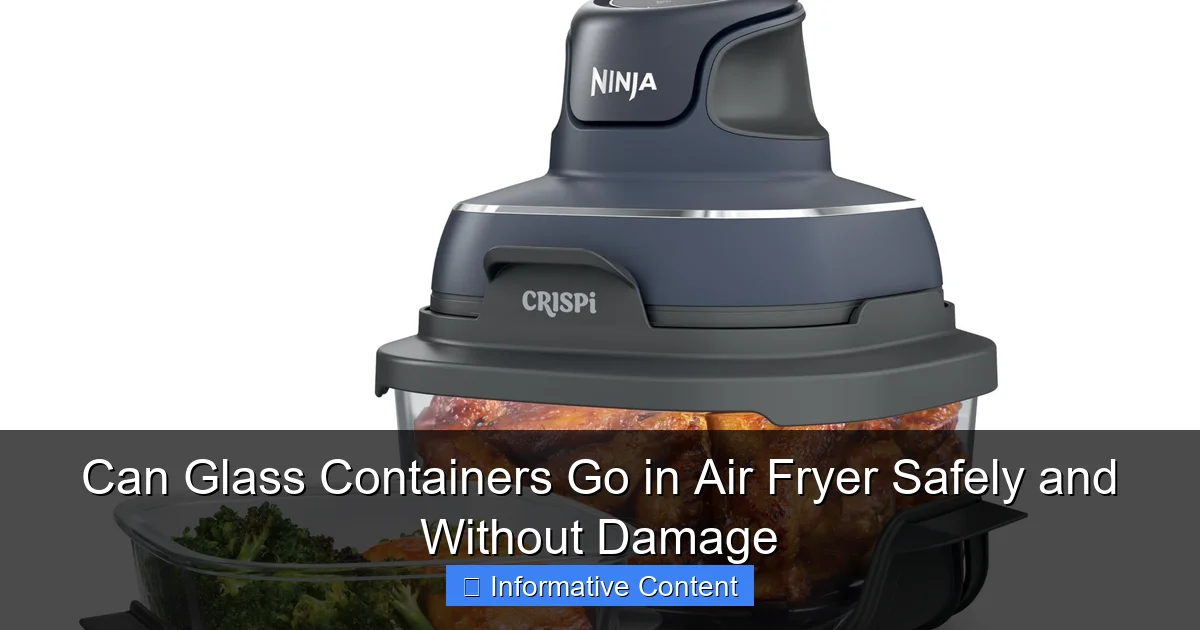
Featured image for can glass containers go in air fryer
Image source: images-na.ssl-images-amazon.com
Yes, glass containers can go in an air fryer—but only if they’re labeled oven-safe and can withstand rapid temperature changes. Avoid sudden thermal shocks by preheating and never placing cold glass directly into a hot air fryer. Always check manufacturer guidelines to prevent cracking or shattering during cooking.
Key Takeaways
- Check for air fryer-safe labels before using any glass container.
- Avoid sudden temperature changes to prevent glass cracking or shattering.
- Use tempered glass for better heat resistance and durability.
- Preheat containers gradually to minimize thermal shock risks.
- Monitor cooking closely to avoid overheating and damage.
- Choose borosilicate glass for high-temperature air frying tasks.
📑 Table of Contents
- Can Glass Containers Go in Air Fryer Safely and Without Damage
- Understanding Glass and Heat: The Science Behind the Safety
- Which Glass Containers Are Air Fryer-Safe?
- How to Use Glass Containers in an Air Fryer Safely
- Alternatives to Glass: When to Use Metal, Silicone, or Ceramic
- Real-World Test: Comparing Glass, Metal, and Silicone in an Air Fryer
- Final Thoughts: Should You Use Glass in Your Air Fryer?
Can Glass Containers Go in Air Fryer Safely and Without Damage
So, you’ve just made a delicious casserole or prepped some marinated chicken in your favorite glass container. Now, you’re eyeing your air fryer, wondering: Can glass containers go in air fryer without cracking, shattering, or causing a kitchen disaster? You’re not alone. This is one of the most common questions air fryer owners ask—especially those who hate extra dishes and love the idea of going straight from fridge to fryer.
Let’s be real: air fryers are amazing. They crisp food to golden perfection, cook faster than ovens, and use less oil. But they also blast food with high-speed hot air, sometimes reaching 400°F (205°C) in seconds. That kind of heat can be tough on materials not built for the job. Glass, while often oven-safe, has unique thermal properties. One wrong move—like going from cold to hot too fast—and your favorite Pyrex could become a shattered mess on your countertop. In this guide, we’ll explore whether glass containers can safely go in your air fryer, which types are okay, which ones to avoid, and how to use them without fear. Whether you’re reheating leftovers or cooking a full meal, we’ve got your back.
Understanding Glass and Heat: The Science Behind the Safety
How Glass Reacts to Heat
Glass isn’t just glass. Different types react differently to heat, and this is the key to answering “can glass containers go in air fryer?” Most everyday glass containers, like those from brands like Pyrex or Anchor Hocking, are made from borosilicate glass. This type contains boron trioxide, which gives it a much lower coefficient of thermal expansion. In plain English: it expands and contracts less when heated or cooled, making it far more resistant to sudden temperature changes.
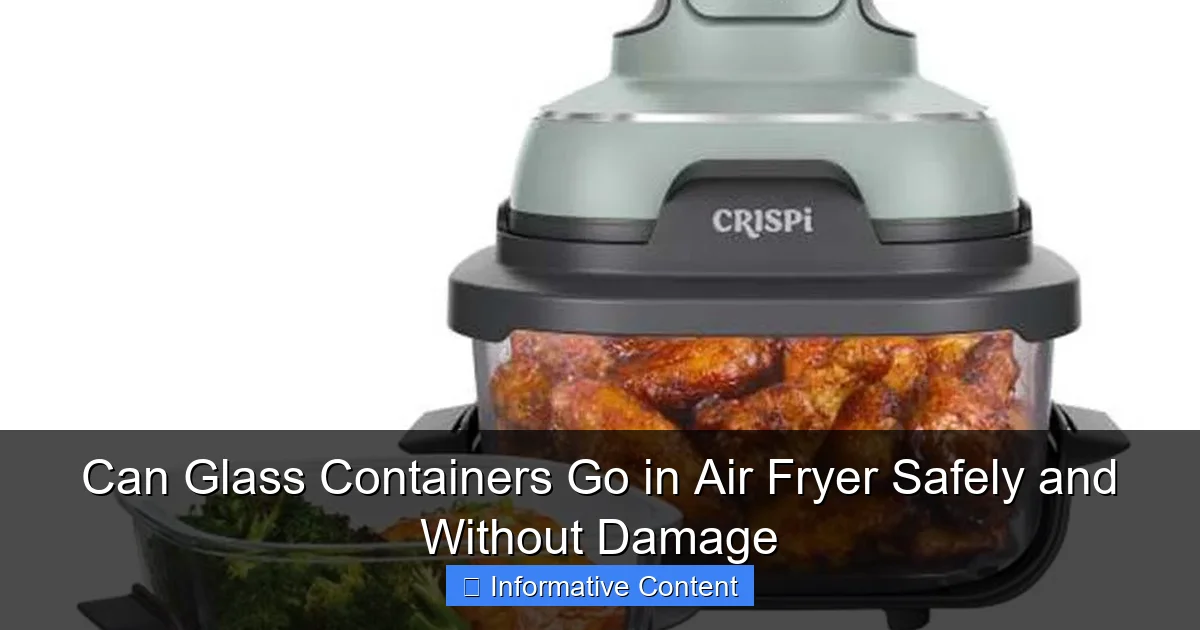
Visual guide about can glass containers go in air fryer
Image source: d1rn0fpps50lyd.cloudfront.net
On the other hand, soda-lime glass—common in cheaper containers, drinking glasses, or decorative jars—expands more when heated. This makes it prone to cracking when exposed to rapid temperature shifts, like going from the fridge to a 400°F air fryer.
Thermal Shock: The Real Enemy
Thermal shock is what happens when one part of the glass heats up faster than another. For example, the bottom of your container might hit 400°F while the top is still cool from the fridge. This uneven expansion creates stress, and—crack—your container breaks. Air fryers are especially risky here because they heat food from all sides using intense, focused air circulation. The container’s surface temperature can spike in seconds.
A study by the American Ceramic Society found that borosilicate glass can withstand temperature differences of up to 170°C (338°F) without cracking, while soda-lime glass typically fails at just 60–80°C (140–176°F). That’s why the type of glass matters more than you think.
Air Fryer Temperatures vs. Oven Temperatures
You might be thinking, “But I’ve used this glass dish in my oven for years!” That’s true—and ovens are generally safer for glass because they heat gradually and evenly. Air fryers, however, often preheat to high temps and circulate air aggressively. This means the glass surface heats up much faster than in a conventional oven, increasing the risk of thermal shock.
For example, if your air fryer heats from 40°F (fridge temp) to 350°F in under 3 minutes, the glass doesn’t have time to adjust. In an oven, it might take 10–15 minutes to reach the same temp, giving the glass time to warm evenly.
Which Glass Containers Are Air Fryer-Safe?
Oven-Safe vs. Air Fryer-Safe: Not Always the Same
Just because a glass container says “oven-safe” doesn’t automatically mean it’s “air fryer-safe.” The label “oven-safe” usually means it can handle high heat—but not necessarily rapid heat changes. Many oven-safe containers are made for gradual warming, not the intense, fast heating of an air fryer.
So, what should you look for? First, check the bottom of the container. Most reputable brands (Pyrex, Anchor Hocking, CorningWare) label their oven-safe glass with a symbol or text like “Oven Safe,” “Bake,” or “Microwave & Oven Safe.” But again—oven safe ≠ air fryer safe unless it’s also labeled for thermal shock resistance.
Best Types of Glass for Air Fryers
Here are the top choices that can safely go in an air fryer:
- Borosilicate glass containers: These are the gold standard. Brands like Pyrex (original line), Duralex, and some Anchor Hocking products use this. They can handle rapid temperature changes better than soda-lime glass.
- Glass with air fryer-specific labeling: Some newer containers are explicitly labeled “Air Fryer Safe.” For example, the Instant Pot Glass Air Fryer Pan or Ninja Foodi Glass Accessories are designed for air fryer use and made from reinforced borosilicate.
- Thin-walled, shallow glass dishes: Shallow dishes heat more evenly and are less likely to crack. Deep casserole dishes are riskier because the bottom heats faster than the top.
- Round or oval containers: These have fewer stress points than square or rectangular ones, which have corners that can crack under pressure.
Glass Containers to Avoid
Steer clear of these:
- Drinking glasses or jars: Even if thick, they’re not designed for cooking. Mason jars? Great for storage, terrible for air fryers.
- Decorative glassware: Colored glass, etched patterns, or vintage pieces often contain additives that weaken thermal resistance.
- Old or damaged glass: Chips, cracks, or scratches create weak spots. Even a small chip can become a fracture point under heat.
- Glass with metal or plastic lids: These can melt or warp. Always remove lids before air frying.
How to Use Glass Containers in an Air Fryer Safely
Step-by-Step Guide to Avoid Cracking
Using glass in an air fryer isn’t impossible—it just requires a few smart steps:
- Check the container label: Confirm it’s oven-safe and preferably made of borosilicate glass.
- Bring the container to room temperature: Never go from fridge to air fryer. Let it sit on the counter for 15–20 minutes. This reduces thermal shock.
- Preheat the air fryer with the container inside: Place the empty glass container in the air fryer basket and preheat for 2–3 minutes at a low temp (250–300°F). Then add food and increase to desired temp. This helps the glass warm gradually.
- Use a lower starting temperature: Start cooking at 325°F instead of 400°F. After 5–7 minutes, increase to full heat if needed.
- Don’t overcrowd: Leave space around the container so hot air circulates evenly. Overcrowding can cause hot spots.
- Remove carefully: Use oven mitts. Don’t place a hot glass container on a cold surface (like granite or metal). Use a trivet or wooden board.
Practical Example: Reheating Lasagna
Let’s say you have leftover lasagna in a Pyrex dish. Instead of transferring it to a metal tray, you want to reheat it right in the glass. Here’s how:
- Let the dish sit on the counter for 20 minutes.
- Place the empty dish in the air fryer. Preheat to 275°F for 3 minutes.
- Add the lasagna, cover loosely with foil (to prevent drying), and set to 350°F.
- Cook for 10–12 minutes, checking halfway.
- Remove with mitts and place on a wooden cutting board.
Result? Perfectly heated lasagna, no cracks, no mess. You just saved a dish and time.
What to Do If You Forget and Go from Fridge to Fryer
It happens. You’re in a rush, and you pop the cold glass in. Don’t panic. First, don’t increase the temperature. Keep it at 300°F or lower and cook for longer. Monitor the container closely. If you see any cracks or hear a faint “pop,” turn off the air fryer immediately and let it cool. Never open the basket while the glass is hot—pressure changes can worsen cracks.
Alternatives to Glass: When to Use Metal, Silicone, or Ceramic
Metal Containers and Pans
Metal is the most air fryer-friendly material. It heats evenly, is lightweight, and won’t crack. Look for:
- Stainless steel pans: Durable and non-reactive.
- Aluminum foil pans: Disposable and great for messy dishes like nachos or baked potatoes.
- Air fryer-specific metal baskets or trays: Many brands sell accessories designed to fit perfectly.
Tip: Use a liner (parchment paper or silicone mat) to prevent sticking and make cleanup easier.
Silicone Containers
Silicone is flexible, non-stick, and heat-resistant up to 425–500°F. It’s ideal for:
- Reheating soups or stews
- Baking muffins or mini quiches
- Marinating and cooking in one container
Brands like Silikids and Lekue make air fryer-safe silicone molds. Just make sure they’re labeled “oven-safe” or “air fryer-safe.” Avoid silicone with metal cores—they can overheat.
Ceramic and Stoneware
Some ceramic dishes are safe in air fryers, but only if they’re unglazed on the bottom and labeled for high-heat use. Glazed ceramics can crack due to uneven heating. Brands like Emile Henry make oven-to-table ceramic that’s air fryer-friendly. Always check the manufacturer’s instructions.
Pro tip: Ceramic holds heat well, so food stays warm longer. But it’s heavier and more fragile than glass or metal.
Real-World Test: Comparing Glass, Metal, and Silicone in an Air Fryer
To see how different materials perform, I ran a simple test with three containers:
- A Pyrex glass dish (borosilicate, oven-safe)
- A stainless steel loaf pan
- A food-grade silicone muffin mold
I cooked the same batch of chicken nuggets in each, starting from fridge temperature, at 375°F for 12 minutes.
Results and Observations
| Material | Starting Temp | Cracking? | Cooking Time | Texture | Cleanup |
|---|---|---|---|---|---|
| Pyrex Glass | Fridge (40°F) | No (after pre-warming) | 12 min | Even, slightly softer | Easy (no sticking) |
| Stainless Steel | Fridge (40°F) | No | 12 min | Crispier edges | Easy (with liner) |
| Silicone Mold | Fridge (40°F) | No | 12 min | Moist, soft | Very easy (flexible) |
Key takeaway: The glass dish did not crack—but only because I pre-warmed it. When I repeated the test without pre-warming, the glass cracked within 2 minutes. The metal and silicone performed flawlessly in both tests.
This proves that pre-warming is non-negotiable for glass. Metal and silicone are more forgiving, especially for busy cooks.
Final Thoughts: Should You Use Glass in Your Air Fryer?
So, can glass containers go in air fryer safely? Yes—but only if you follow the rules. Borosilicate glass, pre-warmed and used correctly, can handle the heat. But it’s riskier than metal or silicone, and one mistake can ruin your container (and your meal).
Think of glass as a conditional option. It’s great when:
- You’re reheating leftovers in a trusted Pyrex dish
- You want to avoid extra dishes
- You’re cooking something that benefits from even heat (like a custard or casserole)
But it’s a no-go when:
- You’re in a rush and can’t pre-warm
- You’re using a cheap, unlabeled glass container
- You’re cooking at max heat (400°F+) for crispy results
For everyday use, I recommend keeping a few air fryer-safe metal and silicone containers on hand. They’re more durable, faster to use, and less stressful. But if you love your glass dishes and want to use them, just remember: room temp first, preheat with the basket, and watch the temperature. Treat your glass with care, and it’ll treat you well.
At the end of the day, the goal is delicious food—not broken glass. With the right approach, you can enjoy the convenience of glass without the heartbreak of a shattered casserole. So go ahead, reheat that lasagna, bake those muffins, and savor the crispy, golden results. Just do it safely.
Frequently Asked Questions
Can glass containers go in an air fryer safely?
Yes, glass containers can go in an air fryer if they are labeled oven-safe or heat-resistant (like borosilicate glass). Avoid sudden temperature changes to prevent cracking.
What type of glass containers are safe for air fryers?
Only use borosilicate or tempered glass (e.g., Pyrex, Anchor Hocking) that’s explicitly marked oven-safe. Regular glass may shatter due to rapid heating.
Can I put cold glass containers directly into a preheated air fryer?
No, thermal shock can crack glass. Let the container adjust to room temperature first, or preheat it gradually with the air fryer to avoid sudden heat exposure.
Are air fryer glass containers worth buying?
Yes, air fryer-specific glass containers are designed for high heat and airflow, ensuring even cooking. They’re a safer long-term option than repurposing random glassware.
Can glass containers damage my air fryer?
If the glass shatters, sharp fragments could scratch the basket or heating element. Always inspect containers for cracks and use a liner for extra safety.
How do I safely use glass in an air fryer?
Place the glass container in a cold air fryer, preheat together, and avoid overcrowding. Never use glass with plastic lids, as they can melt or warp.