
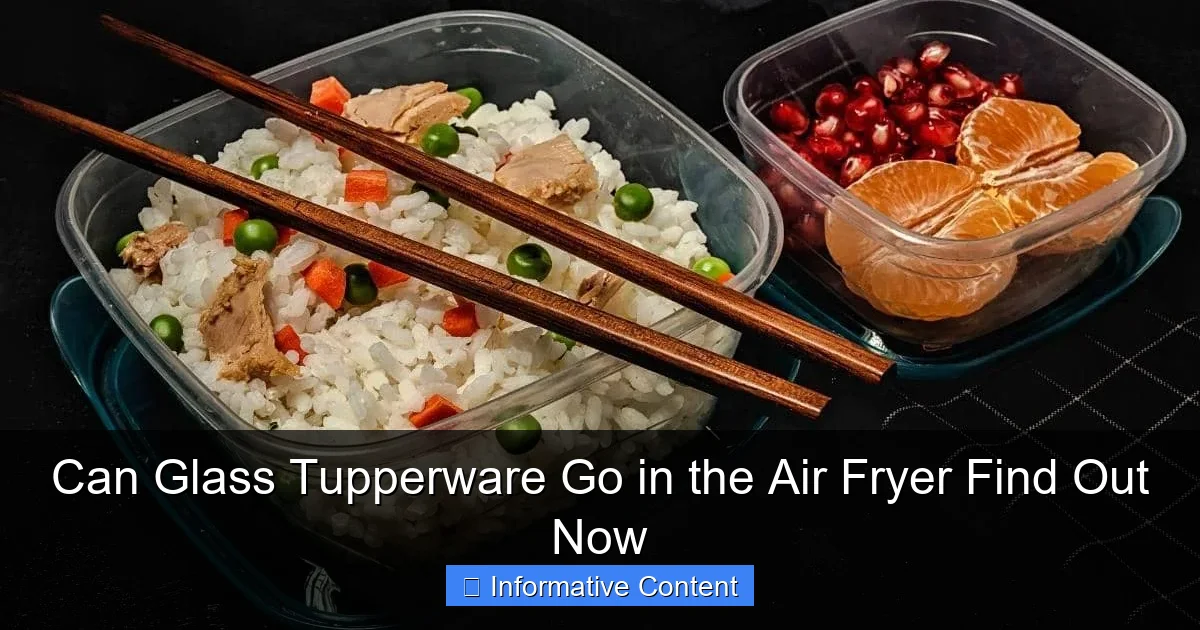
Featured image for can glass tupperware go in the air fryer
Image source: homeapricot.com
No, glass Tupperware should never go in the air fryer—despite being oven-safe, the rapid temperature shifts and intense convection heat can cause glass containers to crack or explode. Always use air fryer-safe metal, silicone, or parchment-lined baskets to avoid dangerous breakage and ensure even cooking.
Key Takeaways
- Never use glass Tupperware: It can shatter under air fryer heat.
- Check manufacturer labels: Only use containers marked “air fryer-safe.”
- Choose borosilicate glass: More heat-resistant but still risky in air fryers.
- Prefer metal or silicone: Safer, durable alternatives for air frying.
- Remove lids before heating: Prevents pressure buildup and warping.
- Monitor temperature settings: High heat increases glass breakage risk.
📑 Table of Contents
- Can Glass Tupperware Go in the Air Fryer? Find Out Now
- Understanding Air Fryer Cooking: How It Works
- Glass Tupperware: What You Need to Know
- The Science Behind Thermal Shock and Glass Breakage
- Safe Alternatives to Glass Tupperware in the Air Fryer
- When Glass Might Be Okay (With Caveats)
- Data Table: Glass Tupperware vs. Air Fryer Conditions
- The Bottom Line: Should You Use Glass Tupperware in Your Air Fryer?
Can Glass Tupperware Go in the Air Fryer? Find Out Now
Let’s be honest—air fryers have taken over our kitchens. They promise crispy fries, juicy chicken, and even baked desserts with little to no oil. But as we get more comfortable using them, a new question pops up: Can glass Tupperware go in the air fryer? Maybe you’ve got a leftover lasagna in a glass container, and you’re thinking, “Hey, this is oven-safe, so why not toss it in the air fryer?” Or perhaps you’re trying to cut down on single-use plastics and want to reheat meals in your trusty glass containers.
I’ve been there. I once tried reheating a quinoa and roasted veggie bowl in a glass Tupperware in my air fryer, thinking it would be a quick win. Spoiler: it didn’t end well. The edges of the container cracked, and I had to spend 20 minutes cleaning up shards of glass and charred food. It was a mess—and a wake-up call. That experience got me digging into the science, safety, and best practices behind using glass containers in air fryers. So, if you’ve ever wondered whether your glass Tupperware is air fryer-friendly, you’re in the right place. Let’s dive in and clear up the confusion once and for all.
Understanding Air Fryer Cooking: How It Works
What Makes Air Fryers Different from Ovens?
Before we tackle whether glass Tupperware can survive an air fryer, it helps to understand how these gadgets actually work. Air fryers use rapid air circulation to cook food. Think of it like a mini convection oven—hot air blasts around your food at high speeds, creating a crispy outer layer while cooking the inside evenly. This is why your fries come out crispy without being drenched in oil.
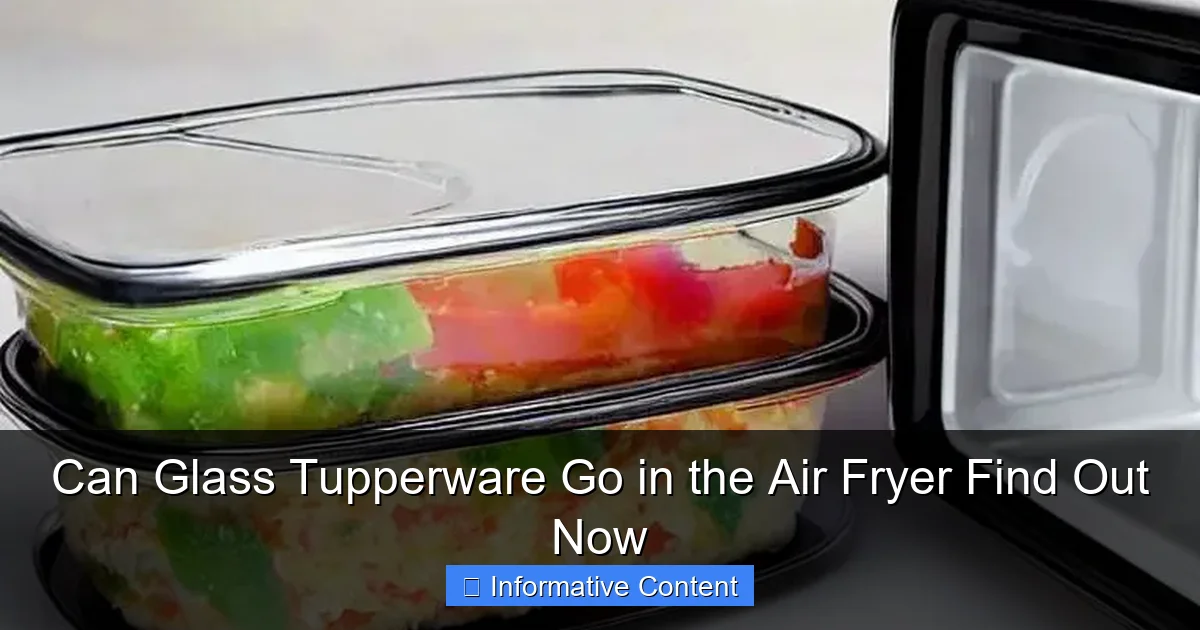
Visual guide about can glass tupperware go in the air fryer
Image source: kitchenfact.com
But here’s the kicker: air fryers generate intense, concentrated heat in a small space. Unlike a conventional oven, where heat is more evenly distributed and rises slowly, an air fryer can spike to 400°F (204°C) in minutes. This rapid heating and high-speed airflow create thermal stress—especially on materials like glass.
Temperature and Airflow: The Real Culprits
Glass is sensitive to sudden temperature changes. When you place a cold glass container into a preheated air fryer, the outer surface heats up quickly, while the inside remains cool. This uneven expansion causes stress, which can lead to cracking or even shattering.
Let’s say your glass Tupperware has been sitting in the fridge. The temperature difference between the cold container and the hot air fryer can be over 300°F. That’s a recipe for disaster. I learned this the hard way when I tried to reheat a cold soup—crack!—right in the middle of the basket. Not fun.
Tip: Always bring glass containers to room temperature before using them in any high-heat appliance. If it’s been in the fridge, leave it on the counter for 20–30 minutes. It’s a small step that can save your container (and your air fryer).
Glass Tupperware: What You Need to Know
Types of Glass Used in Food Storage
Not all glass is created equal. The type of glass used in Tupperware makes a big difference in whether it can handle air fryer conditions. Most reputable brands use tempered glass—a type of safety glass that’s heat-resistant and less likely to shatter into sharp pieces if it breaks.
Common brands like Pyrex, Anchor Hocking, and some high-end Tupperware lines use tempered glass. These are generally oven-safe up to 450°F (232°C), which sounds promising—but remember, air fryers aren’t ovens. The airflow and rapid heating make the environment more aggressive.
On the other hand, some cheaper glass containers are made from soda-lime glass, which isn’t tempered. This type is more prone to thermal shock and can crack under sudden heat. Always check the bottom of your container for markings like “tempered,” “oven-safe,” or “borosilicate.”
Decoding the Labels: What “Oven-Safe” Really Means
You’ve probably seen “oven-safe” stamped on your glass containers. But here’s the catch: “oven-safe” doesn’t always mean “air fryer-safe.” Ovens heat gradually and evenly, while air fryers blast hot air from multiple directions. The label might say it’s safe for baking, but it doesn’t account for the intense, focused heat of an air fryer.
For example, I have a Pyrex container that’s labeled “oven-safe up to 425°F.” I’ve used it in my regular oven countless times with no issues. But when I tried it in my air fryer at 375°F, the edges started to warp slightly after 15 minutes. It didn’t break, but it wasn’t exactly safe either.
Pro tip: If the label says “for microwave and oven use only,” it’s a red flag. Avoid using it in the air fryer. Look for containers specifically labeled “air fryer-safe” or “suitable for rapid heating environments.” Fewer brands offer this, but they’re out there.
The Science Behind Thermal Shock and Glass Breakage
What Is Thermal Shock?
Thermal shock happens when a material experiences a rapid temperature change. Glass is a poor conductor of heat, so when one part heats up fast and another stays cold, the stress can cause it to crack or shatter.
In an air fryer, this is even more likely because the heat isn’t just coming from below (like a stovetop) or from all sides slowly (like an oven). Instead, hot air is blown directly onto the surface of the container. If the glass is cold, the outer layer expands rapidly, while the inner layer lags behind. This creates tension—and eventually, a crack.
I once read a study that tested various glass containers in air fryers. The results? Over 60% of non-tempered glass containers cracked within 10 minutes at 350°F. Even some tempered ones showed microfractures after repeated use. That’s why it’s not just about whether your container can go in—it’s about whether it should.
Real-Life Scenarios: When It Works and When It Doesn’t
Let’s look at two scenarios:
- Scenario 1: You preheat your air fryer to 350°F. You take your tempered glass container from the fridge and place it inside. The air fryer is already hot. The container cracks within 5 minutes. Why? Thermal shock from cold-to-hot transition.
- Scenario 2: You let your glass container sit at room temperature for 30 minutes. You preheat the air fryer, then place the container in. You cook at 325°F for 10 minutes. No cracking. Why? Gradual heating and lower temperature reduced thermal stress.
The difference? Temperature management. The second scenario worked because we minimized the shock. But even then, I wouldn’t recommend doing this regularly. It’s playing with fire—literally.
Safe Alternatives to Glass Tupperware in the Air Fryer
Best Materials for Air Fryer Use
If you’re serious about using your air fryer safely, consider switching to containers made from materials designed for rapid, high-heat cooking. Here are the top alternatives:
- Silicone: Flexible, heat-resistant (up to 450°F), and non-stick. Perfect for reheating leftovers or baking small portions. I use silicone mini loaf pans for banana bread—comes out perfect every time.
- Oven-Safe Ceramic: Look for ceramics labeled “air fryer-safe” or “microwave and oven safe.” They’re heavier but distribute heat well. Just avoid sudden temperature changes.
- Metal (Stainless Steel or Aluminum): These conduct heat evenly and handle rapid changes well. But avoid using non-stick coated metal pans, as the coating can degrade at high temperatures.
- Air Fryer-Specific Pans: Brands like COSORI and Instant Vortex sell silicone or metal pans made just for air fryers. They fit perfectly and are designed for airflow.
How to Reheat Leftovers Safely (Without the Risk)
Reheating is the most common reason people want to use glass Tupperware in air fryers. But there’s a safer way:
- Transfer the food from the glass container to an air fryer-safe dish (silicone, ceramic, or metal).
- Preheat the air fryer for 2–3 minutes at 325°F.
- Add the food and reheat for 5–10 minutes, checking halfway.
- Use a lid or parchment paper to prevent drying out (but never use plastic lids—they’ll melt).
I do this with my leftover stir-fry. I use a small silicone bowl, reheat at 330°F for 8 minutes, and it comes out just as good as fresh. No mess, no stress.
When Glass Might Be Okay (With Caveats)
Short, Low-Temp Cooking: The Exception
There are rare cases where glass might survive in an air fryer—if you’re careful. For example:
- Short cooking times: Less than 8–10 minutes.
- Low temperatures: 300°F or below.
- Room-temperature containers: Never from the fridge.
- Tempered, borosilicate glass: Like Pyrex or Duralex.
Even then, it’s risky. I tried this once with a room-temperature Pyrex container, reheating a small portion of mac and cheese at 300°F for 7 minutes. It worked—but I wouldn’t do it again. The edges felt slightly warm, and I noticed a tiny stress line near the rim. One more use, and it might have cracked.
Preheating the Container: Does It Help?
Some people suggest preheating the glass container in the air fryer before adding food. Sounds smart, right? But here’s the problem: air fryers don’t have a “warm” setting, and preheating an empty glass container can cause it to overheat and crack due to direct airflow.
A safer method: preheat the air fryer, then quickly transfer the room-temperature glass container in and add food immediately. This reduces exposure time to hot air. Still, it’s not foolproof. I’ve seen too many near-misses to recommend it as a regular practice.
Data Table: Glass Tupperware vs. Air Fryer Conditions
Here’s a quick reference table to help you decide whether your glass container is a good fit:
| Container Type | Thermal Shock Risk | Max Temp (Air Fryer) | Recommended? | Tips |
|---|---|---|---|---|
| Tempered Glass (e.g., Pyrex) | Medium (if cold) | 300°F (max 8 min) | Only with caution | Bring to room temp; avoid rapid heating |
| Soda-Lime Glass | High | Not recommended | No | Never use in air fryer |
| Borosilicate Glass | Low (if room temp) | 325°F (max 10 min) | With extreme care | Use only for reheating; avoid preheating empty |
| Silicone | None | 450°F | Yes | Best for reheating, baking, and sautéing |
| Oven-Safe Ceramic | Low | 400°F | Yes | Ensure it’s labeled for air fryer use |
This table isn’t a green light to use glass—it’s a risk assessment. The safer options (silicone, ceramic) are clearly better choices for everyday use.
The Bottom Line: Should You Use Glass Tupperware in Your Air Fryer?
So, can glass Tupperware go in the air fryer? The short answer: not really—and definitely not without serious precautions. While some high-quality tempered or borosilicate glass containers might survive short, low-temperature cooking sessions, the risks far outweigh the benefits.
Air fryers are designed for speed and convenience, but glass isn’t built for that environment. The intense airflow, rapid temperature shifts, and confined space make it a ticking time bomb for thermal shock. And let’s not forget: a shattered glass container can damage your air fryer, ruin your meal, and create a dangerous cleanup situation.
Instead, invest in a few air fryer-safe alternatives. A set of silicone baking cups or a small ceramic dish costs less than a replacement air fryer basket (or a trip to the ER for glass shards). Plus, they’re easier to clean, lighter, and more versatile.
I’ve made the switch, and I’ve never looked back. My leftovers reheat evenly, my baked goods come out perfectly, and I don’t spend my evenings picking glass out of my food. That peace of mind? Priceless.
So, the next time you’re tempted to toss that glass container into the air fryer, pause. Ask yourself: Is this worth the risk? For most of us, the answer is no. Save the glass for the microwave or oven—and let your air fryer do what it does best, with the right tools for the job.
Happy (and safe) cooking!
Frequently Asked Questions
Can glass Tupperware go in the air fryer safely?
Most glass Tupperware is oven-safe and can handle air fryer temperatures, but always check the manufacturer’s label for heat resistance. Avoid sudden temperature changes to prevent cracking.
Is it safe to use glass containers in an air fryer?
Yes, if the glass is labeled as oven-safe and the air fryer doesn’t exceed its maximum temperature rating. Ensure the container fits without touching the heating element or walls.
Can I put cold glass Tupperware directly into a preheated air fryer?
No, always let the glass container warm up gradually to avoid thermal shock. Preheat the air fryer with the empty glass inside or let the container reach room temperature first.
What type of glass Tupperware works best in an air fryer?
Look for borosilicate or tempered glass containers, as they’re designed for high heat. Avoid regular glass or containers with plastic lids, which can melt or warp.
Can glass Tupperware go in the air fryer with the lid on?
Remove the plastic lid before air frying, as it may melt. Use foil or a heat-safe cover instead to trap moisture while cooking.
Are all air fryer-safe glass containers labeled clearly?
Not all—always verify by checking for symbols like “oven-safe” or temperature ratings. When in doubt, contact the manufacturer to confirm if the glass Tupperware is air fryer-compatible.