Can You Put Foil in Air Fryer
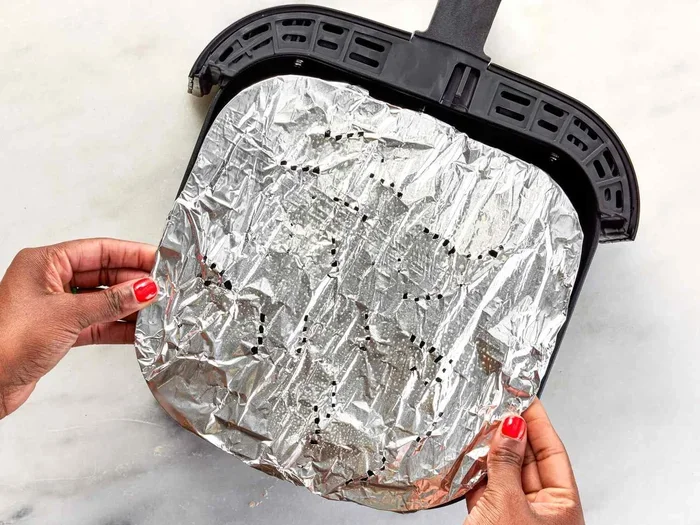
Featured image for aluminum foil air fryer basket
Image source: seriouseats.com
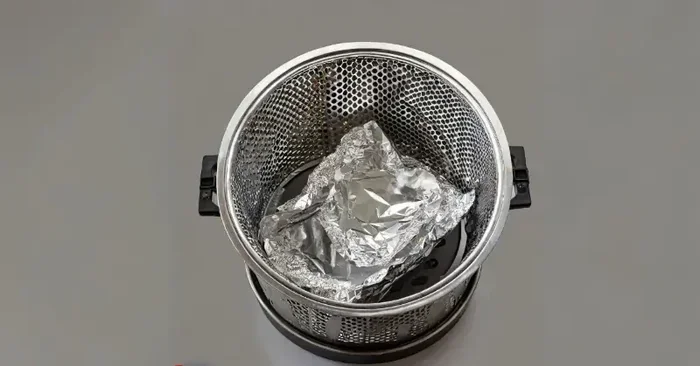
Yes, you can put foil in air fryer units safely when you follow a few simple rules. The foil must never block air flow, touch the heating element, or fly loose inside the basket.
You just bought an air fryer. You’re excited to make crispy wings, roasted veggies, and maybe even a small cake. Then you wonder: can you put foil in air fryer baskets without causing a disaster? The short answer is yes. The longer answer involves a few rules that keep your food crispy, your machine safe, and your warranty intact.
Think of your air fryer like a tiny, powerful convection oven. A fan blows hot air around food at high speed. That moving air is the secret to the crunch. Foil can help with cleanup and prevent sticking, but it can also act like a wall that stops the air from doing its job. This guide walks you through everything you need to know, from safety basics to pro tips for specific foods.
Key Takeaways
- Foil is safe when used correctly: Aluminum foil works in air fryers if it stays weighed down by food and avoids the heating element.
- Air flow is everything: Blocking circulation with foil ruins the cooking process and creates uneven results.
- Never preheat with loose foil: The fan can blow lightweight foil into the heating coil, causing smoke or fire risk.
- Acidic foods react with foil: Tomatoes, citrus, and vinegar-based marinades break down aluminum, creating off-flavors and potential health concerns.
- Parchment paper is often better: Perforated parchment liners allow air flow while preventing sticking, without the reactivity risks.
- Check your manual first: Some manufacturers explicitly prohibit foil use, and doing so may void your warranty.
- Shape matters: Mold foil to the basket shape or create small packets rather than covering the entire bottom surface.
📑 Table of Contents
- The Short Answer: Yes, But With Rules
- Why People Want to Use Foil in Air Fryers
- Safety Rules You Must Follow
- Best Practices for Different Foods
- Common Mistakes to Avoid
- Alternatives to Foil
- Cleaning and Maintenance When Using Foil
- Special Situations and Pro Tips
- Environmental Considerations
- Troubleshooting Common Issues
- Conclusion
The Short Answer: Yes, But With Rules
Most air fryer manufacturers agree that aluminum foil is safe if you use it correctly. The key word is “correctly.” A 2023 consumer survey by a leading kitchen appliance magazine found that 68% of air fryer owners use foil or parchment liners regularly. Yet 22% of those users reported issues like uneven cooking, smoke, or damaged heating elements because they didn’t follow proper guidelines.
What the Manuals Say
Every brand differs slightly. Ninja, Cosori, and Instant Pot generally allow foil with caveats. Philips often recommends their own perforated accessories instead. Some budget brands say “no foil at all” in the fine print. Always check your specific model’s manual first. Using foil against manufacturer instructions can void your warranty. That $150 machine isn’t worth risking over a sheet of foil.
The Golden Rule: Air Must Move
Imagine a hair dryer blowing on wet hair. If you put a flat board in front of the nozzle, the air hits the board, not the hair. Foil flat across the entire basket bottom does the same thing. The fan pushes air, the foil blocks it, and your food steams instead of fries. You end up with soggy fries instead of crispy ones.
Why People Want to Use Foil in Air Fryers
Before diving into the how-to, let’s talk about why foil is so tempting. Understanding the benefits helps you decide when it’s worth the extra effort.
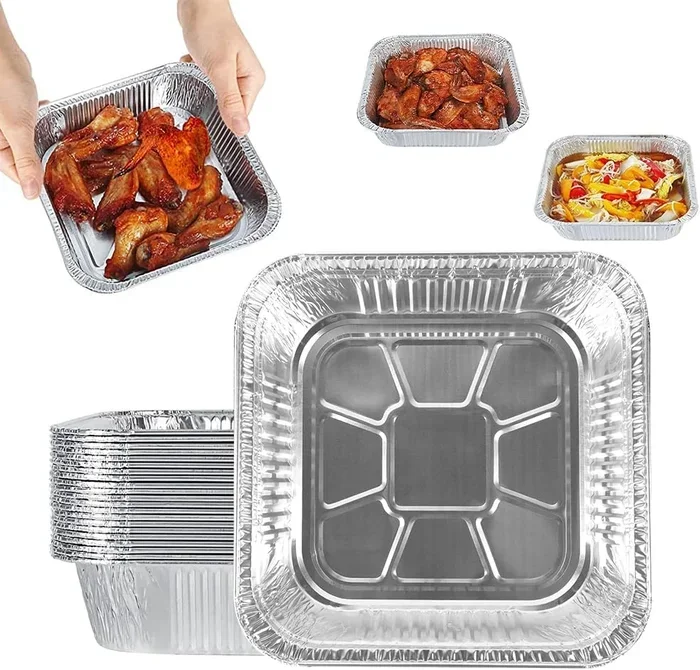
Visual guide about aluminum foil air fryer basket
Image source: m.media-amazon.com
Easy Cleanup
This is the number one reason. Cheese drips. Marinade burns. Bread crumbs scatter. A foil liner catches the mess. You pull it out, toss it, and the basket looks brand new. For busy weeknight cooks, that five minutes of scrubbing saved feels huge.
Preventing Sticking
Delicate fish fillets, egg-based dishes, and items with wet batters love to weld themselves to the basket mesh. Foil creates a non-stick barrier. Your salmon slides off intact instead of leaving half its skin behind.
Cooking Small or Loose Items
Try air frying cherry tomatoes or diced onions without a liner. They fall through the basket holes into the heating element. Smoke city. Foil keeps small pieces contained. You can even fold up the edges to make a little tray.
Portion Control and Meal Prep
Foil packets let you cook individual portions with custom seasonings. One packet gets lemon-herb, another gets spicy Cajun. Everyone gets what they want without cross-contamination. This is huge for families with picky eaters or dietary restrictions.
Reheating Without Drying Out
Leftover pizza, fried chicken, or roasted vegetables reheat beautifully in foil packets. The foil traps just enough moisture to prevent that cardboard texture microwaves create, while the air fryer’s fan re-crisps the exterior. It’s the best of both worlds.
Safety Rules You Must Follow
This section is the most important part of this article. Ignoring these rules risks fire, machine damage, or ruined food. Read carefully.
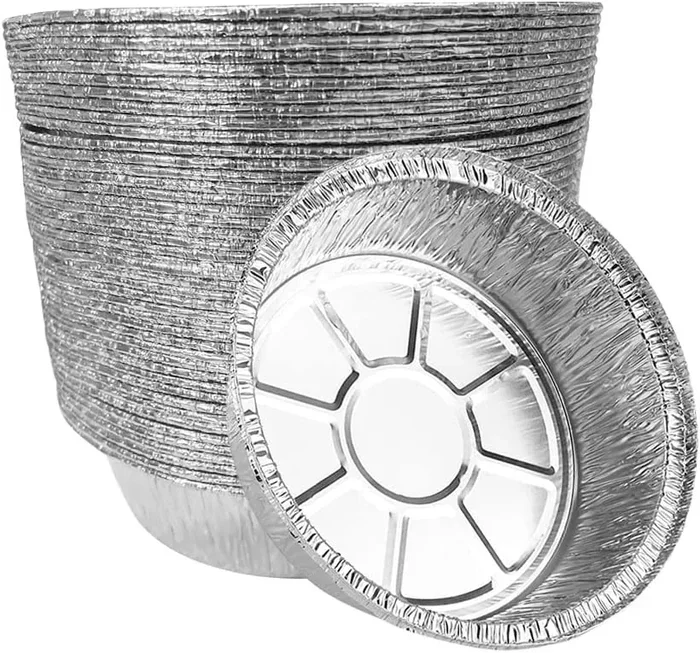
Visual guide about aluminum foil air fryer basket
Image source: m.media-amazon.com
Rule 1: Never Put Foil in During Preheat
This is the most common mistake. You turn on the air fryer to preheat. The fan spins up to full speed. That loose sheet of foil? It becomes a kite. It flies up into the heating element. Best case: it melts and makes a mess. Worst case: it catches fire.
Always place foil only after preheating is complete and you’ve added food on top to weigh it down. The food acts as an anchor. No food on top? No foil.
Rule 2: Don’t Cover the Entire Basket Bottom
Air fryers have holes or mesh in the basket for a reason. Air enters from the bottom, circulates around food, and exits through the top or back. Covering every hole creates a solid barrier. The air hits the foil and bounces back. Your food cooks from the top only.
Instead, cut foil to fit just under the food. Leave a border of at least one inch around the edges exposed. Think of it like a placemat, not a wall-to-wall carpet.
Rule 3: Keep Foil Away From the Heating Element
Most air fryers have the heating coil directly above the basket. When you pull the basket out, look up. That coiled wire gets extremely hot. If foil touches it, the foil melts instantly. Melted aluminum on a heating element is nearly impossible to clean and can create hot spots that burn future food.
When molding foil packets, make sure the top stays well below the basket rim. A good rule: if you can’t see at least half an inch of basket wall above your foil packet, it’s too tall.
Rule 4: Don’t Use Foil With Acidic Foods
Here’s a chemistry lesson made simple. Aluminum reacts with acid. Tomatoes, lemon juice, vinegar, wine-based marinades, and citrus break down the foil. You get two problems: tiny aluminum particles in your food (not appetizing) and a metallic taste that ruins the dish.
A 2021 study published in the Journal of Food Science measured aluminum leaching into tomato sauce cooked in foil. Levels exceeded WHO recommended limits after just 20 minutes at 350°F. For acidic foods, use parchment paper or a silicone liner instead.
Rule 5: Weigh It Down Every Time
We mentioned this, but it bears repeating. The fan in an air fryer moves serious air volume. Lightweight foil has zero chance. Even heavy-duty foil can lift at the corners. Food must cover the foil completely. If your recipe doesn’t have enough food to cover the foil, don’t use foil. Use a different method.
Rule 6: No Foil in the Drawer/Drip Tray
Some people line the bottom drawer (the part that catches drips) with foil to make cleanup easier. Bad idea. That drawer needs airflow too. Blocking it traps heat, which can warp the drawer, damage the heating element, or trigger safety shutoffs. Just wash the drawer. It takes 30 seconds.
Best Practices for Different Foods
Now that safety is covered, let’s talk technique. Different foods need different foil approaches.
Meats and Proteins
Chicken wings, drumsticks, thighs: These release fat. Lots of it. A foil sling (a strip of foil under the meat with handles sticking up the sides) lets you lift the cooked meat out cleanly. The fat drips onto the foil, not the basket. Pro tip: poke a few holes in the foil under the meat with a skewer. This lets fat drain away while keeping the basket clean.
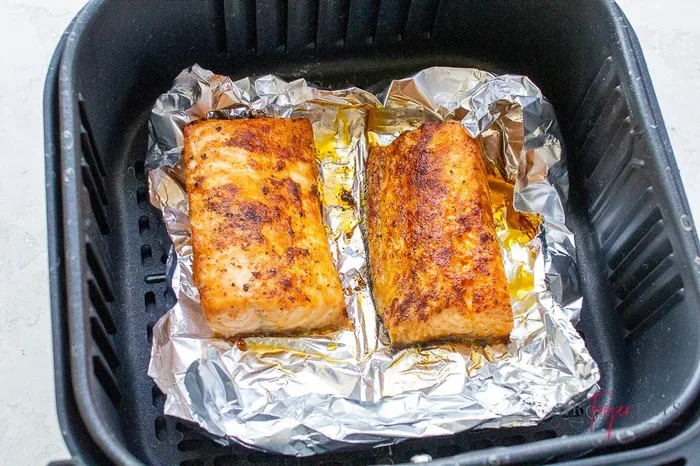
Fish fillets: Delicate fish needs support. Create a foil boat: fold up the edges of a rectangle to make a shallow tray. Place fish inside. The boat holds the fish together and prevents sticking. For skin-on fish, place skin-side down directly on the foil. The skin gets crispy; the flesh stays moist.
Burgers and meatballs: These don’t need foil. The fat drips through the basket holes away from the meat. That’s what you want. Foil would trap the fat, essentially frying the meat in grease instead of air frying it.
Vegetables
Root vegetables (potatoes, carrots, beets): Cut into even pieces. Toss with oil and seasonings. Spread on foil with edges folded up slightly. The foil prevents the natural sugars from burning onto the basket mesh. Shake the basket halfway through. The foil moves with the veggies, no problem.
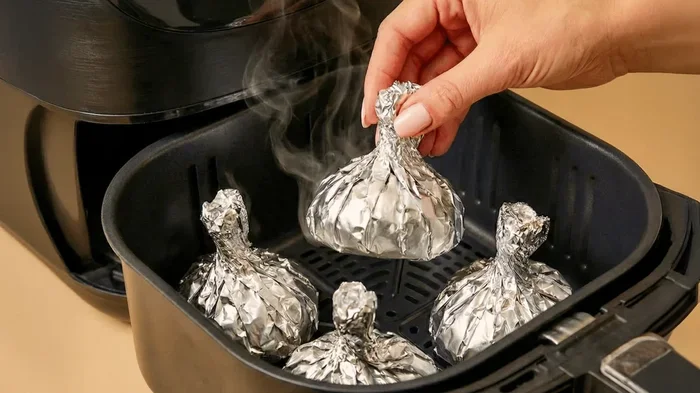
Delicate veggies (asparagus, green beans, zucchini): These cook fast. A foil packet works beautifully. Place veggies on foil, drizzle oil, season, fold into a sealed packet. The steam inside cooks them tender while the air fryer heat gives a slight roast. Open carefully. Steam burns are real.
Tomatoes, peppers, onions (acidic/high water content): Skip the foil. Use parchment paper or a silicone mat. The acid reaction isn’t worth it. Plus, these release so much water they’ll steam in a foil packet anyway.
Baked Goods and Breakfast
Eggs (frittatas, egg bites, baked eggs): Foil is your friend here. Make individual cups by pressing foil into a muffin tin shape, then transferring to the air fryer basket. Or line a small oven-safe dish with foil. The foil prevents the egg from seeping into basket holes and makes removal clean.
Cookies and small pastries: Use perforated parchment instead. Cookies need bottom heat for spread and texture. Foil reflects heat differently and can cause uneven browning. If you must use foil, grease it well and watch closely.
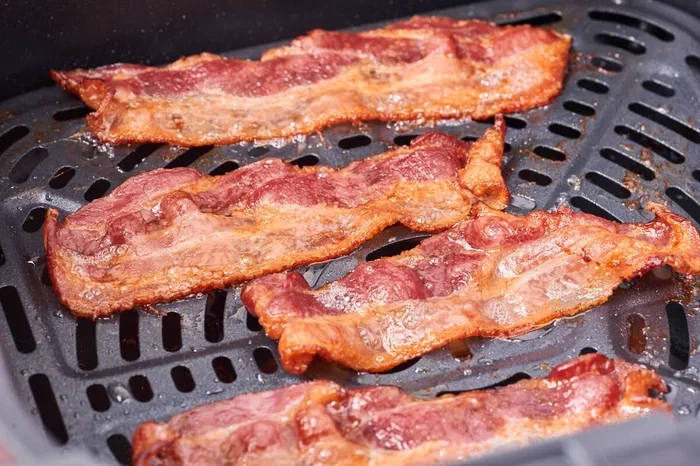
Bacon: This is controversial. Some swear by foil for bacon. Others say the grease needs to drip away. Test both ways. Foil gives you softer bacon; no foil gives crispier. Your preference wins.
Frozen Foods
French fries, tater tots, nuggets: No foil needed. These are designed for direct air contact. Foil makes them soggy. The only exception: if your basket coating is peeling (replace the basket instead).
Frozen vegetables in sauce: Foil packet method works well. The sauce stays with the veggies instead of burning on the basket.
Common Mistakes to Avoid
Even experienced users make these errors. Learn from them instead of repeating them.
Mistake 1: Using Foil as a Permanent Liner
Some people cut a perfect circle of foil, place it in the basket, and leave it there for weeks. Don’t. Foil degrades with heat cycles. It gets brittle, tears, and pieces fall into the fan or heating element. Replace foil every single use. It costs pennies.
Mistake 2: Double-Layering Foil
“Heavy duty” foil isn’t heavy enough for some folks, so they use two layers. Double foil blocks twice the air. It also creates an insulating air pocket between layers that messes with temperature accuracy. One layer. Always.
Mistake 3: Foil Packets That Are Too Tight
Sealing a foil packet completely traps steam. That’s fine for steaming. But if you want any crispness, leave a small vent at the top. Fold the top over twice, then pinch the ends. A tiny gap lets excess steam escape while keeping flavors in.
Mistake 4: Ignoring the “Shake” Reminder
Most air fryer recipes say “shake halfway through.” With foil, people forget because the foil seems to hold everything in place. But food stuck to foil still needs turning. The bottom side touching foil doesn’t get air. Open the basket, use tongs to flip pieces, continue cooking.
Mistake 5: Using Foil in Air Fryer Ovens With Racks
Air fryer toaster ovens have multiple rack positions. Putting foil on the bottom rack to catch drips from the top rack seems smart. It’s not. The foil blocks the convection flow that makes the oven work. Use the manufacturer’s drip tray. That’s what it’s for.
Mistake 6: Assuming All Foil Is Equal
Cheap dollar-store foil tears if you look at it wrong. Heavy-duty or “grill” foil withstands higher temps and handles better. Spend the extra dollar. Your sanity is worth it when you’re not fishing foil shreds out of your dinner.
Alternatives to Foil
Sometimes foil isn’t the best tool. Here are better options for specific situations.
Perforated Parchment Paper Liners
These are round or square sheets with pre-cut holes. They fit standard basket sizes. The holes let air through. The paper prevents sticking. They’re disposable. They handle acidic foods safely. They cost more than foil but save so much hassle. A 100-pack lasts months.
Did you know? Parchment paper can withstand temperatures up to 425°F (220°C). Most air fryers max out at 400°F. You have a safety margin.
Silicone Liners and Mats
Reusable, dishwasher-safe, and virtually indestructible. Silicone liners come in basket-specific shapes with raised edges and perforations. They’re the eco-friendly choice. One $15 liner replaces hundreds of foil sheets. They also provide slight insulation, which can prevent burning on delicate items.
Silicone Muffin Cups and Molds
For eggs, mini muffins, individual pot pies, or frozen treats, silicone cups are perfect. They’re non-stick, flexible for easy release, and come in fun shapes. Kids love the novelty. Adults love the zero cleanup.
Oven-Safe Dishes
Small ceramic ramekins, metal cake pans, glass dishes — if they fit in your basket and are rated for 400°F+, they work. This is ideal for lasagna portions, cobblers, or anything with lots of sauce. No liner needed. Just grease the dish.
Cooking Spray or Oil Mister
For many foods, a light coat of oil on the basket mesh is all you need. An oil mister (not aerosol spray, which damages non-stick coatings) gives even coverage. This preserves the air fryer’s designed airflow completely.
Cleaning and Maintenance When Using Foil
Even with foil, your air fryer needs care. Foil reduces mess but doesn’t eliminate maintenance.
After Every Use
Remove foil carefully. Check for tears. If any foil shredded, find the pieces. Check the heating element (when cool) for foil fragments. Wipe the basket with a damp cloth. Don’t assume foil caught everything. Splatter happens.
Weekly Deep Clean
Wash the basket and drawer in hot, soapy water. Use a soft brush on the mesh. Check the heating element for grease buildup. A flashlight helps. Wipe the element gently with a damp cloth when completely cool. Never use abrasive cleaners on the basket coating.
Inspect the Basket Coating
Non-stick coatings wear out. Foil can accelerate this if it shifts during cooking and scratches the surface. If you see peeling, flaking, or bare metal, replace the basket. Cooking on damaged coating releases particles into food. Most manufacturers sell replacement baskets for $20-40.
Special Situations and Pro Tips
High-Altitude Adjustments
Above 3,000 feet, air is thinner. Air fryers rely on dense air for heat transfer. Foil further reduces airflow. At altitude, skip foil entirely for most foods. Increase cook times by 5-10% instead. If you must use foil, cut larger ventilation gaps.
Cooking for Crowds
Batch cooking with foil packets streamlines service. Prep packets ahead, refrigerate, cook in succession. Keep cooked packets warm in a low oven (200°F) while the rest cook. This works for parties, meal prep, or holiday sides.
Dehydrating With Foil
Some air fryers have dehydrate settings. Foil can hold herbs or small items that would blow around. Use the lowest rack position. Leave huge gaps in the foil. Check every 30 minutes. This is an advanced technique; expect trial and error.
Travel and Camping
Portable air fryers exist for RVs and camping. Foil packets are ideal here. Prep at home, freeze, cook at the campsite. No dishes to wash in limited water. Just pack out the used foil.
Environmental Considerations
Aluminum foil is recyclable, but only if clean. Food-contaminated foil goes to landfill. A typical household using foil in an air fryer 3x weekly generates about 150 square feet of foil waste yearly. That’s roughly 2 pounds of aluminum.
Switching to a silicone liner pays for itself environmentally in about 6 months. After that, it’s pure waste reduction. If you stick with foil, wipe it clean before recycling. Many municipalities accept balled-up foil (golf ball size or larger) in curbside recycling.
Troubleshooting Common Issues
Food Isn’t Crispy
Check foil coverage. Too much foil = steam oven. Remove foil for the last 2-3 minutes to crisp the bottom. Or flip food onto bare basket for the final minutes.
Foil Stuck to Food
Grease the foil lightly. Even non-stick foil benefits from a spray. For stuck-on disasters, soak the foil-food combo in hot water for 10 minutes. The foil will release.
Smoke During Cooking
Immediate stop. Pull the basket. Check for foil touching the element. Check for grease buildup on the element from previous uses. Clean before continuing. Smoke means something is burning that shouldn’t be.
Uneven Cooking
Foil creating hot and cold spots. Rotate the basket 180 degrees halfway through. Or ditch the foil for this recipe.
Conclusion
So, can you put foil in air fryer baskets? Absolutely. Millions of people do it every day. The trick is respecting the physics. Your air fryer is a wind tunnel for hot air. Foil is a wall. Use the wall strategically — as a targeted shield, not a blanket barrier.
Follow the six safety rules: no preheating with foil, no full coverage, keep away from the heating element, skip acidic foods, weigh it down, and never line the drip tray. Match your technique to the food. Use alternatives when they work better. Clean your machine regularly regardless.
Master these principles, and foil becomes a powerful tool in your air fryer arsenal. You’ll get easier cleanup, perfect delicate foods, and creative meal options — all without risking your machine or your dinner. Happy air frying.
Frequently Asked Questions
Can you put foil in air fryer while preheating?
No, never put foil in during preheating. The fan blows loose foil into the heating element, creating fire risk. Only add foil after preheating finishes and food is ready to weigh it down.
Does foil block air flow in air fryer?
Yes, foil blocks air flow if it covers the basket holes completely. Leave at least a one-inch border around the edges exposed, or use perforated parchment paper designed for air fryers instead.
Can you put aluminum foil in air fryer with acidic foods like tomatoes?
Avoid foil with acidic foods. Tomatoes, citrus, and vinegar react with aluminum, creating metallic flavors and leaching aluminum into food. Use parchment paper or silicone liners for acidic dishes.
Is it safe to put foil in the bottom drawer of an air fryer?
No, never line the bottom drip drawer with foil. This blocks critical airflow, can warp the drawer, damage the heating element, and trigger safety shutoffs. Wash the drawer instead.
What’s better for air fryer: foil or parchment paper?
Perforated parchment paper is often better. It allows full air circulation, handles acidic foods safely, prevents sticking, and eliminates the risk of foil blowing into the heating element.
Can foil damage my air fryer basket coating?
Yes, shifting foil can scratch non-stick coatings over time. Inspect your basket regularly. If coating peels or flakes, replace the basket. Using silicone liners protects the coating completely.