Can a Convection Oven Work As an Air Fryer? What You Need to Know
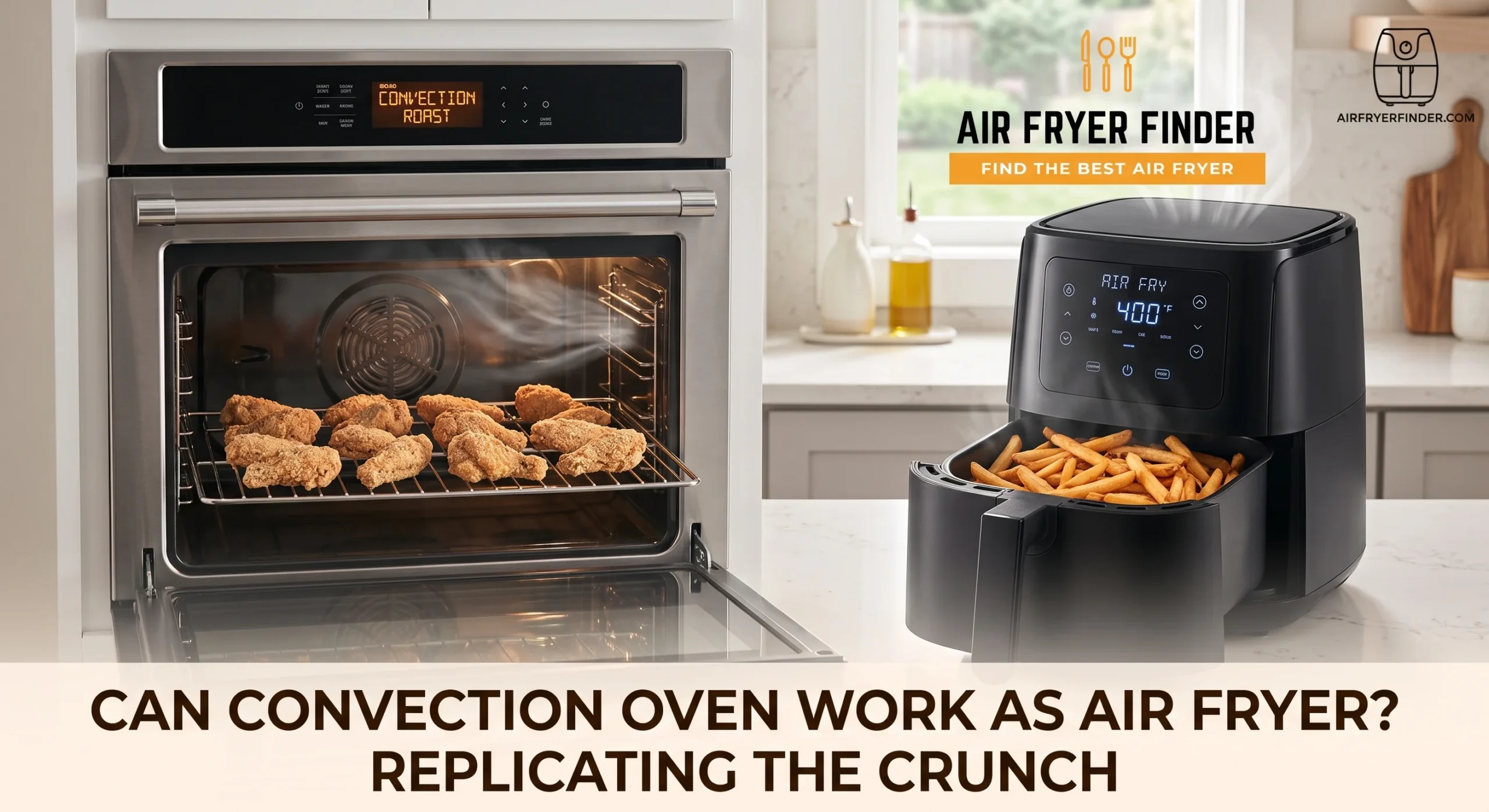
The short answer: Yes, a convection oven can absolutely work as an air fryer. Both appliances use the exact same underlying technology: a heating element combined with a fan that circulates hot air around your food. However, because air fryers are smaller and have more intense airflow, they cook faster and produce a crispier exterior than a standard full-sized convection oven.
If you already own a convection oven, you can replicate the air frying process with a few minor adjustments to your cooking method. Here is exactly how they compare and how to get that signature “air fried” crunch without buying another appliance.
The Science: Convection Ovens vs. Air Fryers
Despite the clever marketing behind air fryers, they do not actually “fry” food. They bake it.
- How a Convection Oven Works: It uses a fan located at the back of the oven to blow hot air around the oven cavity. This prevents hot and cold spots, ensuring even baking and roasting.
- How an Air Fryer Works: It is essentially a countertop convection oven on steroids. The heating element is closer to the food, and the fan is significantly larger and more powerful relative to the small cooking chamber. This creates a miniature wind tunnel of intense, rapid heat.
Key Differences
| Feature | Air Fryer | Convection Oven |
| Cooking Speed | Extremely fast (requires zero to minimal preheating) | Slower (requires 10-15 minutes to preheat) |
| Crispiness Level | Maximum crunch due to rapid, concentrated airflow | Moderate crunch; excellent for even browning |
| Capacity | Limited (typically 2 to 8 quarts); hard to cook for a crowd | Large; can easily fit whole turkeys, multiple baking sheets, or large pizzas |
| Counter Space | Requires dedicated countertop real estate | Built-in or functions as a standard large appliance |
| Energy Usage | Low (heats a tiny space) | High (heats a massive cavity) |
How to Use Your Convection Oven as an Air Fryer
If you want to use your convection oven for air frying, you cannot simply toss a baking sheet in and hit “convection bake.” To get air fryer results, follow these four steps:
- Use a Dark, Perforated Pan or Wire Rack: Air fryers use a basket with holes so air hits the bottom of the food. Replicate this by placing your food on a wire cooling rack set inside a rimmed baking sheet. This allows the hot air to circulate 360 degrees around the food.
- Increase the Heat: Convection ovens lose heat faster when opening the large door. Set your convection oven 25°F to 50°F higher than an air fryer recipe suggests to compensate for the larger space.
- Choose “Convection Roast” over “Convection Bake”: If your oven has both settings, pick Roast. Convection Bake slows down the fan for delicate items like cakes. Convection Roast runs the fan at higher speeds, mimicking the intense blast of an air fryer.
- Use Oil Strategically: Toss your wings, fries, or vegetables in a light coating of oil (or use an oil spray). The oil reacts with the circulating high heat to create the crispy Maillard reaction on the surface.
Pros and Cons of Using Your Convection Oven
The Advantages:
- Zero Counter Clutter: You save valuable kitchen space by not buying a single-use gadget.
- Batch Cooking: You can air fry enough wings for a crowd all at once on two large baking sheets, rather than doing four tiny batches in a standard air fryer.
The Drawbacks:
- Longer Wait Times: Preheating a massive oven takes significantly longer than firing up a 4-quart air fryer.
- Mess and Cleanup: Dripping grease from a wire rack onto a baking sheet can cause smoke in a large oven and is generally harder to clean than a non-stick air fryer basket.
The Verdict: Do You Still Need an Air Fryer?
If your primary goal is cooking massive batches of food or you want to keep your countertops completely clear, your convection oven is more than capable of handling “air frying” duties.
However, if you are looking for maximum convenience, speed, and the crispiest possible results for weeknight dinners, a dedicated air fryer is still a worthy investment. The concentrated heat simply cannot be perfectly matched by a full-sized oven.
Frequently Asked Questions: Convection Ovens vs. Air Fryers
1. Is an air fryer really just a small convection oven?
Yes. Both appliances operate on the exact same principle: convection heating. They use a heating element paired with a fan to circulate hot air around the cooking chamber. The primary difference is scale. An air fryer is a compact, high-powered version that moves air more rapidly across a smaller area, resulting in faster cooking times.
2. Can I use air fryer recipes in a convection oven?
You can easily adapt air fryer recipes for a convection oven. Because a full-sized oven has a much larger cavity, you will typically need to increase the cooking temperature by 25°F to 50°F and add 5 to 10 minutes to the total cooking time to account for slower heat recovery and preheating.
3. Does food get as crispy in a convection oven as it does in an air fryer?
Food will get crispy in a convection oven, but it rarely reaches the extreme crunch of a dedicated air fryer. The air fryer’s smaller chamber creates a more intense, concentrated “wind tunnel” effect that extracts moisture from the surface of the food much faster than a standard oven fan can.
4. Should I use the ‘Convection Bake’ or ‘Convection Roast’ setting?
Always choose Convection Roast if your oven has both options. Convection bake uses a lower fan speed to prevent delicate baked goods from blowing over. Convection roast utilizes the highest fan speed and alternating heating elements, which closely mimics the intense airflow of an air fryer.
5. What is the best pan to use to replicate an air fryer?
To get the best results, use a wire cooling rack placed inside a rimmed aluminum baking sheet (half sheet pan). This elevates the food, allowing the oven’s convection fan to circulate hot air underneath the ingredients, mimicking the 360-degree airflow of an air fryer basket.
6. Do I still need to flip my food in a convection oven?
Yes. Even with a wire rack and an active convection fan, flipping your food halfway through the cooking process ensures the most even browning. The heat source in most ovens still radiates heavily from the top or bottom, so turning the food prevents one side from overcooking.
7. Why is my convection oven smoking when I try to air fry?
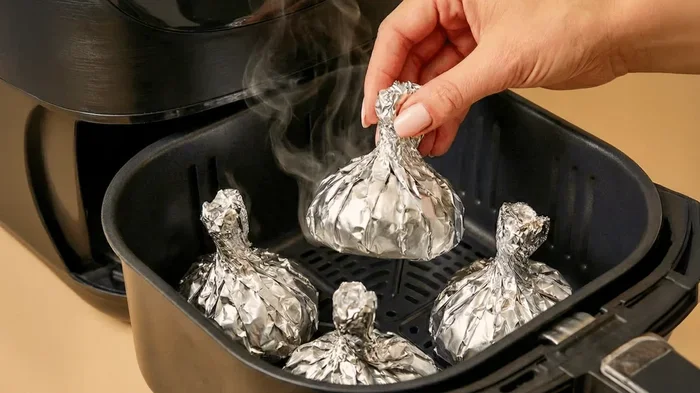
Smoking occurs when grease or oil drips from your food onto the hot baking sheet or oven floor. To prevent this, line the bottom baking sheet (under your wire rack) with aluminum foil to catch drippings, or place a few slices of bread or a splash of water in the bottom tray to absorb the rendering fat before it burns.
8. Which appliance uses more electricity?
A convection oven uses significantly more electricity. A standard electric oven draws between 2,000 and 5,000 watts to heat a massive cavity. A typical air fryer draws only 1,500 to 1,700 watts and cooks the food in a fraction of the time, making it much more energy-efficient for small meals.
9. Is food cooked in a convection oven just as healthy as air-fried food?
Yes, the health benefits are identical. Both methods allow you to achieve a crispy texture using a fraction of the oil required for deep frying (usually just a light spray or 1-2 teaspoons). The nutritional profile of the food remains the same regardless of which convection appliance you use.
10. Can I cook wet-battered foods in a convection oven?
No. Just like an air fryer, a convection oven cannot handle wet batters (like tempura or beer batter). The powerful fan will blow the wet batter off the food, creating a massive mess, and the batter will not set fast enough to create a crust. Stick to dry rubs, marinades, or breaded coatings (like panko or seasoned flour).