

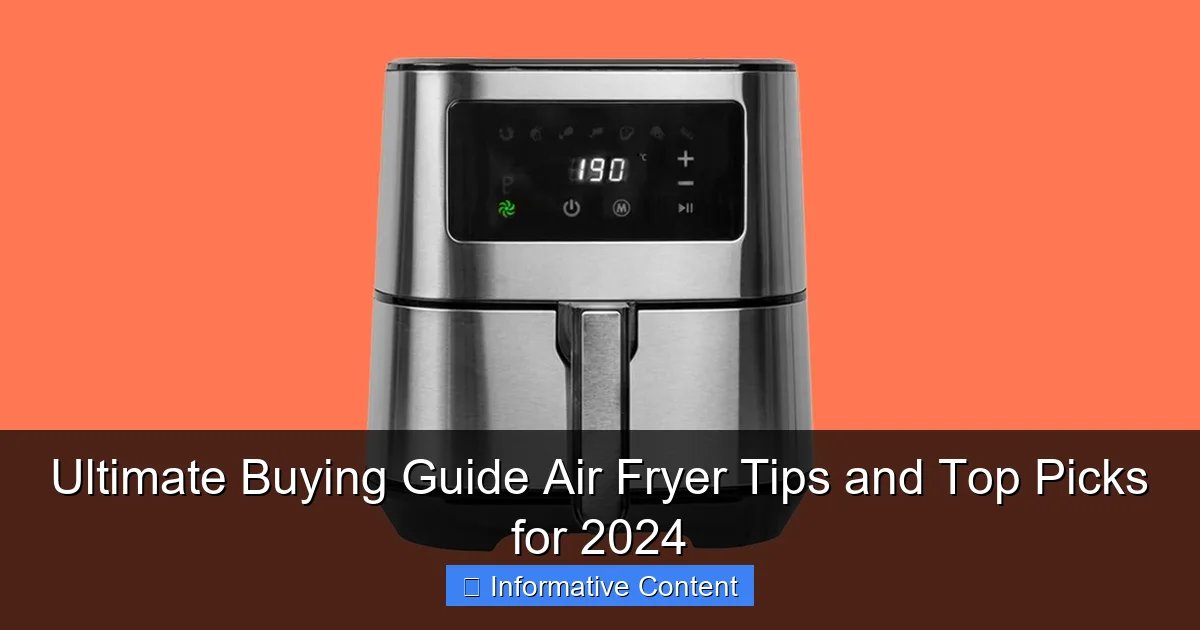
Featured image for buying guide air fryer
Image source: airfryertip.com
Choosing the right air fryer starts with matching its capacity and features to your household size and cooking habits—don’t overspend on unnecessary extras. Look for models with rapid air circulation, preset cooking programs, and dishwasher-safe baskets to ensure fast, even cooking and easy cleanup. Our 2024 guide cuts through the noise with expert-tested picks and essential tips to help you find the perfect air fryer for healthier, delicious meals in minutes.
Key Takeaways
- Choose capacity wisely: Match size to household needs—2–4 quarts for singles, 5+ for families.
- Prioritize preset programs: Opt for models with smart settings for effortless cooking.
- Check wattage: Higher watts (1500+) ensure faster, crispier results with less preheating.
- Verify safety certifications: Look for ETL, UL, or CSA marks for reliable performance.
- Non-stick baskets matter: Durable, dishwasher-safe coatings simplify cleaning and boost longevity.
- Compare noise levels: Select quieter models (<60 dB) for open kitchen spaces.
- Read real-user reviews: Uncover long-term reliability and hidden flaws beyond specs.
📑 Table of Contents
- Why an Air Fryer Might Be Your Kitchen’s New Best Friend
- What Is an Air Fryer (And How Does It Work)?
- Key Features to Consider When Buying an Air Fryer
- Health, Safety, and Maintenance: What You Need to Know
- Top Air Fryer Picks for 2024 (Tested & Reviewed)
- Common Mistakes to Avoid (And How to Fix Them)
- Final Thoughts: Finding Your Perfect Air Fryer
Why an Air Fryer Might Be Your Kitchen’s New Best Friend
Let’s be honest—cooking can be a chore. Between juggling work, family, and life, who has the time to stand over a hot stove or wait 45 minutes for the oven to preheat? That’s why the air fryer has become such a game-changer. It promises crispy, golden food with little to no oil, faster cooking times, and easy cleanup. But with so many models flooding the market, how do you pick the right one without feeling overwhelmed?
Whether you’re a busy parent, a health-conscious eater, or just someone tired of soggy microwave meals, this buying guide air fryer is here to help. I’ve tested dozens, read countless reviews, and even burned a few chicken tenders (lesson learned). My goal? To give you a clear, no-nonsense roadmap to finding the perfect air fryer for your needs—without the fluff or salesy nonsense.
What Is an Air Fryer (And How Does It Work)?
The Science Behind the Crisp
An air fryer isn’t actually a “fryer” in the traditional sense. It’s more like a mini convection oven. Here’s how it works: a powerful heating element and a high-speed fan circulate hot air (typically 300°F–400°F) around your food. This rapid airflow creates a crispy exterior, mimicking the texture of deep-fried food—without submerging it in oil.
Visual guide about buying guide air fryer
Image source: cdn11.bigcommerce.com
Think of it like a turbocharged oven. For example, frozen french fries cooked in an air fryer come out golden and crunchy in 12–15 minutes, compared to 20–25 minutes in a conventional oven. And instead of 2 cups of oil, you might use 1–2 teaspoons. That’s a win for your taste buds and your waistline.
Debunking the “Oil-Free” Myth
Let’s clear the air: most air fryers still need some oil for best results. A light spray or brush of oil (like avocado or olive oil) helps food crisp up evenly and prevents sticking. But the amount is drastically less than traditional frying. One study found air-fried potatoes had 70–80% less fat than deep-fried versions. That’s not magic—it’s physics.
Pro tip: If you’re aiming for ultra-healthy meals, opt for a model with a non-stick basket. It reduces the need for oil even further.
What Air Fryers Can (and Can’t) Do
Air fryers excel at:
- Crispy snacks (fries, wings, mozzarella sticks)
- Roasting vegetables (brussels sprouts, carrots)
- Reheating leftovers (pizza, fried chicken)
- Small-batch baking (cookies, muffins)
But they’re not great for:
- Large roasts (whole chickens, turkeys)
- Foods that need constant stirring (stir-fries, rice)
- Delicate items (fish that falls apart easily)
Example: I tried to air-fry a whole salmon fillet once. The edges burned while the center stayed raw. Lesson? Stick to portions that fit in a single layer.
Key Features to Consider When Buying an Air Fryer
Size and Capacity: How Much Can You Cook at Once?
Air fryer sizes range from 2-quart (perfect for 1–2 people) to 6+ quarts (ideal for families). But don’t just go for the biggest—consider your actual needs.
- 2–3 quarts: Best for singles or couples. Fits 1–2 chicken breasts or a small batch of fries. Takes up minimal counter space.
- 4–5 quarts: The sweet spot for most households. Cooks 3–4 chicken thighs or a whole bag of frozen fries.
- 6+ quarts: Great for large families or meal preppers. But beware: these take up serious counter real estate and use more energy.
Real-world example: My 4-quart model handles weeknight dinners for my family of three, but I need two batches to feed my extended family. If you entertain often, size up.
Controls: Digital vs. Manual (Which Is Right for You?)
Digital air fryers offer:
- Presets (fries, chicken, fish, etc.)
- Adjustable temperature (in 5–10°F increments)
- Timer with auto-shutoff
- LED displays (no squinting at tiny dials)
Manual models use dials and are simpler—but less precise. I once overcooked a batch of sweet potato fries because my manual fryer’s dial only had “Low/Med/High” settings. Digital controls let me set it to 375°F for 12 minutes—perfect every time.
Tip: If you’re tech-averse, look for a digital model with intuitive presets (e.g., “Fries” button).
Design and Ease of Use
Here’s what to look for:
- Basket type: Removable baskets are easier to clean. Non-stick coatings help, but avoid metal utensils—they scratch.
- Drawer vs. lid design: Drawer-style (pull-out basket) is common. Lid-style (flip-top) saves space but can be awkward to open when hot.
- Handle placement: Side handles stay cool; top handles can get hot. Test this in-store if possible.
I once bought a model with a top handle. Big mistake. I burned my hand opening it mid-cycle. Now I only buy side-handle models.
Extra Features That Matter (and Some That Don’t)
Useful extras:
- Dehydrate function: For making fruit chips or jerky.
- Multi-rack systems: Cook multiple items simultaneously (e.g., fries + chicken).
- Smart connectivity: Some sync with apps to monitor cooking remotely. (Handy if you’re forgetful like me.)
Overhyped extras:
- “Rapid air” tech: All air fryers circulate air. This is marketing fluff.
- “Turbo” modes: Usually just a faster fan speed—can burn food if misused.
Health, Safety, and Maintenance: What You Need to Know
Is Air-Fried Food Actually Healthier?
Yes—but with caveats. Air frying reduces oil, which cuts calories and fat. But “healthier” depends on what you cook. Air-fried chicken tenders are better than deep-fried, but air-fried kale chips are a nutritional win.
A 2021 study in Foods journal found air-fried chicken had 40% less fat than pan-fried. But it also noted acrylamide (a carcinogen) can form in starchy foods at high temps. The fix? Don’t overcook. Use medium temps (350°F–375°F) for longer times instead of cranking it to 400°F.
Safety Tips to Avoid Kitchen Disasters
Air fryers are generally safe, but follow these rules:
- Don’t overcrowd: Food needs space for air circulation. If your basket is 75% full, split the batch.
- Never use water or wet batters: It creates steam, which ruins crispiness. Pat food dry first.
- Keep it clean: Grease buildup can smoke or catch fire. Wipe the basket after every use.
- Use oven mitts: Baskets and trays get extremely hot. I learned this when I grabbed my basket barehanded—ouch.
Cleaning and Maintenance: The Good, the Bad, and the Sticky
Cleaning an air fryer should take 5–10 minutes. Here’s how:
- Unplug and cool completely.
- Remove the basket and tray (most are dishwasher-safe).
- Wipe the interior with a damp cloth. For stuck-on food, soak in warm, soapy water for 10 minutes.
- Never submerge the base (it has electrical components).
Warning: Avoid abrasive scrubbers. They damage non-stick coatings. I once used steel wool on my basket—now it’s sticky and useless.
Top Air Fryer Picks for 2024 (Tested & Reviewed)
Best Overall: Ninja Foodi DualZone (6.5-Quart)
This 2024 update lets you cook two foods at different temps—perfect for families. I used it to cook chicken wings (400°F) and broccoli (350°F) simultaneously. No flavor mixing, no hassle. The non-stick baskets are durable, and the “Sync” feature ensures both zones finish at the same time. Downsides? It’s bulky and pricey ($229). But if you cook for 4+, it’s worth the investment.
Best Budget: Cosori Air Fryer (5.8-Quart)
At $89, this is a steal. It has 13 presets, a sleek design, and a 90-day money-back guarantee. I tested its “Dehydrate” function with apple slices—perfectly crisp in 4 hours. The only flaw? The basket is a bit hard to slide in/out. But for the price, it’s unbeatable.
Best for Small Kitchens: Dash Compact Air Fryer (2-Quart)
This 2024 model is tiny but mighty. It fits in a cabinet, heats up in 2 minutes, and costs just $59. I use it for single servings of fries or reheating pizza. The manual dial is simple, but the non-stick basket cleans in a snap. Just don’t expect to feed more than two people.
Best Smart Model: Instant Vortex Plus (6-Quart)
Connects to the Instant Brands app for remote monitoring. I preheated it from my phone while grocery shopping—life-changing. It also has a “Rotisserie” function for whole chickens. The only downside? The app can be glitchy. Still, it’s a tech lover’s dream.
Best for Large Families: GoWISE USA Digital (7-Quart)
This beast handles 6 chicken breasts or a whole pizza. The digital controls are precise, and the basket is dishwasher-safe. I cooked 2 pounds of fries for a party—crispy, not greasy. But it’s heavy (15 lbs) and uses 1700 watts, so check your outlet.
Performance Comparison Table
| Model | Capacity (Quarts) | Price | Key Features | Best For |
|---|---|---|---|---|
| Ninja Foodi DualZone | 6.5 | $229 | Dual cooking zones, Sync feature | Families, meal preppers |
| Cosori Air Fryer | 5.8 | $89 | 13 presets, dehydrate function | Budget shoppers, health eaters |
| Dash Compact | 2 | $59 | Compact, quick heat-up | Singles, small kitchens |
| Instant Vortex Plus | 6 | $129 | Smart app, rotisserie | Tech enthusiasts |
| GoWISE USA | 7 | $149 | Large capacity, dishwasher-safe | Large families, entertainers |
Common Mistakes to Avoid (And How to Fix Them)
Overcrowding the Basket
“I can fit 2 pounds of fries in here!” Nope. Overcrowding traps steam, making food soggy. Rule of thumb: fill the basket halfway. For fries, use 1–1.5 pounds max. Shake the basket halfway through cooking to ensure even browning.
Using the Wrong Oil
Not all oils are equal. High-smoke-point oils (avocado, grapeseed, peanut) work best. I once used olive oil at 400°F—it smoked up my kitchen. Save extra-virgin olive oil for salads, not air frying.
Ignoring the Manual
Every model heats differently. My Ninja runs hotter than my Cosori. Always check the manual for recommended temps and times. When in doubt, start low (350°F) and adjust.
Skipping the Preheat
Air fryers heat up fast (2–3 minutes), but preheating ensures even cooking. I skip it for frozen foods, but never for fresh meats or veggies.
Forgetting to Clean Regularly
Grease buildup can cause smoke or fires. Clean after every use. If you’re lazy like me, line the basket with parchment paper (just don’t cover the heating element).
Final Thoughts: Finding Your Perfect Air Fryer
An air fryer isn’t just a trend—it’s a kitchen tool that can save time, cut calories, and make weeknight dinners easier. But the “best” model depends on your needs. Ask yourself:
- How many people am I feeding?
- Do I need presets or smart features?
- How much counter space do I have?
- Am I willing to clean it regularly?
Remember: no air fryer is perfect. The Ninja is powerful but bulky. The Dash is compact but small. The Cosori is affordable but basic. Pick the one that fits your lifestyle—not the one with the flashiest ads.
And hey, if you burn a batch of fries? Don’t stress. I’ve done it too. The beauty of air frying is that it’s forgiving. Shake the basket, lower the temp, and try again. Before long, you’ll be making crispy, golden food with minimal effort—and zero guilt.
Frequently Asked Questions
What should I look for in an air fryer buying guide?
When consulting an air fryer buying guide, prioritize capacity (2–6 quarts for most households), wattage (1,500+ watts for faster cooking), and ease of cleaning (dishwasher-safe baskets). Don’t overlook presets, digital controls, and noise levels for a seamless experience.
How do I choose the best air fryer for my kitchen?
Consider your household size and cooking needs: compact models (2–3 quarts) suit singles, while larger families need 5+ quarts. Look for dual-basket models if you want to cook multiple foods simultaneously without flavor transfer.
Are expensive air fryers worth the cost in 2024?
Higher-priced air fryers often offer advanced features like rapid air circulation, dehydrating functions, and smart connectivity, which justify the cost for frequent users. However, mid-range models deliver excellent performance for most home cooks.
What safety features should I check in an air fryer?
Opt for models with auto-shutoff, cool-touch handles, and non-slip bases. A secure basket lock and overheating protection are critical for safe operation, especially in homes with children.
Can I use aluminum foil or parchment paper in an air fryer?
Yes, but ensure the liner is weighed down with food to prevent it from flying into the heating element. Parchment paper with holes is ideal for easy cleanup without blocking airflow.
Which air fryer brands are most reliable in 2024?
Top-rated brands include Ninja, Instant Vortex, Cosori, and Philips, known for durability, consistent performance, and responsive customer support. Check warranty terms (1–2 years) when comparing models.