
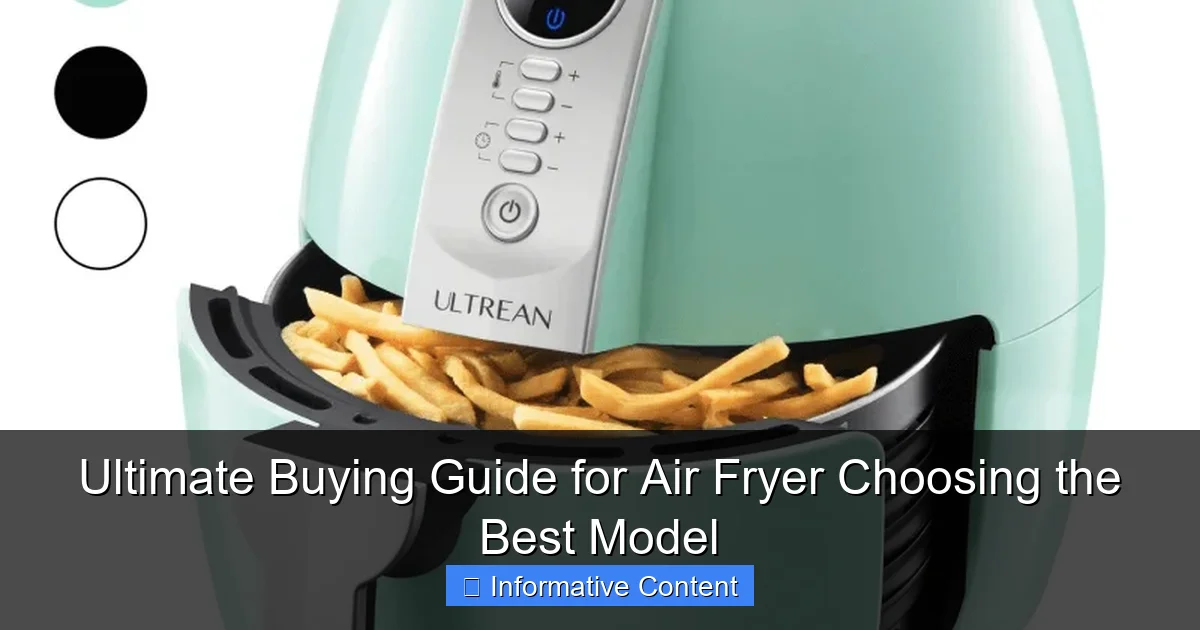
Featured image for buying guide for air fryer
Image source: airfryerguide.com
Choosing the right air fryer starts with matching its capacity and features to your cooking needs and kitchen space. Look for models with adjustable temperature controls, rapid air circulation, and easy-to-clean components to ensure crispy, healthy meals with minimal effort. This guide breaks down top-rated options, key specs, and budget-friendly picks to help you make a confident, informed decision.
Key Takeaways
- Prioritize capacity: Choose size based on household needs, from 2L for singles to 6L+ for families.
- Check wattage: Higher wattage (1500W+) ensures faster, crispier results with less preheating.
- Opt for presets: Built-in programs simplify cooking common foods like fries, chicken, and fish.
- Verify safety: Look for auto-shutoff, cool-touch handles, and non-slip feet for secure operation.
- Assess ease of cleaning: Non-stick baskets and dishwasher-safe parts save time and effort.
- Compare noise levels: Quieter models (under 60dB) improve kitchen comfort during use.
📑 Table of Contents
- Why an Air Fryer Might Be the Kitchen Upgrade You’ve Been Missing
- How Air Fryers Work: The Science Behind the Crunch
- Key Features to Consider When Buying an Air Fryer
- Types of Air Fryers: Finding the Right Fit for Your Kitchen
- Top Brands and Models: What Real Users Say
- Common Mistakes to Avoid (And How to Fix Them)
- Final Thoughts: Making the Right Choice for Your Kitchen
Why an Air Fryer Might Be the Kitchen Upgrade You’ve Been Missing
Let’s be honest: cooking healthy meals without sacrificing flavor is a constant balancing act. We all love crispy fries, golden chicken tenders, and crunchy veggie nuggets—but the idea of deep-frying? That comes with a side of guilt, not to mention smoke alarms and greasy stovetops. That’s where the air fryer swoops in like a culinary superhero.
When I first bought my air fryer, I was skeptical. Could a small countertop gadget really deliver that deep-fried crunch without the oil? After burning a batch of frozen wings (rookie mistake) and then nailing a batch of sweet potato fries so crispy they rivaled my favorite diner’s, I was hooked. Now, I use it almost daily—not just for “frying,” but for roasting, baking, reheating, and even dehydrating. If you’re on the fence about buying one, this guide is for you. Whether you’re a busy parent, a health-conscious eater, or just someone who hates scrubbing greasy pans, I’ll walk you through everything you need to know to pick the best air fryer for your needs—no fluff, no hype, just real talk.
How Air Fryers Work: The Science Behind the Crunch
What’s Happening Inside the Basket?
Air fryers don’t actually fry. Instead, they use rapid air circulation to cook food. A heating element warms the air, and a powerful fan blows it around the food at high speed. This creates a convection effect—similar to a convection oven—that browns and crisps the outside while cooking the inside evenly. Think of it like a mini tornado of hot air hugging your food from all angles.

Visual guide about buying guide for air fryer
Image source: thefamilyneed.com
For example, when you cook frozen mozzarella sticks in an air fryer, the hot air sears the breading instantly, locking in moisture and creating a crispy shell—without submerging them in oil. Most models use 70–80% less oil than traditional frying, which cuts fat and calories significantly. A 2020 study in Food Science & Nutrition found that air-fried chicken had 50% less fat than deep-fried versions, with similar texture and flavor.
Why It’s Not Just for “Frying”
One common misconception? Air fryers are only for snacks. Not true! They’re incredibly versatile. I’ve used mine to:
- Roast a whole chicken (crispy skin, juicy meat)
- Bake cookies (yes, chocolate chip—crispy edges, soft centers)
- Reheat pizza (crispy crust, no soggy microwave mess)
- Dehydrate apple chips (perfect for kids’ snacks)
- Even cook frozen salmon fillets (flaky, moist, ready in 12 minutes)
The key is understanding your model’s temperature range (typically 175°F–400°F) and how to adjust cook times. A good air fryer gives you the control of an oven with the speed of a microwave—without sacrificing texture.
Key Features to Consider When Buying an Air Fryer
Capacity: How Much Can You Cook at Once?
Size matters—especially if you’re feeding a family or meal prepping. Air fryer capacities are measured in quarts (or liters), but what really counts is how much usable space you have in the basket.
- 2–3.5 quarts: Best for singles, couples, or small portions. Fits 1–2 servings of fries or a small chicken breast. Great for small kitchens.
- 4–5.8 quarts: Ideal for families of 3–4. Can handle a whole 3-lb chicken, a 12-inch pizza, or 2 lbs of fries. This is the sweet spot for most households.
- 6+ quarts: For large families, meal preppers, or those who love entertaining. Some models (like dual-basket air fryers) let you cook two foods at once—like chicken and veggies—on different settings.
Pro tip: Measure your countertop space before buying. A 5.8-quart model might look compact in the store, but it can dominate a small kitchen.
Basket Type: Non-Stick vs. Stainless Steel
The basket is where the magic happens. Here’s what to look for:
- Non-stick coating: Easy to clean (usually dishwasher-safe), but can scratch over time. Avoid metal utensils. Some brands use ceramic or diamond-infused coatings for extra durability.
- Stainless steel: More durable and doesn’t peel, but food sticks more. Requires oiling or parchment liners. Great for high-heat cooking (like roasting nuts).
- Removable inner basket: A game-changer! Lets you shake or flip food without removing the entire unit. Found in models like the Ninja Foodi DualZone.
I once ruined a non-stick basket by using a metal spatula. Lesson learned: always check the manual for utensil recommendations.
Controls: Digital vs. Manual
- Digital touchscreens: Offer precision (e.g., 5° increments), preset programs (fries, chicken, fish), and timers. Great for beginners. But they can be finicky—my old model glitched in humidity.
- Manual dials: Simpler, more durable, and work in power outages. Less precise (e.g., 50° increments), but perfect for those who hate tech.
If you’re tech-averse, go for a model with tactile buttons (not touch-sensitive) and clear labels. I love my dial-controlled air fryer—no app updates, no Wi-Fi glitches.
Additional Features Worth the Upgrade
- Dual baskets: Cook two foods at once (e.g., chicken + broccoli) with separate controls. Saves time, but takes up more space.
- Dehydrator function: For making jerky, fruit chips, or herbs. Rare but useful if you love DIY snacks.
- Smart features: Wi-Fi/app control (e.g., Ninja Foodi Smart XL). Convenient, but overkill for most. Also, not worth the extra cost if you’re not tech-savvy.
- Accessories: Some models come with racks, skewers, or grill pans. Check if they’re included or sold separately.
Types of Air Fryers: Finding the Right Fit for Your Kitchen
1. Basket-Style Air Fryers
The classic design. Food sits in a perforated basket, and hot air circulates from below and above. Pros:
- Affordable ($50–$150)
- Compact and easy to store
- Great for beginners
Cons:
- Smaller capacity
- Food can overcrowd (reducing crispiness)
- Less versatile for large meals
Best for: Singles, couples, or those with limited space. Example: Cosori Air Fryer Max XL (5.8 quarts).
2. Oven-Style (Toaster Oven) Air Fryers
Combines an air fryer with a convection toaster oven. Features:
- Larger cooking space (6–12 quarts)
- Multiple racks for layering
- Functions: bake, broil, toast, roast, dehydrate
Pros:
- Replace multiple appliances
- Cook full meals (e.g., chicken + veggies on different racks)
- Better for large batches
Cons:
- Bulky (takes up counter space)
- Heavier and harder to move
- Higher price ($150–$400)
Best for: Families or meal preppers. Example: Ninja Foodi Max XL (10 quarts).
3. Dual-Basket Air Fryers
Two separate baskets with independent controls. Pros:
- Cook two foods simultaneously (e.g., fries + chicken)
- Different temps/times for each basket
- No flavor transfer
Cons:
- Expensive ($200–$300)
- Large footprint
- Smaller individual baskets (e.g., 4 quarts total)
Best for: Busy households or entertainers. Example: Ninja Foodi DualZone.
4. Paddle-Style (Rotating) Air Fryers
Uses a paddle to stir food automatically (like a slow cooker). Pros:
- Even cooking with no shaking required
- Great for stir-fries or sauces
Cons:
- Food can get mushy (no crispiness)
- Not ideal for fries or wings
- Rare and niche
Best for: Asian cuisine lovers. Example: Philips AirFryer XXL with Rapid Air Technology.
Top Brands and Models: What Real Users Say
Budget-Friendly Picks ($50–$100)
- Cosori Air Fryer Max XL: 5.8 quarts, 11 presets, non-stick basket. Users love its even cooking and easy cleanup. One reviewer noted: “I’ve cooked everything from frozen dumplings to salmon—no issues.”
- Dash Compact Air Fryer: 2.6 quarts, perfect for small kitchens. Great for reheating leftovers. Downsides? No presets, and the basket is hard to clean.
Mid-Range Winners ($100–$200)
- Ninja Air Fryer (AF101): 4 quarts, 4 presets, stainless steel basket. Praised for durability and consistent results. A parent said: “My kids’ chicken nuggets come out crispy, not soggy.”
- Instant Vortex Plus: 6 quarts, dual racks, dehydrator function. Users love the versatility. One tip: “Use parchment liners—it saves cleanup time.”
Premium Picks ($200+)
- Ninja Foodi DualZone: 8 quarts total, two baskets, 6 functions. A game-changer for multitaskers. A chef reviewer noted: “I can roast a chicken in one basket and bake cookies in the other—genius.”
- Philips Premium AirFryer XXL: 7 quarts, patented starfish design for even airflow. Users rave about its “restaurant-quality crispy skin” on chicken. Downsides: pricey and heavy.
Data Table: Top 5 Air Fryers Compared
| Model | Capacity | Type | Price Range | Key Features | Best For |
|---|---|---|---|---|---|
| Cosori Air Fryer Max XL | 5.8 quarts | Basket | $80–$100 | 11 presets, non-stick basket, dishwasher-safe | Beginners, small families |
| Ninja Foodi DualZone | 8 quarts (4+4) | Dual-basket | $200–$250 | Two independent baskets, 6 cooking functions | Families, multitaskers |
| Instant Vortex Plus | 6 quarts | Oven-style | $120–$150 | Dual racks, dehydrator, rotisserie | Meal preppers, large batches |
| Philips Premium XXL | 7 quarts | Basket | $250–$300 | Starfish design, rapid air circulation | Crispiness enthusiasts |
| Dash Compact | 2.6 quarts | Basket | $50–$70 | Compact, simple controls | Singles, small kitchens |
Common Mistakes to Avoid (And How to Fix Them)
1. Overcrowding the Basket
Air needs space to circulate. Pile food too high, and it steams instead of crisps. Solution: Cook in batches or use a model with a larger basket. For fries, spread them in a single layer—shake halfway through.
2. Forgetting to Preheat
Most air fryers don’t require preheating, but it helps. Cold air = soggy food. Solution: Run the air fryer empty for 3–5 minutes at your target temp before adding food.
3. Skipping the Shake
Food on the bottom gets crispy; food on top doesn’t. Solution: Pause the timer and shake the basket (or flip with tongs) halfway through. Dual-basket models often have a “sync” feature to pause both timers.
4. Using the Wrong Oil
High-smoke-point oils (avocado, canola) work best. Olive oil burns and smokes. Solution: Lightly spray or brush oil—don’t pour. A $10 oil mister is a kitchen essential.
5. Ignoring Maintenance
Grease buildup affects performance. Solution: Clean the basket and pan after every use. For stubborn residue, soak in warm, soapy water. Avoid abrasive scrubbers on non-stick coatings.
Bonus Tip: Read the Manual
Every air fryer is different. My Cosori has a “shake reminder” light; my Ninja has a “keep warm” function. Skipping the manual means missing out on time-saving features.
Final Thoughts: Making the Right Choice for Your Kitchen
Choosing the best air fryer isn’t about finding the “perfect” model—it’s about finding the one that fits your life. If you’re a solo cook who hates cleanup, a compact basket-style air fryer like the Dash might be ideal. If you’re feeding a family of five, a dual-basket or oven-style model will save you hours in the kitchen. And if you’re all about that crispy, golden crunch? A Philips or Ninja with advanced airflow tech will deliver.
Remember: air fryers are tools, not magic wands. They won’t make your cooking effortless, but they will make it healthier, faster, and (dare I say) more fun. I’ve turned my kids into “air fryer taste testers,” and my husband—who once claimed he “hated healthy food”—now asks for air-fried Brussels sprouts. That’s the power of this little machine.
Before you buy, ask yourself:
- How many people am I cooking for?
- What do I cook most often?
- Do I value speed, versatility, or ease of use?
- Can I live with the size and noise level?
Your answers will guide you to the right model. And when you finally hit “add to cart,” you’re not just buying an appliance—you’re investing in better meals, less mess, and more time to enjoy the food (and life) you love. Happy air frying!
Frequently Asked Questions
What should I look for in an air fryer buying guide?
When consulting an air fryer buying guide, prioritize capacity (2–6 quarts for most households), wattage (1,400–1,800W for faster cooking), and preset cooking modes. Also, check for dishwasher-safe parts and compact designs if countertop space is limited.
How do I choose the best air fryer for my kitchen?
Consider your household size (larger families need 5+ quart models) and cooking needs (e.g., dehydrating, baking). Look for digital controls, rapid air circulation technology, and energy efficiency to ensure versatility and consistent results.
Are expensive air fryers worth the investment?
Higher-priced models often offer better build quality, advanced features (like dual baskets or smart connectivity), and longer warranties. However, mid-range options can perform just as well for basic frying, roasting, and reheating tasks.
What safety features should I check before buying an air fryer?
Look for auto-shutoff, cool-touch handles, and non-slip bases to prevent accidents. Some models also include overheat protection, which is critical if you plan to use the air fryer frequently or for long durations.
Can I cook frozen foods in an air fryer without defrosting?
Yes! Air fryers excel at cooking frozen foods like fries, nuggets, or veggies straight from the freezer. Just adjust cooking time by 2–5 minutes and use the “frozen” preset if your model has one.
What’s the difference between basket-style and oven-style air fryers?
Basket models are compact and ideal for small batches, while oven-style air fryers (toaster oven hybrids) offer larger capacities and multi-rack cooking. Choose based on your space and whether you need convection baking or rotisserie functions.