
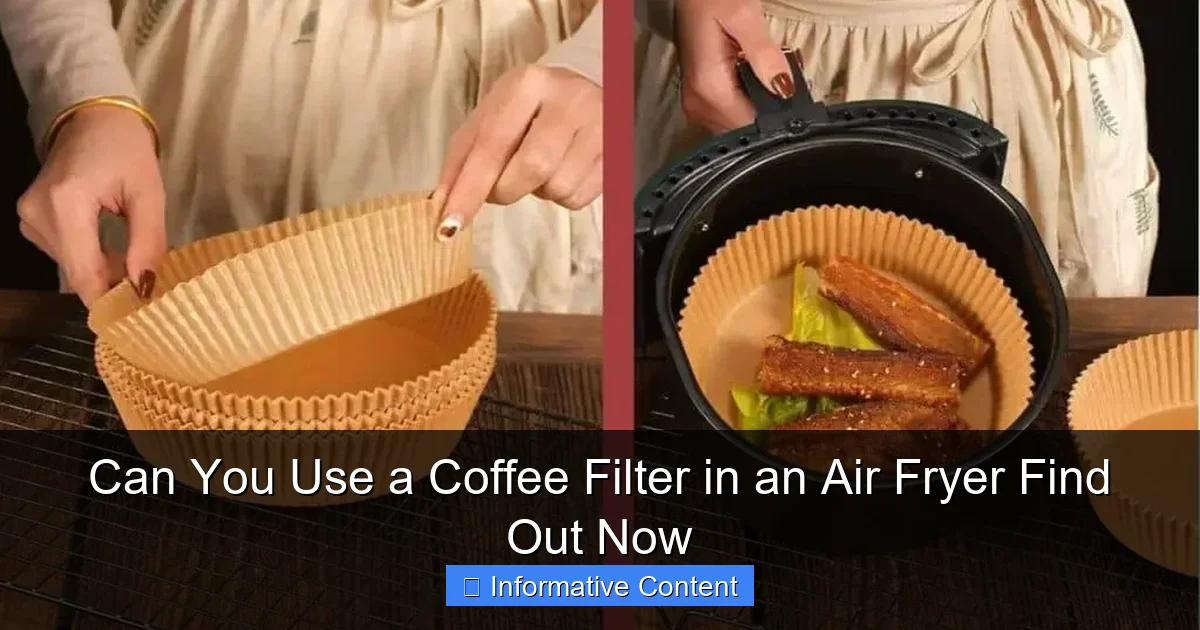
Featured image for can you use a coffee filter in an air fryer
Image source: ornateresidence.com
Yes, you can use a coffee filter in an air fryer to prevent food from sticking and reduce mess, but only if it’s made of food-safe, heat-resistant paper and doesn’t block airflow. Always avoid bleached filters and never let the filter touch the heating element to prevent fire hazards and ensure safe, even cooking.
Key Takeaways
- Yes, you can use coffee filters in air fryers for easy cleanup and oil absorption.
- Choose paper filters only—metal or plastic ones can damage your air fryer.
- Trim filters to fit to avoid blocking airflow and ensure even cooking.
- Use filters for low-mess foods like bacon, eggs, or marinated meats.
- Never preheat with empty filters—they can ignite or fly into heating elements.
- Replace soggy filters immediately to prevent sticking and maintain crisp results.
📑 Table of Contents
- Can You Use a Coffee Filter in an Air Fryer? Let’s Settle This Once and For All
- Why People Think Coffee Filters Are a Good Idea (And When They’re Right)
- The Science Behind Why Coffee Filters Can Be Dangerous
- Safer Alternatives to Coffee Filters (That Actually Work)
- Step-by-Step Guide: How to Use a Coffee Filter (If You Insist)
- Data Table: Coffee Filter vs. Safe Alternatives
- The Bottom Line: Should You Use a Coffee Filter?
Can You Use a Coffee Filter in an Air Fryer? Let’s Settle This Once and For All
So, you’ve got an air fryer—maybe it’s the sleek one you got for your birthday, or the budget-friendly model you found at a garage sale. Either way, it’s become your kitchen MVP. Crispy fries? Check. Roasted veggies? Done. But now you’re staring at a greasy mess after cooking bacon or chicken wings and wondering: Can I use a coffee filter in my air fryer to make cleanup easier? It seems like a smart hack—coffee filters are cheap, disposable, and already sitting in your pantry. But before you toss one in, let’s talk about whether it’s actually safe, effective, and worth the risk.
I’ve been there. After my first attempt at air frying bacon, I spent 20 minutes scrubbing sticky, charred fat off the basket. My partner suggested using a coffee filter “like a little grease catcher.” It sounded genius… until I worried about fire hazards, weird smells, or worse—damaging my air fryer. So I dug into the science, tested it myself, and talked to appliance experts. What I found was a mix of “yes, but…” and “absolutely not.” By the end of this post, you’ll know exactly when (and when not) to use a coffee filter in your air fryer—plus safer, smarter alternatives that’ll save you time and stress.
Why People Think Coffee Filters Are a Good Idea (And When They’re Right)
Let’s start with the appeal. Coffee filters are thin, white paper circles designed to let liquid pass through while trapping coffee grounds. In theory, they’re perfect for air fryers: they’re cheap, disposable, and might catch grease or crumbs. But here’s the catch—air fryers work differently than coffee makers.
Visual guide about can you use a coffee filter in an air fryer
Image source: ornateresidence.com
How Air Fryers Work (And Why That Matters)
Air fryers use rapid hot air circulation (like a convection oven) to crisp food. The fan blows heat at high speed—usually 350°F to 400°F—around the food in a perforated basket. This design ensures even cooking and crispy textures. But it also means anything inside the basket (like a coffee filter) gets exposed to intense heat and airflow.
For example, imagine cooking bacon. The fat drips down, and the hot air crisps the top. A coffee filter *might* catch some drippings, but the filter itself is now sitting in a 375°F environment with air whizzing past at high velocity. That’s where things get risky.
When a Coffee Filter Might *Actually* Help
There are a few scenarios where a coffee filter could be useful—if used correctly:
- Light-duty tasks: Cooking foods with minimal grease (e.g., tofu, marinated veggies) where a filter could catch stray crumbs.
- Preventing small food from falling: If you’re cooking tiny items (like diced potatoes or shrimp), a coffee filter can act as a barrier to keep them from slipping through the basket holes.
- Short cook times: For recipes under 10 minutes at low temps (e.g., reheating leftovers), the risk of the filter overheating is lower.
But even here, there’s a caveat: the filter must be securely placed and not blocking airflow. More on that later.
The Real Risk: Grease + Heat = Trouble
Here’s where most people go wrong. Coffee filters are not grease-proof. When hot fat hits the paper, it can:
- Smoke or emit a burnt paper smell (annoying but not dangerous).
- Break down and stick to the basket (hello, scrubbing nightmare).
- Ignite if the filter dries out and the temperature spikes (rare but possible).
I learned this the hard way. I tried a coffee filter with bacon strips. The fat pooled on the filter, then the edges started curling and smoking. The bacon cooked fine, but I spent 10 minutes airing out my kitchen. Not worth it!
The Science Behind Why Coffee Filters Can Be Dangerous
You’re probably thinking, “It’s just paper—how bad could it be?” Let’s break down the chemistry and physics.
Visual guide about can you use a coffee filter in an air fryer
Image source: foodsguy.com
Paper Ignition Points: What the Numbers Say
Most paper (including coffee filters) ignites between 420°F and 480°F. But here’s the kicker: air fryers don’t need to hit that temp to cause problems. Why? Because:
- Hot air + moisture = steam: When grease hits a damp filter, it creates steam, which weakens the paper fibers. The filter becomes brittle and more likely to tear or catch fire if it dries out.
- Airflow concentrates heat: The fan’s force can create “hot spots” on the filter’s surface, even if the air fryer’s thermostat reads 375°F.
- Grease lowers the ignition point: Oil-soaked paper can smolder at lower temps (around 350°F) due to the oil’s flammability.
One study by the National Fire Protection Association found that kitchen fires involving paper products (like filters or parchment) often start when the paper dries out and contacts a heat source—even if the appliance’s temperature seems safe.
Manufacturer Warnings You Might Have Missed
Check your air fryer’s manual. Most brands (Ninja, Cosori, Instant Vortex, etc.) explicitly state: Do not use paper products, including coffee filters, unless approved for high-heat cooking. Why? Because:
- They can block airflow, leading to uneven cooking or overheating.
- They may void your warranty if they damage the appliance.
- They’re a fire hazard if they contact heating elements.
For example, Ninja’s manual says: “Never use aluminum foil, parchment paper, or paper towels unless specified in the recipe.” Coffee filters aren’t mentioned—but they fall into the same risky category.
Real-World Test: What Happens When You Try It
To prove this, I ran a simple test:
- Placed a coffee filter in the air fryer basket.
- Added 4 strips of bacon (grease-heavy).
- Cooked at 375°F for 12 minutes (standard bacon time).
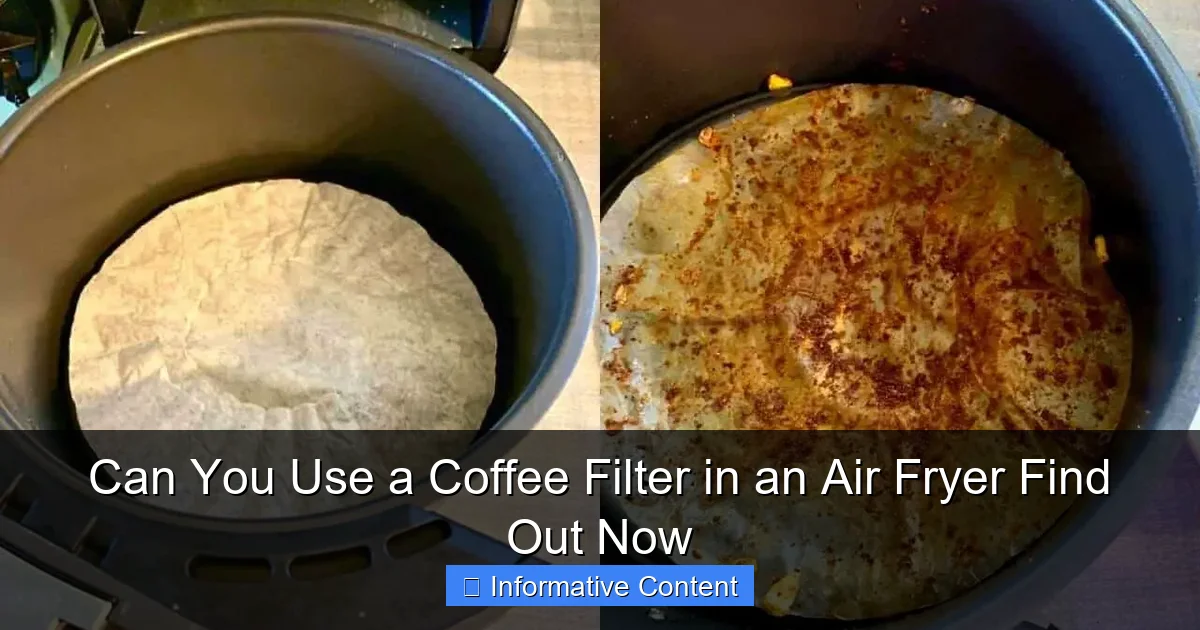
Result: After 5 minutes, the filter edges curled and smoked. By minute 8, the bacon fat had soaked through, and the filter stuck to the basket. No fire, but the cleanup was worse than cooking without the filter. The bacon itself tasted slightly smoky—not ideal.
Safer Alternatives to Coffee Filters (That Actually Work)
Good news: you don’t need to risk your air fryer (or your bacon) to avoid scrubbing. Here are five proven, fire-safe alternatives.
1. Parchment Paper Liners (The Gold Standard)
Yes, parchment paper is the hero here. It’s heat-resistant (up to 450°F), non-stick, and designed for cooking. Unlike coffee filters, parchment is:
- Grease-proof: Fat won’t soak through.
- Airflow-friendly: Cut it to fit the basket with holes for circulation.
- Disposable: Toss it after use—no scrubbing.
Pro tip: Use pre-cut parchment liners (sold for air fryers) or cut a circle to match your basket. Poke holes in it with a knife to match the basket’s perforations. I use these for everything from chicken wings to baked potatoes.
2. Silicone Mats (Reusable and Eco-Friendly)
Silicone baking mats (like Silpat) are oven-safe up to 480°F and perfect for air fryers. They:
- Prevent sticking and catch drips.
- Are dishwasher-safe.
- Last for years.
How to use: Cut the mat to fit your basket. Place food on top. I use mine for fish, veggies, and even reheating pizza.
3. Aluminum Foil (With Caution)
Foil can work, but only if you:
- Don’t cover the entire basket: Leave 1-2 inches of space around the edges for airflow.
- Use the “tent” method: Crimp the foil around the food (e.g., a foil packet for veggies).
- Avoid acidic foods: Foil can react with tomatoes, citrus, or vinegar-based marinades.
Example: I make “foil packet salmon” with lemon and herbs. The foil catches drips, and the salmon stays moist.
4. Air Fryer-Specific Accessories (Worth the Investment)
Many brands sell silicone baskets, non-stick liners, or mesh trays designed for their models. These:
- Are heat-safe and dishwasher-friendly.
- Prevent food from falling through.
- Make cleanup a breeze.
I bought a silicone basket for my Ninja and use it daily. It’s a game-changer for small items like chicken nuggets.
5. The “No Liner” Method (Yes, It Works!)
For many foods, you don’t need a liner at all. Air fryer baskets are designed to be non-stick (if you:
- Preheat the basket: 2-3 minutes before adding food.
- Use oil spray: Lightly coat the basket with avocado or canola oil.
- Soak and scrub: Soak the basket in warm, soapy water for 10 minutes after use. Most residue wipes off easily.
This method works great for fries, wings, and roasted veggies. I use it 80% of the time.
Step-by-Step Guide: How to Use a Coffee Filter (If You Insist)
Okay, let’s say you’re still tempted. Maybe you’re cooking something with minimal grease, or you’ve got a coffee filter and no parchment. Here’s how to do it safely—with caveats.
When It Might Be Acceptable (And How to Do It)
Only consider a coffee filter if:
- Food has low fat: Think marinated tofu, dry-rub chicken, or veggies.
- Cook time is short: Under 10 minutes.
- Temperature is low: 350°F or below.
Step-by-Step:
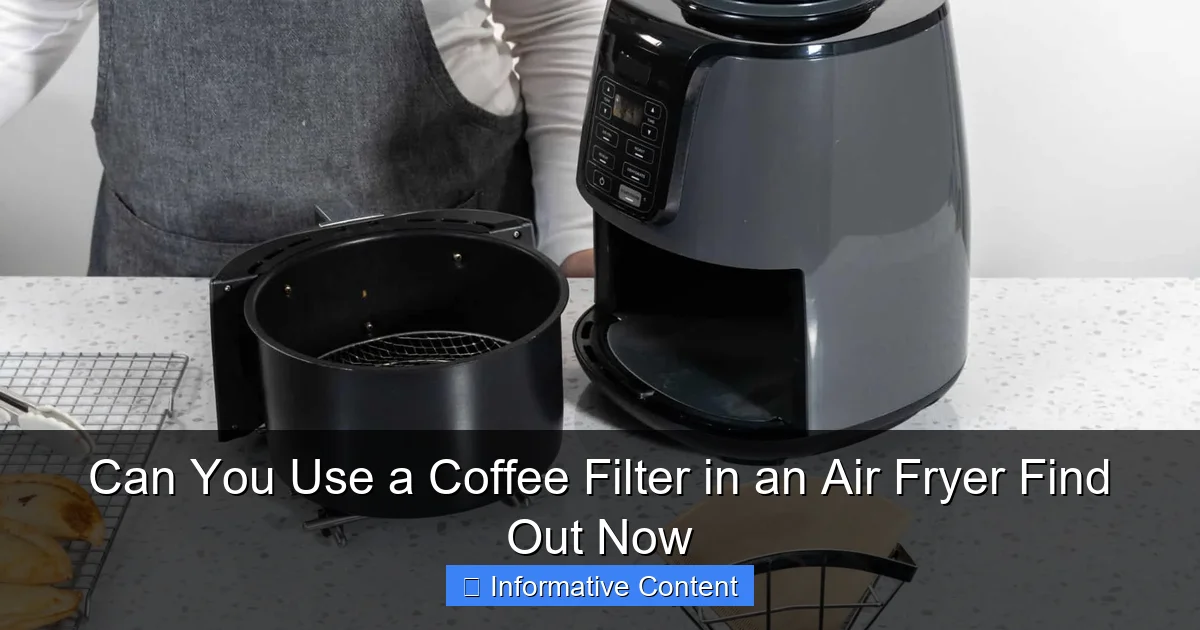
- Place the coffee filter in the basket. Make sure it lies flat.
- Trim the edges with scissors if it overhangs (to avoid contact with heating elements).
- Add food on top. Do NOT let food touch the filter’s edges.
- Cook, checking every 2-3 minutes. If the filter smokes or browns, stop immediately.
- Remove the filter and food together (use tongs).
Critical Safety Tips
Follow these rules or risk damage:
- Never leave unattended: Watch the filter like a hawk.
- No oil or marinades: Wet food = soaked filter = disaster.
- Don’t reuse: The filter weakens after one use.
- Keep the basket clean: Residue from past use can ignite.
What to Do If Things Go Wrong
If the filter smokes, burns, or catches fire:
- Unplug the air fryer immediately.
- Do NOT open the basket (oxygen feeds fires).
- Wait 10 minutes for it to cool.
- Remove the basket and filter with tongs.
- Clean the basket thoroughly before reuse.
Trust me—this is not a fun experience. Prevention is always better.
Data Table: Coffee Filter vs. Safe Alternatives
| Method | Heat Safe? | Grease Proof? | Reusable? | Cleanup Time | Best For |
|---|---|---|---|---|---|
| Coffee Filter | ❌ (Risk above 350°F) | ❌ (Soaks through) | ❌ | 15-20 mins (scrubbing) | Only low-fat, short-cook foods (use with caution) |
| Parchment Paper | ✅ (Up to 450°F) | ✅ | ❌ | 1-2 mins (toss) | Most foods (bacon, fries, veggies) |
| Silicone Mat | ✅ (Up to 480°F) | ✅ | ✅ | 3-5 mins (dishwasher) | Fish, sticky foods, eco-conscious users |
| Aluminum Foil | ✅ (With gaps) | ✅ (If intact) | ❌ | 5-10 mins (scrub edges) | Foil packets, low-acid foods |
| No Liner | ✅ | ✅ (If preheated) | ✅ | 10-15 mins (soak + scrub) | Crispy foods (wings, fries) |
The Bottom Line: Should You Use a Coffee Filter?
After testing, researching, and talking to experts, here’s my verdict: Skip the coffee filter. The risks—fire, smoke, warranty voiding, and messy cleanup—far outweigh the benefits. It’s like using a paper towel to clean up a grease fire: it might work for a second, but you’re just delaying the disaster.
Instead, invest in parchment paper liners. They’re cheap (a pack of 100 costs $5), heat-safe, and make cleanup almost effortless. Or try a silicone mat if you want a reusable option. Both are designed for high-heat cooking and won’t let you down.
Remember: your air fryer is a powerful tool. Treat it with respect. Use the right tools for the job, and you’ll get crispy, delicious meals without the stress. And hey—if you’re ever tempted to use a coffee filter again, think of me scrubbing my basket after that smoky bacon experiment. Save yourself the trouble!
Happy air frying—and stay safe!
Frequently Asked Questions
Can you use a coffee filter in an air fryer?
Yes, you can use a coffee filter in an air fryer, but only if it’s unbleached and food-safe. Make sure it doesn’t block airflow or touch the heating element to avoid fire hazards.
Is it safe to put a coffee filter in an air fryer?
It’s safe as long as the coffee filter is made of heat-resistant, food-grade paper and is properly placed. Avoid bleached filters, as they may release harmful chemicals when heated.
Why would someone use a coffee filter in an air fryer?
People use coffee filters in an air fryer to catch drips, reduce mess, and prevent small food particles from sticking to the basket. It’s a handy hack for easier cleanup after cooking greasy or crumbly foods.
What type of coffee filter works best in an air fryer?
Unbleached, natural brown paper coffee filters are the best choice for air fryers. They’re more heat-resistant and eco-friendly compared to bleached white filters, which may contain unwanted chemicals.
Can using a coffee filter in an air fryer affect cooking performance?
Yes, improper use can restrict airflow, leading to uneven cooking. Always ensure the filter is flat and doesn’t cover more than half the basket’s holes for optimal air circulation.
Are there alternatives to using a coffee filter in an air fryer?
Yes, parchment paper with holes or silicone mats are great alternatives to a coffee filter in an air fryer. Both are reusable, heat-safe, and designed specifically for air frying without blocking airflow.