
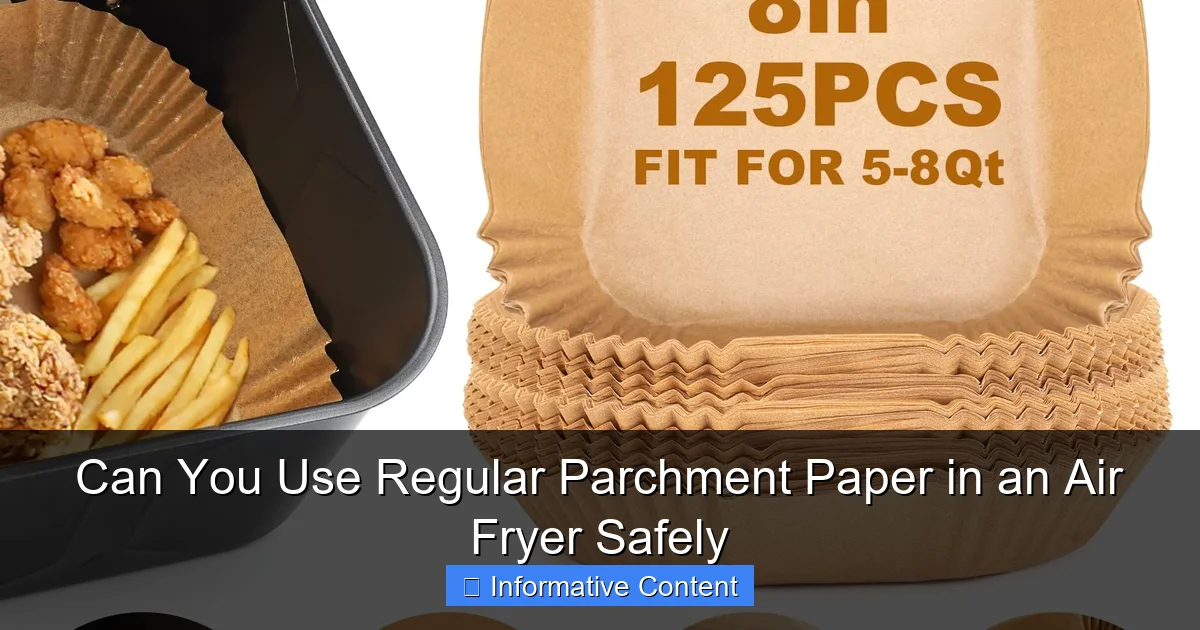
Featured image for can you use regular parchment paper in an air fryer
Image source: m.media-amazon.com
Yes, you can use regular parchment paper in an air fryer, but only if it’s pre-cut to fit the basket and doesn’t block airflow. Avoid letting the paper extend beyond the basket or touch the heating element to prevent burning or fire hazards. For safety and best results, always opt for parchment paper labeled “air fryer-safe” or use alternatives like silicone mats.
Key Takeaways
- Regular parchment paper is safe in air fryers if it doesn’t block airflow.
- Always pre-cut parchment to fit your air fryer basket perfectly.
- Never place parchment near heating elements or vents.
- Use perforated parchment for better air circulation and even cooking.
- Silicone-coated parchment offers extra heat resistance and non-stick benefits.
- Secure parchment with food to prevent it from blowing into heating parts.
📑 Table of Contents
- Can You Use Regular Parchment Paper in an Air Fryer Safely
- Understanding Parchment Paper: What Is It and How Does It Work?
- Can You Use Regular Parchment Paper in an Air Fryer? The Safety Breakdown
- How to Use Regular Parchment Paper in an Air Fryer (The Right Way)
- Alternatives to Regular Parchment Paper: Are They Better?
- Common Mistakes and How to Avoid Them
- Data Table: Parchment Paper Safety and Performance in Air Fryers
- Final Thoughts: Yes, But Do It Right
Can You Use Regular Parchment Paper in an Air Fryer Safely
Let’s be real—air fryers are a kitchen game-changer. They promise crispy, golden results with little to no oil, making them a favorite for weeknight dinners, reheating leftovers, and even baking. But if you’ve ever stood in front of your air fryer basket, parchment paper in hand, wondering whether it’s safe to use, you’re not alone. I’ve been there too, staring at the roll of parchment paper I use for baking, wondering if it’s going to catch fire the second I hit “start.”
The short answer? Yes, you can use regular parchment paper in an air fryer—but with some important caveats. It’s not a free-for-all. There are safety concerns, temperature limits, and best practices that can make the difference between a perfectly cooked meal and a kitchen mishap. In this guide, we’ll dive into everything you need to know about using parchment paper in your air fryer, from the science behind it to practical tips that’ll keep your kitchen safe and your food delicious. Whether you’re a first-time air fryer user or a seasoned pro, this post is for you.
Understanding Parchment Paper: What Is It and How Does It Work?
What Makes Parchment Paper Different?
Parchment paper isn’t just any paper. It’s a special type of cellulose-based paper that’s been treated with silicone or another non-stick coating. This treatment makes it heat-resistant, non-stick, and grease-resistant—perfect for baking cookies, roasting veggies, or lining cake pans. But not all parchment papers are created equal.
Regular parchment paper (the kind you find in most grocery stores) can typically withstand temperatures up to 420°F (215°C). Some heavy-duty or commercial-grade versions go up to 450°F (232°C). This is important because most air fryers operate between 300°F and 400°F—right in the sweet spot for parchment paper.
How Air Fryers Work and Why Parchment Paper Matters
Air fryers use rapid air circulation to cook food from all sides, mimicking the crispiness of deep frying with minimal oil. The hot air flows around the food, and the basket’s design helps create that golden, crunchy exterior. But that same airflow can be a problem if you’re not careful.
When you place a loose sheet of parchment paper in the air fryer basket, the intense airflow can lift the edges or even cause the paper to flutter into the heating element. That’s a fire hazard waiting to happen. So while parchment paper is heat-resistant, its placement and use are critical.
Real-life example: A friend of mine once tossed a full sheet of parchment into her air fryer to make chicken tenders. The edges caught the airflow, curled up, and brushed against the heating coil. The paper didn’t catch fire, but it started smoking—scary and smelly. Lesson learned: never leave loose parchment unattended.
Can You Use Regular Parchment Paper in an Air Fryer? The Safety Breakdown
Temperature Tolerance: Is Your Parchment Paper Up to the Task?
Most air fryers max out at 400°F, and regular parchment paper is rated for up to 420°F. So, in theory, it should be safe—right? Well, yes, but only if used correctly.
The key is ensuring the parchment paper doesn’t come into direct contact with the heating element. Air fryers have a heating coil or rod at the top or bottom, and if parchment paper touches it, it can ignite, even below the paper’s rated temperature. The airflow can create localized hot spots, and paper that’s even slightly singed can start a small flame.
Pro tip: Always check your air fryer’s manual for max temperature settings. If your model goes above 420°F (some do for “sear” or “crisp” modes), avoid using regular parchment paper during those cycles.
Airflow and Placement: The Real Safety Risk
The bigger danger isn’t the heat—it’s the airflow. Air fryers blast hot air at high velocity, and if parchment paper isn’t secured, it can:
- Flutter and touch the heating element
- Block airflow, leading to uneven cooking
- Smoke or smolder if it gets too close to the fan
To avoid this, never use a full sheet of parchment paper that hangs over the edges of the basket. Instead, cut it to fit the basket’s bottom, or better yet, use pre-cut parchment liners designed for air fryers. These are often round, perforated, and have small holes to allow airflow while preventing food from sticking.
Signs Your Parchment Paper Is Unsafe
Even if you’re careful, keep an eye out for these red flags:
- Smoke or burning smell during cooking
- Discoloration or charring on the paper
- Paper lifting or moving during cooking
- Food not cooking evenly (a sign of blocked airflow)
If you notice any of these, stop the air fryer immediately, remove the basket, and check the paper. Safety first!
How to Use Regular Parchment Paper in an Air Fryer (The Right Way)
Step-by-Step Guide for Safe Use
Using parchment paper in your air fryer isn’t rocket science, but it does require a few extra steps to ensure safety and effectiveness. Here’s how to do it right:
- Measure your basket: Trace the bottom of your air fryer basket onto the parchment paper. Cut it to fit snugly—no overhang.
- Poke small holes (optional): Use a fork or toothpick to make a few tiny holes in the center. This helps airflow and prevents steam buildup, which can make food soggy.
- Preheat with the basket: Some people preheat their air fryer empty. Don’t do this with parchment paper inside. Always add the paper after preheating, or preheat with the basket empty and add the paper just before adding food.
- Place food on top: The food’s weight will help keep the paper in place. Avoid using parchment for very light items (like popcorn or small veggies) unless you have a liner with a weight or clip.
- Monitor during cooking: Keep an eye on the air fryer for the first few minutes to ensure the paper isn’t lifting.
Best Foods to Use with Parchment Paper
Parchment paper is ideal for foods that:
- Stick easily (like fish, eggs, or sticky marinated meats)
- Have a high oil content (like bacon or sausages)
- Are delicate and need gentle cooking (like baked apples or custards)
Example: I love making salmon fillets in my air fryer. The parchment paper keeps the skin from sticking and makes cleanup a breeze. I cut the paper to fit, add a lemon slice and herbs on top, and cook for 12 minutes at 380°F. The result? Perfectly flaky salmon with zero mess.
What to Avoid
Don’t use parchment paper for:
- High-fat foods without a drip tray: Grease can pool and smoke.
- Very small items: They can slip through holes or blow around.
- Long cooking times above 400°F: Even if the paper is rated for it, prolonged exposure increases risk.
Alternatives to Regular Parchment Paper: Are They Better?
Perforated Air Fryer Liners
These are pre-cut, round liners with small holes to allow airflow. They’re made from the same parchment material but are designed specifically for air fryers. Pros: No cutting, better airflow, less risk of fluttering. Cons: More expensive, can be hard to find in stores.
Tip: You can make your own by cutting and poking holes in regular parchment, but pre-cut liners are worth the investment if you use your air fryer often.
Silicone Mats and Reusable Liners
Silicone mats are heat-resistant, non-stick, and reusable. They’re a great eco-friendly option. Pros: No waste, can be washed and reused, often come with grips to prevent sliding. Cons: Can retain odors, not as non-stick as parchment, may not fit all basket sizes.
I’ve used a silicone liner for months, and it’s held up well—but I noticed a slight fishy smell after making salmon a few times. A vinegar soak helped, but it’s something to keep in mind.
Foil (With Caution)
Aluminum foil can be used, but it’s riskier. Foil can block airflow and, if it touches the heating element, can spark or melt. If you use foil:
- Don’t let it touch the heating coil
- Use it only for short cooking times (under 20 minutes)
- Never use it with acidic foods (like tomatoes or citrus), which can react with the metal
Foil is best for wrapping food (like foil packets) rather than lining the basket.
Nothing at All (The Naked Basket Method)
For many foods—like chicken wings, fries, or roasted veggies—you don’t need any liner at all. A light spray of oil or cooking spray is enough to prevent sticking. Pros: Maximum airflow, crispiest results, no risk of paper issues. Cons: Harder to clean, some foods may stick.
My rule of thumb: Use parchment for sticky or delicate foods, and go naked for everything else.
Common Mistakes and How to Avoid Them
Using the Wrong Size
One of the biggest mistakes is using parchment paper that’s too big. If it hangs over the edges, it can catch the airflow and lift. Always cut it to fit the basket’s bottom. If you’re unsure, trace the basket onto the paper before cutting.
Forgetting to Add Holes
Without holes, steam builds up under the paper, making food soggy. Even a few small punctures can make a big difference. I use a toothpick to make 4-5 holes in the center—it takes seconds and improves results dramatically.
Ignoring the Weight of the Food
Light foods (like shredded cheese or small veggies) can blow around and lift the paper. For these, use a liner with a weight (like a small metal ring) or skip the paper altogether. I once tried making “air fryer nachos” with parchment—the cheese blew everywhere! Now I just use the basket directly.
Reusing Damaged Parchment
Don’t reuse parchment paper that’s torn, charred, or discolored. The structural integrity is compromised, and it’s more likely to catch fire. When in doubt, toss it and use a fresh sheet.
Overlooking Manufacturer Guidelines
Some air fryer brands (like Ninja or Cosori) explicitly recommend using parchment paper, while others warn against it. Always check your manual. If it says “do not use parchment,” it’s probably because their heating element is too close to the basket.
Data Table: Parchment Paper Safety and Performance in Air Fryers
| Feature | Regular Parchment Paper | Perforated Air Fryer Liners | Silicone Mats | Foil |
|---|---|---|---|---|
| Max Temperature | 420°F (215°C) | 420°F (215°C) | 480°F (250°C) | 400°F (204°C) |
| Non-Stick | Yes | Yes | Yes (after seasoning) | No (unless oiled) |
| Reusable | No | No | Yes (50+ uses) | Sometimes |
| Airflow-Friendly | With holes | Yes (pre-perforated) | Yes (if not too thick) | No (blocks airflow) |
| Ease of Use | Requires cutting | Ready to use | Ready to use | Requires shaping |
| Best For | Sticky/delicate foods | All air fryer cooking | Eco-conscious users | Foil packets only |
This table sums up the key differences. Regular parchment paper is safe and effective when used correctly, but perforated liners or silicone mats offer convenience and reusability.
Final Thoughts: Yes, But Do It Right
So, can you use regular parchment paper in an air fryer safely? Absolutely—but only if you follow the rules. Cut it to fit, add holes for airflow, keep it away from the heating element, and never leave it unattended. Used correctly, parchment paper can be a lifesaver, making cleanup easier and preventing sticking without compromising safety.
But don’t be afraid to experiment with alternatives. Perforated liners are a great upgrade, and silicone mats are perfect for eco-friendly kitchens. And for some foods, the best “liner” is no liner at all—just a light spray of oil and a clean basket.
At the end of the day, your air fryer is a versatile tool, and parchment paper is just one part of the puzzle. Whether you’re making crispy tofu, reheating pizza, or baking a small cake, the key is understanding your tools and using them wisely. Stay safe, keep experimenting, and enjoy those golden, crispy results!
Frequently Asked Questions
Can you use regular parchment paper in an air fryer safely?
Yes, you can use regular parchment paper in an air fryer as long as it doesn’t block airflow or touch the heating element. Ensure it’s cut to size and weighed down with food to prevent it from flying into the heating coil.
Is regular parchment paper safe for air fryer cooking at high temperatures?
Regular parchment paper is heat-resistant up to around 420–450°F (215–230°C), which aligns with most air fryer cooking temperatures. Just avoid preheating the air fryer with parchment paper inside to prevent scorching.
Can you use regular parchment paper in an air fryer without it catching fire?
Yes, as long as the parchment paper is properly trimmed and covered with food, the risk of fire is minimal. Never let loose parchment paper come into direct contact with the heating element.
What’s the difference between regular parchment paper and air fryer-specific parchment paper?
Air fryer-specific parchment paper often has pre-cut holes or perforations to improve airflow, while regular parchment paper may require manual cutting. Both work, but air fryer paper is designed to optimize crispiness and circulation.
Can you use regular parchment paper in an air fryer for baking or roasting?
Absolutely—regular parchment paper is great for baking or roasting in an air fryer. It prevents sticking and makes cleanup easier, especially for dishes like roasted veggies or baked salmon.
Does using regular parchment paper in an air fryer affect cooking results?
It can slightly reduce crispiness if the paper blocks too much airflow, so trim it to fit your basket and poke small holes if needed. Overall, it’s a safe and convenient tool for easier air frying.