
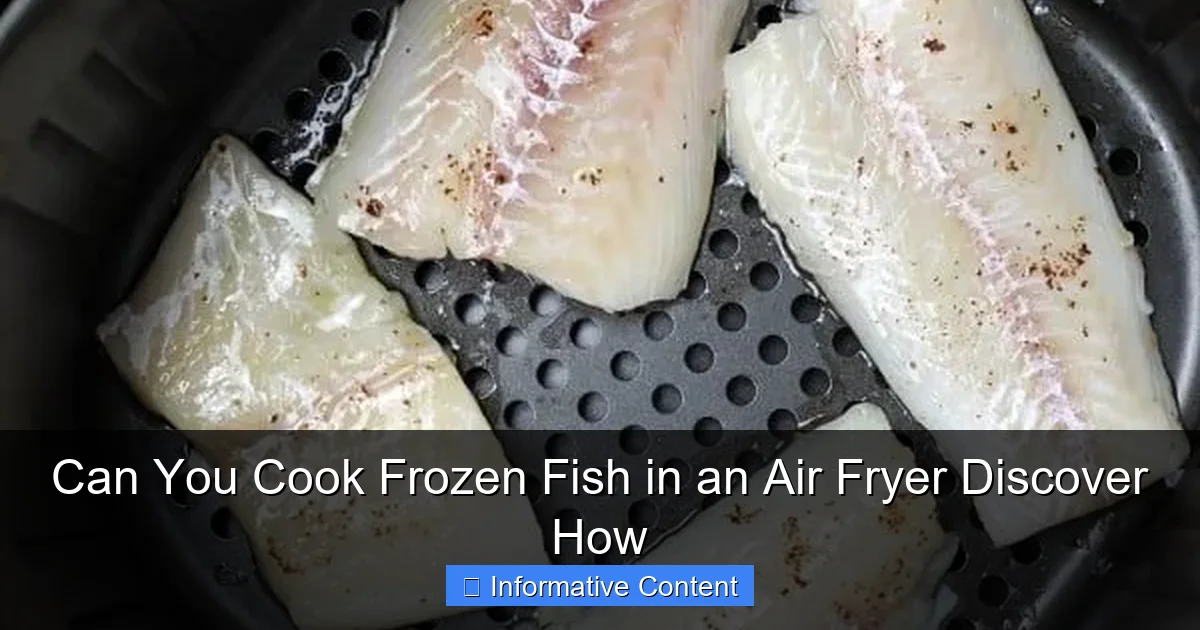
Featured image for can you cook frozen fish in an air fryer
Image source: i.pinimg.com
Yes, you can cook frozen fish in an air fryer—quickly, safely, and with deliciously crispy results. No need to thaw; just season, place in the basket, and cook at 375–400°F (190–200°C) for 10–15 minutes, flipping halfway. This method locks in moisture while delivering a golden, flaky finish that rivals traditional frying—without the extra oil or mess.
Key Takeaways
- Yes, you can cook frozen fish in an air fryer—no thawing needed for quick, crispy results.
- Preheat the air fryer to ensure even cooking and better texture.
- Use minimal oil—air fryers require less than traditional frying methods.
- Cook in batches to avoid overcrowding and ensure crispiness.
- Check internal temperature—fish should reach 145°F (63°C) for safety.
- Season after cooking to prevent breading from burning or sticking.
📑 Table of Contents
- Can You Cook Frozen Fish in an Air Fryer? Discover How
- Why Cooking Frozen Fish in an Air Fryer Makes Sense
- How to Cook Frozen Fish in an Air Fryer: Step-by-Step Guide
- Tips and Tricks for Perfect Results Every Time
- Best Types of Frozen Fish to Cook in an Air Fryer (With Examples)
- Common Mistakes and How to Avoid Them
- Data: Air Fryer vs. Oven vs. Stovetop for Frozen Fish
- Final Thoughts: Yes, You Should Cook Frozen Fish in Your Air Fryer
Can You Cook Frozen Fish in an Air Fryer? Discover How
Let’s be honest—life gets hectic. Between work, family, and everything in between, who has time to thaw fish for dinner? I’ve been there: standing in front of the freezer at 6 p.m., staring at a bag of frozen fish fillets, wondering if I can just toss them in the air fryer and call it a night. Spoiler: yes, you absolutely can. And not only can you, but you might end up with a tastier, crispier, and more convenient meal than if you’d thawed them first.
Air fryers have revolutionized home cooking, turning frozen foods into golden, delicious meals in minutes. But when it comes to something as delicate as fish, it’s natural to wonder: can you cook frozen fish in an air fryer without turning it into a soggy, overcooked mess? The good news? With the right technique, you can achieve flaky, perfectly cooked fish straight from the freezer—no thawing, no stress. Whether you’re cooking frozen salmon, cod, tilapia, or even breaded fish sticks, your air fryer can be your new kitchen hero. Let’s dive into how it works, what to watch out for, and how to get the best results every time.
Why Cooking Frozen Fish in an Air Fryer Makes Sense
No Thawing Required: Save Time and Reduce Waste
One of the biggest perks of cooking frozen fish in an air fryer is that you skip the thawing step entirely. No more forgetting to take the fish out of the freezer the night before. No more worrying about food safety when it sits out too long. Just grab, prep, and go.
Thawing fish in the fridge can take 12–24 hours, and if you’re like me, you’re not always that organized. Leaving it on the counter? That’s a food safety risk. Microwaving? It can start cooking the edges while the center is still frozen. The air fryer solves all of this. It gently circulates hot air, cooking the outside while slowly bringing the center up to temperature—all without turning your fish into a rubbery disappointment.
Healthier Than Deep Frying, Crispier Than Baking
Let’s talk texture. Baking frozen fish in the oven often leads to dry, uneven results. Deep frying gives you that golden crunch but comes with extra oil, mess, and calories. The air fryer strikes the perfect balance. It uses rapid hot air circulation to crisp the outside while keeping the inside moist—especially important for lean fish like cod or halibut.
I tried cooking frozen breaded fish sticks in the oven once. They came out pale, soggy, and undercooked in the middle. When I switched to the air fryer, they were golden, crisp, and fully cooked in 12 minutes. Same brand, same packaging—just a different cooking method. The air fryer made all the difference.
Energy Efficient and Fast
Air fryers preheat in 2–3 minutes (or not at all, for some models). They also cook faster than ovens because of their compact size and powerful convection. A batch of frozen fish fillets that might take 25 minutes in the oven can be ready in 15–18 minutes in an air fryer. That’s a huge win when you’re hungry and short on time.
Plus, they use less energy than firing up a full-sized oven—great for both your wallet and the planet.
How to Cook Frozen Fish in an Air Fryer: Step-by-Step Guide
Step 1: Choose the Right Fish
Not all frozen fish cook the same. Here’s a quick rundown of what works best:
- Fillets (skin-on or skinless): Cod, haddock, halibut, salmon, tilapia. These are ideal because they’re thin and cook evenly.
- Breaded or battered fish: Fish sticks, fish fingers, or breaded fillets. The air fryer gives them a restaurant-quality crunch.
- Frozen fish steaks (e.g., tuna, swordfish): Thicker cuts may need slightly longer cooking time, but they work fine if spaced properly.
Avoid large, dense cuts like whole frozen salmon fillets (over 1 inch thick) unless you’re okay with slightly longer cook times or flipping mid-way. For best results, stick to fillets around ¾ inch thick.
Step 2: Prep the Air Fryer Basket
Lightly coat the basket with cooking spray or brush with oil. This helps prevent sticking, especially with delicate fish. You can also use parchment paper with holes for air circulation—just don’t block the airflow entirely.
If you’re cooking breaded fish, you can skip the oil—the breading already contains fat and will crisp up beautifully on its own.
Pro tip: Don’t overcrowd the basket. Leave space between pieces so hot air can circulate. Cook in batches if needed. Overcrowding leads to steaming, not crisping.
Step 3: Set the Temperature and Time
Here’s a general guide, but always check the fish for doneness (we’ll cover that next):
- Unbreaded frozen fillets: 375°F (190°C) for 12–16 minutes
- Breaded frozen fillets or fish sticks: 400°F (200°C) for 10–14 minutes
- Thicker cuts (over 1 inch): 375°F for 18–22 minutes, flipping halfway
Start at the lower end of the time range. You can always add more time, but you can’t undo overcooked fish.
Step 4: Flip or Shake (If Needed)
For even cooking, flip fillets halfway through. Breaded items can usually stay put—just give the basket a gentle shake at the 7-minute mark to redistribute.
I’ve found that skin-on fish benefits from flipping so the skin gets crispy on both sides. Skinless fillets are more delicate, so handle with care.
Step 5: Check for Doneness
This is the most important step. Never rely solely on time. Fish should be opaque and flake easily with a fork. The internal temperature should reach 145°F (63°C), but since most of us don’t carry a meat thermometer to the kitchen, use the flake test:
- Insert a fork at the thickest part and gently twist. If it flakes apart, it’s done.
- If it’s still translucent or rubbery, cook for another 2–3 minutes and check again.
Remember: residual heat will continue cooking the fish for 1–2 minutes after you remove it. Let it rest briefly before serving.
Tips and Tricks for Perfect Results Every Time
Use Oil (But Not Too Much)
A light spray or brush of oil helps unbreaded fish develop a golden crust and prevents drying. I use avocado or olive oil spray—just a quick mist. Too much oil can drip into the heating element and cause smoke, especially at high temps.
For breaded fish, you can skip the oil. The breading usually contains fat, and the air fryer’s high heat will crisp it naturally. In fact, adding oil can make breaded fish greasy.
Season After Cooking (Sometimes)
Here’s a trick I learned the hard way: if you season frozen fish before air frying, the salt can draw out moisture and make the surface wet, which hinders crisping. For breaded fish, seasoning is usually baked into the coating, so you’re good to go.
For unbreaded fillets, I recommend cooking them first, then adding lemon juice, herbs, or a light sprinkle of salt and pepper after. This keeps the surface dry and crispy. Or, if you must season before, use a light hand and pat the fish dry with a paper towel first.
Don’t Skip the Preheat (But It’s Fast)
Some air fryer models don’t require preheating, but I always do it for fish. A 2–3 minute preheat at 375°F ensures consistent cooking from the start. Cold baskets can lead to uneven results, especially with delicate proteins.
Just set the temp, let it run for a few minutes, then add your fish. Easy.
Experiment with Cooking Sprays and Liners
Non-stick cooking sprays are great, but some leave a residue. I’ve had better luck with avocado oil spray—it’s high smoke point and doesn’t gunk up the basket.
For easy cleanup, try air fryer liners (parchment or silicone). Just make sure they don’t block airflow. I cut small holes in parchment to let hot air through. Silicone mats are reusable and work well, but they can slightly slow crisping, so I use them mostly for delicate fish or when I’m cooking multiple batches.
Adjust for Your Air Fryer Model
Not all air fryers are created equal. Some are convection ovens with baskets; others are rapid-air units with more powerful fans. If your fish is cooking too fast or too slow, adjust:
- If it’s browning too quickly: lower the temp by 25°F and extend time slightly.
- If it’s taking too long: increase temp by 25°F or ensure the basket isn’t overcrowded.
I have a Ninja Foodi DualZone, so I can cook two types of fish at once at different temps. But even with a basic Cosori, I get great results—just need to tweak times based on thickness.
Best Types of Frozen Fish to Cook in an Air Fryer (With Examples)
Frozen Salmon Fillets
Salmon is rich in omega-3s and cooks beautifully in the air fryer. I love using frozen wild-caught salmon fillets (skin-on). They come out flaky, with a slightly crispy skin.
How I do it: 375°F for 14 minutes, flip at 7 minutes. I spray lightly with oil and add a sprinkle of smoked paprika and garlic powder after cooking. Serve with lemon wedges and roasted veggies.
One time, I forgot to flip—still came out great. But flipping gives a more even crust.
Frozen Cod or Haddock
Lean, mild, and perfect for fish tacos or fish and chips. I use frozen, unbreaded cod fillets from the grocery store.
How I do it: 375°F for 12–14 minutes. I brush with a little olive oil and season with lemon pepper after. The result? Moist, tender, and never dry.
Pro tip: if you’re making fish tacos, cook the cod, then break it into chunks and toss with lime juice and cilantro. Instant taco filling.
Breaded Fish Sticks and Fillets
These are a game-changer for quick meals. I’ve tried Gorton’s, Van de Kamp’s, and store brands. All work great.
How I do it: 400°F for 10–12 minutes. No oil needed. Shake the basket at 6 minutes. They come out golden, crunchy, and fully cooked—no soggy center.
My kids prefer these over oven-baked ones. They say the air fryer version “tastes like the ones at school.”
Frozen Tilapia Fillets
Tilapia is affordable and mild, but it can dry out easily. The air fryer keeps it juicy.
How I do it: 375°F for 12 minutes. I spray with oil and add a light dusting of cajun seasoning after. Great for salads or wraps.
One batch I overcooked by 3 extra minutes—still edible, but drier. Lesson learned: stick to the time and check early.
Frozen Shrimp (Bonus!)
While not fish, frozen shrimp cook beautifully in the air fryer too. 400°F for 6–8 minutes. Toss with garlic butter after. So good.
Common Mistakes and How to Avoid Them
Mistake 1: Overcrowding the Basket
It’s tempting to cook everything at once, but stacking fish leads to steaming, not crisping. You’ll end up with pale, soggy fillets.
Solution: Cook in batches. It only adds a few extra minutes, and the result is worth it.
Mistake 2: Setting and Forgetting
Frozen fish can go from perfect to overcooked in 2 minutes. Don’t walk away.
Solution: Set a timer for the lower end of the recommended time. Check early and often. Use the flake test.
Mistake 3: Using Too Much Oil
Excess oil can drip into the heating element, causing smoke or even a fire hazard.
Solution: Use a light spray or brush. One pass is enough. For breaded fish, skip it entirely.
Mistake 4: Not Adjusting for Thickness
A ¾-inch fillet isn’t the same as a 1.5-inch steak. Cooking times vary.
Solution: Measure thickness if unsure. Thicker cuts need lower temps and longer times, or flip halfway.
Mistake 5: Skipping the Flip (for unbreaded fish)
Unbreaded fillets cook unevenly if you don’t flip. One side may be dry, the other undercooked.
Solution: Flip at the halfway point. Use tongs or a spatula gently to avoid breaking.
Data: Air Fryer vs. Oven vs. Stovetop for Frozen Fish
| Cooking Method | Avg. Time (Minutes) | Crispiness | Moisture Retention | Ease of Use | Cleanup |
|---|---|---|---|---|---|
| Air Fryer | 12–16 | Excellent (especially breaded) | Very Good | Very Easy | Easy (basket is dishwasher-safe) |
| Oven (Baked) | 20–25 | Fair (often soggy) | Good | Easy | Moderate (tray cleanup) |
| Stovetop (Pan-Fried) | 15–20 | Good (if not overcrowded) | Fair (can dry out) | Moderate (requires attention) | Hard (oil splatter, scrubbing) |
| Deep Fryer | 8–10 | Excellent | Good | Hard (oil handling, safety) | Very Hard (oil disposal, deep clean) |
As you can see, the air fryer wins on speed, crispiness, and ease—especially for frozen fish. It’s the sweet spot between convenience and quality.
Final Thoughts: Yes, You Should Cook Frozen Fish in Your Air Fryer
So, can you cook frozen fish in an air fryer? Absolutely. It’s faster, healthier, and often tastier than other methods. Whether you’re feeding a family, meal prepping, or just trying to get dinner on the table fast, the air fryer turns frozen fish into a reliable, delicious option.
I’ve cooked everything from gourmet salmon to kids’ fish sticks in mine, and I’ve never looked back. The key is to avoid overcrowding, check for doneness, and use a light touch with oil and seasoning. Once you get the hang of it, you’ll wonder why you ever waited for thawed fish.
And here’s a little secret: some of the best-tasting frozen fish I’ve had was cooked straight from the freezer. The air fryer locks in moisture while giving you that golden, crispy edge—something even fresh fish can struggle to achieve when overcooked.
So next time you’re staring at that bag of frozen cod or salmon, don’t hesitate. Pop it in the air fryer. Set the timer. Walk away for 12 minutes. When you come back, you’ll have a flaky, flavorful, restaurant-quality meal—no thawing, no mess, no stress.
Your air fryer isn’t just for fries and chicken wings. It’s a frozen fish powerhouse. Give it a try. I promise, you’ll be glad you did.
Frequently Asked Questions
Can you cook frozen fish in an air fryer without thawing?
Yes, you can cook frozen fish in an air fryer directly—no thawing required. The air fryer’s high heat circulates evenly, cooking the fish safely and efficiently while maintaining a crispy texture.
What’s the best way to cook frozen fish in an air fryer?
Preheat the air fryer to 375°F (190°C), lightly spray the basket with oil, and cook the frozen fish for 10–14 minutes, flipping halfway. Adjust time based on thickness, and ensure the internal temperature reaches 145°F (63°C).
Do you need to add oil when cooking frozen fish in an air fryer?
Adding a light spray of oil helps achieve a crispier exterior, especially for breaded or uncoated fish. However, it’s optional—air fryers require less oil than traditional frying methods.
Can you cook battered or breaded frozen fish in an air fryer?
Absolutely! Battered or breaded frozen fish turns out crispy in the air fryer. Cook at 375°F (190°C) for 10–12 minutes, flipping once to ensure even browning.
How long does it take to cook frozen fish in an air fryer?
Most frozen fish fillets or sticks take 10–14 minutes at 375°F (190°C). Thicker cuts may need extra time, so check for flakiness and an internal temperature of 145°F (63°C).
Is cooking frozen fish in an air fryer healthier than frying?
Yes, air frying uses little to no oil, reducing fat and calories compared to deep frying. It’s a healthier way to enjoy crispy fish while preserving nutrients and flavor.