
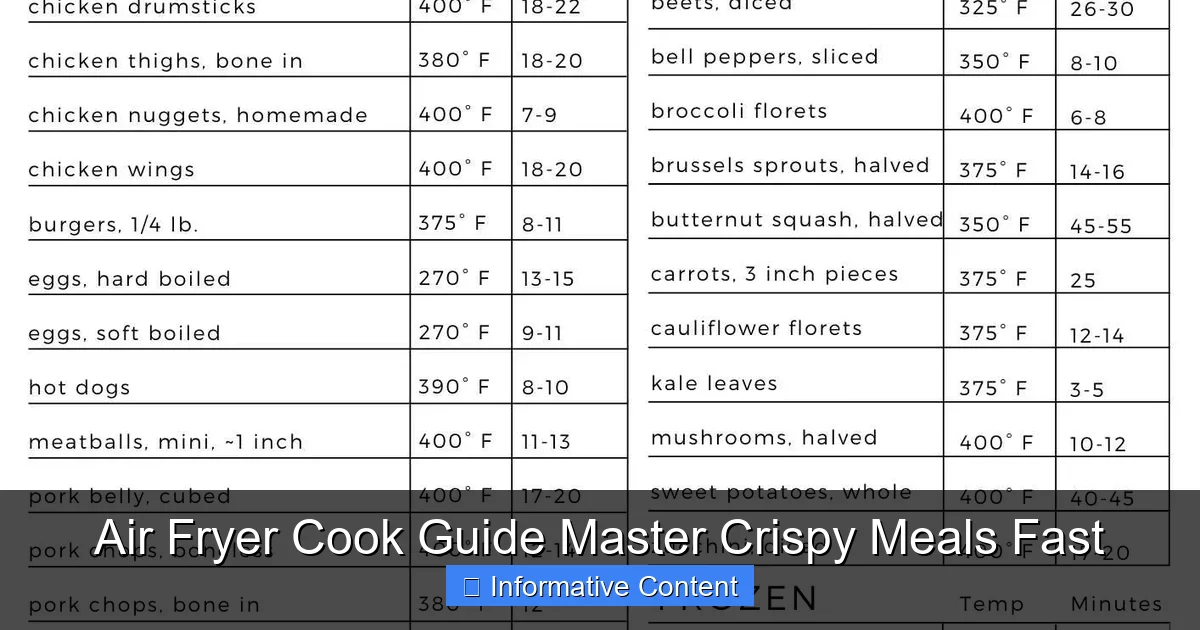
Featured image for air fryer cook guide
Image source: cookathomemom.com
Master crispy, healthy meals in minutes with this comprehensive air fryer cook guide designed for beginners and pros alike. Discover foolproof recipes, pro tips, and time-saving techniques to achieve perfectly golden results every time—without the oil or mess.
Key Takeaways
- Preheat your air fryer: Ensures even cooking and perfect crispiness every time.
- Use minimal oil: Achieve crispy results with just 1 tsp for healthier meals.
- Shake the basket: Flip or shake food halfway for uniform browning and texture.
- Don’t overcrowd: Leave space for hot air circulation to maximize crispiness.
- Adjust time/temp: Fine-tune settings based on food thickness and moisture content.
- Clean after use: Prevents smoke and odors, prolonging your air fryer’s lifespan.
📑 Table of Contents
- Why Air Frying Is a Game-Changer in Modern Kitchens
- How Air Fryers Work (And Why They’re So Efficient)
- Essential Tips for Perfect Air Fryer Results
- Air Fryer Cook Times & Temperatures (With Examples)
- Beyond Fried Food: Creative Air Fryer Recipes
- Cleaning, Maintenance, and Troubleshooting
- Final Thoughts: Mastering Your Air Fryer for Life
Why Air Frying Is a Game-Changer in Modern Kitchens
Remember the first time you tried to make crispy chicken wings in your oven, only to end up with soggy, unevenly cooked disappointment? We’ve all been there. That’s why air fryers have taken kitchens by storm—they promise the crunch and flavor of deep-frying, minus the guilt, mess, and extra calories. As someone who used to dread the greasy aftermath of frying, I can honestly say my air fryer has become my most-used appliance. It’s not just about speed; it’s about consistency, ease, and the ability to whip up delicious meals even on the busiest weeknights.
But here’s the thing: an air fryer isn’t a magic wand. It’s a tool, and like any tool, it works best when you know how to use it. Whether you’re a newbie or someone who’s had an air fryer for a while but still struggles with dry chicken or undercooked fries, this air fryer cook guide is for you. I’ve tested, tweaked, and even failed my way through dozens of recipes to bring you practical, real-world tips—no fluff, just what actually works. From understanding how it works to mastering timing and technique, this guide will help you turn out crispy, golden meals faster than ever.
How Air Fryers Work (And Why They’re So Efficient)
The Science Behind the Crisp
At first glance, an air fryer looks like a small countertop convection oven, but there’s more going on under the hood. Instead of submerging food in oil, air fryers use rapid air circulation—a fan blows superheated air (usually 300°F to 400°F) around your food in a confined space. This creates a Maillard reaction, the same chemical process that browns and crisps food in deep fryers. The result? A crispy exterior with a juicy interior, using just a fraction of the oil.
Think of it like a mini tornado of heat swirling around your chicken tenders or sweet potato fries. The compact design means heat doesn’t escape, so cooking happens quickly and evenly. That’s why you can get crispy results in 15–20 minutes instead of 30–40 in a conventional oven.
Key Components You Should Know
- Basket or Drawer: This holds your food. Most are nonstick and removable for easy cleaning.
- Heating Element: Located at the top, it generates the intense heat.
- Fan: Circulates the hot air—this is what makes the “frying” possible.
- Timer & Temperature Controls: Simple dials or digital panels let you set time and temp.
- Airflow Vents: Allow excess moisture to escape, preventing sogginess.
Pro tip: Always preheat your air fryer when the recipe calls for it. Just like a skillet, it needs to be hot before you add food. A 3-minute preheat at 375°F ensures your food starts cooking immediately, locking in juices and building that crispy crust.
Air Fryer vs. Deep Fryer vs. Oven: A Quick Comparison
Let’s be real—air fryers aren’t perfect. They won’t give you the exact same mouthfeel as 350°F oil, and they can’t handle huge batches. But for everyday cooking? They win on speed, convenience, and health. Here’s a quick breakdown:
- Oil Usage: Air fryers use 1–2 teaspoons per batch; deep fryers use 2–4 cups. Ovens use little to no oil but take longer.
- Cooking Time: Air fryers are 20–30% faster than ovens. Deep fryers are fast but messy.
- Cleanup: Air fryer baskets are dishwasher-safe. Deep fryers require oil disposal. Ovens need tray cleaning.
- Texture: Air fryers give a crisp exterior with less greasiness. Deep fryers offer maximum crunch. Ovens are more neutral.
Essential Tips for Perfect Air Fryer Results
Don’t Overcrowd the Basket
This is the #1 mistake I see. Air fryers need space for air to circulate. If you pile in too much food, you’ll end up with steamed, not crispy, results. Think of it like a crowd at a concert—everyone needs room to move. As a rule of thumb, fill the basket no more than halfway. For smaller items like fries or nuggets, a single layer is ideal.
Example: When I tried to cook a full bag of frozen fries (about 16 oz) at once, they came out uneven—some were perfect, others were mushy. When I split them into two batches, every fry was golden and crisp. It took an extra 10 minutes, but the difference was night and day.
Shake, Flip, or Rotate Midway
Even with great airflow, food can cook unevenly. For items like chicken wings, fish sticks, or veggies, pause halfway through and give the basket a gentle shake. For thicker cuts (like chicken breasts or steak), flip them over. This ensures both sides get that beautiful browning.
Tip: Use silicone-tipped tongs or a spatula to avoid scratching the nonstick coating. And don’t open the basket too early—every time you do, heat escapes, adding minutes to your cook time.
Use Oil Sparingly (But Wisely)
Air fryers don’t need much oil, but a light spray or brush can make a huge difference. A teaspoon of oil on chicken wings helps them crisp up without drying out. For vegetables, a light coating brings out their natural sweetness and prevents sticking.
Best oils for air frying (high smoke points):
- Avocado oil
- Grapeseed oil
- Canola oil
- Light olive oil (not extra virgin)
Avoid: Coconut oil, butter, or oils with low smoke points—they can smoke and leave a burnt taste.
Preheat When Possible
While not all recipes require it, preheating gives you a head start. For frozen foods, preheat for 3–5 minutes. For fresh ingredients, preheat for 2–3 minutes. I’ve found this step makes a noticeable difference in texture, especially with meats and breaded items.
Know When to Add Seasoning
For maximum flavor, season food before cooking. But if you’re using a wet marinade (like teriyaki or buffalo sauce), pat the food dry first. Excess moisture creates steam, which fights crispiness. After cooking, you can toss in sauce—just do it in a separate bowl to avoid making the outside soggy.
Air Fryer Cook Times & Temperatures (With Examples)
General Guidelines for Common Foods
Every air fryer is slightly different, but these are the baseline settings I’ve found work across brands (Ninja, Cosori, Instant Vortex, etc.). Always check for doneness—especially with meats—using a thermometer.
Data Table: Air Fryer Cook Times & Temperatures
| Food | Amount | Temp (°F) | Time (min) | Tips |
|---|---|---|---|---|
| Frozen French Fries | 1–1.5 cups | 400 | 12–15 | Shake at 6 min. Light oil spray for extra crisp. |
| Chicken Wings (raw) | 1 lb | 380 | 20–25 | Flip at 10 min. Sauce after cooking. |
| Salmon Fillet | 6 oz | 375 | 10–12 | Season with salt, pepper, lemon. Skin side down. |
| Frozen Mozzarella Sticks | 8–10 sticks | 390 | 8–10 | No preheat. Watch for cheese oozing. |
| Sweet Potato Fries | 1.5 cups | 400 | 15–18 | Toss with 1 tsp oil before cooking. |
| Chicken Breast (boneless) | 8 oz | 375 | 15–18 | Internal temp: 165°F. Rest 5 min after. |
| Brussels Sprouts | 2 cups | 375 | 12–15 | Toss with oil, salt, pepper. Shake at 7 min. |
| Hard-Boiled Eggs | 4–6 eggs | 270 | 15 | Cool in ice water for easy peeling. |
| Reheated Pizza | 1–2 slices | 350 | 3–4 | Crisps crust without melting cheese. |
Adjusting for Your Model
Some air fryers run hotter than others. If your food burns, lower the temp by 10–20°F next time. If it’s undercooked, add 2–5 minutes. I once had a model that cooked 15% faster than average—so my go-to 12-minute fries were done in 10. Keep a small notebook or sticky notes with your personal adjustments.
Frozen vs. Fresh: What’s the Difference?
- Frozen foods: Often require a slightly higher temp (5–10°F) and longer time (1–3 min) because they start colder. But they’re convenient and usually pre-seasoned.
- Fresh foods: Cook faster and more evenly. Season them yourself for better flavor control.
Example: I compared frozen vs. fresh sweet potato fries. The frozen ones needed 18 minutes at 400°F, while the fresh ones (cut 1/4 inch thick) were perfect at 15 minutes. But the fresh ones required more prep—peeling, cutting, oiling.
Beyond Fried Food: Creative Air Fryer Recipes
Breakfast in the Air Fryer
Who says air fryers are just for dinner? I’ve started making air fryer breakfast potatoes with diced potatoes, bell peppers, onions, and a splash of oil. Toss, cook at 375°F for 15 minutes (shake at 7), and you’ve got a hearty side in half the time it takes on the stove.
Another favorite: air fryer hard-boiled eggs. Place eggs in the basket, cook at 270°F for 15 minutes, then plunge into ice water. They peel effortlessly and are perfect for salads or snacks.
Vegetarian & Vegan Wins
Roasted veggies are a no-brainer, but air fryers excel at plant-based proteins too. Try air fryer tofu: Press firm tofu for 15 minutes (to remove moisture), cut into cubes, toss with soy sauce and cornstarch, then cook at 375°F for 12 minutes. Flip halfway. The result? Crispy on the outside, chewy inside—perfect for stir-fries or bowls.
For a quick snack, air fryer kale chips are addictive. Toss kale leaves with a teaspoon of olive oil and a pinch of salt, spread in a single layer, and cook at 350°F for 8–10 minutes. Watch closely—they burn fast!
Reheating Like a Pro
Got leftover pizza, fries, or fried chicken? Don’t microwave it. Air fryers revive leftovers beautifully. For pizza, cook at 350°F for 3–4 minutes. The crust crisps up, and the cheese stays melty. For fries, 375°F for 4–5 minutes brings back that fresh-out-of-the-fryer texture.
Pro tip: Add a tiny splash of water (1/4 tsp) to the basket when reheating chicken. It keeps the inside moist while the outside crisps.
Desserts? Yes, Really!
Yes, you can make desserts in your air fryer. Try air fryer apple slices: Core apples, slice, toss with cinnamon and a drizzle of honey, then cook at 350°F for 8–10 minutes. Serve with yogurt or ice cream. Or make mini apple turnovers using pre-made puff pastry—just fold, seal, and cook at 360°F for 10 minutes. Golden, flaky, and guilt-free.
Cleaning, Maintenance, and Troubleshooting
Cleaning Your Air Fryer (The Right Way)
The basket and tray are usually dishwasher-safe, but I prefer hand-washing to preserve the nonstick coating. Use warm, soapy water and a soft sponge. For stuck-on food, soak for 10 minutes, then gently scrub. Avoid steel wool or abrasive pads—they scratch the surface.
For the heating element and fan (the parts you can’t remove), wipe with a damp cloth. Never submerge the main unit in water. And if you notice a burnt smell, check for food debris near the heating coil—it can smoke and affect flavor.
Common Issues (And How to Fix Them)
- Food is soggy: You overloaded the basket. Next time, cook in batches. Also, pat food dry before cooking.
- Food is dry: You overcooked it or didn’t add enough oil. Try reducing time by 1–2 minutes or adding a light oil spray.
- Smoke or burning smell: Food residue on the heating element. Clean thoroughly. Also, avoid cooking at temps above 400°F unless necessary.
- Uneven cooking: Flip or shake halfway. Ensure the basket isn’t blocked by large items.
- Nonstick coating peeling: You used metal utensils or abrasive cleaners. Switch to silicone or wooden tools.
When to Replace Your Air Fryer
Most air fryers last 3–5 years with regular use. Signs it’s time for a new one:
- Consistent undercooking or overcooking (even with adjustments)
- Nonstick coating is severely chipped
- Fan or heating element isn’t working
- Persistent burning smell after cleaning
I once kept using a model with a failing fan—my fries took twice as long and never crisped up. Once I replaced it, everything improved.
Final Thoughts: Mastering Your Air Fryer for Life
Look, an air fryer won’t replace every tool in your kitchen. You’ll still need your skillet for searing, your oven for roasting big trays of veggies, and your slow cooker for stews. But for speed, crispiness, and convenience? It’s hard to beat. This air fryer cook guide isn’t about perfection—it’s about progress. Start with the basics, experiment, and learn from your mistakes.
Remember: every air fryer is a little different. Your neighbor’s “perfect 12-minute chicken” might take 14 in your model. That’s okay. Use the times and temps in this guide as a starting point, then adjust based on what works for you. And don’t be afraid to try new things. I once made air fryer stuffed mushrooms on a whim—and now it’s a weekly staple.
The key is to think of your air fryer as a partner, not a magic box. Treat it well, learn its quirks, and it’ll reward you with crispy, golden meals faster than you ever thought possible. Whether you’re cooking for one or feeding a family, this tool can simplify your life—one delicious bite at a time. So go ahead, preheat that basket, and get cooking. Your crispiest meals are just minutes away.
Frequently Asked Questions
What is an air fryer and how does it work?
An air fryer is a compact countertop appliance that circulates hot air around food to create a crispy, fried texture using little to no oil. It works by combining rapid air circulation with high heat, making it a healthier alternative to deep frying while still delivering crunchy results.
How do I use the Air Fryer Cook Guide to make crispy meals fast?
The Air Fryer Cook Guide provides time-saving recipes, temperature settings, and pro tips to achieve perfectly crispy meals in under 30 minutes. Each recipe is tested for optimal browning, crispiness, and flavor with minimal preheating or oil.
Can I cook frozen foods in an air fryer without thawing?
Yes! Air fryers excel at cooking frozen foods like fries, nuggets, or vegetables straight from the freezer—no thawing needed. Just add 2–3 minutes to the recommended cook time and shake the basket halfway for even crispiness.
What are the best foods to cook using an air fryer?
The air fryer is ideal for chicken wings, roasted vegetables, fish fillets, mozzarella sticks, and even reheating leftovers. Its versatility makes it perfect for achieving crunchy textures on high-moisture foods without sogginess.
How do I clean and maintain my air fryer for long-term use?
Remove and wash the basket and tray with warm, soapy water after each use, and wipe the interior with a damp cloth. Avoid abrasive scrubbers to protect the nonstick coating, and ensure the heating element stays free of debris for optimal performance.
Does the Air Fryer Cook Guide include healthy recipes?
Absolutely! The Air Fryer Cook Guide features low-oil, nutrient-packed recipes like crispy tofu, sweet potato wedges, and salmon bites—all designed to cut calories without sacrificing flavor or texture.