
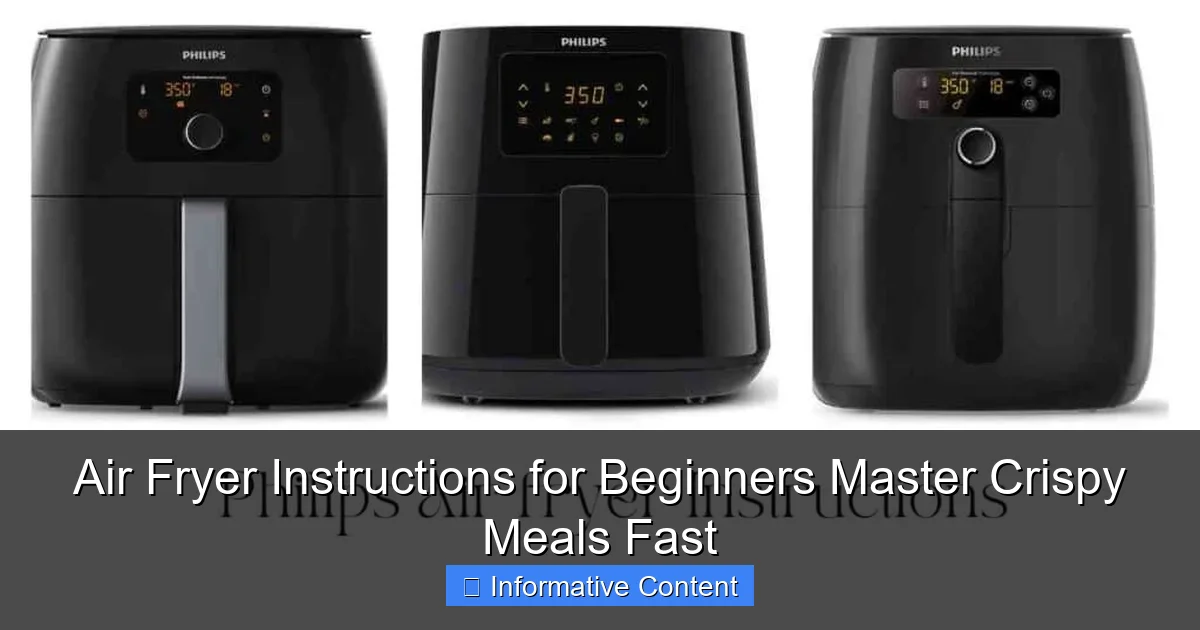
Featured image for air fryer instructions for beginners
Image source: fryerhouse.com
Master your air fryer in minutes with simple, beginner-friendly instructions that deliver crispy, delicious meals fast—no preheating or guesswork required. Learn key tips like proper basket spacing, oil use, and timing to transform frozen snacks, meats, and veggies into golden perfection every time.
Key Takeaways
- Preheat your air fryer for crispier, evenly cooked meals every time.
- Use minimal oil—just 1 tsp per meal for healthy, golden results.
- Shake the basket halfway through cooking for even browning and crispiness.
- Don’t overcrowd food to ensure hot air circulates freely for perfect texture.
- Follow time guidelines but check early—air fryers cook faster than ovens.
- Clean after each use to maintain performance and prevent smoke or odors.
📑 Table of Contents
- Why Your Air Fryer Might Be the Best Kitchen Upgrade You’ve Ever Made
- Getting to Know Your Air Fryer: Parts, Settings, and Safety
- Your First 5 Air Fryer Recipes (and How to Get Them Right)
- Mastering Temperature, Timing, and Shaking (Yes, Shaking!)
- Cleaning, Maintenance, and Troubleshooting Like a Pro
- Beyond the Basics: Creative Uses and Pro Tips
- Data Table: Common Air Fryer Settings at a Glance
- Final Thoughts: You’re Ready to Air Fry Like a Pro
Why Your Air Fryer Might Be the Best Kitchen Upgrade You’ve Ever Made
Let’s be honest—cooking can feel like a chore. Between preheating the oven, waiting for food to crisp, and then dealing with a greasy stovetop or oven cleanup, it’s no wonder we often reach for takeout. But what if there was a way to get that crispy, golden-brown perfection with less oil, less mess, and in half the time? Enter the air fryer.
I remember the first time I used mine. I was skeptical. Could a little countertop gadget really replace my deep fryer, oven, and toaster oven? I tried cooking frozen french fries. In 12 minutes, they came out hot, crispy on the outside, and fluffy on the inside—without a single drop of oil. I was sold. And since then, my air fryer has become my go-to for everything from chicken wings to roasted veggies, even reheating pizza without turning it into a soggy mess.
If you’re new to air frying, don’t worry. You’re not alone. Many beginners feel overwhelmed by the settings, accessories, and “rules” they think they need to follow. But here’s the truth: air fryer instructions for beginners don’t have to be complicated. With a little guidance and a few simple tips, you’ll be mastering crispy, delicious meals in no time—without the guilt or the grease.
Getting to Know Your Air Fryer: Parts, Settings, and Safety
Before you start cooking, let’s break down what your air fryer actually is and how it works. Think of it like a mini convection oven with a powerful fan. It circulates hot air rapidly around your food, creating that signature crispiness we all love—without needing to dunk everything in oil.
Understanding the Key Components
- Basket or Drawer: This is where your food goes. Most models have a removable basket with a non-stick coating. Some newer models have a drawer-style design that pulls out like a toaster oven.
- Heating Element and Fan: Located at the top (or back, in some models), this combo blasts hot air downward and around the food.
- Control Panel: This varies by model. You might have preset buttons (fries, chicken, fish, etc.), digital touch controls, or simple dials for time and temperature.
- Airflow Vents: Usually on the sides or back. Never block these—airflow is critical for even cooking.
Common Settings and What They Do
Most air fryers come with similar temperature and time ranges:
- Temperature: Typically 180°F to 400°F (80°C to 200°C). Lower temps (300°F and below) are great for gentle cooking (like reheating or delicate fish), while higher temps (360°F–400°F) are ideal for crisping and browning.
- Timer: Usually up to 60 minutes. Some models let you set it in 1-minute increments, others in 5- or 10-minute jumps.
- Presets: “Fries,” “chicken,” “veggies,” “bake,” “dehydrate,” etc. These are helpful starting points, but don’t feel locked in—you can always adjust manually.
Safety Tips Every Beginner Should Know
- Don’t overcrowd the basket. Leave space between food items so air can circulate. Overcrowding leads to steaming instead of crisping.
- Never use metal utensils. They can scratch the non-stick coating. Use silicone, wood, or plastic.
- Keep it clean and dry. Wipe the basket and interior after each use. Never submerge the main unit in water.
- Place it on a heat-safe surface. Countertops with laminate or plastic can warp under high heat. Use a trivet or wooden board if needed.
- Let it cool before cleaning. The basket gets hot—wait 10–15 minutes after cooking before handling.
One thing I learned the hard way? Don’t put the basket in the dishwasher unless the manual says it’s safe. The high heat and harsh detergents can damage the non-stick coating. Hand-washing with warm, soapy water is usually best.
Your First 5 Air Fryer Recipes (and How to Get Them Right)
Now that you know the basics, let’s dive into cooking. The best way to learn air fryer instructions for beginners is by doing. Here are five simple, delicious recipes to get you started—plus tips to avoid common beginner mistakes.
1. Classic Air-Fried French Fries
Why it’s great: It’s the ultimate test of an air fryer’s crisping power.
- 1 lb (450g) frozen french fries (or cut fresh potatoes into 1/4-inch sticks)
- 1 tsp olive oil (optional, for extra crisp)
- Salt and pepper to taste
Steps:
- Preheat air fryer to 400°F (200°C) for 3 minutes.
- Toss fries with oil (if using) and seasonings.
- Place in basket in a single layer (don’t stack!).
- Cook for 10 minutes, shake the basket, then cook 5–8 more minutes until golden.
Tip: If using fresh potatoes, soak them in cold water for 30 minutes to remove starch, then pat dry. Wet potatoes steam instead of crisp.
2. Crispy Chicken Tenders (No Breading Needed? Yes!)
Why it’s great: Juicy inside, crispy outside—without deep frying.
- 1 lb (450g) chicken breast, cut into strips
- 1 tbsp olive oil
- 1 tsp garlic powder, 1 tsp paprika, 1/2 tsp salt
Steps:
- Preheat to 375°F (190°C).
- Toss chicken with oil and seasonings.
- Arrange in single layer in basket.
- Cook 8 minutes, flip, cook 6–8 more minutes until internal temp reaches 165°F (74°C).
Tip: For extra crunch, lightly spray with oil halfway through. But don’t overdo it—too much oil can cause smoke.
3. Roasted Brussels Sprouts
Why it’s great: Transforms a veggie haters’ nightmare into a caramelized, crispy delight.
- 1 lb (450g) Brussels sprouts, halved
- 1 tbsp olive oil
- 1/2 tsp salt, 1/4 tsp black pepper
Steps:
- Preheat to 380°F (195°C).
- Toss sprouts with oil and seasonings.
- Cook 10 minutes, shake, cook 8–10 more minutes until edges are browned.
Tip: Cut them evenly so they cook at the same rate. Bigger halves take longer.
4. Air-Fried Salmon Fillet
Why it’s great: Moist, flaky fish in under 15 minutes.
- 2 salmon fillets (6 oz each)
- 1 tbsp olive oil
- 1/2 tsp salt, 1/4 tsp dill, lemon slices (optional)
Steps:
- Preheat to 375°F (190°C).
- Brush fillets with oil, season, top with lemon.
- Cook 8–10 minutes until opaque and flakes easily.
Tip: Use a meat thermometer. 125°F (52°C) for medium-rare, 135°F (57°C) for medium.
5. Reheated Pizza (Yes, Really!)
Why it’s great: No more soggy microwave pizza.
- 1–2 slices of leftover pizza
- 1 tsp water (yes, water!)
Steps:
- Preheat to 350°F (175°C).
- Place pizza in basket. Add 1 tsp water to a small cup or corner of the basket.
- Cook 3–4 minutes until crust is crispy and cheese is melty.
Tip: The water creates steam to reheat the toppings without drying out the crust.
Mastering Temperature, Timing, and Shaking (Yes, Shaking!)
Here’s the secret to air frying success: it’s not just about setting and forgetting. A little attention makes a big difference. Let’s break down the three most important factors.
Temperature: Not All Foods Need 400°F
Many beginners crank the heat to 400°F for everything—but that can backfire.
- 350°F–375°F: Ideal for meats, fish, and delicate veggies. Gives a golden crust without burning.
- 380°F–400°F: Best for frozen foods, potatoes, and anything needing serious crisp (like onion rings or mozzarella sticks).
- 300°F–320°F: Use for reheating, gentle cooking (like scrambled eggs), or foods that burn easily (like breaded items with sugar).
Example: I once tried cooking chicken wings at 400°F. The outside burned before the inside was done. Now I start at 375°F, then increase to 390°F for the last 3 minutes for extra crisp.
Timing: Less Is Often More
Air fryers cook faster than ovens. As a rule of thumb:
- Reduce oven time by 20–25%.
- Reduce temperature by 25°F (15°C) compared to oven recipes.
For example, if a recipe says “bake at 400°F for 20 minutes,” try 375°F for 15–16 minutes in your air fryer.
The Art of Shaking (or Flipping)
Shaking the basket every 5–7 minutes ensures even cooking. But don’t overdo it—every time you open the drawer, heat escapes and cooking time increases.
- Shake: For small, uniform items (fries, nuggets, veggies).
- Flip: For larger items (chicken breasts, fish fillets, burgers).
- Don’t touch: For delicate foods (like fish or breaded items that might fall apart).
Pro tip: Use silicone tongs or a spatula to flip. Metal can scratch the basket.
Preheating: Yes or No?
Some recipes say to preheat, others don’t. Here’s my take:
- Preheat for frozen foods and crispy items. Helps start the browning process.
- Skip preheating for fresh meats and veggies. The food itself helps regulate the temperature.
Preheating takes 3–5 minutes. If you’re in a rush, you can skip it—but add 1–2 minutes to your cook time.
Cleaning, Maintenance, and Troubleshooting Like a Pro
Your air fryer will only perform well if it’s clean and well-maintained. Here’s how to keep it in top shape—and what to do when things go wrong.
Daily Cleaning Routine
- Let the basket cool for 10–15 minutes.
- Remove the basket and tray (if applicable).
- Wash with warm, soapy water and a soft sponge. For stuck-on food, soak for 10–15 minutes.
- Wipe the interior with a damp cloth. Never use abrasive cleaners—they damage the non-stick coating.
- Dry everything thoroughly before reassembling.
Tip: For greasy messes, sprinkle baking soda, add hot water, and let it sit for 10 minutes before scrubbing.
Deep Cleaning (Every 2–4 Weeks)
- Remove the heating element cover (if your model allows).
- Use a soft brush or cloth to remove crumbs and debris.
- Wipe the fan area gently—don’t force anything.
- Check the air vents. Use a cotton swab or toothbrush to clear dust.
Warning: Never use a vacuum cleaner near the air fryer—static electricity can damage internal components.
Common Problems (and How to Fix Them)
- Food is soggy: You overcrowded the basket or didn’t shake/flip. Next time, leave space and stir halfway.
- Smoke or burning smell: Oil dripped onto the heating element. Clean the basket and interior. Use less oil next time.
- Uneven cooking: Food was stacked or not flipped. Use a single layer and shake every 5–7 minutes.
- Food sticks: The non-stick coating is damaged. Stop using metal utensils. Consider a silicone liner (but don’t cover the entire basket—airflow matters).
- Unit won’t turn on: Check if it’s plugged in. Some models have a safety feature that won’t start if the basket isn’t fully inserted.
When to Replace Your Air Fryer
Most air fryers last 3–5 years with proper care. Signs it’s time to upgrade:
- Non-stick coating is peeling or scratched.
- Heating is inconsistent (some parts burn, others undercook).
- Fan is loud or weak.
- Controls are unresponsive.
Don’t panic—many issues are fixable with a good cleaning!
Beyond the Basics: Creative Uses and Pro Tips
Once you’ve mastered the basics, it’s time to get creative. Your air fryer can do way more than fries and chicken nuggets. Here are some fun, unexpected uses—and pro tips to level up your cooking.
Reheating Like a Boss
Air fryers are perfect for reheating leftovers without drying them out.
- Pizza: 350°F for 3–4 minutes (with a tsp of water).
- Fried chicken: 350°F for 5–6 minutes. Crispy skin, juicy inside.
- Roasted veggies: 320°F for 4–5 minutes. No sogginess.
- Burritos: 375°F for 6–8 minutes. Crispy tortilla, melty cheese.
Tip: Add a small cup of water to the basket to add moisture—especially for meats and bread.
Baking (Yes, Baking!)
You can bake cookies, muffins, and even small cakes in your air fryer.
- Use silicone molds or parchment paper.
- Reduce oven temperature by 25°F and check 2–3 minutes early.
- For cookies: 320°F for 6–8 minutes.
- For banana bread: 350°F for 20–25 minutes (in a small loaf pan).
Dehydrating Fruits and Veggies
Many air fryers have a “dehydrate” setting (or you can use 130°F–140°F).
- Slice apples, bananas, or zucchini thinly.
- Cook 2–4 hours, flipping every 30 minutes.
- Store in airtight containers for healthy snacks.
Pro Tips from a Seasoned Air Fryer User
- Use parchment paper with holes. Prevents sticking and makes cleanup easier—but don’t cover the entire basket.
- Don’t fear frozen foods. Most frozen items (nuggets, fish sticks, veggies) cook perfectly—just add 1–2 minutes to the time.
- Marinate for extra flavor. But pat dry before air frying—wet marinades cause steaming.
- Try the “double crisp” method: Cook at 375°F for 8 minutes, increase to 390°F for the last 3–4 minutes for extra crunch.
- Keep a cooking log. Note what worked (and what didn’t) so you can improve every time.
I once tried making “air fryer donuts” from scratch. They came out a bit dense—but I learned that reducing the sugar and using less flour helped. That’s the beauty of air frying: it’s forgiving, and every mistake is a learning opportunity.
Data Table: Common Air Fryer Settings at a Glance
| Food | Temperature (°F) | Time (Minutes) | Tips |
|---|---|---|---|
| Frozen French Fries | 400 | 10–15 | Shake every 5 minutes |
| Chicken Tenders | 375 | 14–16 | Flip halfway |
| Salmon Fillet | 375 | 8–10 | Use thermometer |
| Brussels Sprouts | 380 | 15–18 | Cut evenly, shake once |
| Reheated Pizza | 350 | 3–4 | Add 1 tsp water |
| Frozen Chicken Wings | 390 | 20–25 | Flip once, increase temp last 5 min |
| Baked Potatoes | 400 | 35–40 | Prick skin, flip once |
| Chocolate Chip Cookies | 320 | 6–8 | Use silicone molds |
Final Thoughts: You’re Ready to Air Fry Like a Pro
When I first started using my air fryer, I thought it was just a gimmick. But after cooking hundreds of meals—some hits, some misses—I can confidently say it’s one of the most versatile, efficient, and fun kitchen tools I own. And now, with these air fryer instructions for beginners, you’re equipped to do the same.
Remember, perfection isn’t the goal. Progress is. Don’t stress if your first batch of fries isn’t restaurant-quality. Every time you use your air fryer, you’re learning—about timing, temperature, and what works for your machine.
Start simple. Master the basics. Then experiment. Try new recipes. Reheat your leftovers with confidence. Bake a cookie. Dehydrate some apples. The possibilities are endless.
And most importantly—enjoy the process. There’s something deeply satisfying about pulling a basket of golden, crispy food out of your air fryer in minutes, knowing you didn’t need a drop of oil or a messy cleanup.
So go ahead. Plug it in. Preheat it. And get cooking. Your crispy, delicious future is just 10 minutes away.
Frequently Asked Questions
What are the basic air fryer instructions for beginners?
Start by preheating your air fryer for 3-5 minutes, then place food in the basket in a single layer, leaving space for air circulation. Follow recipe times and shake or flip food halfway for even crispiness. These air fryer instructions for beginners ensure perfectly cooked meals every time.
How do I prevent food from sticking in my air fryer?
Lightly coat the basket with cooking spray or a thin layer of oil, and avoid overcrowding. Most air fryers have non-stick baskets, but parchment liners or reusable silicone mats can also help with sticky foods like cheese or marinades.
Can I use aluminum foil or parchment paper in an air fryer?
Yes! Both are safe to use, but ensure they’re secured under food to prevent blocking airflow. Parchment paper is ideal for messy dishes, while foil works well for drippings—just avoid covering the entire basket to maintain crisp results.
How much oil should I use when following air fryer instructions for beginners?
Use 1-2 teaspoons of oil for most foods, or skip it entirely for frozen or high-fat items like bacon. Air fryers require less oil than deep frying, so a light spray or brush is enough for crispy, golden results.
What’s the best way to clean my air fryer?
Let the basket and tray cool, then wash with warm, soapy water or place them in the dishwasher if labeled safe. Wipe the exterior with a damp cloth—never submerge the base unit in water.
Why is my air-fried food not crispy?
Overcrowding or excess moisture can cause soggy results. Shake the basket halfway, pat food dry before cooking, and ensure proper spacing for air circulation. Adjust cooking time or temperature as needed for your model.