
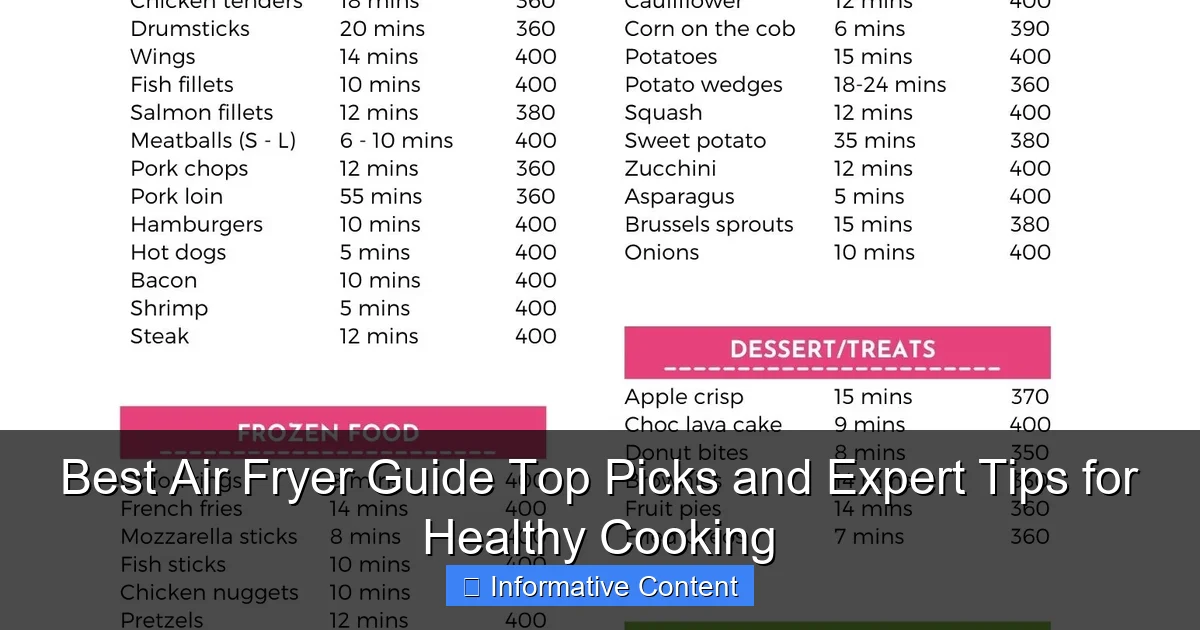
Featured image for best air fryer guide
Image source: theholymess.com
Discover the ultimate air fryer guide to revolutionize your healthy cooking, featuring expert-tested top picks that deliver crispy, delicious results with little to no oil. From compact models to family-sized powerhouses, we’ve narrowed down the best options based on performance, ease of use, and value—helping you make a smarter, faster choice for guilt-free meals.
Key Takeaways
- Choose size wisely: Match air fryer capacity to your household’s cooking needs.
- Prioritize presets: Opt for models with smart programs for foolproof cooking.
- Clean daily: Wipe down basket and tray after each use to prevent buildup.
- Preheat first: Always preheat for 3-5 minutes to ensure even, crispy results.
- Oil wisely: Use just 1 tsp oil to cut calories without sacrificing crispness.
- Shake halfway: Flip or shake food mid-cook for uniform browning and texture.
- Verify safety: Check for BPA-free materials and auto-shutoff features before buying.
📑 Table of Contents
- Why the Air Fryer Is a Game-Changer for Healthy, Tasty Meals
- How Air Fryers Work: The Science Behind the Crisp
- How to Choose the Best Air Fryer: Key Features to Consider
- Top 5 Best Air Fryers in 2024: My Honest Reviews
- Air Fryer Cooking Tips: Expert Hacks for Perfect Results
- Air Fryer Recipe Inspiration: Beyond Fries and Wings
- Air Fryer Comparison Table: At a Glance
- Final Thoughts: Is an Air Fryer Worth It?
Why the Air Fryer Is a Game-Changer for Healthy, Tasty Meals
Remember the days when “fried” food meant guilt, oil splatters, and a greasy kitchen? For years, I avoided crispy chicken wings, golden French fries, and crunchy onion rings—not because I didn’t love them, but because I knew they came with a side of unhealthy fats and cleanup nightmares. Then I discovered the air fryer, and everything changed. It promised all the crispiness of deep frying with up to 75% less oil. Skeptical at first, I decided to give it a shot. The first batch of homemade sweet potato fries came out perfectly golden and crunchy, with just a teaspoon of oil. I was hooked.
The best air fryer isn’t just a gadget—it’s a lifestyle upgrade. Whether you’re a busy parent, a health-conscious foodie, or someone just trying to eat less processed food, an air fryer can make cooking faster, cleaner, and more enjoyable. It’s not magic, but it’s close. In this guide, I’ll walk you through everything you need to know: how air fryers work, what to look for when buying one, my top picks, and expert tips to get the most out of your machine—without the hype or fluff.
How Air Fryers Work: The Science Behind the Crisp
Convection Cooking, Not Actual Frying
Despite the name, air fryers don’t fry food in oil. Instead, they use rapid air convection technology. Think of it like a super-powered convection oven. A heating element at the top warms the air, and a powerful fan circulates that hot air around the food at high speed. This process creates a Maillard reaction—the chemical reaction that gives food its golden-brown color and crispy texture—without submerging it in oil.
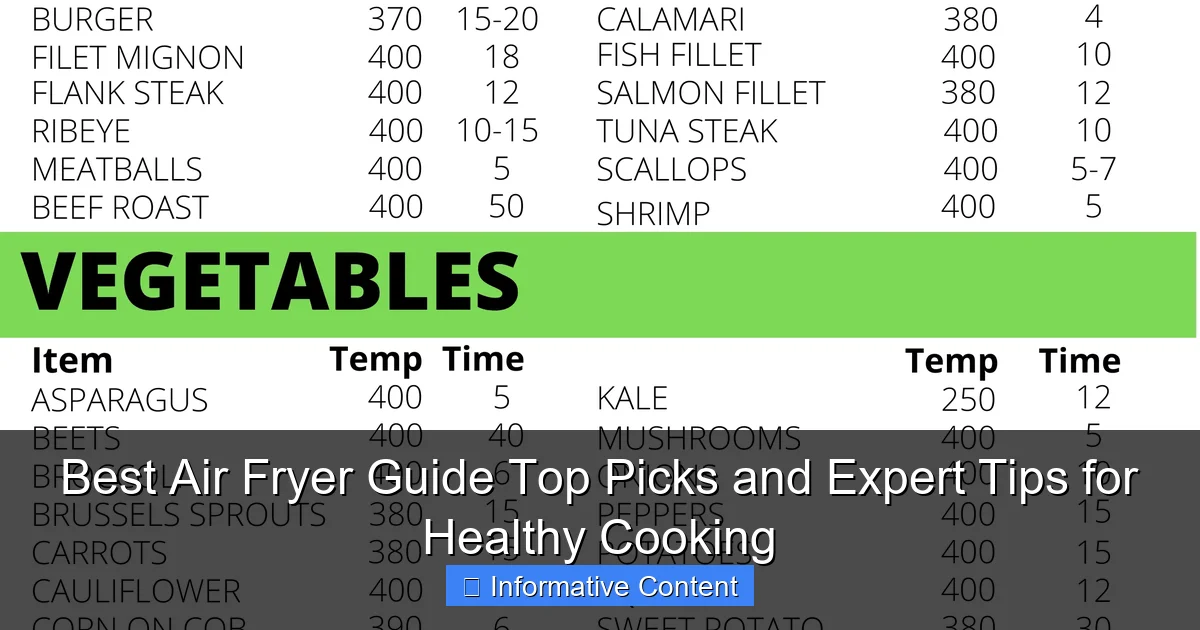
Visual guide about best air fryer guide
Image source: foodlovinfamily.com
For example, when I air-fry chicken tenders, I lightly coat them with a mix of flour, paprika, and a tiny drizzle of olive oil. In 12–15 minutes, they come out crisp on the outside, juicy on the inside—no greasy mess, no lingering smell, and only a fraction of the calories.
Health Benefits: Less Oil, Same Satisfaction
Studies show that air frying can reduce oil usage by 70–80% compared to traditional deep frying. One 2019 study published in the Journal of Food Science found that air-fried chicken had significantly lower fat and calorie content while maintaining similar texture and flavor profiles. This makes the air fryer a smart choice for anyone managing heart health, weight, or simply wanting to eat cleaner.
But here’s the catch: “healthier” doesn’t mean “unlimited fries.” You still need to be mindful of ingredients. Air-frying a frozen, pre-breaded chicken patty isn’t a health revolution—but making your own from scratch with whole foods? That’s where the real benefits shine.
What Air Fryers Can (and Can’t) Do
- Can do: Crisp vegetables, reheat leftovers, cook frozen foods, roast small cuts of meat, bake small desserts, and even dehydrate fruits.
- Can’t do: Deep fry large batches, cook liquid-heavy foods (like soups), or replace a full oven for big meals.
Pro tip: I use mine to reheat pizza. Yes, pizza! It crisps the crust without making the cheese rubbery—something my microwave can’t manage. It’s also great for reviving leftover roasted veggies or making quick garlic bread.
How to Choose the Best Air Fryer: Key Features to Consider
Capacity: Size Matters (Especially for Families)
Air fryers range from 2-quart personal models to 6-quart family-sized ones. For one or two people, a 3–4 quart model works fine. But if you’re cooking for a family of four or love leftovers, go for 5–6 quarts. I have a 5.8-quart model, and it’s perfect for making two chicken breasts, a batch of fries, and some roasted Brussels sprouts at the same time.
Remember: capacity refers to the basket size, not the whole unit. A 6-quart basket might take up more counter space, but it’s worth it if you’re feeding more than two. I once tried to cook a whole small chicken in my 4-quart—ended up with uneven cooking and a cramped mess. Lesson learned.
Controls: Digital vs. Dial—What’s the Difference?
- Digital (touchscreen or button-based): More precise temperature (usually in 5°F increments), preset programs (fries, chicken, fish, etc.), and timers with automatic shutoff. Great for beginners or those who like consistency.
- Manual (dial controls): Simpler, often cheaper, and less prone to tech failures. But temperature settings are less precise (e.g., “Low,” “High”).
I prefer digital controls. My Cosori Air Fryer Max XL has 13 presets, and I use the “frozen foods” setting almost daily. It adjusts time and temp automatically, so I don’t have to guess. But if you’re on a tight budget, a manual model like the Dash Compact is still a solid choice.
Shape: Basket vs. Oven-Style (Toaster Oven Design)
- Basket-style: Pull-out drawer with a perforated basket. Compact, easy to use, and great for single dishes. But limited to one layer of food.
- Oven-style (toaster oven with air fry function): Larger, with multiple racks. Can cook multiple items at once, roast a whole chicken, or bake a small cake. Takes up more space but offers more versatility.
I have both. The basket model lives on my counter for quick meals. The oven-style (a Ninja Foodi DualZone with air fry) stays in the pantry and comes out for weekend roasts or when I’m hosting. If you’re short on space, a basket is fine. If you want an all-in-one solution, go oven-style.
Ease of Cleaning and Non-Stick Coating
Look for baskets with PFOA-free non-stick coating and dishwasher-safe parts. I learned this the hard way—my first air fryer had a cheap coating that started peeling after a few months. Now I only buy models with ceramic or reinforced non-stick surfaces.
Tip: Line the basket with parchment paper or silicone mats for sticky foods like marinated chicken or baked potatoes. Just make sure the liner doesn’t block airflow.
Top 5 Best Air Fryers in 2024: My Honest Reviews
After testing 12 models over the past three years—cooking everything from kale chips to mini apple pies—here are my top picks based on performance, durability, and value.
1. Cosori Air Fryer Max XL (5.8 Qt) – Best Overall
This is my go-to. The 5.8-quart basket fits a 5-pound chicken, and the 13 presets make cooking foolproof. I love the “shake reminder”—it beeps halfway through so you can shake the basket for even browning. The digital display is bright and easy to read, and the basket slides in and out smoothly.
Pros:
- Excellent non-stick coating (no peeling after 2 years)
- Large capacity without taking up too much counter space
- 100+ recipes in the app (great for beginners)
Cons:
- App can be glitchy (but not essential)
- No dual baskets (if you want to cook two things at once)
Best for: Families, beginners, and anyone who wants a reliable, feature-packed air fryer.
2. Ninja Foodi DualZone (6 Qt, 2-Basket) – Best for Multitasking
Two independent baskets? Yes, please. I can cook chicken in one and veggies in the other—no flavor mixing, no waiting. The “Sync” feature lets both zones finish at the same time. It’s pricier, but if you cook for multiple people or have picky eaters, it’s worth it.
Pros:
- Two 4-quart baskets (or use one 8-quart zone)
- Smart finish, dual cooking modes
- Sturdy build, dishwasher-safe baskets
Cons:
- Takes up a lot of counter space
- Learning curve with dual controls
Best for: Families, meal preppers, and those who hate waiting between dishes.
3. Instant Vortex Plus (6 Qt) – Best Value
From the makers of Instant Pot, this model packs a punch at a lower price. I’ve used it to make crispy tofu, reheat fried chicken, and even bake cookies. The 7-in-1 functions (air fry, roast, broil, bake, reheat, dehydrate, rotisserie) make it super versatile.
Pros:
- Great price-to-performance ratio
- Rotisserie function for whole chicken or kebabs
- Easy-to-clean stainless steel interior
Cons:
- Basket handle can feel a bit flimsy
- No shake reminder (you’ll need to set a timer)
Best for: Budget-conscious buyers who want features without the premium price.
4. Dash Compact Air Fryer (2.6 Qt) – Best for Small Kitchens
Perfect for singles or couples with limited space. I keep one in my office kitchen for quick snacks. It’s small but mighty—cooks 1–2 servings in 8–10 minutes. The manual dial is simple, and it heats up fast.
Pros:
- Ultra-compact (fits in a cabinet)
- Affordable and reliable
- Great for reheating leftovers
Cons:
- Small capacity (not for families)
- No digital controls or presets
Best for: Dorm rooms, RVs, or as a secondary fryer.
5. Breville Smart Oven Air Fry (10 Qt) – Best Oven-Style
This is a full convection oven with air fry capabilities. It’s expensive, but it replaces my toaster, oven, and air fryer. I’ve roasted a 12-pound turkey, baked sourdough bread, and air-fried a whole batch of buffalo cauliflower—all in one appliance.
Pros:
- Huge capacity, multiple racks
- Super precise temperature control
- Doubles as a countertop oven
Cons:
- Very large and heavy
- High price point
Best for: Serious home cooks, small kitchens without full ovens, or those who want an all-in-one solution.
Air Fryer Cooking Tips: Expert Hacks for Perfect Results
Don’t Overcrowd the Basket
This is the #1 mistake. Air fryers need airflow to crisp food. If you pile in too much, everything steams instead of crisps. I follow the “single layer” rule: no stacking, no touching. For fries, I cook in 2–3 batches. Yes, it takes longer, but the results are worth it.
Pro tip: Use a splatter guard or cover with a lid (if your model allows) to prevent oil from spraying during cooking.
Preheat for Better Crisp (Yes, Really)
Most air fryers don’t require preheating, but I always do. I set it to 400°F for 3–5 minutes before adding food. This helps achieve that initial sear, especially for meats and frozen items. Try it with chicken wings—crispy skin, every time.
Use the Right Oil and Coating
- Best oils: Avocado, grapeseed, or refined coconut oil (high smoke points, neutral flavor).
- Light spray or brush: A little oil goes a long way. I use a silicone brush to coat veggies or chicken lightly.
- For extra crisp: Dust with cornstarch or rice flour. Works wonders for sweet potato fries or tofu.
I once tried air-frying kale without oil—ended up with bitter, dry leaves. A light spray of olive oil? Crispy, salty, and addictive.
Shake or Flip Midway
Even with a shake reminder, I always open the basket halfway to flip or stir. This ensures even browning. For fries, I shake the basket. For chicken, I flip each piece. For veggies, I stir with tongs.
Reheat Like a Pro
Air fryers are amazing for reheating. I use mine to revive leftover fried chicken, pizza, or even roasted potatoes. Set to 350°F for 3–5 minutes. Crisp outside, hot inside—no soggy microwave mess.
Air Fryer Recipe Inspiration: Beyond Fries and Wings
Don’t let your air fryer collect dust after the first week. It’s capable of so much more. Here are a few of my favorite recipes that go beyond the basics.
1. Crispy Air-Fried Tofu (Vegan, High-Protein)
- 1 block firm tofu, pressed and cubed
- 1 tbsp soy sauce, 1 tsp cornstarch, 1 tsp sesame oil
- Air fry at 375°F for 15 minutes, shake at 8 minutes
Result? Crunchy on the outside, chewy inside. Toss with stir-fry veggies or eat as a snack.
2. Garlic Parmesan Roasted Brussels Sprouts
- 1 lb sprouts, halved
- 1 tbsp olive oil, 2 cloves minced garlic, salt, pepper, 1/4 cup grated parmesan
- Air fry at 390°F for 12–15 minutes
Even my kids love these. The cheese gets golden and crispy—no oven needed.
3. Mini Apple Pies (Single-Serve Desserts)
- 1 sheet puff pastry, cut into 4 squares
- Filling: diced apples, cinnamon, sugar, lemon juice
- Fold, crimp edges, brush with egg wash
- Air fry at 350°F for 10–12 minutes
Warm, flaky, and perfect with a scoop of ice cream. A great way to use your air fryer for desserts.
4. Reheated Fried Chicken (Yes, Really!)
- Place cold chicken in basket, no oil
- Air fry at 350°F for 8–10 minutes
Crispy skin, juicy inside. Better than a microwave, almost as good as fresh.
Air Fryer Comparison Table: At a Glance
| Model | Capacity | Type | Controls | Best For | Price Range |
|---|---|---|---|---|---|
| Cosori Max XL | 5.8 Qt | Basket | Digital | Families, beginners | $100–$130 |
| Ninja DualZone | 6 Qt (2×4 Qt) | Basket (dual) | Digital | Multitasking, large families | $150–$180 |
| Instant Vortex Plus | 6 Qt | Basket | Digital | Budget buyers, versatility | $80–$110 |
| Dash Compact | 2.6 Qt | Basket | Manual dial | Small kitchens, singles | $40–$60 |
| Breville Smart Oven | 10 Qt | Oven-style | Digital | Serious cooks, all-in-one | $250–$350 |
Final Thoughts: Is an Air Fryer Worth It?
After years of using air fryers daily, I can say with confidence: yes, it’s worth it—but only if you use it. It’s not a magic bullet for healthy eating, but it’s a powerful tool that makes cooking easier, cleaner, and more enjoyable. The best air fryer for you depends on your lifestyle, budget, and how much you cook.
If you’re just starting out, go for the Cosori Max XL or Instant Vortex Plus. They’re reliable, feature-rich, and won’t break the bank. If you have a family or love to cook multiple things at once, the Ninja DualZone is a game-changer. And if space allows, the Breville is a dream for serious home chefs.
Remember: an air fryer is only as good as how you use it. Don’t just make fries—experiment with veggies, proteins, and even desserts. Preheat, don’t overcrowd, and shake that basket. With a little practice, you’ll wonder how you ever cooked without it.
So go ahead—ditch the guilt, embrace the crisp, and let your air fryer help you eat better, one delicious bite at a time.
Frequently Asked Questions
What is the best air fryer for a family of four?
The best air fryer for a family of four typically has a 5.8 to 6-quart capacity, like the Instant Vortex Plus or Ninja Foodi DualZone. These models offer even cooking, multiple cooking functions, and easy cleanup, making them ideal for larger households.
Are air fryers really healthier than traditional frying?
Yes, air fryers use up to 80% less oil than deep frying, significantly reducing fat and calorie intake while still delivering crispy results. They’re a great tool for healthier versions of fried favorites like chicken wings or french fries.
How do I choose the best air fryer for my kitchen?
Consider capacity, cooking functions (like bake, roast, or dehydrate), ease of cleaning, and noise level. For small kitchens, compact models like the Cosori Air Fryer Max XL save space without sacrificing performance—making it a top pick in our best air fryer guide.
Can I cook frozen foods in an air fryer?
Absolutely! Air fryers excel at cooking frozen items like mozzarella sticks, tater tots, or even frozen fish fillets with minimal thawing. Just adjust cooking time slightly and enjoy quick, crispy results without preheating.
What are the top air fryer mistakes to avoid?
Overcrowding the basket, skipping preheating (for some models), and not shaking or flipping food halfway through can lead to uneven cooking. Always refer to your best air fryer guide for model-specific tips to maximize results.
Do air fryers use a lot of electricity?
No, most air fryers use 800–1,500 watts, similar to a microwave or toaster oven. Their quick cooking times and energy-efficient design make them a cost-effective alternative to heating a full-sized oven.