
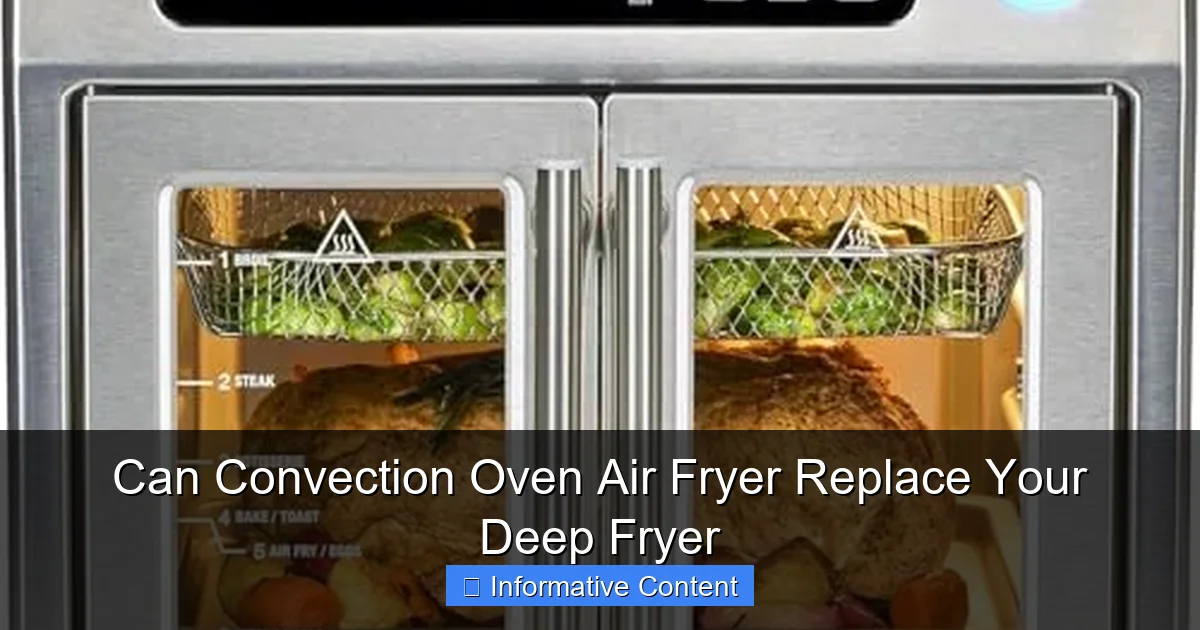
Featured image for can convection oven air fryer
Image source: m.media-amazon.com
A convection oven air fryer can effectively replace your deep fryer by delivering crispy, golden results with up to 75% less oil, making it a healthier and more versatile kitchen essential. With rapid hot air circulation and precise temperature control, it mimics deep frying without the mess, grease, or lingering odors—ideal for guilt-free fries, wings, and more.
Key Takeaways
- Yes, it can replace deep frying: Air fryers deliver crispy results with minimal oil.
- Healthier meals: Cut calories and fat by up to 80% vs. traditional frying.
- Faster cleanup: No messy oil disposal or greasy pans to scrub.
- Multifunctional use: Roast, bake, reheat, and air fry in one appliance.
- Preheat for best results: Always preheat to ensure even, crispy cooking.
- Batch size matters: Avoid overcrowding for optimal air circulation and crispness.
📑 Table of Contents
- Can Convection Oven Air Fryer Replace Your Deep Fryer?
- How Does a Convection Oven Air Fryer Work?
- Pros and Cons of Using a Convection Oven Air Fryer
- Can Air Fryers Replicate Deep-Fried Flavors and Textures?
- Best Foods for Air Frying (and Which Ones to Avoid)
- Choosing the Right Convection Oven Air Fryer: A Buyer’s Guide
- Final Verdict: Should You Ditch Your Deep Fryer?
Can Convection Oven Air Fryer Replace Your Deep Fryer?
Remember that guilty pleasure of biting into a crispy, golden-brown piece of fried chicken or biting into a perfectly fried mozzarella stick with that satisfying crunch? For years, deep frying has been the go-to method for achieving that irresistible texture and flavor. But let’s be honest—deep frying comes with a few downsides. The splatters, the lingering smell, and the not-so-healthy aspect of submerging food in hot oil. Enter the convection oven air fryer, a kitchen gadget that’s been making waves for its promise to deliver that same crunch with less mess and fewer calories. But can it truly replace your trusty deep fryer?
As someone who loves fried food but hates the cleanup, I’ve been on a mission to find a better way. I’ve experimented with various air fryers, convection ovens, and hybrid models to see if they can truly mimic the magic of deep frying. In this post, I’ll walk you through the ins and outs of convection oven air fryers, how they work, their pros and cons, and whether they’re worth the switch. Whether you’re a health-conscious cook, a busy parent, or just someone tired of scrubbing oil off your stovetop, this guide is for you.
How Does a Convection Oven Air Fryer Work?
The Science Behind Air Frying
At first glance, the convection oven air fryer might seem like a futuristic gadget, but the technology is actually quite simple. Unlike traditional deep fryers that submerge food in hot oil, air fryers use rapid air circulation to cook food. Think of it like a mini convection oven with a turbocharged fan. The heating element warms the air, and the fan blasts that hot air around the food at high speed. This process, called convection, creates a crispy outer layer while cooking the inside evenly—no oil bath required.

Visual guide about can convection oven air fryer
Image source: m.media-amazon.com
The key difference between a standard convection oven and an air fryer is the size and speed of the fan. Air fryers have a more powerful fan in a smaller chamber, which means the hot air hits your food from all sides, mimicking the even cooking of a deep fryer. Some models even have a special basket or tray design that helps circulate air more efficiently, giving you that crispy texture we all crave.
Convection Ovens vs. Air Fryers: What’s the Difference?
Here’s where things get a little confusing. Many people use the terms “air fryer” and “convection oven” interchangeably, but they’re not quite the same. A convection oven is a full-sized oven that uses a fan to circulate hot air, making it great for baking, roasting, and even reheating. An air fryer, on the other hand, is a compact countertop appliance designed specifically for crisping and frying.
However, many convection ovens now come with an “air fry” setting or a dedicated air fry tray. This means you can get the benefits of air frying without buying a separate appliance. The advantage? More versatility. You can use the same oven for baking cookies, roasting vegetables, and air frying chicken wings. The downside? The air frying results might not be as consistent as a dedicated air fryer due to the larger chamber and less concentrated airflow.
Pro Tip: If you’re considering a convection oven with an air fry function, look for models with a dedicated air fry tray or basket. This helps direct the airflow more efficiently and improves crispiness.
Pros and Cons of Using a Convection Oven Air Fryer
The Pros: Why You’ll Love It
- Healthier Cooking: The biggest win is the health factor. Air frying uses up to 80% less oil than deep frying, which means fewer calories and less fat. For example, a batch of air-fried french fries has about 5 grams of fat per serving, compared to 17 grams in deep-fried ones. That’s a huge difference if you’re watching your intake.
- Less Mess and Cleanup: No more dealing with splattered oil or greasy pans. Air fryers are self-contained, and most baskets are non-stick and dishwasher-safe. A quick wipe or rinse is usually all you need.
- Faster Cooking Times: Because the hot air circulates more efficiently, many foods cook faster in an air fryer than in a traditional oven. Chicken tenders, for instance, might take 15 minutes in an air fryer versus 25 minutes in a regular oven.
- Versatility: Modern convection ovens with air fry settings can handle a wide range of tasks—baking, roasting, reheating, and even dehydrating. Some models even have pre-programmed settings for specific foods like pizza or chicken wings.
- No Lingering Smells: Deep frying often leaves your kitchen smelling like a fast-food joint for hours. Air frying produces minimal odor, which is a lifesaver if you live in an apartment or hate the smell of fried food.
The Cons: What to Watch Out For
- Texture Differences: While air frying gets close, it doesn’t always replicate the exact texture of deep-fried food. Some foods, like tempura or heavily battered items, might lack that ultra-crisp, oil-infused crunch.
- Batch Cooking Limitations: Air fryers have smaller capacities than deep fryers, so you might need to cook in batches for larger families or parties. A standard 5-quart air fryer can hold about 1 pound of fries or 4 chicken thighs—fine for a family of four, but not for a crowd.
- Learning Curve: Air frying isn’t always a “set it and forget it” process. You’ll need to shake or flip food halfway through cooking to ensure even browning. Some trial and error is needed to find the perfect cooking time and temperature.
- Price Tag: High-quality convection ovens with air fry functions can be pricey. While standalone air fryers are more affordable (ranging from $60 to $200), convection ovens with advanced features can cost $800 or more.
- Space Considerations: If you opt for a standalone air fryer, it takes up valuable counter space. Convection ovens solve this by combining functions, but they’re not always an option for smaller kitchens.
Real-Life Example: I tried making onion rings in my air fryer. The first batch came out a little soggy on the inside because I didn’t shake the basket halfway through. After adjusting the time and flipping them, the second batch was much better—crispy outside, tender inside. It’s all about finding that sweet spot.
Can Air Fryers Replicate Deep-Fried Flavors and Textures?
The Great Crispiness Debate
This is the million-dollar question: Can a convection oven air fryer truly replace the deep-fried crunch we all know and love? The short answer is: sometimes. It depends on the food, the recipe, and your expectations.
For foods with a light coating (think breaded chicken tenders, french fries, or zucchini sticks), air fryers do an excellent job. The rapid air circulation creates a Maillard reaction—the same chemical process that happens in deep frying—giving you that golden-brown, crispy crust. In blind taste tests, many people can’t tell the difference between air-fried and deep-fried versions of these foods.
However, for heavily battered or breaded items (like tempura shrimp or beer-battered fish), the results are mixed. The thick coating can trap moisture, leading to a less crispy texture. Some tricks can help:
- Lightly spray or brush the food with oil before air frying (just 1-2 teaspoons can make a big difference).
- Use a wire rack or perforated tray to elevate the food, allowing air to circulate underneath.
- Preheat the air fryer to ensure the food starts crisping immediately.
Flavor Comparison: Oil vs. Air
Here’s where deep frying has an edge: flavor. Oil isn’t just a cooking medium—it adds richness and depth. When food is submerged in hot oil, the oil seeps into the coating, giving it a unique mouthfeel and flavor. Air frying, by contrast, relies on dry heat, which can result in a slightly “drier” taste.
That said, you can bridge the gap with a few tricks:
- Use flavored oils: Spray your food with a high-smoke-point oil infused with garlic, herbs, or spices.
- Season the coating: Add paprika, garlic powder, or smoked salt to the breading for extra flavor.
- Finish with a drizzle: After air frying, lightly drizzle with oil or a flavorful sauce (like truffle oil or honey).
My Experience: I made air-fried chicken wings using a buttermilk brine and seasoned flour coating. They came out crispy and juicy, but the flavor wasn’t quite as rich as deep-fried wings. A quick spray of avocado oil and a dusting of smoked paprika fixed that. Close enough for me!
Best Foods for Air Frying (and Which Ones to Avoid)
Top Picks for Air Frying Success
Not all foods are created equal when it comes to air frying. Here’s a quick guide to what works best:
- Vegetables: Brussels sprouts, sweet potatoes, zucchini, and cauliflower all crisp up beautifully with minimal oil.
- Meats: Chicken tenders, pork chops, and steak bites cook evenly and develop a great crust.
- Frozen Foods: French fries, mozzarella sticks, and chicken nuggets reheat perfectly—no sogginess.
- Fish: Skin-on salmon or cod gets crispy skin without falling apart.
- Baked Goods: Air fryers can bake cookies, muffins, and even small cakes (though they’ll be smaller than oven-baked ones).
Foods That Don’t Air Fry Well
Some foods are better left to deep frying or other methods:
- Wet Batter: Beer-battered fish or tempura shrimp tend to drip and create steam, leading to soggy results.
- Very Thin Foods: Leafy greens or delicate fish fillets can dry out or burn quickly.
- Large Roasts: Whole chickens or large cuts of meat don’t fit well and cook unevenly.
- Sticky Foods: Foods like honey-glazed chicken can drip and burn on the heating element.
Pro Tip: For wet-battered foods, try using a light dusting of flour or cornstarch instead of a full batter. Or, opt for a “flash fry”—air fry for 80% of the cooking time, then finish in a hot oven for extra crispiness.
Choosing the Right Convection Oven Air Fryer: A Buyer’s Guide
Key Features to Look For
If you’re convinced a convection oven air fryer is right for you, here’s what to consider:
- Capacity: Measure your needs. A 5-6 quart model works for 1-4 people; larger families may need 8+ quarts.
- Controls: Digital controls with pre-set programs are easier to use, but manual dials give you more control.
- Basket Design: Look for a non-stick, dishwasher-safe basket with a handle for easy shaking.
- Temperature Range: A wide range (175°F to 400°F) gives you more flexibility for different foods.
- Accessories: Some models come with racks, trays, or rotisserie attachments for added versatility.
- Noise Level: Air fryers can be loud. If noise is a concern, check reviews for quieter models.
Top Models Compared
| Model | Type | Capacity | Key Features | Price Range |
|---|---|---|---|---|
| Philips Premium AirFryer XXL | Standalone Air Fryer | 7.3 quarts | Rapid Air Technology, dishwasher-safe parts, 16 programs | $200-$250 |
| Ninja Foodi Max XL | Convection Oven with Air Fry | 10 quarts | 8-in-1 functions, dehydrate, roast, bake, air fry | $250-$300 |
| Brava Oven | Convection Oven with Air Fry | 1.2 cubic feet | Smart sensors, no preheat, multi-zone cooking | $800-$1,000 |
| COSORI Air Fryer Max XL | Standalone Air Fryer | 5.8 quarts | 13 programs, shake reminder, non-stick basket | $100-$130 |
My Pick: I use the Ninja Foodi Max XL because it combines an air fryer with a convection oven. I can air fry chicken wings while baking a casserole—perfect for busy weeknights.
Final Verdict: Should You Ditch Your Deep Fryer?
So, can a convection oven air fryer replace your deep fryer? The answer isn’t a simple yes or no—it’s “it depends.” If you’re looking for a healthier, cleaner, and more convenient way to enjoy crispy foods, an air fryer is an excellent investment. It’s perfect for everyday cooking, quick meals, and foods that don’t require a thick, oil-infused crust.
However, if you’re a die-hard fan of classic deep-fried dishes—like tempura, beer-battered fish, or funnel cakes—you might still want to keep your deep fryer for special occasions. The oil just can’t be beat for certain textures and flavors.
Here’s my take: Start by trying an air fryer for the foods you eat most often—fries, chicken, vegetables, and frozen snacks. You’ll likely find that the convenience, health benefits, and ease of cleanup outweigh the slight differences in texture. And who knows? You might discover new ways to enjoy your favorite foods with less guilt.
At the end of the day, the best kitchen tools are the ones that fit your lifestyle. Whether you choose a standalone air fryer or a convection oven with air fry capabilities, you’re taking a step toward a smarter, more efficient way to cook. So go ahead—give it a try. Your taste buds (and your waistline) might just thank you.
Frequently Asked Questions
Can a convection oven air fryer really replace my deep fryer?
Yes, a convection oven air fryer can effectively replace your deep fryer for most dishes, offering crispy results with little to no oil. While it may not perfectly replicate the texture of deep-fried foods like doughnuts, it’s far healthier and easier to clean.
How does an air fryer function in a convection oven?
A convection oven air fryer uses rapid hot air circulation (similar to a convection oven) but with optimized fan speed and airflow to mimic frying. This “air frying” feature browns and crisps food faster than standard convection baking.
Is a convection oven with air fryer worth the extra cost?
If you frequently crave fried foods but want to reduce oil consumption, yes. The convection oven air fryer combo saves space and energy while delivering comparable crispiness to deep frying with minimal cleanup.
What foods can I cook in a convection oven air fryer that usually require deep frying?
You can cook chicken wings, mozzarella sticks, french fries, and even battered foods. For best results, lightly coat items in oil or use a spray to enhance browning—just like traditional air fryers.
Does the convection oven air fryer leave food soggy?
No, if used correctly. Overcrowding the basket or tray is the main cause of sogginess. Leave space between items to ensure hot air circulates evenly, achieving a crispy finish every time.
Can I use my convection oven’s air fryer for reheating leftovers?
Absolutely. The convection oven air fryer excels at reheating fried foods, pizza, and snacks without making them soggy. It restores crispiness better than a microwave in under 5 minutes.