

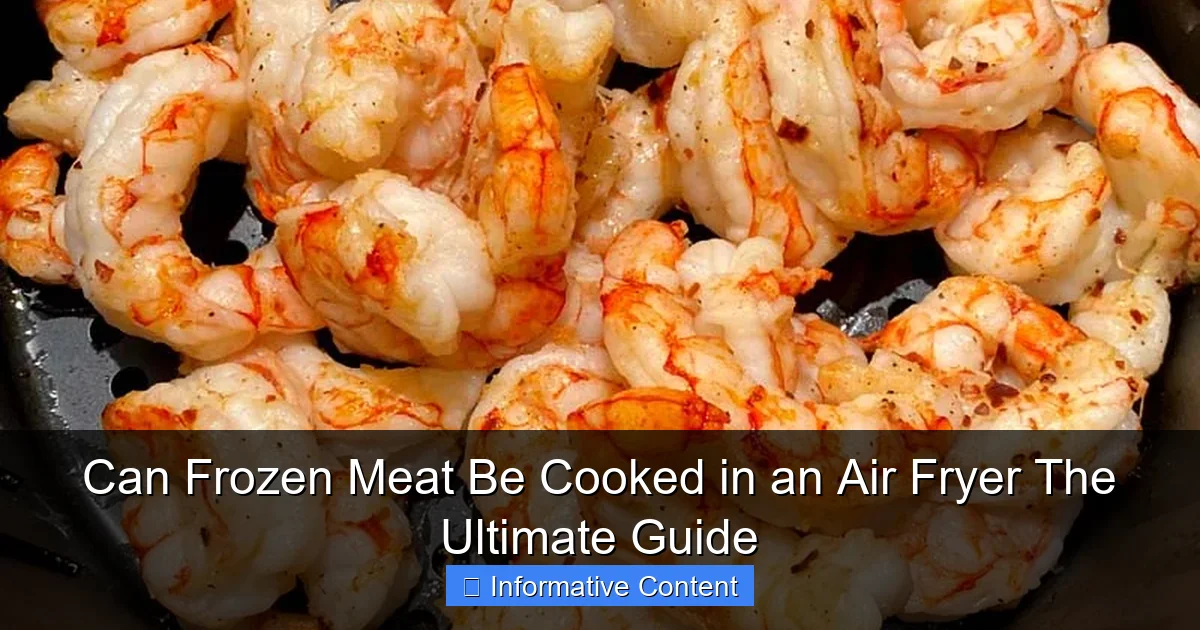
Featured image for can frozen meat be cooked in an air fryer
Image source: recipethis.com
Yes, you can cook frozen meat in an air fryer—it’s a fast, safe, and convenient way to prepare juicy, evenly cooked meals without thawing. With proper temperature settings and timing adjustments, your air fryer can transform frozen steaks, chicken breasts, or burgers into delicious, restaurant-quality dishes in minutes.
Key Takeaways
- Cook frozen meat safely: Air fryers can cook frozen meat without thawing first.
- Adjust cooking time: Add 50% more time compared to thawed meat for even results.
- Preheat for crispiness: Always preheat the air fryer for better texture and browning.
- Flip halfway through: Flip meat mid-cook to ensure uniform cooking and crispiness.
- Check internal temperature: Use a thermometer to confirm safe doneness (e.g., 165°F for poultry).
- Season after cooking: Add spices post-cook to avoid burning and enhance flavor.
- Pat dry for best results: Remove excess ice to prevent steaming and improve crispness.
📑 Table of Contents
- Can Frozen Meat Be Cooked in an Air Fryer? The Ultimate Guide
- How Air Fryers Work with Frozen Meat: The Science Made Simple
- Best Types of Frozen Meat for Air Frying (and Which to Avoid)
- Safety First: How to Cook Frozen Meat Safely
- Step-by-Step Guide: Cooking Frozen Meat in Your Air Fryer
- Common Mistakes and How to Fix Them
- Data: Cooking Times and Temps for Common Frozen Meats
- Final Thoughts: Is It Worth It?
Can Frozen Meat Be Cooked in an Air Fryer? The Ultimate Guide
Imagine this: It’s 6 p.m., you’re tired after work, and dinner plans are nonexistent. You open the freezer, stare at a pack of frozen chicken breasts or a bag of burger patties, and wonder—can I just toss these straight into the air fryer? No thawing, no waiting, no stress? As someone who’s burned countless dinners trying to rush the process, I’ve been there. And the good news? Yes, you can cook frozen meat in an air fryer—and often with surprisingly delicious results.
Air fryers have become kitchen superheroes, promising crispy, golden perfection without the oil or mess of deep frying. But when it comes to frozen meat, myths and confusion abound. Some say it’s unsafe. Others claim it’ll ruin your appliance. The truth? With the right technique, cooking frozen meat in an air fryer is not only safe and convenient but can actually yield juicier, more evenly cooked results than thawed meat in some cases. In this guide, we’ll dive deep into how it works, what types of frozen meat work best, safety tips, and how to avoid common pitfalls. Whether you’re a busy parent, a meal-prep pro, or just someone who forgets to defrost, this guide is for you.
How Air Fryers Work with Frozen Meat: The Science Made Simple
Why Air Fryers Are Great for Frozen Food
Air fryers use rapid hot air circulation to cook food from all sides at once. This method, called convection cooking, mimics the effect of deep frying by creating a crisp exterior while retaining moisture inside. When you place frozen meat in the basket, the hot air starts working immediately on the outer layer. As that layer thaws, the heat penetrates deeper, cooking the meat from the outside in.
Visual guide about can frozen meat be cooked in an air fryer
Image source: melaniecooks.com
Unlike ovens, which take time to preheat and warm the entire cavity, air fryers heat up almost instantly and focus energy directly on the food. This makes them ideal for frozen items that need a quick, even cook. The key is the high-speed air circulation, which prevents the outside from drying out while the inside finishes cooking.
The Thawing Myth: Why You Don’t Always Need to Defrost
Many of us grew up with the rule: “Never cook frozen meat!” But that rule was designed for traditional methods like stovetop frying or slow roasting, where uneven cooking can lead to cold centers and charred outsides. Air fryers, however, are different.
Frozen meat actually benefits from the air fryer’s precision. Because the meat starts frozen, the outer layer acts like a protective shell, slowing down moisture loss. This can result in juicier chicken breasts or more tender burgers compared to thawed meat that might overcook on the outside before the center catches up. Think of it like a built-in “slow release” effect—nature’s way of helping you avoid dry, rubbery results.
What Happens Inside the Meat?
When frozen meat hits the hot air, the surface begins to thaw rapidly. Within minutes, the outer layer reaches a temperature that starts cooking the proteins and browning the surface (via the Maillard reaction). Meanwhile, the core remains cold and continues to thaw gradually. As the air fryer cycles, the heat penetrates deeper, and the meat cooks evenly.
The trick is to give it enough time. Most frozen meats need 20–40% longer than their thawed counterparts. For example, a thawed chicken breast might take 12 minutes at 375°F, but frozen could need 18–20. But the result? Often more flavorful and tender, thanks to reduced moisture evaporation.
Best Types of Frozen Meat for Air Frying (and Which to Avoid)
Top Picks: These Work Like a Dream
Not all frozen meats are created equal. Some cook beautifully in air fryers, while others can turn into dry, rubbery disappointments. Here are the best options:
- Chicken breasts (boneless, skinless): A favorite for meal prep. Cook from frozen at 375°F for 18–22 minutes, flipping halfway. Juicy every time.
- Ground beef patties: Frozen burger patties (like beef or turkey) cook evenly and stay moist. 375°F for 10–12 minutes, flip once.
- Frozen sausages: Breakfast links or dinner sausages? Yes, please. 360°F for 10–15 minutes, depending on thickness.
- Meatballs (homemade or store-bought): A game-changer. 375°F for 12–15 minutes, shaking the basket halfway for even browning.
- Frozen fish fillets (breaded or plain): Cod, salmon, or tilapia? Works great. 375°F for 12–16 minutes, depending on thickness.
Meats That Need Extra Care (or Should Be Avoided)
Some frozen meats require special attention or are better thawed first:
- Large, thick cuts (like pork chops or whole chickens): These are risky from frozen. The outside may overcook before the center reaches safe temps. Thaw first or use a meat thermometer to check.
- Stuffed meats (chicken cordon bleu, stuffed pork chops): The stuffing can act as an insulator, leading to undercooked centers. Best thawed or cooked in stages.
- Frozen meat with sauces or glazes: Sauces can drip and smoke. Try placing a foil liner under the basket or cook at a slightly lower temp to prevent burning.
- Delicate items (like scallops or shrimp): Can dry out quickly. If cooking from frozen, reduce temp to 350°F and cook in batches.
Pro Tip: The “Shake and Flip” Rule
For even cooking, always shake the basket or flip the meat halfway through. This ensures all sides get equal exposure to the hot air. For items like nuggets or meatballs, shaking is enough. For thicker cuts, a flip with tongs is essential.
Bonus tip: Lightly spray or brush frozen meat with oil (just a spritz!) before cooking. This helps crisp the surface and prevents sticking, especially for unbreaded items.
Safety First: How to Cook Frozen Meat Safely
Understanding the Danger Zone
The USDA defines the “danger zone” as temperatures between 40°F and 140°F, where bacteria multiply rapidly. When cooking frozen meat, the goal is to get it through this zone as quickly as possible and into the safe zone (140°F+).
Air fryers are great for this because they heat food rapidly. But safety isn’t just about temperature—it’s about consistency. A meat thermometer is your best friend. Always check the internal temp of the thickest part:
- Chicken: 165°F
- Ground beef: 160°F
- Steaks/pork chops: 145°F (with a 3-minute rest)
- Fish: 145°F
Common Safety Mistakes (and How to Avoid Them)
- Cooking too many pieces at once: Overcrowding blocks airflow, leading to uneven cooking. Cook in batches if needed.
- Not checking internal temps: Don’t rely on time alone. A thermometer is non-negotiable.
- Using damaged or old frozen meat: If meat has been freezer-burned or stored too long, it may not cook evenly. Check for ice crystals, discoloration, or off smells.
- Ignoring the “resting” step: Let meat sit for 3–5 minutes after cooking. This allows juices to redistribute and temps to stabilize.
What If the Outside Is Done But the Inside Isn’t?
This happens! If the outer layer is browned but the center is still cold, don’t panic. Try these fixes:
- Lower the temp and extend the time: Reduce to 325°F and cook another 3–5 minutes. This gives the center time to catch up without burning the outside.
- Cover with foil: If the outside is browning too fast, loosely cover with foil to slow it down.
- Slice and finish: For large cuts, slice the meat in half (if possible) and cook the exposed center for another 2–3 minutes.
Step-by-Step Guide: Cooking Frozen Meat in Your Air Fryer
General Rules for All Frozen Meats
Before we dive into specific recipes, here are universal steps:
- Preheat (optional but helpful): Most air fryers heat quickly, but a 2–3 minute preheat at the target temp can help.
- Lightly oil or spray: A thin coat of oil (avocado, olive, or spray) prevents sticking and aids crispiness.
- Don’t overcrowd: Leave space between pieces for air to circulate.
- Cook at the right temp: Most frozen meats do best at 360–375°F. Lower temps for delicate items (350°F), higher for thick cuts (up to 400°F).
- Flip or shake halfway: Ensures even browning.
- Check temps: Use a meat thermometer.
Specific Examples: From Chicken to Burgers
Frozen Chicken Breasts (Boneless, Skinless)
- Prep: Lightly spray with oil. Season if desired (salt, pepper, garlic powder).
- Cook: 375°F for 18–22 minutes, flip at 10 minutes.
- Check: 165°F internal temp.
- Tip: If breasts are very thick (over 1.5 inches), slice horizontally into thinner cutlets before cooking.
Frozen Beef Burgers
- Prep: Place patties in basket (no oil needed for pre-seasoned ones).
- Cook: 375°F for 10–12 minutes, flip at 5 minutes.
- Check: 160°F internal temp.
- Tip: Add cheese in the last 1–2 minutes for a melty finish.
Frozen Sausages
- Prep: Pierce with a fork to prevent bursting.
- Cook: 360°F for 10–15 minutes, flip at 7 minutes.
- Check: 160°F for pork, 165°F for chicken/turkey.
- Tip: For breakfast sausages, reduce temp to 350°F to avoid drying.
Frozen Meatballs
- Prep: Lightly spray with oil (especially if unbreaded).
- Cook: 375°F for 12–15 minutes, shake basket at 7 minutes.
- Check: 160°F for beef, 165°F for chicken.
- Tip: Toss in sauce after cooking for “baked” meatballs.
Common Mistakes and How to Fix Them
Mistake #1: Overcooking (Dry, Rubber Results)
Why it happens: Too high a temp or too long a cook time. Frozen meat needs patience.
Fix: Lower the temp by 25°F and extend time in 2–3 minute increments. Use a thermometer to avoid guesswork.
Mistake #2: Soggy or Pale Exterior
Why it happens: Not enough oil, overcrowding, or too low a temp.
Fix: Lightly spray oil before cooking. Cook in batches. Increase temp by 25°F if browning is slow.
Mistake #3: Uneven Cooking (Hot Spots)
Why it happens: Air fryers have hot spots (usually near the heating element).
Fix: Rotate the basket halfway or flip the meat. For large batches, rearrange pieces mid-cook.
Mistake #4: Smoking or Burning
Why it happens: Dripping fat or sugary glazes hitting the heating element.
Fix: Place a foil liner under the basket. Use less oil or choose leaner meats. Clean the basket after each use to prevent buildup.
Mistake #5: Forgetting to Rest
Why it matters: Resting allows juices to redistribute. Cutting too soon = dry meat.
Fix: Set a timer for 3–5 minutes after cooking. Use this time to prep sides or set the table.
Data: Cooking Times and Temps for Common Frozen Meats
| Meat Type | Prep Tip | Temp (°F) | Time (Minutes) | Internal Temp (°F) |
|---|---|---|---|---|
| Chicken Breasts (boneless) | Lightly spray oil | 375 | 18–22 | 165 |
| Beef Burgers (1/4 lb) | None (for pre-seasoned) | 375 | 10–12 | 160 |
| Sausages (pork/chicken) | Pierce with fork | 360 | 10–15 | 160–165 |
| Meatballs (beef) | Spray with oil | 375 | 12–15 | 160 |
| Fish Fillets (cod/salmon) | Pat dry first | 375 | 12–16 | 145 |
| Shrimp (large, frozen) | Reduce temp for delicate items | 350 | 8–10 | 145 |
Note: Times are approximate. Always check internal temps. Adjust for air fryer model and meat thickness.
Final Thoughts: Is It Worth It?
So, can frozen meat be cooked in an air fryer? Absolutely—and it’s often better than thawed in many cases. The air fryer’s rapid, even heat turns frozen meat into juicy, golden perfection with minimal effort. No more last-minute thawing or soggy microwave results. Just pop it in, set the timer, and let the appliance do the work.
That said, it’s not foolproof. Thick cuts, delicate items, and meats with sauces need extra care. And safety? Always non-negotiable. A meat thermometer isn’t optional—it’s essential. But once you master the technique, the convenience is unmatched. Imagine: frozen chicken breasts for a quick stir-fry, burgers for an impromptu cookout, or meatballs for a cozy pasta night—all without a single trip to the fridge.
At the end of the day, cooking frozen meat in an air fryer is about smart shortcuts, not lazy compromises. It’s about using technology to make life easier while still delivering flavor, texture, and safety. So next time you’re staring into the freezer with zero plans, remember: your air fryer is ready. Just add meat, set the dial, and enjoy dinner—frozen, fast, and fantastic.
Frequently Asked Questions
Can you cook frozen meat in an air fryer without thawing?
Yes, you can safely cook frozen meat in an air fryer without thawing first. The air fryer’s rapid hot air circulation evenly cooks frozen cuts, though you may need to add 3–5 minutes to the cooking time compared to thawed meat.
What types of frozen meat work best in an air fryer?
Most frozen meats like chicken breasts, burgers, sausages, and pork chops cook well in an air fryer. For best results, choose uniformly sized cuts to ensure even cooking and avoid overcrowding the basket.
Do I need to adjust air fryer settings for frozen meat?
Yes, when cooking frozen meat in an air fryer, increase the cooking time by 20–30% and use a slightly higher temperature (around 375°F/190°C). Shake or flip halfway through for optimal browning and texture.
Is it safe to cook frozen meat in an air fryer?
Cooking frozen meat in an air fryer is safe as long as the internal temperature reaches recommended levels (e.g., 165°F/74°C for poultry). The air fryer’s consistent heat penetration ensures thorough cooking when directions are followed.
How do I prevent frozen meat from drying out in the air fryer?
To keep frozen meat juicy, lightly coat it with oil or marinade before cooking. Avoid overcooking by using a meat thermometer and checking doneness early, especially with lean cuts like chicken or turkey.
Can I cook frozen marinated meat in an air fryer?
Yes, you can cook frozen marinated meat in an air fryer—no need to thaw. The marinade will infuse flavor during cooking, but reduce cook time slightly as the liquid can lower the meat’s starting temperature.