
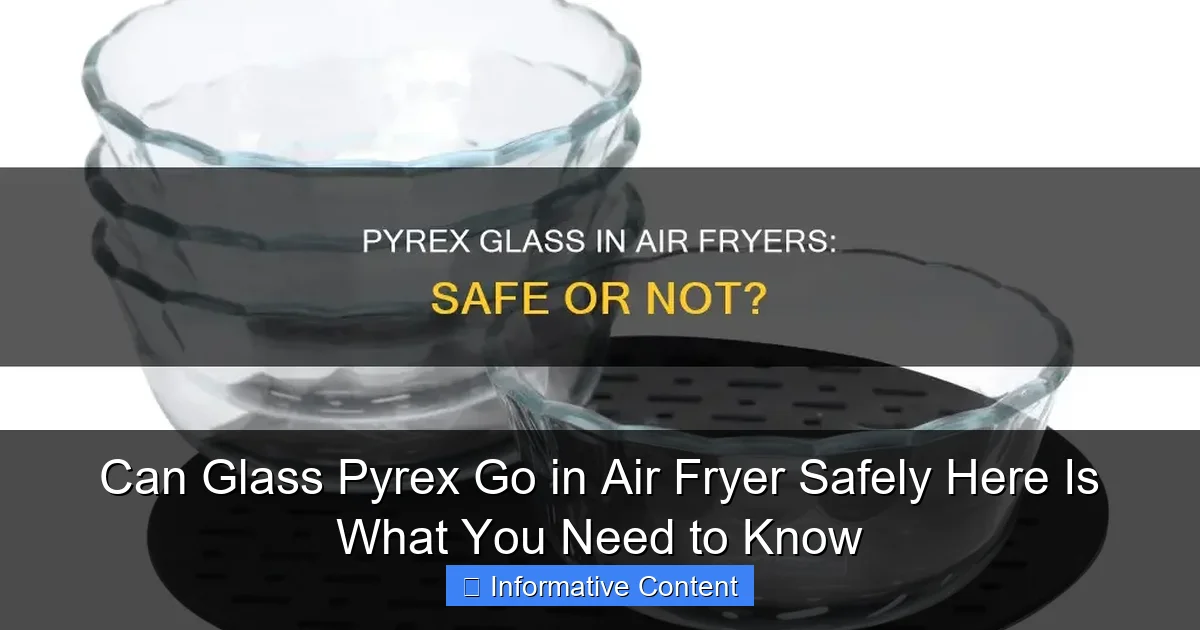
Featured image for can glass pyrex go in air fryer
Image source: cycookery.com
Yes, Pyrex glass can safely go in an air fryer if it’s labeled oven-safe and you follow key precautions like avoiding sudden temperature changes. Always preheat the air fryer and place the Pyrex dish inside before turning it on to prevent cracking due to thermal shock—never add cold dishes to a hot basket or vice versa.
Key Takeaways
- Check for cracks: Inspect Pyrex for damage before air frying to prevent breakage.
- Preheat properly: Avoid thermal shock by preheating Pyrex with the air fryer.
- Use oven-safe only: Ensure Pyrex is labeled oven-safe for air fryer use.
- Limit temperature changes: Avoid sudden shifts from cold to hot environments.
- Place centrally: Position Pyrex in the middle for even heat distribution.
- Monitor closely: Watch for overheating or warping during cooking.
📑 Table of Contents
- Can Glass Pyrex Go in Air Fryer Safely? Here’s What You Need to Know
- Understanding Pyrex Glass and Its Heat Resistance
- How Air Fryers Work and Why They’re Different from Ovens
- Can Glass Pyrex Go in Air Fryer? The Safety Guidelines
- Alternative Cookware Options for Air Fryers
- Real-Life Tips and Common Mistakes to Avoid
- Final Thoughts: Should You Use Glass Pyrex in Your Air Fryer?
Can Glass Pyrex Go in Air Fryer Safely? Here’s What You Need to Know
Let’s be honest—cooking with an air fryer has become one of the most convenient ways to whip up crispy, delicious meals without the guilt of deep frying. I remember the first time I used mine: I tossed in some frozen french fries, set the timer, and was amazed at how perfectly golden they came out. But as I got more comfortable, I started wondering—can I use my favorite glass Pyrex dishes in there too? After all, I already use them in the oven, microwave, and even for storing leftovers. Why not the air fryer?
That question led me down a rabbit hole of research, testing, and a few close calls (thankfully, no shattered glass). What I discovered was both surprising and essential for anyone who loves their Pyrex and wants to use it safely with their air fryer. In this guide, I’ll walk you through everything you need to know—from the science behind Pyrex glass and air fryer temperatures to practical tips, real-life examples, and even a handy data table to help you make the right call. Whether you’re reheating lasagna or baking a mini casserole, knowing can glass Pyrex go in air fryer safely could save you from a kitchen disaster.
Understanding Pyrex Glass and Its Heat Resistance
What Makes Pyrex Different?
Pyrex isn’t just any glass. It’s a brand name that has become synonymous with heat-resistant glassware, and for good reason. Originally made from borosilicate glass, early Pyrex products could withstand extreme temperature changes—like going from the freezer straight into a hot oven. This made them ideal for baking, roasting, and even lab use.
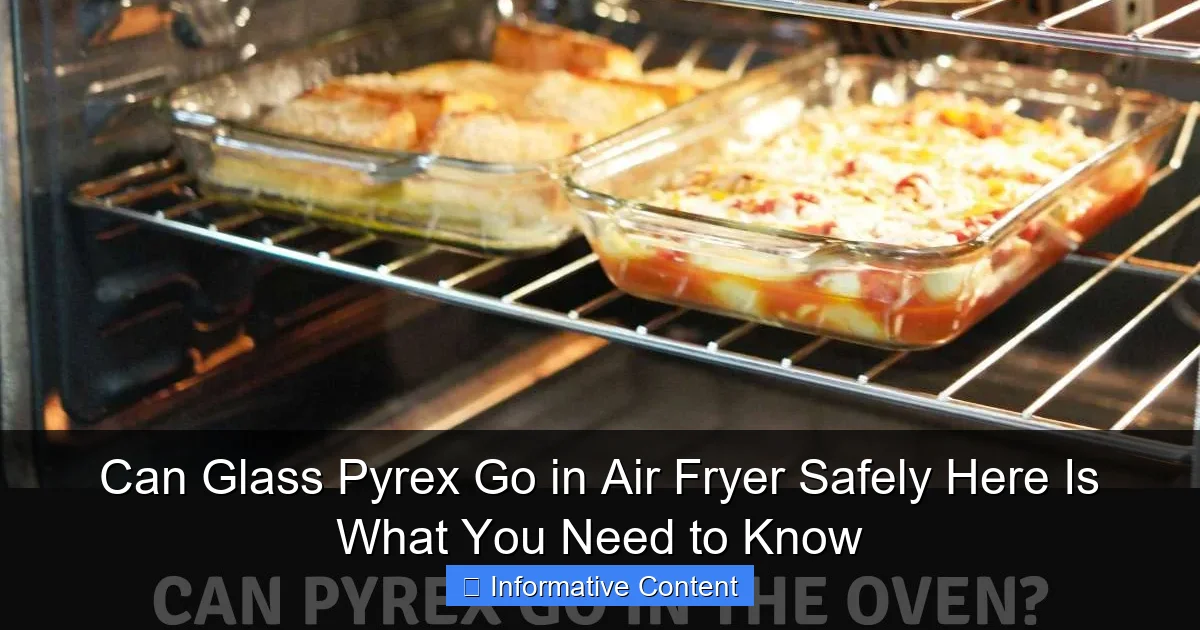
Visual guide about can glass pyrex go in air fryer
Image source: bakingbakewaresets.com
But here’s a twist: since the 1990s, most Pyrex sold in the U.S. and Canada has been made from soda-lime glass, which is tempered to improve durability. While it’s still strong, it’s not quite as heat-resistant as borosilicate. That’s a key distinction when you’re thinking about using it in an air fryer, where temperatures can spike quickly and air circulates at high velocity.
Heat Tolerance of Pyrex Glass
Tempered soda-lime glass (modern Pyrex) is rated to handle temperatures up to 425°F (218°C) when heated gradually. This is usually safe for conventional ovens, where the heat builds slowly. However, air fryers work differently. They use rapid convection—hot air blown at high speed—which can create localized hot spots and thermal shock if the glass isn’t heated evenly.
Thermal shock happens when one part of the glass heats up faster than another. For example, if you place a cold Pyrex dish into a preheated air fryer, the bottom might expand rapidly while the top stays cool. This stress can cause cracks or, in worst cases, shattering. So while your Pyrex might survive a 400°F oven, the same temperature in an air fryer could be riskier due to airflow and uneven heating.
Tip: Look at the bottom of your Pyrex dish. If it says “borosilicate,” you’re in better shape. But if it’s standard tempered glass (most likely), proceed with caution and follow the safety tips below.
How Air Fryers Work and Why They’re Different from Ovens
The Science of Convection Cooking
Air fryers don’t actually fry—they simulate frying using a powerful fan and heating element. The fan circulates hot air at high speeds (often up to 400°F) around the food, creating a crispy exterior similar to deep frying. This process is called convection, and it’s much more intense than the ambient heat of a conventional oven.
Because the air is moving so fast, it can hit the surface of your Pyrex dish from all angles, potentially creating uneven heating. Imagine a hair dryer blowing directly on one side of a glass bowl—it’s not just the temperature, but the way the heat is applied that matters.
Preheating and Temperature Fluctuations
Most air fryers preheat quickly—sometimes in under 5 minutes. This means the air inside is already hot when you insert your dish. If your Pyrex is at room temperature or, worse, cold from the fridge, the sudden exposure can cause thermal stress.
Additionally, air fryers often cycle the heating element on and off to maintain temperature. This creates small fluctuations that, over time, can weaken glass that isn’t designed for such rapid changes. Ovens, by contrast, tend to hold a more stable temperature, making them gentler on glassware.
Real-life example: A friend tried to reheat a chilled Pyrex casserole in her air fryer at 350°F. She didn’t preheat the dish and set it in immediately. Within two minutes, she heard a loud crack. The dish had split cleanly down the middle. The casserole survived, but the dish didn’t.
Takeaway: The method of heating matters as much as the temperature. Air fryers are efficient but aggressive—your Pyrex needs to be handled with care.
Can Glass Pyrex Go in Air Fryer? The Safety Guidelines
When It’s Generally Safe to Use Pyrex
Yes, glass Pyrex can go in an air fryer—but only under certain conditions. Here’s when it’s likely safe:
- Room-temperature Pyrex: Never place a cold dish straight from the fridge into a preheated air fryer.
- Gradual temperature increase: Start at a lower temperature (e.g., 300°F) and increase slowly if needed.
- Short cooking times: Reheating or cooking for under 20 minutes reduces thermal stress.
- Even food distribution: Fill the dish at least halfway to help distribute heat evenly.
- No sudden temperature changes: Avoid opening the air fryer frequently, which causes rapid cooling.
For example, reheating leftover mac and cheese in a room-temp Pyrex dish at 325°F for 10–12 minutes is usually safe. The food acts as a heat buffer, and the short time reduces risk.
When You Should Avoid Using Pyrex
There are clear situations when you should not use Pyrex in your air fryer:
- Starting from cold: A dish that’s been in the fridge or freezer is a no-go. Let it sit at room temp for at least 30 minutes.
- High-heat cooking (400°F+): While Pyrex can technically handle this, the rapid convection in air fryers increases the risk. Stick to 375°F or below.
- Empty dishes: Never preheat an empty Pyrex dish in the air fryer. Without food to absorb heat, the glass heats unevenly and is more likely to crack.
- Damaged or scratched glass: Chips, cracks, or deep scratches weaken the structure. Discard any damaged Pyrex immediately.
- Using the crisper plate directly on Pyrex: The metal plate can scratch the glass and create hot spots.
Pro tip: Use a trivet or silicone mat under the Pyrex dish to elevate it slightly. This improves airflow and reduces direct contact with hot metal components.
Best Practices for Safe Use
If you’re set on using Pyrex in your air fryer, follow these best practices:
- Pre-warm the dish: Place it on the counter while the air fryer preheats. Or, run it under warm (not hot) water first.
- Use a lower rack position: Avoid placing the dish too close to the heating element at the top.
- Check for air gaps: Make sure the air can circulate around the dish, but not so much that it blows food around.
- Monitor the first few uses: Watch for any signs of stress—fogging, popping sounds, or slight warping.
- Let it cool gradually: Don’t place a hot Pyrex dish on a cold counter or in water. Let it cool in the air fryer or on a trivet.
Example: I once made individual frittatas in Pyrex ramekins. I let them sit out for 20 minutes, placed them on a silicone mat, and cooked at 325°F for 15 minutes. They came out perfectly—no cracks, just fluffy eggs. The key was the gradual approach.
Alternative Cookware Options for Air Fryers
Safer Glass and Ceramic Alternatives
If you’re nervous about using Pyrex, there are better-suited options:
- Borosilicate glass dishes: Look for brands like Duralex or Anchor Hocking that specify borosilicate. These handle thermal shock better.
- Ceramic baking dishes: Oven-safe ceramic (like Le Creuset or Emile Henry) is excellent for air fryers. It heats evenly and resists cracking.
- Stoneware: Heavy-duty and great for casseroles. Just make sure it’s labeled oven-safe and avoid sudden temperature changes.
Note: Always check the manufacturer’s label. Some ceramic dishes have metallic glazes that aren’t microwave- or air fryer-safe.
Metal and Silicone: The Air Fryer-Friendly Choices
For maximum safety and performance, consider:
- Silicone molds and pans: Flexible, heat-resistant (up to 450°F), and easy to clean. Perfect for muffins, mini quiches, or even baking bread.
- Aluminum or stainless steel pans: Lightweight and conduct heat well. Use oven-safe versions (not disposable).
- Air fryer-specific accessories: Many brands sell silicone liners, metal trays, and stackable baskets designed to fit perfectly and improve airflow.
Real-life example: I switched to silicone mini loaf pans for banana bread. They fit perfectly in my 5.8-quart air fryer, cook evenly, and pop out easily. No risk of breakage, and cleanup takes seconds.
When to Choose Each Option
Here’s a quick guide to help you decide:
| Cookware Type | Best For | Max Temp | Pros | Cons |
|---|---|---|---|---|
| Pyrex (tempered glass) | Reheating, short bakes | 425°F (with caution) | Non-reactive, clear, oven-safe | Risk of thermal shock; not for high heat |
| Borosilicate glass | All air fryer cooking | 500°F+ | Excellent thermal resistance | More expensive |
| Ceramic | Casseroles, roasting | 450–500°F | Even heating, attractive | Heavy; can chip if dropped |
| Silicone | Baking, small portions | 450°F | Flexible, non-stick, safe | May absorb odors; not rigid |
| Stainless steel | Frying, roasting | 500°F+ | Durable, great sear | Can scratch air fryer basket |
As you can see, while Pyrex has its place, other materials may be safer and more effective depending on your recipe.
Real-Life Tips and Common Mistakes to Avoid
Common Mistakes (And How to Fix Them)
Even experienced cooks make these errors:
- Mistake: Using a cold Pyrex dish. Solution: Always bring it to room temperature first.
- Mistake: Cooking at 400°F for 30 minutes. Solution: Lower the temp to 350°F and extend time slightly.
- Mistake: Placing the dish directly on the metal crisper plate. Solution: Use a silicone mat or trivet.
- Mistake: Assuming all “glass” is safe. Solution: Only use oven-safe glassware, and avoid decorative or non-labeled dishes.
- Mistake: Opening the air fryer frequently to check food. Solution: Resist the urge—each opening drops the temp and stresses the glass.
Smart Hacks for Using Pyrex in Air Fryers
Want to use your Pyrex without stress? Try these:
- Double-layer protection: Place a small metal pan or aluminum foil tray under the Pyrex to buffer heat.
- Use a lid (carefully): A loose-fitting glass or silicone lid can trap steam and prevent drying, but don’t seal it tightly—pressure can build.
- Start with low and slow: Cook at 300°F for 5 minutes, then increase to 325°F if needed. This reduces thermal shock.
- Label your dishes: Use a permanent marker to note which Pyrex dishes you’ve safely used in the air fryer. Helps avoid confusion later.
Personal story: I once forgot I’d put a Pyrex dish in the fridge. I took it out, tossed it in the air fryer, and—pop! A hairline crack appeared. I learned my lesson: always check the temperature of your dish before cooking.
When in Doubt, Test It
If you’re unsure about a specific dish, do a test run:
- Fill it with water or food.
- Set the air fryer to 325°F.
- Cook for 10 minutes.
- Check for cracks, warping, or strange sounds.
If it survives, you’re probably safe for similar recipes. If not, switch to a safer material.
Final Thoughts: Should You Use Glass Pyrex in Your Air Fryer?
So, can glass Pyrex go in air fryer? The short answer is: yes, but with caution. Pyrex can work for reheating, short bakes, and low-to-mid temperature cooking—especially if you follow the safety guidelines we’ve covered. But it’s not ideal for high-heat, long-duration, or cold-start cooking due to the risk of thermal shock.
Think of your air fryer like a high-performance car. It’s powerful, fast, and efficient—but it demands respect. Just like you wouldn’t put regular tires on a race car, you shouldn’t use just any glass in an air fryer. When used correctly, Pyrex can be a helpful tool, but it’s not the best tool for every job.
For peace of mind, consider investing in air fryer-specific cookware—like silicone molds, ceramic dishes, or borosilicate glass. They’re designed for the unique conditions of convection cooking and will last longer, perform better, and keep your kitchen safe.
At the end of the day, your safety and the longevity of your cookware matter more than convenience. A little extra prep—like letting your Pyrex warm up or choosing the right pan—can save you from a messy, dangerous accident.
So go ahead, experiment, but do it wisely. And the next time someone asks, “Can glass Pyrex go in air fryer?” you can confidently say: “Yes—but here’s how to do it safely.”
Frequently Asked Questions
Can glass Pyrex go in an air fryer safely?
Yes, Pyrex glass can generally go in an air fryer if it’s labeled oven-safe and meets the temperature requirements of your recipe. Avoid sudden temperature changes to prevent cracking.
What temperature can Pyrex glassware withstand in an air fryer?
Most Pyrex glass is safe up to 425°F (220°C), but always check the manufacturer’s guidelines. Air fryers typically operate within this range, but preheating empty Pyrex can cause breakage.
Why does Pyrex sometimes crack in an air fryer?
Thermal shock is the main culprit—placing cold Pyrex directly into a hot air fryer or overheating beyond its limit. Always let glassware adjust to room temperature before use.
Can I put a frozen Pyrex dish in my air fryer?
No, never place frozen or chilled Pyrex directly into an air fryer. Extreme temperature differences can cause the glass to shatter. Thaw food first or use oven-safe alternatives like metal.
Are all Pyrex containers air fryer-safe?
Not all Pyrex is created equal—older or damaged pieces may not handle air fryer heat. Look for the “oven-safe” label and inspect for cracks or scratches before use.
What are the best practices for using Pyrex in an air fryer?
Preheat the air fryer gradually, avoid overcrowding, and never exceed the glass’s max temperature. Use potholders when removing Pyrex, as glass retains heat longer than metal.