
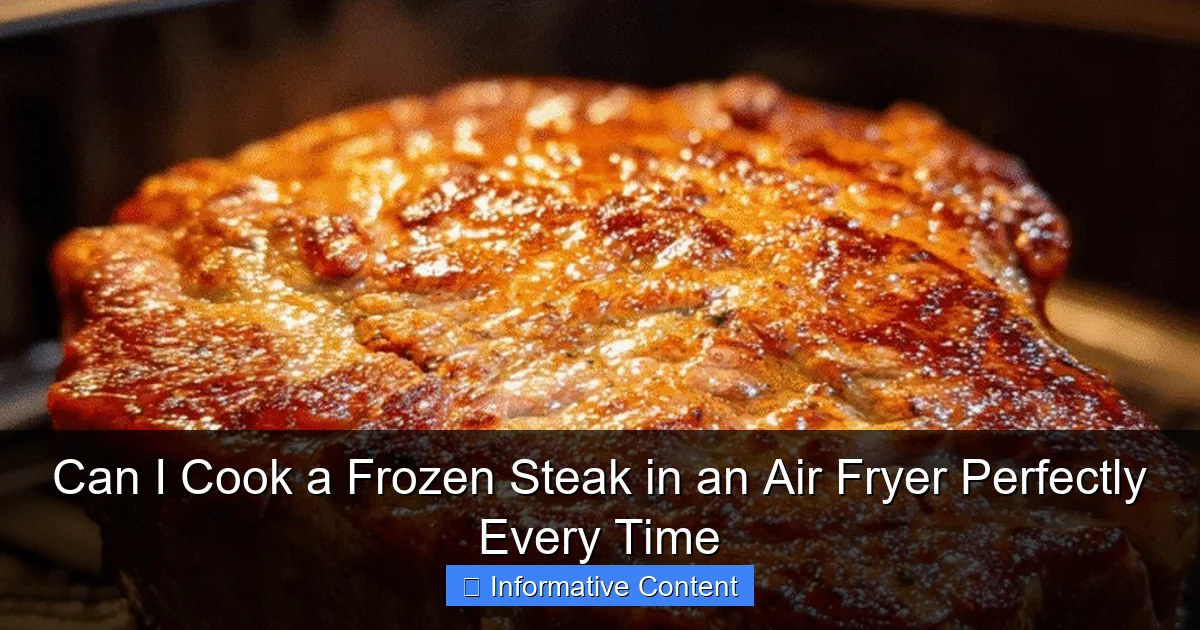
Featured image for can i cook a frozen steak in an air fryer
Image source: airfryerdiaries.com
Yes, you can cook a frozen steak in an air fryer perfectly every time with the right technique—no thawing required. Preheat the air fryer, season the steak, and cook at 375°F (190°C) for 12–18 minutes, flipping halfway, ensuring a juicy, evenly seared result. This method locks in flavor and saves time, making it a game-changer for quick, delicious meals.
Key Takeaways
- Cook frozen steak directly: No thawing needed—air fryer works magic from frozen.
- Preheat for even cooking: Always preheat to ensure consistent results every time.
- Use high heat: Set to 400°F (200°C) for a perfect sear and crust.
- Flip halfway: Flip steak mid-cook for even browning and doneness.
- Check internal temp: Use a thermometer to hit your desired doneness precisely.
- Rest before slicing: Let steak rest 5 minutes to retain juices.
📑 Table of Contents
- Can I Cook a Frozen Steak in an Air Fryer Perfectly Every Time?
- Why the Air Fryer Is a Game-Changer for Frozen Steak
- Choosing the Right Cut of Frozen Steak
- Step-by-Step: How to Cook a Frozen Steak in an Air Fryer
- Common Mistakes (And How to Avoid Them)
- Beyond the Basics: Pro Tips for Next-Level Frozen Steak
Can I Cook a Frozen Steak in an Air Fryer Perfectly Every Time?
Let’s be honest—there’s nothing worse than planning a hearty steak dinner, only to realize you forgot to thaw the meat. We’ve all been there: staring into the freezer at a solid block of frozen steak, wondering if it’s even possible to cook it straight from frozen without turning it into a leathery, uneven mess. Enter the air fryer, the kitchen gadget that’s been touted as a miracle worker for everything from crispy fries to reheating leftovers. But can it truly handle a frozen steak? Can you really cook a frozen steak in an air fryer and still get that juicy, restaurant-quality bite?
The short answer is: yes, you absolutely can. But like most things in life, the key lies in the details. Cooking a frozen steak in an air fryer isn’t as simple as tossing it in and pressing “start.” It requires a little finesse, the right timing, and a few pro tips to avoid overcooking the outside while leaving the center still frozen. In this guide, I’ll walk you through everything you need to know—from choosing the right cut to nailing the perfect internal temperature—so you can cook a frozen steak in an air fryer perfectly every time. Whether you’re a busy parent, a meal prepper, or just someone who loves a good steak without the hassle, this method might just become your new go-to.
Why the Air Fryer Is a Game-Changer for Frozen Steak
When it comes to cooking frozen foods, the air fryer is like the Swiss Army knife of modern kitchens. Unlike traditional ovens or microwaves, it uses rapid, circulating hot air to cook food quickly and evenly. This makes it uniquely suited for cooking frozen steak—a task that often leads to disappointment with other methods.
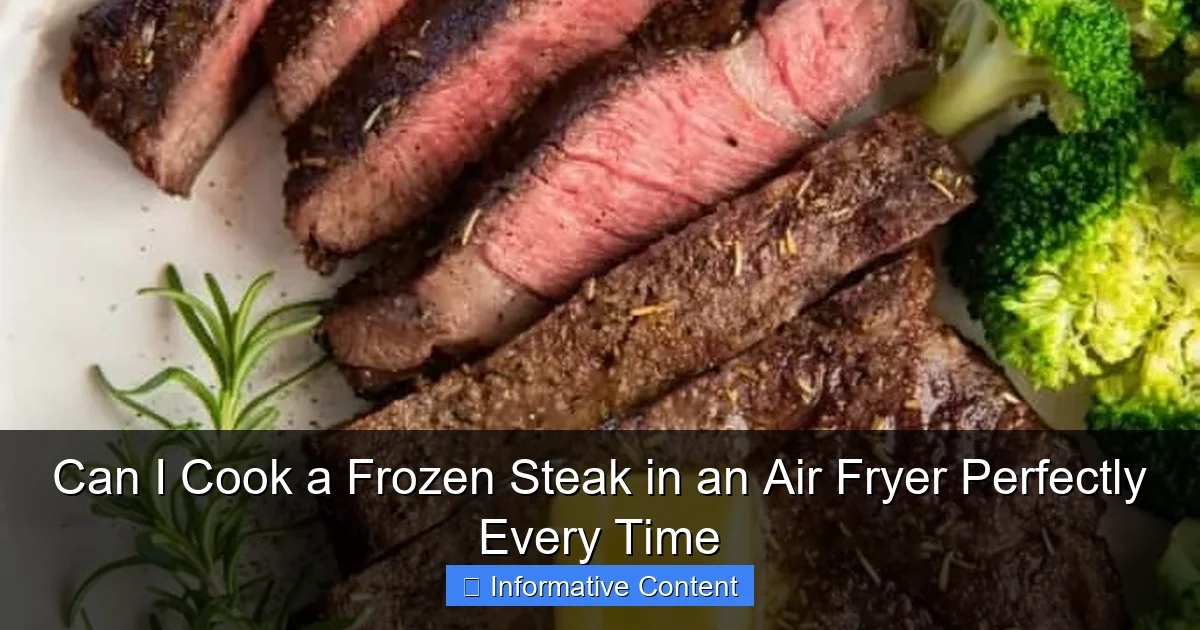
Visual guide about can i cook a frozen steak in an air fryer
Image source: everydayfamilycooking.com
How Air Fryers Work (And Why It Matters)
Air fryers use a heating element and a powerful fan to blow hot air around food at high speed. This process, known as convection cooking, creates a crisp exterior while locking in moisture. Unlike boiling or steaming, which can make frozen steak soggy, the air fryer’s dry heat mimics the effect of a grill or stovetop sear—perfect for achieving that desirable crust.
Here’s why this matters for frozen steak:
- No need to thaw: Skip the fridge thawing process, which can take hours (or even days).
- Faster cooking: The air fryer’s concentrated heat reduces cooking time compared to an oven.
- Even browning: The fan ensures consistent heat distribution, reducing hot spots.
- Less mess: No splattering oil or smoke, unlike pan-searing.
Common Myths About Cooking Frozen Steak
Many people believe that cooking frozen steak leads to uneven results—cooked on the outside, still icy in the center. While this can happen with poor technique, the air fryer actually minimizes this risk. The key is patience and timing, not high heat. Another myth? That frozen steak will be dry. In reality, the outer layer of ice actually helps protect the meat’s juices during the initial cooking phase. When done right, your steak can be just as tender as if it were thawed first.
Real-Life Example: A Busy Weeknight Rescue
Imagine this: It’s 6:30 PM, and you’ve just realized dinner plans involve a frozen ribeye. Instead of scrambling to thaw or resorting to takeout, you grab your air fryer. After preheating and a simple seasoning, you pop the steak in. In under 25 minutes, you’ve got a medium-rare steak with a golden crust. No stress, no waste. That’s the power of this method.
Choosing the Right Cut of Frozen Steak
Not all steaks are created equal—especially when it comes to cooking from frozen. The cut you choose will directly impact texture, cooking time, and flavor. Let’s break down the best options and what to avoid.
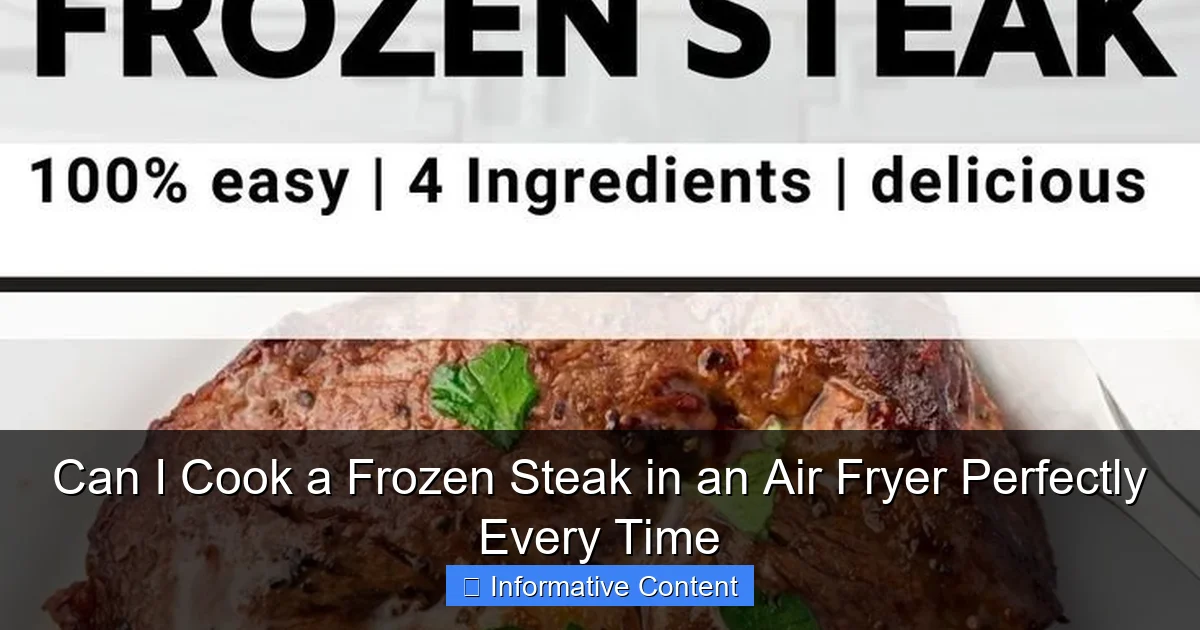
Visual guide about can i cook a frozen steak in an air fryer
Image source: i.pinimg.com
Best Cuts for Air Fryer Frozen Steak
Thinner, more tender cuts work best because they cook through more evenly. Here are the top picks:
- Ribeye: Rich in marbling, which keeps it juicy even when frozen. Aim for 1 to 1.5 inches thick.
- Strip steak (New York Strip): Firm texture with good fat distribution. Cooks evenly in the air fryer.
- Filet mignon: Lean and tender, but best cooked to medium-rare to avoid drying out.
- Sirloin: Affordable and versatile. Works well, but may dry out if overcooked.
Pro tip: Look for steaks with even thickness. Uneven cuts (like a thick center with thin edges) can lead to overcooking the thinner parts.
Cuts to Avoid (or Use with Caution)
- Very thick cuts (over 2 inches): These take too long to cook through, risking a burnt exterior before the center thaws.
- Lean cuts like flank or skirt steak: Prone to drying out when cooked from frozen. Better suited for marinating and high-heat methods.
- Pre-seasoned or marinated frozen steaks: The added moisture can make the surface too wet, preventing a good sear. Pat dry before cooking.
Thickness Matters: The Goldilocks Principle
The ideal thickness for air frying frozen steak is 1 to 1.5 inches. Here’s why:
- Under 1 inch: Cooks too fast, risking overcooking.
- 1 to 1.5 inches: Perfect balance. Enough time for heat to penetrate without burning the outside.
- Over 1.5 inches: Requires a two-stage method (more on that later).
Example: A 1.25-inch ribeye will cook in about 18–22 minutes for medium-rare, while a 2-inch cut may need 30+ minutes and a pre-sear.
Step-by-Step: How to Cook a Frozen Steak in an Air Fryer
Now for the good stuff—the actual method. I’ve tested this dozens of times, tweaking times, temperatures, and techniques to find the sweet spot. Follow these steps, and you’ll nail it every time.
Step 1: Preheat the Air Fryer
Preheating is non-negotiable. It ensures the steak starts cooking immediately, reducing the risk of uneven doneness. Set your air fryer to 400°F (205°C) and let it run for 5 minutes. This is the optimal temperature for searing and cooking simultaneously.
Why 400°F? Higher temps (like 450°F) can burn the outside before the center thaws. Lower temps (like 350°F) take too long, drying out the steak.
Step 2: Season the Steak
Even though it’s frozen, seasoning matters. Use a simple blend:
- 1 tsp kosher salt
- 1/2 tsp black pepper
- 1/2 tsp garlic powder (optional)
- 1/4 tsp onion powder (optional)
Sprinkle evenly on both sides. No need to thaw—the seasoning will adhere to the ice layer and infuse flavor as it cooks.
Pro tip: Add a light drizzle of olive oil (1/2 tsp per side) to enhance browning. Don’t overdo it—oil can cause smoking.
Step 3: Place Steak in the Air Fryer
Place the steak in the basket in a single layer. If your air fryer is small, cook one steak at a time to ensure proper airflow. Do not overcrowd—this traps steam and prevents crisping.
For even cooking, position the steak so the thicker part is toward the center of the basket, where airflow is strongest.
Step 4: Cook in Two Stages (For Thicker Cuts)
This is the secret to avoiding overcooked edges. For steaks 1 inch or thicker:
- Stage 1 (Sear): Cook at 400°F for 5 minutes per side (10 minutes total). This creates a crust and starts thawing the center.
- Stage 2 (Cook): Reduce heat to 350°F (175°C). Cook for 8–12 minutes, flipping halfway. Use a meat thermometer to check doneness.
For steaks under 1 inch, cook at 400°F for 8–10 minutes, flipping once.
Step 5: Check Internal Temperature
This is the most important step. Use an instant-read meat thermometer to avoid guesswork. Insert it into the thickest part, away from fat or bone.
Target temperatures for doneness:
| Doneness | Internal Temp (°F) | Internal Temp (°C) |
|---|---|---|
| Rare | 120–125 | 49–52 |
| Medium-Rare | 130–135 | 54–57 |
| Medium | 140–145 | 60–63 |
| Medium-Well | 150–155 | 66–68 |
| Well-Done | 160+ | 71+ |
Remove the steak 5°F below your target temp. It will rise 5°F during resting (carryover cooking).
Step 6: Rest and Serve
Rest the steak on a plate or cutting board for 5–10 minutes. This lets juices redistribute, ensuring a tender bite. Slice against the grain for maximum tenderness.
Real-life tip: Resting is easy to skip when you’re hungry, but it makes a huge difference. I once served a steak without resting—my family said it was “good but chewy.” The next time, I rested it, and they asked if I’d gone to a fancy restaurant!
Common Mistakes (And How to Avoid Them)
Even with the best method, mistakes happen. Here are the top pitfalls and how to fix them.
1. Overcooking the Outside
Problem: The steak looks charred, but the center is still cold.
Solution: Use the two-stage method (400°F for searing, 350°F for cooking). For very thick cuts, consider a quick pre-sear in a hot skillet before air frying.
2. Undercooking the Center
Problem: The outside is perfect, but the center is icy.
Solution: Don’t rush. Use a thermometer. If the center is still frozen after 15 minutes, reduce heat to 325°F and cook in 5-minute increments, checking often.
3. Soggy or Pale Steak
Problem: The steak lacks a crust.
Solution: Ensure the air fryer is fully preheated. Pat the steak dry with a paper towel before seasoning. Avoid overcrowding.
4. Uneven Cooking
Problem: One side is well-done, the other rare.
Solution: Flip halfway through. Use tongs (not a fork) to avoid losing juices. For thick cuts, rotate the steak 180° halfway.
5. Smoke and Odor
Problem: The air fryer smokes or smells like burnt steak.
Solution: Avoid excess oil. Clean the air fryer basket after each use. If using fatty cuts, place a drip tray (or aluminum foil) under the basket to catch grease.
6. Forgetting to Rest
Problem: Juices leak out when slicing, making the steak dry.
Solution: Set a timer for 10 minutes. Use the time to prepare sides or make a simple pan sauce from the drippings.
Beyond the Basics: Pro Tips for Next-Level Frozen Steak
Want to elevate your frozen steak game? These advanced tips will take your air fryer skills to the next level.
Enhance Flavor with a Quick Sear (Optional)
For an extra-crispy crust, finish the steak in a hot skillet for 30–60 seconds per side. Use a cast-iron pan with a splash of oil or butter. This adds a restaurant-quality sear without overcooking.
Pro tip: Add a sprig of rosemary or thyme to the skillet for aromatic flavor.
Marinate After Thawing (Yes, Really!)
While you can’t marinate a frozen steak, you can reverse marinate. After cooking, let the steak rest in a simple marinade (e.g., soy sauce, garlic, olive oil) for 30 minutes. It adds depth without overpowering.
Experiment with Seasonings
Try these bold flavor combos:
- Smoky: Paprika, cumin, chili powder
- Herbaceous: Dried oregano, thyme, rosemary
- Umami: Soy sauce, Worcestershire, mushroom powder
Mix with oil and brush on during the last 5 minutes of cooking.
Make a Pan Sauce (Even Without a Pan!)
After cooking, deglaze the air fryer basket (if safe to do so) with broth, red wine, or balsamic vinegar. Add butter and fresh herbs for a quick sauce.
Freeze Your Own Steak for Perfect Results
For the best texture, freeze steaks before cooking. Wrap tightly in plastic, then foil, and label with date and cut. This prevents freezer burn and ensures even freezing.
There you have it—your ultimate guide to cooking a frozen steak in an air fryer perfectly every time. From choosing the right cut to avoiding common mistakes, this method saves time, preserves flavor, and delivers consistent results. Whether you’re in a pinch or just love the convenience, the air fryer is your frozen steak’s new best friend. So next time you’re staring at that icy slab of beef, don’t panic. Fire up the air fryer, follow these steps, and enjoy a steakhouse-quality dinner in under 30 minutes. Happy cooking!
Frequently Asked Questions
Can I cook a frozen steak in an air fryer without thawing it first?
Yes, you can cook a frozen steak in an air fryer directly—no thawing required. The air fryer’s rapid hot air circulation cooks the steak evenly while maintaining a juicy interior.
What’s the best way to cook a frozen steak in an air fryer?
Season the frozen steak, preheat the air fryer to 400°F (200°C), and cook for 12–18 minutes, flipping halfway. Adjust time based on thickness and desired doneness for perfect results.
Does cooking a frozen steak in an air fryer affect its texture or flavor?
When done right, the air fryer seals in juices, yielding a flavorful steak with a slightly crisp exterior. Just avoid overcrowding and use a meat thermometer for accuracy.
How long should I cook a 1-inch frozen steak in an air fryer?
Cook a 1-inch frozen steak at 400°F (200°C) for 14–16 minutes, flipping halfway. Use a thermometer to ensure it reaches 135°F (medium-rare) or your preferred temperature.
Can I use the air fryer to cook frozen steak from any cut, like ribeye or sirloin?
Yes, cuts like ribeye, sirloin, or strip steak work well. Thicker cuts may need extra time, so monitor internal temperature for doneness.
Do I need to add oil when cooking a frozen steak in an air fryer?
Adding a light spray of oil enhances browning, but it’s optional since frozen steaks release fat as they cook. Focus on seasoning and proper timing for best results.