
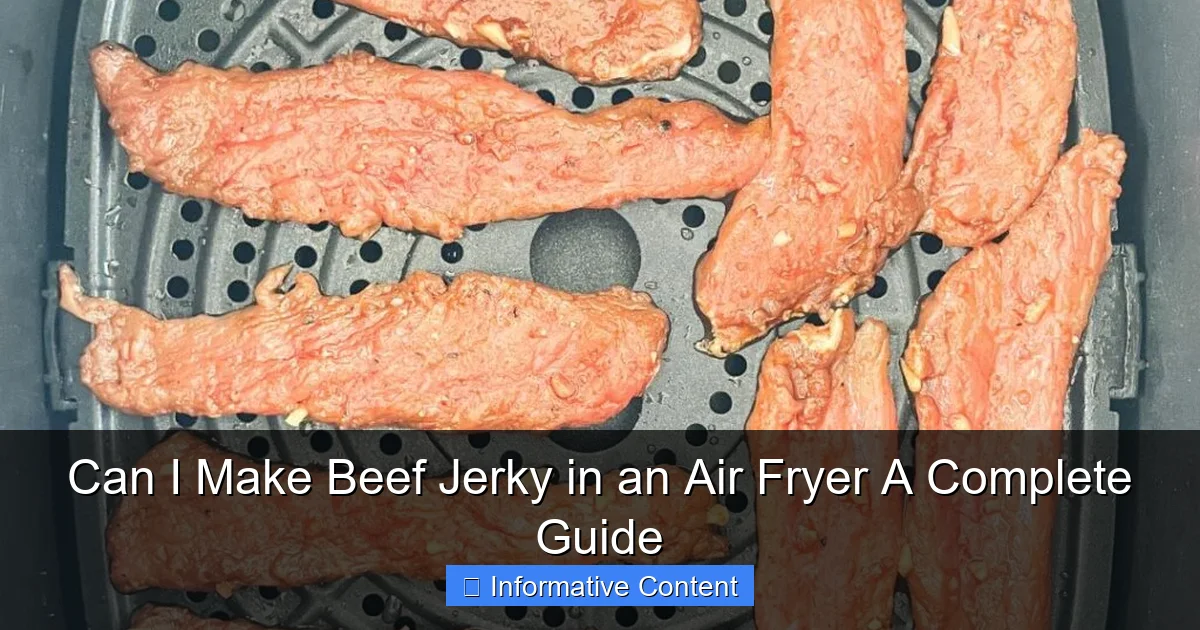
Featured image for can i make beef jerky in an air fryer
Image source: airfryerdelicacies.com
Yes, you can make beef jerky in an air fryer—it’s a faster, more convenient alternative to dehydrators or ovens, delivering tender, flavorful results in under 2 hours. With proper slicing, marinating, and air fryer settings (160–180°F), you’ll achieve perfectly chewy jerky with minimal effort, though batch size and cook time may vary by model.
Key Takeaways
- Yes, you can: Make beef jerky in an air fryer with proper settings.
- Slice thinly: Uniform 1/4-inch strips ensure even drying and texture.
- Marinate well: At least 4–6 hours for maximum flavor infusion.
- Low and slow: Cook at 160°F–180°F for 2–4 hours, checking often.
- Rotate trays: Promotes consistent airflow and prevents uneven drying.
- Store properly: Keep in airtight containers to maintain freshness.
📑 Table of Contents
- Can I Make Beef Jerky in an Air Fryer? A Complete Guide
- Why Use an Air Fryer for Beef Jerky?
- Choosing the Right Beef and Prepping It Properly
- Marinating for Maximum Flavor and Safety
- Step-by-Step: How to Air Fry Beef Jerky
- Troubleshooting, Storage, and Safety Tips
- Creative Variations and Final Thoughts
Can I Make Beef Jerky in an Air Fryer? A Complete Guide
Beef jerky has always held a special place in my heart—and my snack drawer. I remember road trips with my dad, where we’d share a bag of store-bought jerky, chewing through the long drives. But as I got older, I started wondering: *Could I make this at home?* And more specifically—*Can I make beef jerky in an air fryer?*
That question led me down a delicious rabbit hole. I’ve tested, failed, and eventually succeeded in turning lean strips of beef into savory, chewy jerky using nothing but my trusty air fryer. And guess what? Yes, you absolutely can make beef jerky in an air fryer—and it might just become your favorite kitchen hack. Whether you’re a jerky newbie or a seasoned snacker looking to skip the dehydrator, this guide will walk you through everything you need to know: the right cuts of meat, marinade secrets, timing tricks, and even how to avoid common mistakes. No fancy equipment required—just your air fryer and a craving for something tasty.
Why Use an Air Fryer for Beef Jerky?
Let’s face it—dehydrators are great, but they’re bulky, expensive, and often sit unused in the back of your pantry. I’ve had mine for years, and I’ve used it maybe five times. When I first thought about making jerky, I assumed I’d need one. But then I remembered my air fryer—the appliance I use daily for crispy chicken tenders, roasted veggies, and even reheating pizza without sogginess.

Visual guide about can i make beef jerky in an air fryer
Image source: temeculablogs.com
So I asked myself: *Could it do jerky too?* The answer surprised me. Air fryers use rapid air circulation to cook food evenly and remove moisture—just like a dehydrator, but faster and with better temperature control. And since most people already own one, it’s a cost-effective, space-saving alternative.
How Air Fryers Mimic Dehydration
At its core, beef jerky is all about removing moisture to prevent spoilage while preserving flavor and texture. Traditional dehydrators do this slowly over 6–12 hours. An air fryer works by circulating hot air (usually between 170°F and 200°F) around the meat, drawing out moisture more efficiently than oven baking—and with less energy than a full-sized oven.
Think of it like this: your air fryer is essentially a mini convection oven with a turbo boost. The fan pushes hot air over the meat, creating a dry environment that slowly cooks and dehydrates the beef. It’s not *exactly* the same as slow dehydration, but it gets remarkably close—especially when you adjust settings and timing.
Benefits Over Other Methods
Here’s why I now prefer the air fryer method:
- Faster than dehydrators: While traditional dehydrators take 6–12 hours, air fryer jerky can be ready in 3–5 hours.
- More control: Most air fryers let you set exact temperatures and timers—no guessing games.
- No extra appliance: You’re not buying another gadget. If you already have an air fryer, you’re set.
- Better flavor development: The slightly higher heat helps caramelize the marinade, giving your jerky a richer taste.
- Small-batch friendly: Perfect for making 1–2 pounds at a time, ideal for experimenting with flavors.
One caveat? Air fryers have limited space. You won’t be making 10 pounds of jerky at once. But for personal batches or sharing with family, it’s perfect.
Drawbacks to Consider
It’s not all sunshine and umami, though. There are a few downsides:
- Batch size limits: Most air fryers fit 1–1.5 pounds of thinly sliced beef at a time.
- Risk of overcooking: Too high a temp or too long a cook time can make jerky tough or burnt.
- Less uniform drying: Corners or edges may dry faster than the center, so rotation is key.
The good news? These issues are easy to avoid with a little attention and technique—which we’ll cover next.
Choosing the Right Beef and Prepping It Properly
Not all beef is created equal when it comes to jerky. I learned this the hard way. My first attempt used ground beef—yes, really. I thought I’d try a “lazy” version by spreading ground beef into thin sheets. Spoiler: it turned into a crumbly, greasy mess. Don’t be like me.
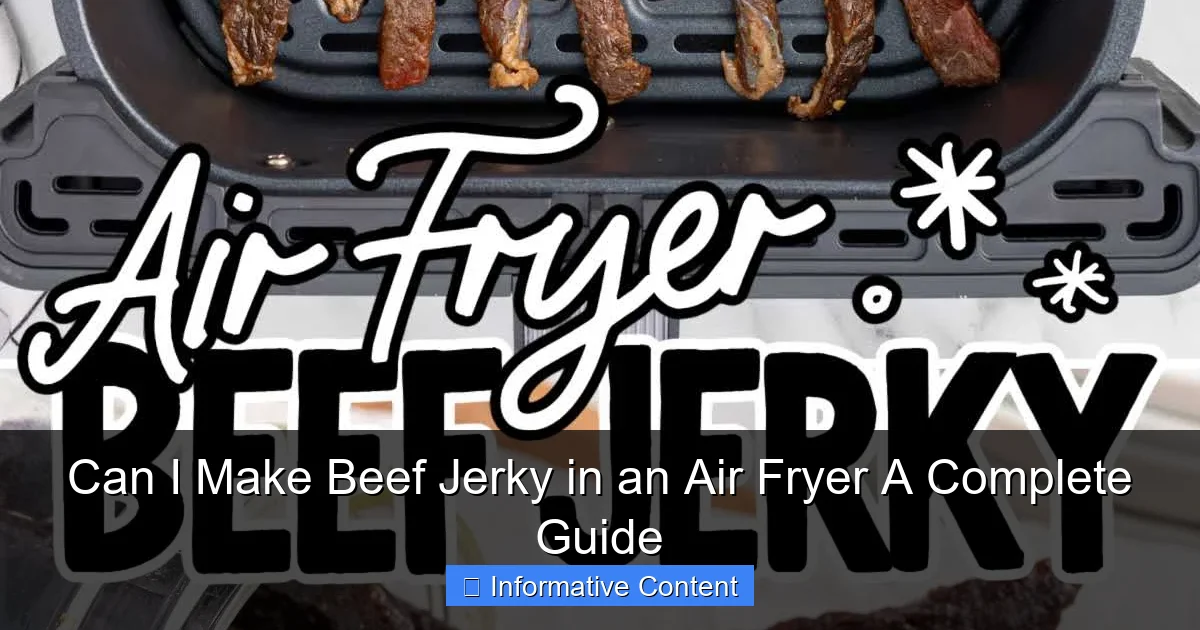
Visual guide about can i make beef jerky in an air fryer
Image source: spaceshipsandlaserbeams.com
Best Cuts for Air Fryer Jerky
For tender, chewy jerky that doesn’t fall apart, you want lean cuts with minimal fat. Fat doesn’t dehydrate well and can go rancid faster, shortening shelf life. Here are the top choices:
- Top round: Affordable, lean, and widely available. Great for beginners.
- Bottom round: Slightly tougher but very lean. Works well with longer marinades.
- Eye of round: Uniform texture, excellent for even drying. My personal favorite.
- Flank steak: More marbling, but packs big flavor. Trim excess fat before slicing.
- Sirloin tip: Balanced tenderness and price. A solid middle-ground option.
Avoid fatty cuts like chuck roast or brisket unless you’re trimming aggressively. Trust me—your jerky will thank you.
How to Slice the Beef Correctly
This step makes or breaks your jerky. I once sliced my beef too thick (about ½ inch), and it ended up rubbery in the center. The sweet spot? ¼ inch thick—about the width of a pencil.
- Freeze for 30 minutes: Slightly frozen meat is easier to slice thinly and evenly.
- Slice against the grain: This breaks up muscle fibers, making the jerky more tender. Look for the lines running through the meat and cut perpendicular to them.
- Keep it consistent: Use a sharp knife or a meat slicer if you have one. Uniform thickness = even drying.
Pro tip: If you’re slicing by hand, go slowly. A dull knife tears the meat, creating uneven edges that dry too fast.
Trimming Fat and Silver Skin
Even lean cuts have some fat and connective tissue (silver skin). Remove both:
- Fat: Trim visible marbling. It won’t dry properly and can spoil your jerky faster.
- Silver skin: This tough membrane won’t soften during dehydration. Peel it off with a knife or your fingers.
After trimming, pat the slices dry with paper towels. Excess surface moisture slows down the drying process and can lead to steaming instead of dehydrating.
Marinating for Maximum Flavor and Safety
Marinating isn’t just about flavor—it’s also a safety step. Acidic ingredients (like vinegar, lemon juice, or soy sauce) help kill surface bacteria, while salt and spices add depth and preservation.
I’ve experimented with dozens of marinades, from classic teriyaki to spicy Korean gochujang. Some worked great; others turned my jerky into a salty, vinegary disappointment. Here’s what I’ve learned.
Essential Ingredients for a Great Marinade
Every good jerky marinade has four components:
- Liquid base: Soy sauce, Worcestershire, or tamari provide umami and salt.
- Acid: Vinegar, lemon juice, or pineapple juice tenderize and add tang.
- Sugar (optional): Brown sugar, honey, or maple syrup balance saltiness and aid browning.
- Flavor boosters: Garlic, onion, chili flakes, smoked paprika, ginger, etc.
Example: A simple “Classic” marinade might include:
- ½ cup soy sauce
- ¼ cup brown sugar
- 2 tbsp Worcestershire sauce
- 2 cloves minced garlic
- 1 tsp onion powder
- ½ tsp black pepper
- 1 tsp liquid smoke (optional, for smokiness)
Marinating Time: How Long Is Long Enough?
Marinating time depends on the cut and thickness. For ¼-inch slices:
- Minimum: 4 hours (overnight is better).
- Ideal: 8–12 hours in the fridge.
- Maximum: 24 hours. Beyond that, the meat starts to “cook” in the acid and becomes mushy.
I always marinate overnight. It fits my schedule, and the flavor penetrates deeper. Just remember: always marinate in the refrigerator, never at room temperature.
Tips to Avoid Common Marinade Mistakes
- Don’t over-salt: Soy sauce and Worcestershire are already salty. Taste before adding extra salt.
- Use a resealable bag: It ensures even coverage and saves space in the fridge.
- Massage the meat: Every hour or two, flip the bag and press the marinade into the beef. This helps it absorb faster.
- Pat dry before air frying: Excess marinade on the surface can cause steaming instead of drying. Use paper towels to blot each slice.
Bonus idea: Try a dry rub! Mix spices and salt, coat the beef, and let it sit for 1–2 hours. No liquid means no blotting—and a crispier texture.
Step-by-Step: How to Air Fry Beef Jerky
Now comes the fun part—cooking! I’ve perfected my method after many trial runs. Follow these steps for foolproof air fryer jerky.
Preheat Your Air Fryer
Start by preheating your air fryer to 170°F (77°C) for 5 minutes. This ensures consistent drying from the start. Some models don’t have a preheat function—just set the timer and let it run empty.
Why 170°F? It’s hot enough to kill bacteria (above 160°F) but low enough to avoid cooking the outside before the inside dries. Higher temps = burnt jerky.
Arrange the Beef Strips
Place the marinated, patted-dry beef strips in the basket in a single layer. Overlapping leads to uneven drying and steaming.
- Use parchment paper or a silicone mat: Prevents sticking and makes cleanup easier.
- Leave space between strips: At least ¼ inch apart for airflow.
- Don’t overcrowd: You may need to cook in 2–3 batches, depending on your air fryer size.
For larger air fryers (6+ quarts), you can fit 1–1.5 pounds. Smaller models (3–4 quarts) handle about 1 pound max.
Air Fry in Phases (With Rotation)
This is where most people go wrong. They set it and forget it. But jerky needs attention.
- First round: Cook at 170°F for 1.5 hours.
- Flip and rearrange: Open the basket, flip each strip, and move outer pieces to the center (and vice versa). This ensures even drying.
- Second round: Cook for another 1–1.5 hours. Check at 1 hour.
- Final check: After 2.5–3 hours total, test a piece. It should be dry and leathery, but still bendable. It shouldn’t snap like a chip.
Total time: Usually 3–4 hours, but can go up to 5 for thicker slices or humid environments.
How to Tell When It’s Done
Don’t rely on time alone. Use these tests:
- Bend test: Fold a piece. If it cracks but doesn’t break, it’s done. If it’s still soft or moist, cook 15–30 minutes more.
- Touch test: It should feel firm and dry, not sticky or greasy.
- Smell test: It should smell savory and meaty, not raw or burnt.
If you see dark spots or charring, reduce the temp to 160°F next time.
Troubleshooting, Storage, and Safety Tips
Even with perfect technique, things can go sideways. I’ve had jerky that was too chewy, too dry, or worse—moldy. Here’s how to avoid those pitfalls.
Common Problems and Fixes
Here’s a quick reference for when things don’t go as planned:
| Issue | Cause | Fix |
|---|---|---|
| Too chewy | Under-dried | Cook 15–30 minutes longer. Check with bend test. |
| Too dry/hard | Over-dried | Reduce cook time by 15–30 minutes next batch. Lower temp to 160°F. |
| Burnt edges | Too high temp | Keep temp at or below 170°F. Rotate strips more often. |
| Sticky surface | Excess marinade | Pat slices thoroughly before air frying. |
| Uneven drying | Overcrowding | Use single layer. Flip and rotate every hour. |
Proper Cooling and Storage
After air frying, let the jerky cool completely on a wire rack for 1–2 hours. This prevents condensation in storage.
- Room temp (short term): Store in an airtight container for up to 2 weeks. Keep in a cool, dark place.
- Refrigerator: Lasts 4–6 weeks. Use vacuum-sealed bags or Mason jars.
- Freezer: Up to 6 months. Wrap tightly in plastic or foil, then place in a freezer bag.
Always label your containers with the date. And never store warm jerky—it creates moisture and encourages mold.
Food Safety Must-Knows
Jerky is low-moisture, but it’s still meat. Follow these rules:
- Use fresh, high-quality meat: Buy from a trusted source. Avoid expired or questionable cuts.
- Sanitize everything: Wash hands, knives, and surfaces before and after handling raw beef.
- Check for spoilage: If jerky smells sour, has a slimy texture, or shows mold, throw it out—no exceptions.
- For long-term storage: Consider adding a food-safe desiccant packet to absorb moisture.
When in doubt, toss it out. Better safe than sorry.
Creative Variations and Final Thoughts
Once you master the basics, the flavor possibilities are endless. I love experimenting—and so can you.
Flavor Ideas to Try
- Spicy Sriracha: Soy sauce, brown sugar, sriracha, garlic, ginger.
- Smoky Chipotle: Apple cider vinegar, chipotle powder, cumin, maple syrup.
- Sweet Teriyaki: Soy sauce, pineapple juice, honey, sesame oil, garlic.
- Herb & Garlic: Balsamic vinegar, rosemary, thyme, minced garlic, cracked pepper.
- Korean BBQ: Gochujang, soy sauce, brown sugar, sesame seeds, rice wine.
Try one new flavor per batch. Keep notes on what works—and what doesn’t.
Final Tips for Success
- Keep a jerky journal: Record marinade recipes, cook times, and results. Helps you perfect your process.
- Share with friends: Homemade jerky makes a great gift. Package in mason jars with custom labels.
- Clean your air fryer promptly: Grease and residue build up. Wash the basket and tray after each use.
- Use a meat thermometer (optional): Insert into a strip. Internal temp should reach 160°F for food safety.
So, can you make beef jerky in an air fryer? Absolutely—and you should. It’s faster, cheaper, and just as tasty as store-bought or dehydrator versions. With the right cut, marinade, and technique, you’ll be snacking on homemade jerky in just a few hours.
I still think of those road trips with my dad. Now, I make my own jerky for my own adventures. And every bite reminds me that good food doesn’t need fancy gear—just a little patience, a good air fryer, and a love for bold flavors. Give it a try. Your taste buds (and your pantry) will thank you.
Frequently Asked Questions
Can I make beef jerky in an air fryer?
Yes, you can make beef jerky in an air fryer! It’s a quick and efficient method that uses hot air circulation to dehydrate thin strips of marinated beef, resulting in tender, flavorful jerky.
What’s the best air fryer setting for beef jerky?
Set your air fryer between 160°F and 180°F (70°C–80°C) for optimal beef jerky. Cook for 2–4 hours, flipping halfway, depending on thickness and desired chewiness.
Do I need to preheat the air fryer for beef jerky?
Yes, preheat your air fryer for 5 minutes to ensure even drying. This helps maintain consistent temperature and reduces overall cooking time for your beef jerky.
Can I make beef jerky in an air fryer without special equipment?
Absolutely—no special dehydrator needed! Just use the air fryer’s basket, ensuring beef strips are spaced apart for proper airflow. Parchment paper with holes can help prevent sticking.
How thin should I slice beef for air fryer jerky?
Slice beef against the grain into ¼-inch (6mm) thick strips for ideal results. Thinner pieces dry faster and yield a chewier texture, while thicker cuts may need extra time.
How do I store air fryer beef jerky to keep it fresh?
Store cooled jerky in an airtight container or vacuum-sealed bag. Keep in a cool, dark place for up to 2 weeks, or refrigerate for longer shelf life (up to 1 month).