
Featured image for can i put foil paper in air fryer
Yes, you can safely use foil paper in your air fryer—but only when used correctly to avoid blocking airflow or causing fire hazards. Always shape the foil to fit the basket’s bottom, leave space around the edges, and never cover the entire surface to ensure even cooking and optimal safety.
Key Takeaways
- Yes, you can use foil in air fryers, but avoid covering critical airflow areas.
- Always preheat the air fryer before adding foil to prevent uneven cooking or hazards.
- Use foil only for containment—never block air vents or the heating element.
- Secure foil tightly to prevent it from flying into the fan or heating element.
- Check for damage after each use; discard crumpled or melted foil immediately.
- Opt for air fryer-safe liners as a safer, non-stick alternative to foil paper.
📑 Table of Contents
Can I Put Foil Paper in Air Fryer Safely and Effectively
Air fryers have revolutionized home cooking, offering a healthier alternative to deep frying with crisp, golden results. Their popularity stems from convenience, speed, and the ability to achieve restaurant-quality textures with minimal oil. Yet, with this convenience comes a wave of questions about best practices and safety—especially when it comes to using common kitchen materials like aluminum foil. One of the most frequently asked questions among air fryer users is: Can I put foil paper in an air fryer? The answer isn’t a simple yes or no—it’s nuanced, depending on how you use it, what you’re cooking, and the design of your appliance.
As more households embrace air frying for everything from crispy French fries to roasted vegetables and even baked potatoes, the temptation to use aluminum foil to prevent sticking, simplify cleanup, or contain messy ingredients is strong. But improper use of foil can pose risks, including fire hazards, reduced cooking efficiency, and even potential chemical interactions. This comprehensive guide explores the ins and outs of using aluminum foil in your air fryer, offering expert-backed advice on how to do it safely and effectively. Whether you’re a seasoned air fryer enthusiast or a beginner just unpacking your first model, understanding the role of foil can elevate your cooking experience while keeping your kitchen safe.
Understanding How Air Fryers Work
How Air Fryers Circulate Hot Air
To grasp whether foil can be safely used in an air fryer, it’s essential to understand how these appliances operate. Air fryers use rapid air circulation technology, where a powerful heating element warms the air inside the cooking chamber, and a fan blows this hot air around the food at high speeds. This process, known as convection, creates a crispy exterior—similar to deep frying—by evaporating surface moisture and triggering the Maillard reaction, which gives food its desirable browning and flavor.
The key to this process is airflow. Unlike ovens, which rely on radiant heat, air fryers depend on unimpeded movement of hot air to cook food evenly and efficiently. Any obstruction—whether from overcrowding, improper basket placement, or materials like foil—can disrupt this airflow, leading to uneven cooking, longer cook times, or undercooked food.
Why Airflow Matters for Cooking Performance
Airflow isn’t just about speed—it’s about precision. When hot air moves freely around food, it ensures that every surface is exposed to heat, creating consistent results. For example, when air frying chicken wings, the air must circulate around each piece to crisp the skin evenly. If the air is blocked by foil that’s crumpled or covering too much of the basket, the wings may steam instead of crisp, defeating the purpose of air frying.
Manufacturers design air fryer baskets with perforated or mesh bottoms specifically to allow air to rise from below and flow around the food. Placing a solid sheet of foil across the entire basket floor can block this upward airflow, especially if it covers more than 70–80% of the surface. This is why partial or strategic use of foil is often recommended over full coverage.
Common Misconceptions About Air Fryer Mechanics
- Myth: “Foil traps heat, making food cook faster.” Truth: Foil can insulate food, but it also blocks airflow, which is the primary cooking mechanism in air fryers.
- Myth: “All metal is safe in air fryers.” Truth: While metal is generally safe, its shape and placement matter. Loose or crumpled foil can create hot spots or short circuits.
- Myth: “Air fryers work like microwaves.” Truth: Air fryers use dry convection heat, not microwave radiation, so they require open airflow to function properly.
Understanding these mechanics helps explain why foil use must be intentional and not a default solution for every cooking challenge.
Is Aluminum Foil Safe in Air Fryers?
General Safety Guidelines from Manufacturers
Most major air fryer brands—including Philips, Ninja, Cosori, Instant Vortex, and GoWISE—state in their user manuals that aluminum foil can be used safely, but with specific conditions. For instance, Philips explicitly says: “You can use aluminum foil in your Airfryer, but only in the basket, and only to cover the bottom or wrap food.” Similarly, Ninja recommends using foil “to prevent food from sticking or to catch drips,” but warns against covering the entire basket or placing foil too close to the heating element.
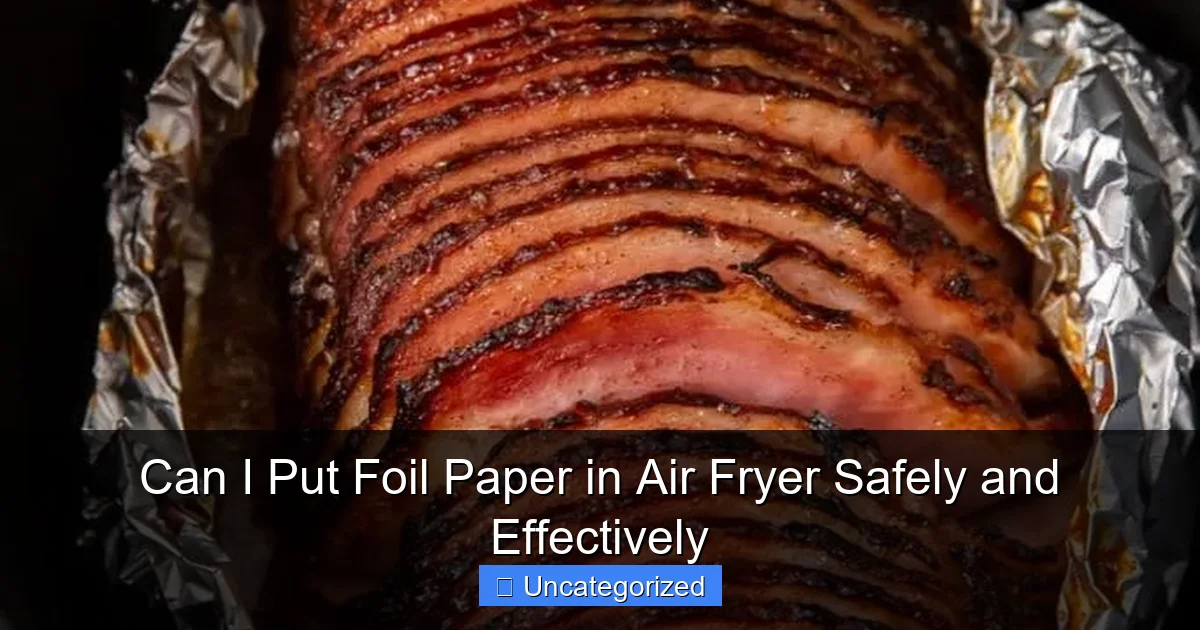
Visual guide about can i put foil paper in air fryer
Image source: airfryereats.com
The overarching rule across brands is: Use foil only in the cooking basket, never near the heating element or fan, and never let it block airflow. This means avoiding foil on the top of the basket, around the sides, or in the crisper plate area where air is drawn in or expelled.
Risks of Improper Foil Use
Using foil incorrectly can lead to several safety and performance issues:
- Fire Hazard: If foil touches the heating element (typically located above the basket), it can melt, smoke, or even ignite. This is especially dangerous in models with exposed heating coils.
- Electrical Short: Loose or crumpled foil can bridge electrical components, especially in basket-style models where the heating element is close to the basket. This may cause sparks or damage the unit.
- Reduced Cooking Efficiency: As mentioned, blocking airflow prevents even cooking. For example, a whole sheet of foil covering the basket floor may cause the bottom of food to steam while the top remains undercooked.
- Chemical Leaching (Rare): While aluminum is generally stable at air fryer temperatures (typically 300°F–400°F / 150°C–200°C), acidic foods like tomatoes, citrus-marinated chicken, or vinegar-based sauces cooked for long periods on foil may cause minimal aluminum transfer. This risk is low but can be mitigated by using parchment paper or non-stick spray instead.
When Foil Is Safe and Recommended
Despite the risks, foil has legitimate uses in air frying:
- Catching Drippings: When cooking fatty meats like bacon, sausages, or burgers, placing a small piece of foil on the bottom of the basket can catch grease and reduce smoke and odor.
- Preventing Sticking: For delicate foods like fish fillets or sticky marinades, a lightly oiled or non-stick foil liner can prevent food from adhering to the basket.
- Wrapping Individual Items: Foil packets (like foil-wrapped potatoes, corn on the cob, or stuffed peppers) allow steam to build inside while still letting air circulate around the packet. This is safe and effective.
- Creating a Tray for Messy Batters: When air frying battered items (e.g., tempura shrimp), a foil “tray” with edges can contain the batter while allowing air to flow around the food.
As long as the foil is flat, secured, and not covering more than 70% of the basket surface, it’s generally safe to use.
How to Use Foil in Your Air Fryer: Step-by-Step Guide
Choosing the Right Type of Foil
Not all foil is created equal. For air frying, use heavy-duty aluminum foil (typically 0.016 mm or thicker). Regular foil is too thin and may tear or crinkle easily, creating sharp edges that could scratch the basket or block airflow. Heavy-duty foil holds its shape better, especially when forming small trays or packets.
Avoid using foil with non-stick coatings unless specifically labeled as oven-safe up to 450°F (230°C). Most non-stick foils are safe for air fryers, but double-check the packaging.
Preparing the Basket: Best Practices
Before inserting foil, follow these steps:
- Clean the basket thoroughly. Residue from previous use can react with foil or create smoke.
- Cut a piece of foil slightly smaller than the basket base. Leave at least a 1-inch (2.5 cm) gap around the edges to allow air to rise from below.
- Smooth the foil flat. Avoid wrinkles or folds that could block airflow. Use the basket itself to shape the foil.
- Optional: Lightly spray with oil. This prevents food from sticking to the foil and improves browning.
Tip: For models with a crisper plate (a removable metal tray inside the basket), you can place the foil under the plate or on top of it—but never replace the plate with foil. The plate is designed to lift food for better airflow.
Using Foil for Specific Cooking Tasks
Here are practical examples of how to use foil effectively:
- Air Frying Bacon: Lay a sheet of foil on the basket bottom, leaving edges open. Lay bacon strips on top. The foil catches grease, preventing smoke. Cook at 350°F (175°C) for 8–10 minutes, flipping halfway.
- Cooking Stuffed Peppers: Cut foil into squares, place a stuffed pepper in the center, and wrap loosely. Leave the top slightly open. Cook at 360°F (180°C) for 20–25 minutes. The foil holds moisture while allowing browning.
- Roasting Potatoes: Toss baby potatoes in oil and seasonings, then place in a foil “boat” (fold edges up to create a shallow tray). This prevents small pieces from falling through the basket. Cook at 400°F (200°C) for 20 minutes, tossing once.
- Air Frying Fish: Place a fish fillet on a lightly oiled foil sheet, season, and fold edges up slightly to create a shallow tray. This keeps delicate fish from sticking and breaking apart. Cook at 375°F (190°C) for 10–12 minutes.
What to Avoid
- Do not cover the entire basket with foil—especially not the sides or top.
- Do not let foil touch the heating element (usually above the basket).
- Do not use crumpled foil as a “scrubber” to clean the basket while hot.
- Do not use foil to create a “lid” over the basket, as this traps steam and defeats the air frying purpose.
Foil vs. Alternatives: When to Use What
Comparing Foil to Parchment Paper
Many users wonder if parchment paper is a better alternative. The answer depends on the task:
| Material | Best For | Pros | Cons |
|---|---|---|---|
| Aluminum Foil | Fatty meats, high-heat cooking, wrapping foods, creating trays | Heat-resistant, moldable, conducts heat, affordable | Can block airflow if overused, potential for sparks, not ideal for acidic foods |
| Parchment Paper | Delicate foods, baking, low-to-mid heat cooking, acidic marinades | Non-stick, doesn’t react with food, allows airflow, no leaching risk | Not as strong for high-fat cooking, can burn at temps above 420°F (215°C), more expensive |
Silicone Mats and Reusable Liners
For eco-conscious users, silicone baking mats (air fryer-safe) are excellent alternatives. They’re reusable, non-stick, and allow full airflow. Brands like Kitzini and Silikids make mats designed specifically for air fryers. These mats can withstand temperatures up to 480°F (250°C) and are easy to clean—just rinse or pop in the dishwasher.
Another option is reusable silicone liners that sit in the basket, catching drips while letting air flow through. These are ideal for frequent air fryer users who want to minimize waste.
When to Skip Foil Entirely
In many cases, you don’t need foil at all. Modern air fryer baskets often come with non-stick coatings that work well with a light spray of oil. For example:
- Vegetables: Toss in oil and cook directly on the basket. The oil prevents sticking, and the airflow ensures crisp edges.
- Frozen Foods: Most frozen items (nuggets, fries, mozzarella sticks) are designed to cook directly on the basket.
- Marinated Meats: If the marinade isn’t overly sticky, a light oil spray on the basket is sufficient.
Using the basket as intended reduces cleanup and maintains optimal airflow, leading to better results.
Expert Tips and Real-World Examples
Pro Tips from Air Fryer Chefs
- “Preheat the basket with foil already in place.” This ensures the foil doesn’t shift during cooking and helps food start crisping immediately.
- “Use foil to create a ‘drip tray’ for multi-layer cooking.” For example, cook chicken on the bottom rack and vegetables on a foil tray above—this catches juices and infuses flavor.
- “Fold foil edges up slightly to create a shallow pan.” This prevents small items (like chopped onions or nuts) from falling through the basket.
- “Always leave space for air to escape.” If using a foil packet, don’t seal it completely. A small vent allows steam to escape and prevents sogginess.
Real-World Cooking Examples
Example 1: Air Fryer BBQ Ribs
– Cut ribs into small portions.
– Place on a foil-lined basket (edges folded up to catch sauce).
– Brush with BBQ sauce and cook at 375°F (190°C) for 25 minutes, basting halfway.
– The foil contains the sticky sauce, while the edges crisp up beautifully.
Example 2: Foil-Wrapped Baked Potatoes
– Prick potatoes and coat in oil.
– Wrap each in foil (optional: add butter and herbs inside).
– Cook at 400°F (200°C) for 35–40 minutes.
– The foil traps steam for tender insides, while the outside gets a slight crisp from air exposure.
Example 3: Crispy Air Fryer Salmon
– Place salmon on a lightly oiled foil sheet.
– Season and add lemon slices.
– Cook at 390°F (200°C) for 12 minutes.
– The foil prevents sticking, and the skin crisps up nicely due to airflow around the sides.
Troubleshooting Common Foil Issues
- Problem: Food sticks to foil.
Solution: Lightly spray foil with oil or use a non-stick spray before adding food. - Problem: Foil moves during cooking.
Solution: Press foil gently into the basket and ensure it’s flat. Avoid overfilling. - Problem: Smoke or burning smell.
Solution: Check if foil is touching the heating element. Remove immediately and clean the basket.
Conclusion
So, can you put foil paper in an air fryer? Yes—but with important caveats. When used correctly, aluminum foil is a safe and effective tool that can simplify cleanup, prevent sticking, and help manage messy or fatty ingredients. It’s particularly useful for cooking meats, creating foil packets, or catching drippings. However, improper use—such as covering the entire basket, letting foil touch the heating element, or blocking airflow—can lead to uneven cooking, safety hazards, or damage to your appliance.
The key to success lies in moderation and intention. Use foil strategically: keep it flat, leave space for air to flow, and never let it obstruct the core mechanics of your air fryer. Pair it with other tools like parchment paper, silicone mats, or non-stick spray when appropriate. And always consult your air fryer’s user manual for brand-specific guidelines.
By understanding how your air fryer works and applying these expert-backed techniques, you can harness the power of foil to enhance—not hinder—your cooking. Whether you’re air frying a weeknight dinner or experimenting with gourmet recipes, knowing when and how to use foil safely will help you achieve crispy, flavorful results every time. So go ahead—grab that roll of heavy-duty foil, follow the best practices, and enjoy the full potential of your air fryer, one perfectly cooked bite at a time.
Frequently Asked Questions
Can I put foil paper in an air fryer without damaging it?
Yes, you can safely use foil paper in an air fryer as long as it’s properly secured and doesn’t block airflow. Avoid letting the foil touch the heating element to prevent damage or fire hazards.
Is it safe to use foil in an air fryer for all types of food?
Foil is great for oily or messy foods, but avoid using it with acidic ingredients like tomatoes or citrus, as they can react with the foil. Always ensure the foil is weighed down by food to prevent it from flying into the heating coil.
Can I put foil paper in an air fryer to make cleanup easier?
Absolutely! Lining the air fryer basket with foil (with proper airflow) simplifies cleanup, especially for sticky or crumbly foods. Just ensure the foil is tucked in and doesn’t cover the entire basket to maintain circulation.
Does using foil in an air fryer affect cooking performance?
When used correctly, foil won’t impact cooking results, but improper placement (like covering too much of the basket) can disrupt hot air circulation. Poke holes in the foil for better airflow if needed.
Can I use aluminum foil in an air fryer for baking or reheating?
Yes, foil works well for baking or reheating foods like fish or casseroles. Just make sure the foil packet is sealed properly and placed in the center of the basket for even heat distribution.
What are the risks of putting foil paper in an air fryer?
The main risks include foil touching the heating element (causing sparks) or blocking airflow, leading to uneven cooking. Always use heavy-duty foil and secure it well to avoid these issues.