
Featured image for can i use air fryer liners in the oven
No, you should never use air fryer liners in a conventional oven—they are specifically designed for the lower heat and rapid air circulation of air fryers, not the higher, direct heat of ovens. Using them in an oven can cause melting, smoke, or even fire hazards, making them unsafe and ineffective for baking or roasting.
Key Takeaways
- Check heat resistance: Ensure liners withstand oven temperatures to avoid melting or fire hazards.
- Material matters: Use parchment or silicone liners, not paper, for safe oven use.
- Verify size: Match liner size to oven racks or trays for even cooking and safety.
- Prevent smoke: Avoid liners with coatings that may smoke or release toxins in high heat.
- Test first: Run a short oven test to confirm liner stability before full use.
📑 Table of Contents
- Why So Many of Us Are Asking: Can I Use Air Fryer Liners in the Oven?
- Understanding Air Fryer Liners: What Are They Made Of?
- Can I Use Air Fryer Liners in the Oven? The Real Answer
- Oven-Safe Alternatives: What to Use Instead (or Alongside)
- Common Mistakes and How to Avoid Them
- Data Table: Air Fryer Liners vs. Oven-Safe Alternatives
- Final Thoughts: Making the Right Choice for Your Kitchen
Why So Many of Us Are Asking: Can I Use Air Fryer Liners in the Oven?
Let’s be honest: we’ve all been there. You’re mid-recipe, the oven’s preheated, and you realize you don’t want to scrub burnt cheese off the baking tray again. Then it hits you—*wait, I have those air fryer liners!* They’ve been a game-changer in your air fryer, keeping cleanup quick and pans spotless. So, naturally, the question arises: can I use air fryer liners in the oven? It’s a smart, practical thought. After all, both appliances use heat, right? But before you toss that parchment circle into the oven, let’s pause and really understand what we’re working with.
I remember the first time I tried this. I was making garlic parmesan wings, and I thought, “Hey, why not use the same liner? Saves time, right?” Spoiler: the liner started smoking within minutes, and I ended up with a smoky kitchen and a slightly charred liner stuck to my tray. Not ideal. That moment taught me that just because something works in one appliance doesn’t mean it’s safe—or effective—in another. Air fryers and ovens may seem similar, but they operate differently, and that changes how materials like liners behave. So, if you’ve ever wondered, “Can I use air fryer liners in the oven?” you’re not alone. In this post, I’ll walk you through everything you need to know, from the science behind the materials to real-world tips and what to look for when choosing safe, effective liners.
Understanding Air Fryer Liners: What Are They Made Of?
The Most Common Types of Air Fryer Liners
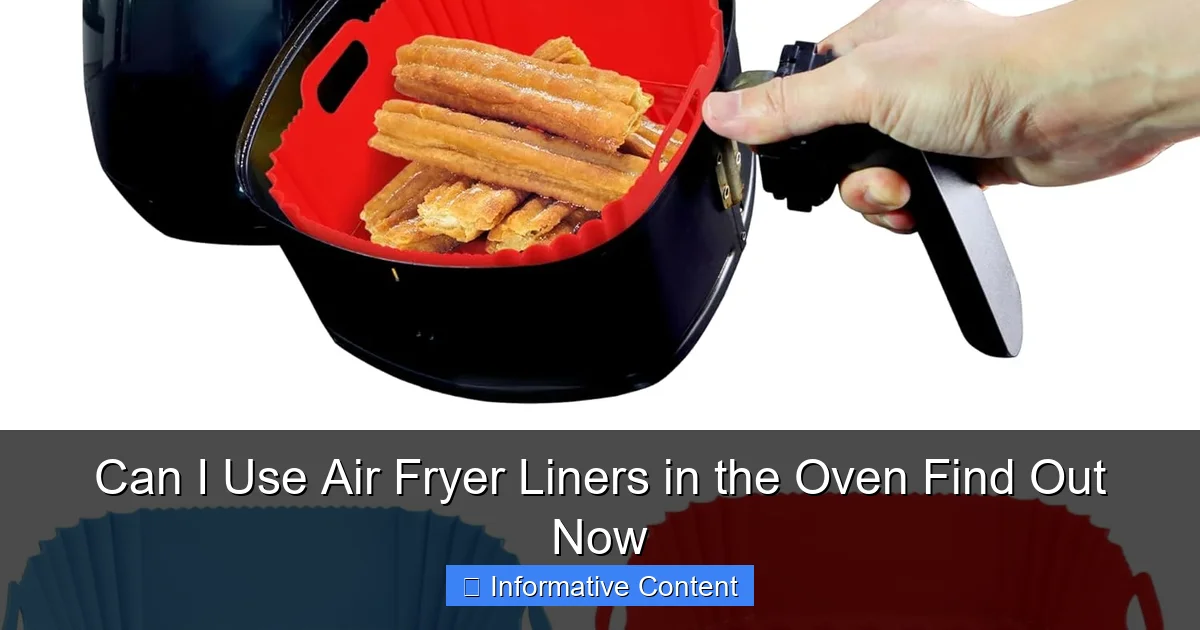
Before we dive into oven compatibility, let’s talk about what air fryer liners actually are. Most of the liners you see in stores—whether they’re round parchment sheets, silicone mats, or even perforated paper—are designed with specific conditions in mind. The most common types include:
Visual guide about can i use air fryer liners in the oven
Image source: m.media-amazon.com
- Parchment paper liners: These are usually pre-cut circles with small holes. They’re affordable, disposable, and excellent at preventing sticking and absorbing excess grease.
- Silicone liners: Reusable, flexible, and often come with a non-stick coating. They’re great for eco-conscious cooks and are typically dishwasher-safe.
- Perforated paper or foil hybrids: A mix of paper and a thin layer of food-safe aluminum. These are less common but marketed as “oven-safe” by some brands.
How Heat and Airflow Affect Liner Performance
Air fryers work by circulating hot air rapidly around food using a powerful fan. This creates a convection effect that crisps food from all sides—think of it like a mini oven with a turbocharged fan. Because the air moves so fast, liners in air fryers are designed to allow airflow through small holes or permeable materials. This prevents steam buildup and helps food cook evenly.
But here’s the catch: ovens work differently. Most standard ovens use radiant heat (from the top, bottom, or both) and rely on natural convection. There’s no high-speed fan pushing air around, so airflow is much slower. This means:
- Liners that are too thick or non-perforated can trap steam, leading to soggy food.
- Materials that work fine at 400°F in an air fryer might degrade or smoke at the same temperature in a conventional oven due to longer exposure and different heat distribution.
So, while a parchment liner might handle 400°F for 10 minutes in an air fryer, the same liner in an oven—where the heat is more intense and direct—could start to brown, curl, or even catch fire if it’s too close to the heating element.
Material Safety: What the Labels Don’t Always Tell You
Many air fryer liner packages claim to be “oven-safe,” but what does that really mean? It’s not always clear. Some manufacturers test their liners only in air fryers, not in traditional ovens. Others use vague terms like “heat-resistant up to 450°F” without specifying *how* that heat is applied.
For example, a liner might survive 450°F in an air fryer (with fast airflow and short cook time) but fail in an oven where the heat is more intense and lingers longer. Always check for certifications like FDA-approved food-safe materials and look for specific oven-use instructions. If the packaging says “for air fryers only,” it’s a red flag.
Can I Use Air Fryer Liners in the Oven? The Real Answer
It Depends: Factors That Determine Safety and Effectiveness
So, can you use air fryer liners in the oven? The short answer is: sometimes, but not always. It depends on the material, the oven temperature, and how you use it. Let’s break it down.
1. Temperature Limits
Most parchment paper liners are rated for up to 425°F–450°F. That sounds safe, but here’s the catch: ovens can have “hot spots” near the heating elements, especially in electric ovens. If the liner touches the element, it can ignite, even if the set temperature is 400°F. Always keep liners at least 1–2 inches away from the top or bottom heating elements.
2. Liner Thickness and Perforations
Thin, perforated parchment liners are better for ovens than thick, solid ones. The holes allow steam to escape, which is crucial in ovens where airflow is limited. A solid liner can trap moisture, leading to steamed (not crispy) food. If you’re using a non-perforated liner, poke a few holes in it with a toothpick before placing it in the oven.
3. Silicone Liners: A Safer Bet
Silicone liners are generally safer for oven use because they’re more heat-resistant (often up to 480°F or higher) and don’t catch fire. However, not all silicone is created equal. Look for liners labeled “food-grade silicone” and avoid those with fillers or dyes that could leach into food. Also, silicone doesn’t absorb grease like parchment, so it’s better for roasting than frying.
When It’s Safe (and When It’s Not)
Safe to Use in the Oven:
- Parchment liners without wax coating (look for “unbleached” or “pure cellulose” on the label).
- Perforated parchment or silicone liners placed on a baking tray or sheet pan (not directly on the oven rack).
- Silicone mats labeled “oven-safe” and used below 450°F.
NOT Safe to Use in the Oven:
- Wax-coated or plastic-lined paper (common in cheap brands).
- Liners with metal components (e.g., foil backing) unless explicitly marked “oven-safe.”
- Any liner placed directly under the broiler (top heating element) or on the bottom of a gas oven (where flames can touch).
- Thick, non-perforated paper liners (they can trap too much heat and smoke).
Real-World Example: Baking Chicken Thighs
Let’s say you’re baking chicken thighs at 400°F. You use a perforated parchment liner on a baking sheet. The liner prevents sticking, absorbs excess fat, and keeps the pan clean. After 30 minutes, the chicken is crispy, and the liner is slightly browned but intact. Success! But if you’d used a thick, non-perforated liner, the chicken might have steamed instead of roasted, and the liner could have started smoking by minute 20. That’s why choosing the right liner matters.
Oven-Safe Alternatives: What to Use Instead (or Alongside)
1. Parchment Paper (The Gold Standard)
Good news: regular parchment paper (not pre-cut air fryer liners) is absolutely oven-safe and works better than many air fryer-specific liners. It’s made from the same material as air fryer parchment but is often thicker and more durable. You can cut it to fit any pan, and it handles temperatures up to 450°F with no issues. Tip: If you’re using a pre-cut air fryer liner, it’s fine for oven use as long as it’s pure parchment and you’re not broiling.
2. Silicone Baking Mats (Reusable and Eco-Friendly)
These are a fantastic alternative. Brands like Silpat or Amazon Basics make mats that are oven-safe up to 480°F and can be reused hundreds of times. They’re non-stick, easy to clean, and don’t require greasing. Just lay one on your baking sheet, and you’re good to go. They’re pricier upfront but save money and waste in the long run.
3. Aluminum Foil (Use with Caution)
Foil is oven-safe, but it’s not a direct substitute for liners. It doesn’t absorb grease, and acidic foods (like tomatoes or citrus) can react with aluminum, affecting flavor. If you use foil, lightly grease it first to prevent sticking. Never use foil under the broiler—it can reflect heat and damage your oven.
4. DIY Liners: When All Else Fails
No liners on hand? No problem. Here are two quick fixes:
- Lightly greased baking sheet: Use a high-smoke-point oil (like avocado or grapeseed) and a pastry brush to coat the pan. Works well for roasting veggies or baking cookies.
- Oiled parchment scraps: Cut a piece of regular parchment (from a roll) and lightly oil it. It’s not as absorbent as a liner, but it prevents sticking and is safer than foil.
Pro Tip: Layering for Best Results
For extra protection, combine methods. For example:
– Use a silicone mat on the baking sheet.
– Place a perforated parchment liner on top.
– Add your food.
This combo prevents sticking, absorbs grease, and makes cleanup a breeze. Just make sure the layers aren’t too thick—you still want heat to reach the food.
Common Mistakes and How to Avoid Them
Mistake 1: Ignoring the Broiler
One of the biggest mistakes is using liners under the broiler. The broiler uses intense, direct heat (often 500°F+), which can ignite paper or melt silicone. If you’re broiling, remove the liner or use a bare, greased pan. For example, when making broiled salmon, skip the liner and just lightly oil the pan.
Mistake 2: Using Liners on the Oven Rack
Never place a liner directly on the oven rack. It can fall through, touch the heating element, or block airflow. Always use a baking sheet or pan as a base. This also makes it easier to remove food without burning yourself.
Mistake 3: Assuming “Oven-Safe” Means “Any Oven”
Not all ovens are the same. Convection ovens have fans, which improve airflow, but they also increase heat intensity. Gas ovens have open flames at the bottom, which can touch liners if they’re not on a tray. Always adjust your liner choice based on your oven type. For gas ovens, keep liners on a tray and avoid placing them too low in the cavity.
Mistake 4: Overloading the Pan
Liners work best when they’re flat and not bunched up. If you’re roasting a large batch of veggies, use a big enough pan so the liner isn’t folded or wrinkled. Crowding causes uneven cooking and increases the risk of hot spots.
Mistake 5: Reusing Damaged Liners
Silicone mats can be reused, but inspect them for tears, discoloration, or a sticky residue. If the surface is compromised, it can affect non-stick performance. For parchment, never reuse it—it breaks down after one use and can smoke or catch fire.
Data Table: Air Fryer Liners vs. Oven-Safe Alternatives
| Liners/Alternative | Max Temp | Oven-Safe? | Reusable? | Best For | Pros | Cons |
|---|---|---|---|---|---|---|
| Perforated Parchment (Air Fryer) | 425°F–450°F | Yes (with caution) | No | Roasting, baking | Absorbs grease, prevents sticking, affordable | Can smoke if too close to element; not for broiling |
| Silicone Liners | 480°F+ | Yes | Yes (100+ uses) | All oven tasks | Reusable, non-stick, easy cleanup | Doesn’t absorb grease; higher upfront cost |
| Regular Parchment Paper | 450°F | Yes | No | Most baking tasks | More durable than air fryer liners, widely available | Single-use; can tear if thin |
| Aluminum Foil | 500°F+ | Yes (with caution) | No (unless cleaned carefully) | Roasting, wrapping | Heat-resistant, cheap | Reacts with acidic foods; not non-stick without oil |
| Lightly Oiled Pan | N/A | Yes | N/A | All oven tasks | No waste, simple | Can stick if not enough oil; greasy cleanup |
Final Thoughts: Making the Right Choice for Your Kitchen
So, can you use air fryer liners in the oven? The answer isn’t a simple yes or no—it’s about making informed, safe choices based on the materials, your oven, and the food you’re cooking. If you’re using a perforated parchment or food-grade silicone liner, and you follow a few key rules (keep it away from heating elements, use a baking sheet, avoid broiling), you’re likely safe. But if you’re unsure, it’s always better to use a trusted alternative like regular parchment paper or a silicone baking mat.
Here’s my take: don’t rely on air fryer liners as your go-to for oven cooking. They’re convenient, but they’re not designed for the unique heat patterns of conventional ovens. Instead, keep a few oven-safe options on hand—like a roll of parchment paper and a silicone mat. They’re more versatile, safer, and will save you from kitchen mishaps (like my smoky wings incident).
At the end of the day, cooking should be fun, not stressful. Whether you’re roasting a chicken, baking cookies, or making sheet-pan nachos, the right liner can make cleanup effortless and food delicious. So, the next time you reach for that air fryer liner, ask yourself: Is this the safest, most effective choice for this oven task? If the answer is yes, go for it. If not, swap it out. Your oven (and your smoke detector) will thank you.
Frequently Asked Questions
Can I use air fryer liners in the oven safely?
Most air fryer liners are made of parchment or silicone and can be used in conventional ovens at temperatures up to 420°F (220°C). Always check the packaging for heat resistance to avoid melting or fire hazards.
Are air fryer liners oven-safe for all cooking methods?
While many liners work for baking or roasting, avoid using them under broilers or direct high heat, as some materials may scorch. Stick to indirect heat applications for best results.
What happens if I use air fryer liners in the oven beyond their rated temperature?
Exceeding the recommended heat limit can cause liners to smoke, melt, or release harmful chemicals. Always verify the maximum temperature listed on the product before oven use.
Do oven-safe air fryer liners affect cooking performance?
No—they function similarly to traditional parchment or silicone mats, promoting even cooking and easy cleanup. Just ensure they’re food-grade and designed for dual appliance use.
Can I reuse air fryer liners in the oven multiple times?
Silicone liners are reusable if undamaged, but parchment liners should be discarded after one use to prevent contamination or flare-ups. Wipe silicone versions clean with warm, soapy water.
Where can I find oven-safe air fryer liners?
Look for brands labeled “dual oven & air fryer safe” on packaging, or choose food-grade silicone liners with heat resistance up to 450°F (230°C). Check online retailers or kitchen supply stores.