
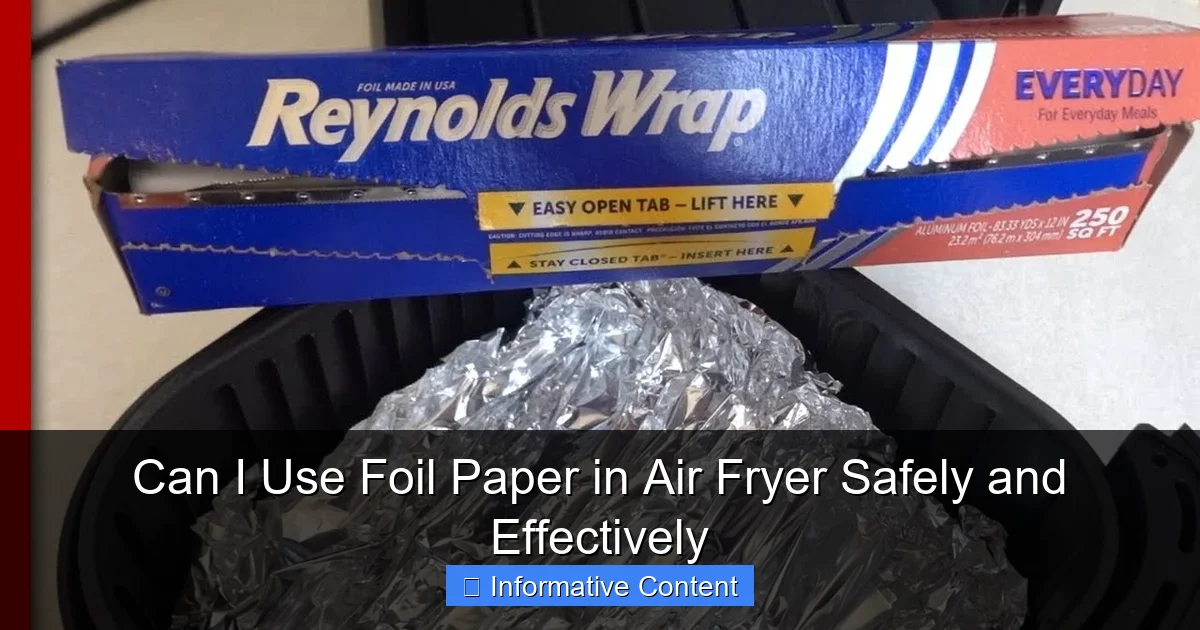
Featured image for can i use foil paper in air fryer
Image source: i.ytimg.com
Yes, you can use foil paper in an air fryer safely—but only when done correctly. Always ensure the foil is weighed down by food to prevent it from flying into the heating element, and never cover the entire basket to maintain proper air circulation. Using small pieces of foil to wrap food or line the basket can simplify cleanup and enhance cooking results without risking damage or fire.
Key Takeaways
- Yes, you can use foil paper in an air fryer if done safely and correctly.
- Always leave space around foil to ensure proper air circulation for even cooking.
- Secure foil tightly to avoid contact with heating elements or fan to prevent fire hazards.
- Use foil for easy cleanup when cooking greasy or sticky foods, but never fully cover the basket.
- Avoid acidic foods with foil as they may react and compromise flavor or safety.
- Never preheat the air fryer with foil inside to reduce risk of overheating or sparks.
- Check manufacturer guidelines first to confirm foil use is approved for your specific model.
📑 Table of Contents
- Can I Use Foil Paper in Air Fryer Safely and Effectively
- How Air Fryers Work (And Why It Matters for Foil)
- When and How to Use Foil Paper in Air Fryer Safely
- Common Mistakes and How to Avoid Them
- Foil vs. Other Liners: What’s the Best Choice?
- Expert Tips for Maximizing Air Fryer Performance with Foil
- Final Thoughts: Yes, You Can—But Do It Right
Can I Use Foil Paper in Air Fryer Safely and Effectively
Let’s talk about something that happens in kitchens everywhere—those moments when you’re about to pop dinner into your air fryer and suddenly pause: “Wait… can I use foil paper in here?” You’ve seen it on social media, your neighbor swears by it, and maybe you’ve even tried it once or twice without any immediate disaster. But deep down, you’re still unsure. Is it safe? Will it damage your machine? Or worse—could it start a fire?
You’re not alone. Air fryers have revolutionized home cooking with their speed, crispiness, and oil-free magic. But their popularity has also sparked endless debates about what’s okay to put inside—especially when it comes to foil paper. Some say it’s a game-changer for easy cleanup and even cooking, while others warn it’s a one-way ticket to a malfunctioning appliance or a smoky kitchen. So, let’s settle this once and for all. In this guide, we’ll explore whether you can use foil paper in air fryer appliances safely and effectively—without fear, guesswork, or melted metal.
How Air Fryers Work (And Why It Matters for Foil)
The Science Behind the Crisp
Air fryers aren’t actually frying. They’re more like mini convection ovens. A powerful fan circulates hot air (usually between 300°F and 400°F) around your food at high speed. This rapid airflow creates a Maillard reaction—the browning process that gives food that delicious, crispy exterior—without needing to submerge it in oil. The key? Uninterrupted airflow.

Visual guide about can i use foil paper in air fryer
Image source: forktospoon.com
Think of it like a wind tunnel for your chicken wings. If you block the airflow, you disrupt the cooking process. Food gets soggy, cooks unevenly, or takes way longer than it should. That’s why understanding how your air fryer functions is crucial before introducing anything foreign—like foil paper—into the equation.
Why Foil Might Seem Like a Good Idea
Foil paper (also known as aluminum foil) is a kitchen staple. It’s cheap, widely available, and incredibly versatile. People love it because it:
- Prevents food from sticking
- Makes cleanup easier (just toss the foil)
- Helps contain drippings from fatty meats
- Can shape into little boats or packets for veggies or fish
But here’s the catch: air fryers rely on open airflow. If you cover the basket with foil or block the vents, you’re essentially turning your air fryer into a slow cooker. Not ideal.
For example, imagine wrapping a whole chicken breast in foil and placing it in the basket. The outside might stay soft while the inside takes forever to cook—or worse, the foil blocks the hot air so much that the heating element overheats. That’s not just inefficient; it could be a safety hazard.
The Risks of Misusing Foil
Using foil incorrectly in your air fryer can lead to:
- Reduced cooking efficiency: Food won’t crisp up properly.
- Uneven cooking: Some parts may be raw while others burn.
- Potential damage: Loose foil can touch the heating element and melt or catch fire.
- Voided warranties: Some manufacturers explicitly warn against foil use.
So while foil can be used, it’s all about how and where you use it. Let’s dig into the safe methods next.
When and How to Use Foil Paper in Air Fryer Safely
Use Foil in the Basket—Not on the Heating Element
The golden rule: Never let foil touch the heating element. Most air fryers have a heating coil or element located at the top, just above the basket. If foil gets too close, it can overheat, melt, or even ignite. That’s a fire risk you don’t want.
Visual guide about can i use foil paper in air fryer
Image source: homemaking.com
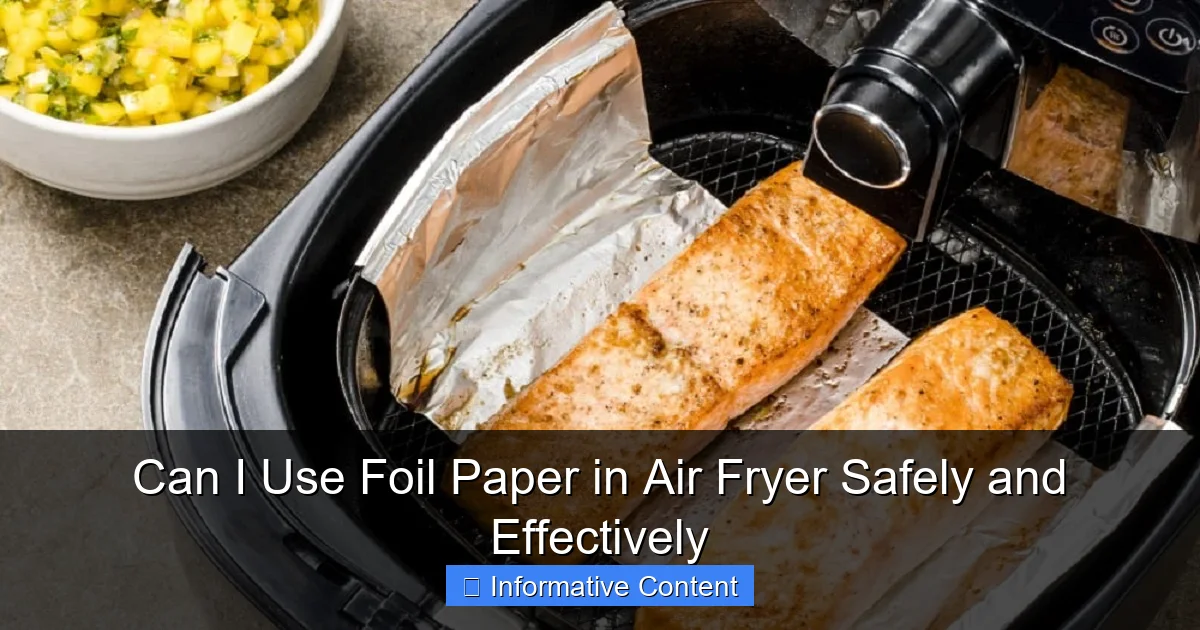
Instead, use foil only on the inside of the basket—specifically, on the bottom tray or in small, contained areas. Here’s how:
- Line the bottom of the basket with a small piece of foil, making sure it doesn’t cover the perforations (the holes that let air through).
- Create a foil boat by folding up the edges to hold drippings—great for bacon, sausages, or marinated meats.
- Place a small foil pouch with veggies or fish, but leave the top open so steam and air can circulate.
For example, I once made honey-glazed salmon in my air fryer. I placed a small foil boat in the basket to catch the sticky glaze and prevent it from dripping onto the heating element. The salmon cooked perfectly, and cleanup was a breeze. Win-win.
Keep It Loose and Secure
Foil should never be crumpled or jammed into the basket. Loose foil can flutter around during cooking and touch the heating element. Instead:
- Use a piece of foil just slightly larger than the food item.
- Press it gently into the basket so it conforms to the shape, but don’t stretch or tear it.
- Secure the edges by tucking them under the food or using a toothpick (remove before cooking).
Pro tip: If you’re making foil packets (like foil-wrapped potatoes or veggies), don’t fully seal them. Leave the top open or poke a few holes. This allows steam to escape and hot air to circulate. Fully sealed packets can create too much pressure and burst—or worse, trap heat near the element.
Use Parchment Paper as a Safer Alternative
While we’re on the topic of liners, consider using air fryer-safe parchment paper instead of foil. These are perforated or pre-cut to fit your basket and won’t block airflow. They’re also non-stick and heat-resistant up to 420°F—perfect for most air fryer recipes.
I switched to parchment after a close call with a foil-wrapped chicken wing that nearly touched the element. Now, I keep a pack of round parchment liners in my pantry. They’re a little more expensive, but they give me peace of mind—and cleaner baskets.
Best Foods for Foil Use (And What to Avoid)
Foil works best with foods that:
- Release a lot of fat (like bacon, sausages, or fatty cuts of meat)
- Are messy or sticky (like marinated chicken or glazed ribs)
- Need containment (like small veggies that might fall through the basket holes)
But avoid using foil with:
- Foods that need maximum crispiness (like French fries or chicken wings)—the foil can trap moisture and prevent browning.
- High-acid foods (like tomatoes or citrus-marinated fish)—the acid can react with aluminum and affect flavor or leach metal into food.
- Foods that cook quickly (like shrimp or thin fish fillets)—they don’t need foil and could overcook if airflow is blocked.
Common Mistakes and How to Avoid Them
Covering the Entire Basket with Foil
This is the #1 mistake. People think, “If a little foil is good, a lot must be better.” Nope. Covering the entire basket with foil blocks airflow, leading to:
- Soggy, steamed food instead of crispy
- Longer cooking times
- Potential overheating of the appliance
Instead, use foil only where needed—like under a fatty steak or around a batch of bacon. Let the rest of the basket breathe.
Using Foil with High Heat Settings
Air fryers can reach up to 400°F. At these temperatures, thin foil can weaken, tear, or even start to degrade. If you’re cooking at high heat (375°F+), use heavy-duty foil and keep it away from direct exposure to the heating element.
I learned this the hard way when I used regular foil for a high-heat roast. The foil started to bubble and discolor. I immediately stopped the cook, removed it, and switched to parchment. Lesson learned: when in doubt, go lower and slower.
Ignoring Manufacturer Warnings
Always check your air fryer’s manual. Brands like Ninja, Philips, and Cosori have different recommendations. Some explicitly say, “Do not use aluminum foil,” while others give guidelines for safe use.
For example, the Ninja Air Fryer Max XL manual says: “You may use aluminum foil, but do not cover the crisper plate completely.” That’s a clear sign to use it sparingly.
Forgetting to Preheat
Preheating helps the air fryer reach optimal temperature and improves airflow. If you add foil-wrapped food to a cold basket, the foil can trap cold air and delay cooking. Always preheat for 3–5 minutes before adding your food—even if it’s in foil.
Leaving Foil in After Cooking
Don’t just leave the foil in the basket after cooking. Remove it promptly to prevent residue from baking on or reacting with the basket coating. Plus, hot foil can warp plastic parts nearby.
Foil vs. Other Liners: What’s the Best Choice?
Aluminum Foil: Pros and Cons
Pros:
- Cheap and widely available
- Can be molded into custom shapes
- Excellent at catching drips and grease
- Can be used to make foil packets for even cooking
Cons:
- Can block airflow if misused
- Risk of melting or catching fire
- Not ideal for high-acid or high-heat foods
- May react with certain foods (flavor or texture changes)
Parchment Paper: The Safer Alternative
Pros:
- Non-stick and heat-resistant
- Pre-perforated for airflow
- No risk of melting or catching fire
- Better for delicate foods like fish or pastries
Cons:
- More expensive than foil
- Can’t be molded into boats or pouches
- May not catch drips as effectively
Silicone Mats: Reusable and Eco-Friendly
Silicone baking mats are another option. They’re non-stick, reusable, and heat-safe up to 480°F. Just make sure they’re air fryer-compatible (some are too thick and block airflow).
I bought a set of silicone mats last year. I use them for fries and roasted veggies. They’re easy to clean and last forever—but they’re not great for catching grease. So I still use foil for bacon or burgers.
Data Table: Liner Comparison for Air Fryers
| Liner Type | Heat Resistance | Airflow-Friendly | Best For | Cleanup | Eco-Friendliness |
|---|---|---|---|---|---|
| Aluminum Foil | Up to 400°F (use heavy-duty) | Only if used correctly | Greasy meats, foil packets | One-time use, toss | Low (not recyclable if greasy) |
| Parchment Paper | Up to 420°F | Yes (perforated) | Fish, veggies, pastries | One-time use, toss | Medium (compostable if uncoated) |
| Silicone Mat | Up to 480°F | Yes (if thin) | Fries, roasted veggies | Washable, reusable | High (long lifespan) |
Expert Tips for Maximizing Air Fryer Performance with Foil
Pre-Cut Foil for Your Basket
Measure your air fryer basket and pre-cut foil pieces. This ensures you never use too much and always have the right size on hand. I keep a stack in a drawer—ready for bacon day (which is every Sunday at my house).
Use Foil for “Set It and Forget It” Cooking
Foil boats are perfect for hands-off cooking. Try this: place marinated chicken thighs in a foil boat, season, and air fry at 375°F for 20–25 minutes. The foil catches the marinade, the chicken stays juicy, and the basket stays clean.
Combine Foil with a Rack (If Your Model Allows)
Some air fryers come with a multi-level rack or skewer set. You can place foil on the bottom tray and use the rack above for food. This keeps everything elevated and maximizes airflow. I use this trick for cooking bacon and sausages together—no grease pooling, no sticking.
Monitor Closely the First Few Times
If you’re new to using foil, stay nearby during the first cook. Watch for any smoke, strange smells, or signs of overheating. It’s better to be safe than sorry.
Clean the Basket After Every Use
Even with foil, residue can build up over time. Wipe down the basket after each use to prevent odor transfer and maintain airflow efficiency. A soft sponge with mild soap works best—avoid steel wool or abrasive cleaners.
When in Doubt, Go Foil-Free
Sometimes the safest choice is no liner at all. Most air fryer baskets are non-stick. A light spray of cooking oil is often enough to prevent sticking. For example, I cook my homemade sweet potato fries without any liner—just a quick spray of avocado oil. They come out golden, crispy, and mess-free.
Final Thoughts: Yes, You Can—But Do It Right
So, can you use foil paper in air fryer appliances? Yes—but with conditions. Foil isn’t a forbidden substance, but it’s not a free-for-all either. The key is understanding your air fryer’s airflow needs and using foil as a tool, not a crutch.
Think of it like cooking with a cast-iron skillet. You wouldn’t cover it with a lid the entire time—you use it strategically to trap heat or prevent splatter. Foil in an air fryer works the same way. Use it to catch drips, contain mess, or make cleanup easier—but never at the expense of airflow or safety.
I’ve used foil safely for years, and it’s saved me from scrubbing greasy baskets more times than I can count. But I’ve also learned to respect its limits. I use parchment for delicate foods, silicone mats for everyday cooking, and foil only when I really need it—like for a batch of sticky ribs or a fatty pork chop.
Remember: your air fryer is a powerful, efficient appliance. It doesn’t need foil to do its job—but when used correctly, foil can make your life easier. Just keep it small, secure, and away from the heating element. And always, always read your manual.
Now go ahead—try that foil boat for your next batch of bacon. Just don’t cover the whole basket. Your air fryer (and your smoke detector) will thank you.
Frequently Asked Questions
Can I use foil paper in an air fryer without damaging it?
Yes, you can use foil paper in an air fryer safely if it’s properly secured and doesn’t block airflow. Avoid letting the foil touch the heating element to prevent damage or fire hazards.
Is it safe to use aluminum foil in an air fryer for all foods?
Aluminum foil is safe for most foods, but avoid using it with acidic ingredients like tomatoes or citrus, as they can react with the foil. Always ensure the foil is weighed down by food to prevent it from flying into the heating element.
Can I use foil paper in an air fryer to make cleanup easier?
Absolutely! Lining the air fryer basket with foil paper simplifies cleanup, but ensure it’s punctured or folded to allow proper air circulation. Never cover the entire basket to maintain optimal cooking performance.
Does using foil in an air fryer affect cooking results?
Foil can slightly alter cooking times or crispiness by blocking direct heat, but it’s manageable by adjusting settings. For best results, leave space around the foil for airflow and flip food halfway through cooking.
Can I use parchment paper instead of foil in an air fryer?
Parchment paper is a safer alternative to foil for air frying, as it doesn’t conduct heat or react with food. Just ensure it’s perforated or trimmed to fit the basket to avoid blocking airflow.
What’s the best way to use foil paper in an air fryer?
To use foil paper effectively, lightly grease it, shape it to fit the basket, and leave edges open for airflow. Always monitor cooking to prevent overheating or foil from dislodging.