
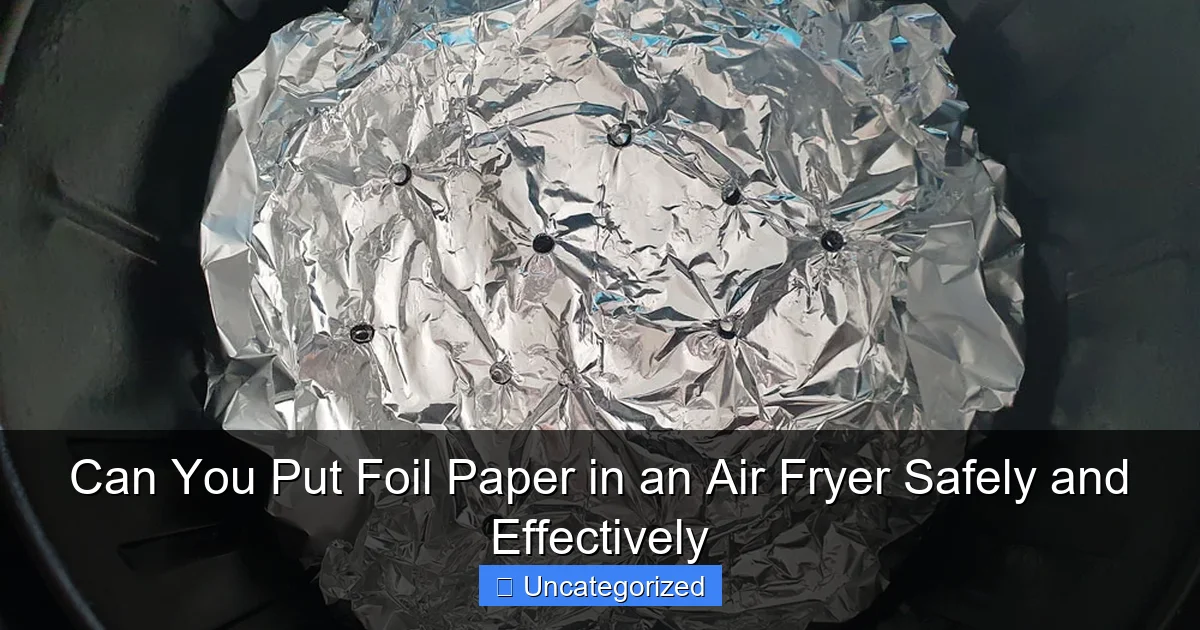
Featured image for can you put foil paper in an air fryer
Image source: airfryanytime.com
Yes, you can safely put foil paper in an air fryer—but only when used correctly to avoid hazards. Always ensure the foil is tightly secured, doesn’t block airflow, and is used for low-mess foods to maintain cooking efficiency and prevent fire risks. Never let foil touch the heating element or overcrowd the basket for safe, effective results.
Key Takeaways
- Yes, you can use foil in an air fryer if it’s weighted down and doesn’t block airflow.
- Always cover food, not the basket to avoid blocking air circulation and ensure even cooking.
- Use foil for easy cleanup but never line the entire basket or touch heating elements.
- Avoid acidic foods with foil to prevent metallic taste and potential chemical reactions.
- Poke holes in foil when wrapping to allow steam and heat to escape properly.
- Never preheat with empty foil to reduce fire risk and damage to your air fryer.
📑 Table of Contents
- Can You Put Foil Paper in an Air Fryer Safely and Effectively
- The Science Behind Air Fryers and Foil Compatibility
- When and How to Use Foil in an Air Fryer (Safe Methods)
- Risks and Dangers of Improper Foil Use
- Alternatives to Foil: When to Use Other Materials
- Best Practices and Pro Tips for Foil Use
- Conclusion
Can You Put Foil Paper in an Air Fryer Safely and Effectively
Air fryers have revolutionized home cooking by offering a healthier alternative to deep frying, delivering crispy, delicious results with little to no oil. As these appliances gain popularity, home cooks are increasingly curious about how to maximize their functionality. One common question that arises is: Can you put foil paper in an air fryer? The answer isn’t as straightforward as a simple “yes” or “no.” While aluminum foil can be a useful tool in air frying, it must be used with care to avoid safety hazards and ensure optimal cooking performance.
Understanding the role of foil in air fryers involves balancing convenience with caution. On one hand, foil can prevent mess, simplify cleanup, and help with even cooking. On the other hand, improper use can lead to blocked airflow, uneven heating, or even potential fire risks. This comprehensive guide will explore the dos and don’ts of using foil in your air fryer, offering practical tips, real-world examples, and science-backed advice to help you use foil safely and effectively. Whether you’re cooking delicate fish, sticky marinated chicken, or trying to avoid greasy drips, knowing how to use foil properly can elevate your air frying game.
The Science Behind Air Fryers and Foil Compatibility
To understand whether foil can be used in an air fryer, it’s essential to grasp how air fryers work. Unlike conventional ovens that rely on radiant heat, air fryers use rapid air circulation to cook food. A powerful heating element at the top generates hot air, which is then circulated around the food at high speed by a fan. This convection process creates a crispy exterior while cooking the interior evenly—mimicking deep-fried results without submerging food in oil.
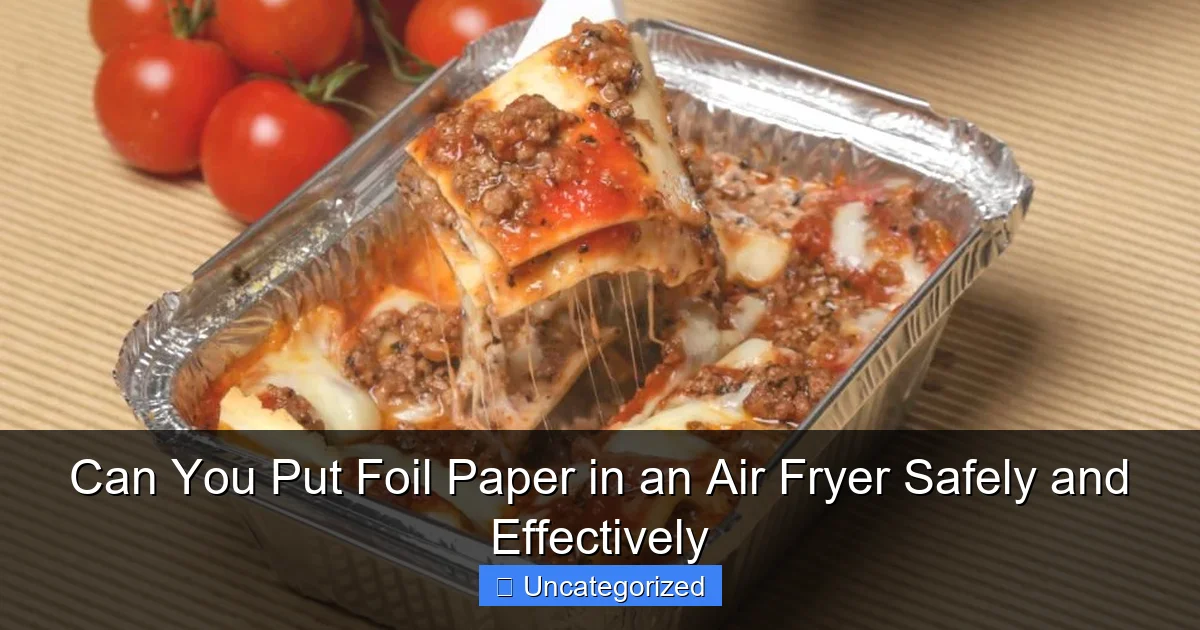
Visual guide about can you put foil paper in an air fryer
Image source: airfryanytime.com
How Air Circulation Affects Cooking
The key to successful air frying lies in unobstructed airflow. When air flows freely around the food, it ensures even cooking and crispiness. However, if airflow is blocked—by overcrowding, improper basket placement, or materials like foil—the cooking process is disrupted. This can lead to:
- Uneven browning
- Longer cooking times
- Food that’s undercooked in some areas and overcooked in others
For example, if you line the entire air fryer basket with foil and place a chicken breast directly on top, the foil may trap heat and steam, preventing the air from circulating properly. This results in a soggy bottom and a lack of the signature “air-fried” crunch.
Thermal Properties of Aluminum Foil
Aluminum foil is an excellent conductor of heat. It reflects radiant heat and can help distribute heat more evenly when used correctly. However, it also has a low thermal mass, meaning it heats up and cools down quickly. In an air fryer, this property can be both beneficial and problematic:
- Benefit: Foil can help protect delicate parts of food (like fish skin or chicken wings) from over-browning while allowing the rest to crisp up.
- Risk: If foil is crumpled or placed near the heating element, it can reflect heat back toward the element, potentially causing overheating or even melting (though rare in most modern air fryers).
Most air fryer manufacturers, including Philips, Ninja, Cosori, and Instant Vortex, state that foil is safe to use if it doesn’t touch the heating element and doesn’t block airflow. Always consult your model’s user manual for specific guidance.
When and How to Use Foil in an Air Fryer (Safe Methods)
Using foil in an air fryer is not only possible but can be highly effective when done correctly. The key is to use it strategically—not as a full liner, but as a targeted tool to enhance cooking performance and simplify cleanup.
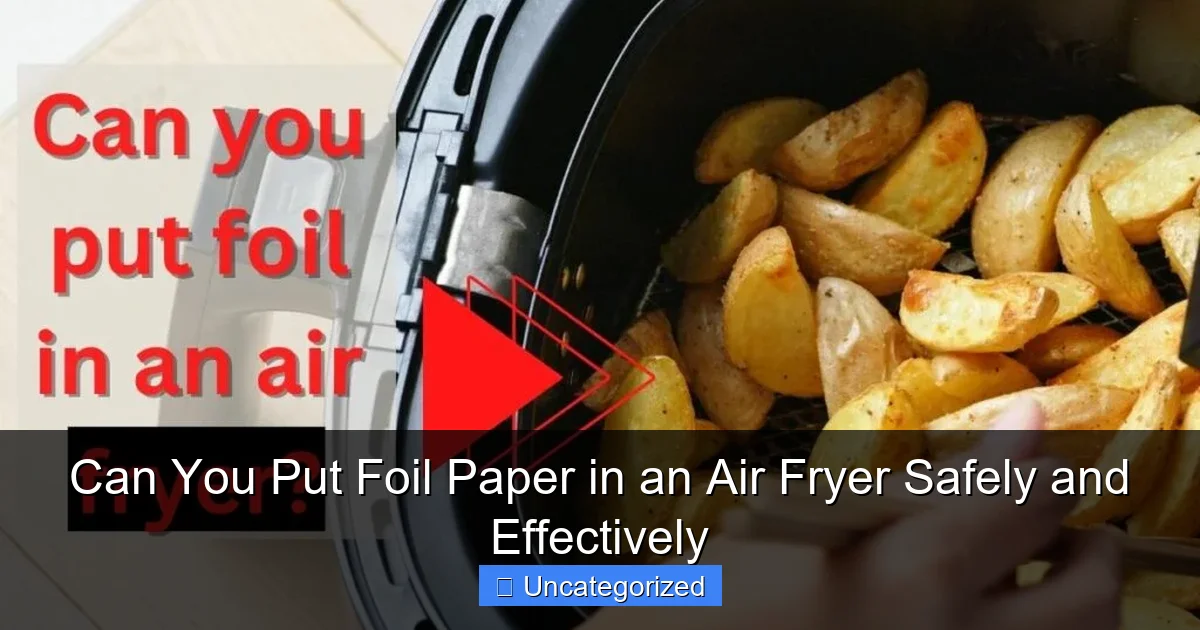
Visual guide about can you put foil paper in an air fryer
Image source: projectperfecthome.com
1. Creating a Foil “Boat” for Messy Foods
One of the most popular and safe uses of foil is creating a “boat” or shallow tray to hold sticky or juicy foods. This method keeps the basket clean and prevents food from sticking while allowing air to circulate around the sides.
- Example: Marinated chicken wings or ribs with a sticky glaze. Place a sheet of foil in the basket, fold up the edges slightly (about 0.5–1 inch), and place the wings inside. The foil catches drippings, and the open sides allow hot air to flow around the meat, ensuring crispiness.
- Tip: Poke a few small holes in the bottom of the foil boat to allow excess fat to drain, preventing sogginess.
2. Shielding Delicate Areas
Some foods have parts that cook faster than others. For instance, fish fillets may have thin edges that overcook before the center is done. Use small strips of foil to shield these areas.
- Example: Air frying salmon. After 6 minutes, when the edges start browning too quickly, cover just the thin edges with foil strips. This allows the center to finish cooking without burning the edges.
- Tip: Use non-stick foil (with the dull side down) to prevent sticking, especially with delicate proteins.
3. Preventing Small Foods from Falling Through
Foods like chopped vegetables, shrimp, or small meatballs can slip through the basket’s gaps. A foil liner with small holes can act as a barrier without blocking airflow.
- Method: Cut a piece of foil to fit the basket, then use a fork or skewer to poke evenly spaced holes (about 1/8 inch diameter). Place the foil in the basket, then add your small items.
- Note: Ensure the holes are large enough to allow air to pass through but small enough to keep food contained.
4. Cooking with Sauces or Marinades
When air frying foods in a sauce (like teriyaki chicken or BBQ ribs), foil helps contain the liquid and prevents it from dripping into the heating element.
- Technique: Use a foil boat, add the food and sauce, and fold the edges to create a shallow dish. Cook as usual, then open the foil to crisp the top in the final 2–3 minutes.
- Pro Tip: Baste the food with sauce halfway through cooking for even flavor distribution.
5. Reheating with Foil
Reheating leftovers like pizza or fried chicken in an air fryer can restore crispiness. Foil helps retain moisture while preventing the top from burning.
- Method: Place the food on a foil-lined basket (edges slightly folded). Cover only the top with a loose foil tent to prevent over-browning.
- Temperature: Use 350°F (175°C) for 3–5 minutes, depending on thickness.
Risks and Dangers of Improper Foil Use
While foil can be a helpful tool, improper use poses several risks. Understanding these dangers is crucial for safe air frying.
1. Blocking Airflow (The #1 Mistake)
Covering the entire basket with foil without ventilation holes severely restricts airflow. This leads to:
- Steam buildup, causing soggy food
- Longer cooking times
- Potential overheating of the air fryer’s internal components
Real-World Example: A user lined their air fryer basket with foil to cook french fries. The foil had no holes, and the fries came out steamed and limp. The air fryer’s fan struggled to circulate air, and the unit shut off due to overheating (a safety feature).
2. Foil Touching the Heating Element
The heating element in most air fryers is located at the top. If foil is draped over the basket’s rim or extends upward, it can come into contact with the element.
- Risk: Melting, sparking, or fire (especially with older models or high temperatures).
- Prevention: Always keep foil at least 1 inch below the top of the basket. Never let it hang over the edges.
3. Static Electricity and Sparking
Some users report sparking when using foil in air fryers. This is usually due to static electricity, especially in dry environments.
- Cause: Foil moving or vibrating near the heating element can create sparks, though it rarely causes fires.
- Solution: Use heavy-duty foil and ensure it’s flat and secured. Avoid crumpled foil.
4. Chemical Leaching (Myth vs. Reality)
A common concern is that high heat causes aluminum to leach into food. However, research shows:
- Aluminum foil is generally safe at air fryer temperatures (up to 400°F/205°C).
- Leaching increases with acidic foods (like tomato sauce) and prolonged cooking, but the levels are far below safety thresholds set by the FDA and WHO.
- Recommendation: Use parchment paper for highly acidic foods or long cook times.
Alternatives to Foil: When to Use Other Materials
While foil is versatile, there are situations where alternatives are safer or more effective.
1. Parchment Paper (Best for Acidic Foods)
Parchment paper is heat-resistant, non-stick, and doesn’t conduct heat like foil. It’s ideal for:
- Foods with high acidity (e.g., lemon chicken, tomato-based sauces)
- Preventing sticking without risk of leaching
- Use with small holes for airflow (like foil)
Tip: Cut parchment to fit the basket and use scissors to snip small holes. Avoid bleached parchment for eco-conscious cooking.
2. Silicone Mats and Baking Liners
Reusable silicone mats are a durable, eco-friendly option. They’re non-stick, heat-resistant up to 480°F (250°C), and easy to clean.
- Best for: Baking, roasting, or reheating sticky foods.
- Note: Ensure the mat is air fryer-safe (not all silicone mats are designed for convection ovens).
3. Air Fryer-Specific Accessories
Many brands offer accessories like:
- Silicone liners
- Perforated baking pans
- Stackable racks
These are designed to maximize airflow and are often safer than DIY foil solutions.
4. No Liner at All (When Appropriate)
For foods with natural fats (like bacon, sausages, or chicken with skin), a liner isn’t necessary. The fat will drip through the basket, and the food will crisp beautifully.
- Tip: Preheat the air fryer for 3–5 minutes to ensure even cooking from the start.
Best Practices and Pro Tips for Foil Use
To use foil safely and effectively, follow these expert-recommended practices.
1. Choose the Right Foil
- Use heavy-duty aluminum foil (0.024 mm thick). It’s less likely to tear or crumple during cooking.
- Avoid non-stick foil for high-heat applications unless specified as air fryer-safe.
2. Secure the Foil Properly
- Press the foil flat against the basket’s base and sides (if using a boat).
- Fold the edges over the basket’s rim slightly to hold it in place—but never cover the rim completely.
- Use a fork to gently press the foil into corners, avoiding sharp creases that could puncture.
3. Monitor Cooking Closely
- Check food every 5–7 minutes when using foil, especially for the first time with a new recipe.
- Adjust foil shielding as needed (e.g., remove foil strips from fish edges if they’re browning too fast).
4. Clean the Basket Thoroughly
- Even with foil, some grease or residue may accumulate. Clean the basket after every use to prevent buildup.
- Wipe the heating element with a damp cloth (when cool) to remove any splatter.
5. Know Your Air Fryer Model
- Some models (e.g., Ninja Foodi, Instant Vortex) have specific guidelines for foil use. Always check the manual.
- Smaller baskets (2–3 quarts) are more sensitive to airflow blockage than larger ones (5+ quarts).
Data Table: Foil Use Comparison in Air Fryers
| Use Case | Recommended Method | Foil Type | Airflow Consideration | Risk Level |
|---|---|---|---|---|
| Sticky marinated chicken | Foil boat with holes | Heavy-duty | Open sides for circulation | Low |
| Fish fillets (thin edges) | Foil strips for shielding | Standard | No blocking of main airflow | Low |
| Small vegetables | Perforated foil liner | Heavy-duty | Holes ≥ 1/8 inch diameter | Medium |
| Tomato-based sauce | Not recommended; use parchment | N/A | Full circulation | High (leaching risk) |
| Reheating pizza | Loose foil tent | Standard | No direct contact with food | Low |
Conclusion
So, can you put foil paper in an air fryer? The answer is a cautious yes—but only when used correctly. Foil is a powerful tool that can enhance your air frying experience by reducing mess, protecting delicate foods, and improving cleanup. However, its benefits are negated if it blocks airflow, touches the heating element, or is used with incompatible foods like high-acid dishes.
By following the guidelines in this guide—using foil boats, shielding, and perforated liners, while avoiding full coverage and high-risk scenarios—you can harness the convenience of foil without compromising safety or cooking quality. Remember, the golden rule of air frying is airflow. Any material, including foil, should support—not hinder—the convection process.
Experiment with foil in small batches, monitor your results, and always prioritize safety over convenience. With the right techniques, your air fryer can deliver restaurant-quality meals with minimal effort. Whether you’re a beginner or a seasoned air fryer enthusiast, mastering the art of foil use is a small step that can make a big difference in your kitchen. Happy air frying!
Frequently Asked Questions
Can you put foil paper in an air fryer without causing damage?
Yes, you can safely use foil paper in an air fryer as long as it’s properly secured and doesn’t block airflow. Avoid letting the foil touch the heating element to prevent overheating or fire hazards.
Is it safe to use foil in an air fryer when cooking greasy foods?
Using foil in an air fryer for greasy foods helps contain mess and makes cleanup easier. Just ensure the foil is weighed down with food and doesn’t flutter into the heating coil.
Can you put foil paper in an air fryer to speed up cooking?
Foil paper won’t speed up cooking in an air fryer but can help distribute heat evenly for certain dishes. It’s best used for wrapping items like fish or potatoes to retain moisture.
What type of foil is safe to use in an air fryer?
Heavy-duty aluminum foil is ideal for air fryers because it’s less likely to tear or blow around. Always avoid non-stick or coated foil, as these may release harmful chemicals when heated.
Does using foil in an air fryer affect crispiness?
Foil can reduce crispiness if it covers too much of the food, since it limits direct exposure to hot air. For best results, use foil only for wrapping or lining the basket’s base.
Can you put foil paper in an air fryer with acidic ingredients like lemon or tomato?
Acidic ingredients can react with aluminum foil, causing small amounts of metal to leach into food. Use parchment paper with a foil base or limit direct contact to avoid this issue.