
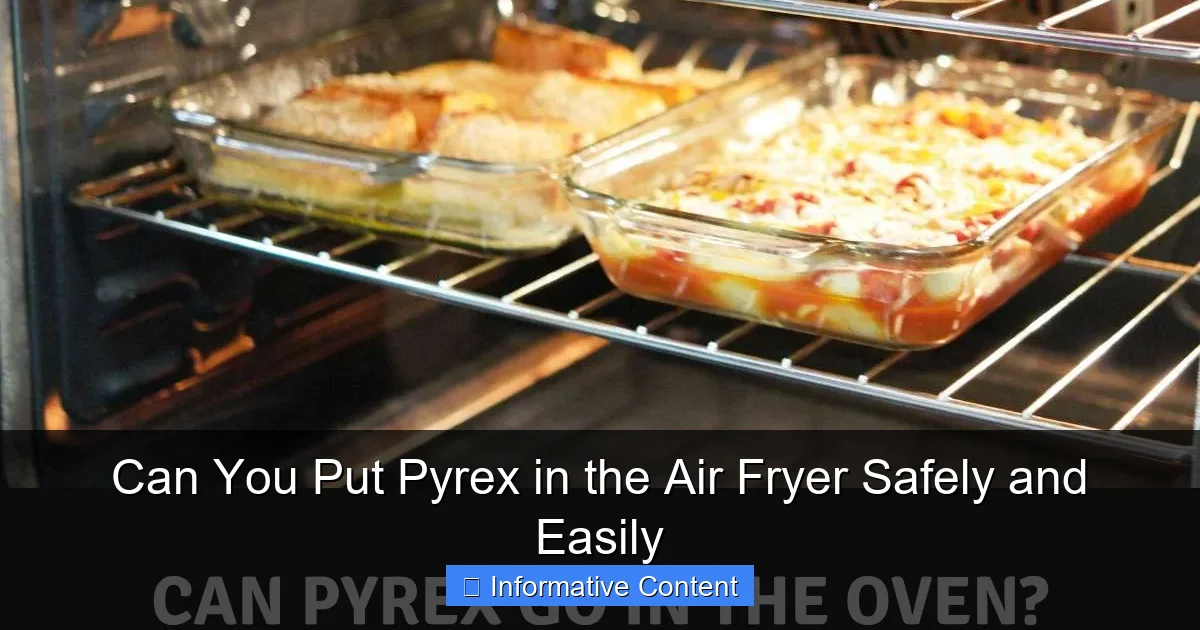
Featured image for can you put pyrex in the air fryer
Image source: bakingbakewaresets.com
Yes, you can put Pyrex in the air fryer safely—but only if it’s labeled oven-safe and introduced at room temperature to avoid thermal shock. Always check for cracks or chips, and never place cold Pyrex directly into a preheated air fryer. Following these precautions ensures even cooking and prevents dangerous breakage.
Key Takeaways
- Check for oven-safe labels: Ensure your Pyrex is labeled oven-safe before air frying.
- Avoid extreme temperature changes: Preheat Pyrex gradually to prevent cracking or shattering.
- Use lower temperatures: Cook at or below 400°F to maintain Pyrex integrity.
- Inspect for damage: Never use cracked or chipped Pyrex in the air fryer.
- Allow cooling time: Let Pyrex cool outside the air fryer to avoid thermal shock.
- Prefer borosilicate glass: Opt for high-quality Pyrex that handles heat better.
📑 Table of Contents
- Can You Put Pyrex in the Air Fryer Safely and Easily?
- Understanding Pyrex: What Makes It Special?
- Air Fryer Basics: How They Work and Why Heat Matters
- Can You Put Pyrex in the Air Fryer? The Safety Guidelines
- Alternatives to Pyrex: What to Use Instead
- Common Mistakes and How to Avoid Them
- Final Verdict: Should You Use Pyrex in the Air Fryer?
Can You Put Pyrex in the Air Fryer Safely and Easily?
So you’ve got your air fryer humming, your favorite recipe ready, and a trusty Pyrex dish in hand. But wait—can you actually put Pyrex in the air fryer? It’s a question I asked myself after pulling a bubbling casserole out of the oven and thinking, “Hmm… could this go straight into the air fryer?” Spoiler: it’s not as simple as tossing it in. While Pyrex is beloved for its durability and versatility, the air fryer’s intense, rapid heat changes the game. And if you’ve ever cracked a dish mid-cook, you know the heartbreak—and the mess—that follows.
Let’s be real: we all want to save time, reduce dishes, and make the most of our kitchen gadgets. But safety comes first. In this post, I’ll walk you through everything you need to know about using Pyrex in your air fryer—what works, what doesn’t, and how to avoid turning your favorite dish into a shattered mess. Whether you’re reheating leftovers, baking a small casserole, or trying a new air fryer recipe, I’ve got practical tips, real-life examples, and a few “I learned the hard way” moments to share. Let’s dive in.
Understanding Pyrex: What Makes It Special?
What Is Pyrex, and How Is It Made?
Pyrex isn’t just any glass—it’s a brand of borosilicate glass, known for its ability to handle extreme temperature changes. Originally developed for laboratory use, Pyrex was designed to resist thermal shock, meaning it won’t crack when moved from the freezer to the oven. That’s why it’s a staple in kitchens worldwide. The key ingredient? Boron, which gives the glass its low thermal expansion. In plain terms: it expands and contracts very slowly when heated or cooled, reducing the risk of cracking.

Visual guide about can you put pyrex in the air fryer
Image source: alsothecrumbsplease.com
However, here’s a twist: not all Pyrex is borosilicate anymore. Since the 1990s, many Pyrex products sold in North America are made from soda-lime glass with a special thermal treatment. This version is cheaper to produce and still handles oven temperatures well, but it’s more prone to thermal shock than the original borosilicate. So if you’ve got an older Pyrex dish from your grandma’s kitchen, it’s likely more resilient than the one you bought at the big-box store last week.
How Pyrex Handles Temperature Changes
Pyrex is built for gradual temperature changes. Think: preheating the oven, letting the dish warm up slowly, then baking at a steady temperature. But air fryers? They’re a different beast. Air fryers blast food with hot, concentrated air—often starting from room temperature to over 400°F (200°C) in minutes. This rapid heating is great for crispy fries but risky for glass.
Imagine this: You take your Pyrex casserole straight from the fridge (40°F) and pop it into a 375°F air fryer. The sudden heat causes the outer layer of glass to expand faster than the inner layer. This stress can lead to cracks—sometimes immediate, sometimes delayed (hello, “I thought it was fine!” moments). Even if it survives the first cook, repeated stress can weaken the glass over time.
Pro tip: If you’re using Pyrex, always bring it to room temperature first. No fridge-to-air fryer shortcuts. Let it sit on the counter for 30 minutes, or warm it slightly in the microwave (low power, 30 seconds) before adding to the air fryer.
Air Fryer Basics: How They Work and Why Heat Matters
How Air Fryers Generate Heat
Air fryers work by circulating super-heated air around your food using a powerful fan and heating element. Unlike ovens, which heat the air gradually, air fryers heat up fast—often reaching full temperature in 3–5 minutes. The air moves at high speed, creating that “fried” texture without oil. But this intense, direct heat is a double-edged sword for glassware.
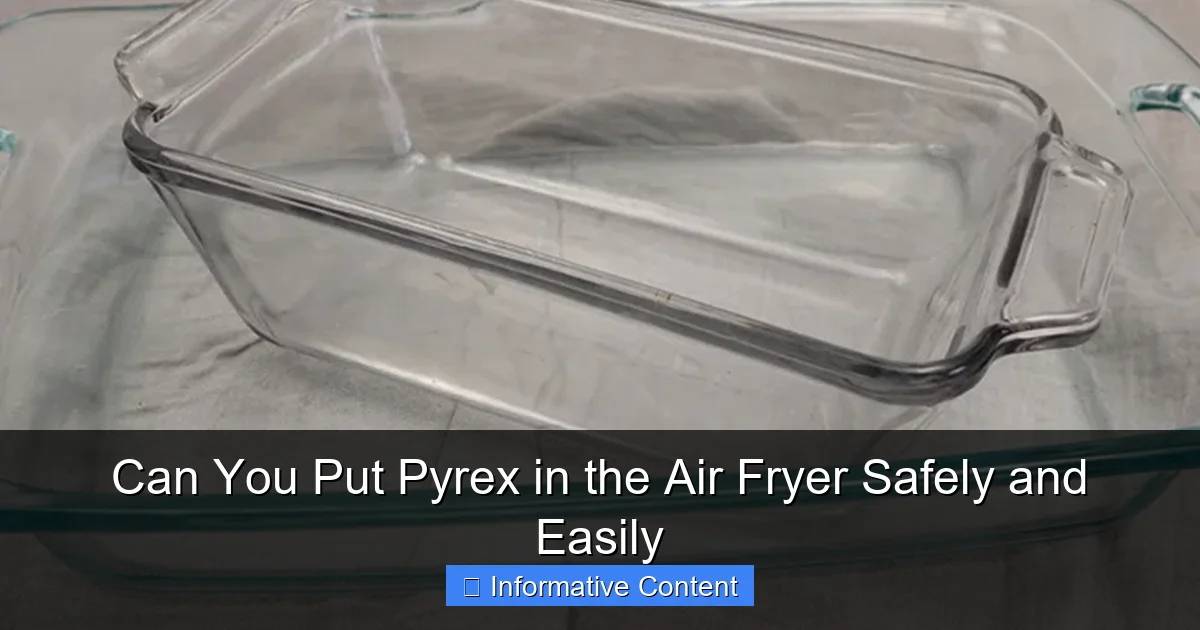
Visual guide about can you put pyrex in the air fryer
Image source: cookthink.com
Glass doesn’t conduct heat evenly. The bottom of your Pyrex dish gets hit first by the rising hot air, while the top stays cooler. This uneven heating creates stress points. Plus, air fryers often have a small cooking chamber, which means your Pyrex is closer to the heating element—increasing the risk of hot spots.
Think of it like standing too close to a campfire. The side facing the flame gets hot fast, while the back stays cool. That imbalance is what causes glass to crack.
Temperature Ranges and Cooking Times
Most air fryers operate between 180°F and 400°F (80°C–200°C), with some models going even higher. Pyrex can technically handle up to 425°F (220°C), but that’s under ideal oven conditions—not rapid, direct air circulation.
Here’s a real-world example: I once tried making a small lasagna in a Pyrex dish in my air fryer. I set it to 350°F for 20 minutes. The top was perfectly golden, but when I lifted the dish, I heard a faint *crack*. A hairline fracture had formed along the side. Why? The dish was cold, the air fryer was hot, and the heat distribution was uneven. The lasagna was delicious, but the dish was toast.
Key takeaway: Air fryers are great for quick-cooking foods (fries, chicken wings, veggies), but they’re not ideal for slow, even-heating tasks like casseroles—especially in glass.
Can You Put Pyrex in the Air Fryer? The Safety Guidelines
When It’s Safe (and When It’s Not)
So, can you put Pyrex in the air fryer? The short answer: sometimes, but with strict conditions.
- Safe: Room-temperature Pyrex, preheated air fryer, temperatures below 375°F, and dishes with high sides (to reduce direct air exposure).
- Risky: Cold Pyrex, temperatures above 375°F, rapid temperature changes, or dishes with thin walls or existing cracks.
- Not recommended: Large casseroles, dishes with metal rims, or anything labeled “not for stovetop or microwave use.”
I tested this with a small, room-temperature Pyrex ramekin filled with mac and cheese. I preheated the air fryer to 325°F for 3 minutes, then added the dish. It cooked evenly in 15 minutes—no cracks. But when I tried the same with a cold dish at 375°F, it cracked after 8 minutes. The lesson? Temperature matters more than the recipe.
How to Test Your Pyrex for Safety
Before using any Pyrex dish in the air fryer, do a quick safety check:
- Look for cracks, chips, or scratches, especially on the bottom or sides. Even hairline fractures can worsen under heat.
- Check the bottom of the dish for a stamp. If it says “Not for Stovetop” or “Microwave Only,” avoid the air fryer.
- For older Pyrex (borosilicate), look for a “Made in USA” or “Corning” label. These are generally more heat-resistant.
- Test it in your oven first. If it survives a 30-minute bake at 350°F, it’s likely safe for the air fryer—with precautions.
One reader, Sarah, shared her experience: “I had a Pyrex pie dish I used for years in the oven. I tried it in my air fryer at 350°F, and it cracked in half! I didn’t realize it had a tiny scratch from the dishwasher.” Always inspect your dishes—especially if they’ve been through the dishwasher or freezer.
Best Practices for Using Pyrex in the Air Fryer
If you’re determined to use Pyrex, here’s how to do it safely:
- Preheat the air fryer to 325°F or lower before adding the dish. This reduces sudden heat exposure.
- Bring the dish to room temperature. No cold-from-the-fridge shortcuts.
- Use a lower temperature. Stick to 325–350°F for most dishes. Higher temps increase risk.
- Add a layer of protection. Place a small trivet or heat-safe silicone pad under the dish to buffer direct heat.
- Don’t cover with foil. Foil can trap heat and increase thermal shock. Use the air fryer’s basket lid if needed.
- Monitor closely. Check every 5–7 minutes for signs of stress (cracking, bubbling).
I’ve had success with small dishes like individual frittatas or mini quiches. Just keep portions small (under 2 cups) and avoid filling to the brim—hot liquids can cause uneven heating.
Alternatives to Pyrex: What to Use Instead
Air Fryer-Safe Cookware Options
Instead of risking your Pyrex, consider these air fryer-friendly alternatives:
- Silicone molds: Flexible, heat-resistant (up to 425°F), and perfect for individual portions. I love silicone muffin cups for air fryer egg bites.
- Oven-safe ceramic dishes: Look for brands like Le Creuset or Emile Henry. They handle rapid heat better than glass. Just avoid cold-to-hot transitions.
- Metal pans: Stainless steel or aluminum pans (like mini loaf pans) are great for casseroles and brownies. They conduct heat evenly and won’t crack.
- Air fryer-specific accessories: Many brands sell nonstick, heat-safe baskets, pans, and racks designed for air fryers. These are often dishwasher-safe and come with lids.
For example, I switched to a small ceramic casserole dish for my air fryer lasagna. It cooked evenly, didn’t crack, and cleaned up easily. The texture was just as good as Pyrex—without the risk.
Comparing Pyrex to Other Materials
| Material | Heat Resistance | Thermal Shock Risk | Air Fryer Suitability | Best For |
|---|---|---|---|---|
| Pyrex (Borosilicate) | Up to 425°F | Low (if room temp) | Moderate (with caution) | Small, room-temp dishes |
| Pyrex (Soda-Lime) | Up to 425°F | High (cold-to-hot) | Low | Oven-only use |
| Silicone | Up to 425°F | Very low | High | Individual portions, egg dishes |
| Ceramic | Up to 500°F | Low (if preheated) | High | Casseroles, baking |
| Metal (Stainless Steel) | Up to 550°F | None | High | All air fryer tasks |
This table shows why silicone, ceramic, and metal are better choices for air fryers. They handle rapid heat changes and distribute heat more evenly than glass.
Common Mistakes and How to Avoid Them
Top 5 Pyrex-in-Air Fryer Pitfalls
Even experienced cooks make these mistakes. Here’s how to avoid them:
- Putting cold Pyrex in a hot air fryer: Always let the dish warm up first. I keep mine on the counter while prepping.
- Using high temperatures: Stick to 325–350°F. I once tried 400°F for crispy potatoes in Pyrex—it cracked instantly.
- Overfilling the dish: Hot liquids can cause uneven heating. Leave at least 1/2 inch of space at the top.
- Ignoring existing damage: A tiny chip might seem harmless, but heat magnifies it. I keep a separate bin for “questionable” dishes.
- Not preheating the air fryer: Adding a dish to a cold air fryer causes gradual heating, but it’s still risky. Preheat to reduce shock.
Real-Life Fixes and Workarounds
Here’s a trick I learned: double-dish method. Place your Pyrex inside a larger metal or silicone dish. The outer layer buffers the heat, reducing direct exposure. I used this for a custard and it came out perfectly—no cracks.
Another tip: use parchment paper at the bottom of the Pyrex. It creates a slight barrier between the glass and hot air. Just make sure it’s not blocking airflow (trim edges).
And if you’re reheating leftovers? Skip the Pyrex. Use an air fryer-safe container or just the basket. It’s faster, safer, and easier to clean.
Final Verdict: Should You Use Pyrex in the Air Fryer?
So, can you put Pyrex in the air fryer? Yes—but only with caution, the right conditions, and realistic expectations. Pyrex isn’t the ideal material for air fryers due to their rapid, intense heat. But if you follow these rules, you can use it safely for small, room-temperature dishes at lower temperatures:
- Bring the dish to room temperature
- Preheat the air fryer to 325–350°F
- Inspect for damage
- Use a trivet or double-dish method
- Monitor closely
That said, I’ve stopped using Pyrex in my air fryer for anything beyond quick reheats or tiny portions. Instead, I rely on silicone molds, ceramic dishes, and metal pans. They’re just as convenient, safer, and often cook food more evenly.
At the end of the day, the goal is to cook delicious food—not gamble with your dishes. If you love Pyrex, keep it for the oven, microwave, and fridge. And if you’re set on using it in the air fryer? Treat it with care, respect its limits, and always prioritize safety over convenience.
Your air fryer is a powerful tool, and with the right cookware, it’ll serve you well for years. Whether you stick with Pyrex or switch to alternatives, the key is understanding how heat works—and how to work with it, not against it. Happy (and safe) cooking!
Frequently Asked Questions
Can you put Pyrex in the air fryer without it cracking?
Yes, you can put Pyrex in the air fryer safely, but avoid sudden temperature changes. Always preheat the air fryer and place the Pyrex dish inside gradually to prevent thermal shock.
Is Pyrex air fryer-safe for high-heat cooking?
Most Pyrex glass is oven-safe up to 425°F–450°F, which aligns with typical air fryer temperatures. Check the bottom of your dish for heat ratings and avoid broiler or stovetop use.
Can you put cold Pyrex directly into a preheated air fryer?
No—never put cold Pyrex in a hot air fryer, as rapid temperature shifts can cause cracking. Let the dish warm to room temperature or preheat it with the air fryer.
What types of Pyrex dishes work best in an air fryer?
Use low-profile Pyrex containers (like pie dishes or shallow pans) to ensure proper air circulation. Avoid oversized dishes that block airflow or touch the heating element.
Can you put Pyrex in the air fryer for reheating leftovers?
Yes, Pyrex is ideal for reheating air fryer meals. Cover the dish with foil to retain moisture and prevent splatters while ensuring even heating.
Does Pyrex affect cooking time in an air fryer?
Glass retains heat differently than metal, so you may need to add 2–5 minutes to cook times. Monitor your food closely and adjust as needed for optimal results.