
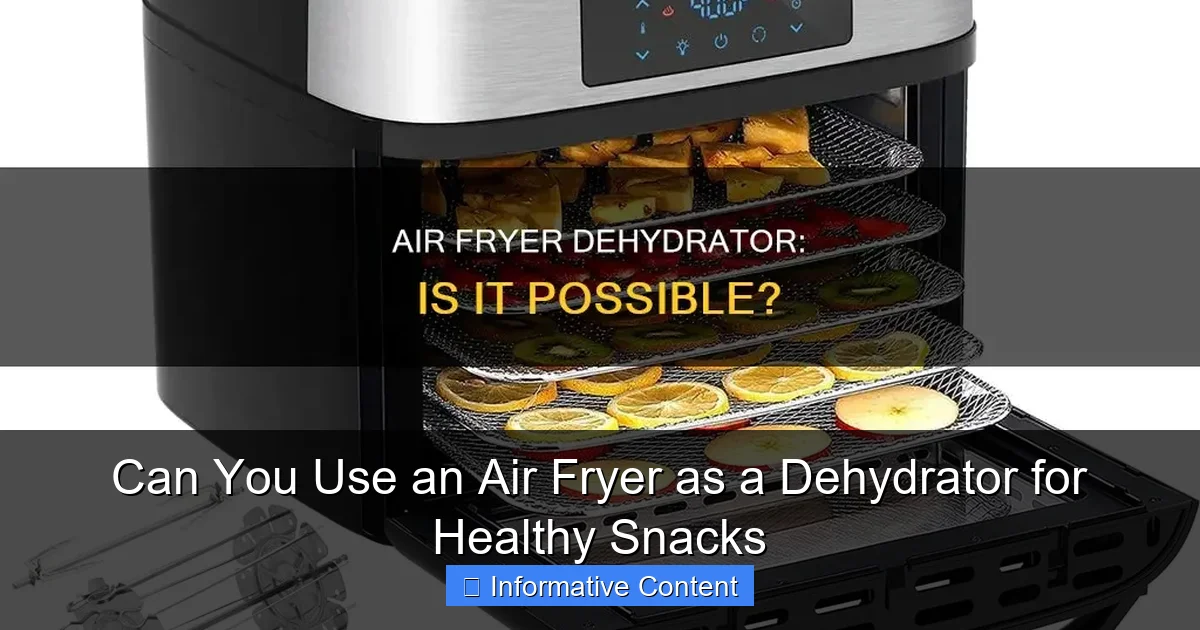
Featured image for can you use an air fryer as a dehydrator
Image source: cycookery.com
Yes, you can use an air fryer as a dehydrator to make healthy, crunchy snacks like fruit chips, beef jerky, and veggie crisps—right in your own kitchen. With adjustable temperature settings and proper airflow, many air fryers effectively mimic dehydrators, offering a faster, more convenient way to preserve nutrients and flavor without added oils.
Key Takeaways
- Air fryers can dehydrate but require low temps and long cook times.
- Slice food thinly for even drying and better results.
- Use dehydrator mode if available, or set to lowest heat setting.
- Rotate trays often to ensure consistent airflow and drying.
- Store properly after drying in airtight containers to maintain crispness.
- Best for fruits, veggies and herbs, not ideal for meats or jerky.
📑 Table of Contents
- Can You Use an Air Fryer as a Dehydrator for Healthy Snacks?
- How Air Fryers Work (And Why That Matters for Dehydrating)
- What Foods Work Best in an Air Fryer Dehydrator?
- Step-by-Step Guide: How to Dehydrate in Your Air Fryer
- Pros and Cons: Air Fryer vs. Dedicated Dehydrator
- Dehydrating Time and Temperature Guide (Air Fryer)
- Final Thoughts: Is It Worth Trying?
Can You Use an Air Fryer as a Dehydrator for Healthy Snacks?
Have you ever stared at your air fryer, wondering if it could do more than just make crispy chicken tenders or golden sweet potato fries? Maybe you’ve seen those beautifully dried apple chips or banana crisps at the store and thought, “I’d love to make those at home.” But then you pause—do you really need another gadget taking up counter space? What if I told you your trusty air fryer might already be the answer to making healthy, crunchy, nutrient-packed snacks without buying a dedicated dehydrator?
I’ve been there. A few years ago, I bought a dehydrator with big dreams of making my own fruit leathers, kale chips, and jerky. But after a few uses, it ended up in the back of my pantry, collecting dust. It was bulky, slow, and honestly, a pain to clean. Then one day, while experimenting with low-temperature cooking, I stumbled upon a revelation: could my air fryer double as a dehydrator? The idea felt too good to be true—but after months of testing, tweaking, and snacking, I can confidently say it’s not only possible, it’s often better than traditional dehydrators for certain foods. In this post, I’ll walk you through exactly how, when, and why to use your air fryer as a dehydrator, plus share practical tips, real-life results, and even a few surprises.
How Air Fryers Work (And Why That Matters for Dehydrating)
Before we dive into recipes and techniques, let’s get on the same page about how air fryers actually work. Understanding the mechanics helps you use the machine more effectively—and safely—when turning it into a dehydrator.

Visual guide about can you use an air fryer as a dehydrator
Image source: thirtysomethingsupermom.com
Hot Air Circulation vs. Conduction
Air fryers use rapid hot air circulation (also called convection) to cook food. A heating element warms the air, and a powerful fan pushes that hot air around the food at high speed. This creates a crispy exterior without needing much oil—hence the “fryer” name, even though nothing is actually fried.
Dehydrators, on the other hand, rely on low, steady heat and airflow to slowly draw moisture out of food over several hours. The goal isn’t to cook, but to preserve by reducing water content—typically below 10% to prevent spoilage.
Here’s the key: both appliances use heat and airflow to remove moisture. The difference is in temperature control, airflow pattern, and duration. Air fryers are designed for quick, high-heat cooking, but many newer models now offer “dehydrate” settings or allow manual temperature adjustments as low as 120°F (49°C). That’s right in the sweet spot for dehydrating!
Temperature Control: The Make-or-Break Factor
Not all air fryers are created equal when it comes to dehydrating. Older or budget models may only go down to 170°F (77°C), which is too hot for proper dehydration. At that temperature, food starts cooking before it dries—think mushy apples instead of crisp chips.
For successful dehydration, you need temperatures between 120°F and 160°F (49°C–71°C). Look for models with digital controls, a “dehydrate” preset, or manual settings that allow you to dial in precise temps. My Philips AirFryer XXL has a dedicated dehydrate mode (set to 135°F), and it works beautifully. Even my older Cosori model, which lacks a preset, lets me manually set 125°F—perfect for herbs and fruit.
Pro tip: If your air fryer doesn’t have a dehydrate setting, check the manual. Some brands recommend using the “air fry” function at the lowest possible temperature (often 170°F) and opening the basket slightly to release steam. It’s not ideal, but it can work in a pinch.
Airflow and Basket Design
Dehydrators have flat, stackable trays with even spacing for consistent airflow. Air fryer baskets, however, are deeper and often have a central hole for the fan. This can create uneven drying—food near the edges may dry faster than food in the center.
To fix this, I’ve found that rotating trays halfway through and using silicone mats or parchment paper (cut to fit) helps distribute heat evenly. You can also layer food in a single, thin layer—no stacking!—to mimic dehydrator trays.
What Foods Work Best in an Air Fryer Dehydrator?
Now that we know how air fryers dehydrate, let’s talk about what actually works. Not everything will turn out perfectly, but some foods shine—and others? Well, let’s just say I’ve learned from a few kitchen disasters.
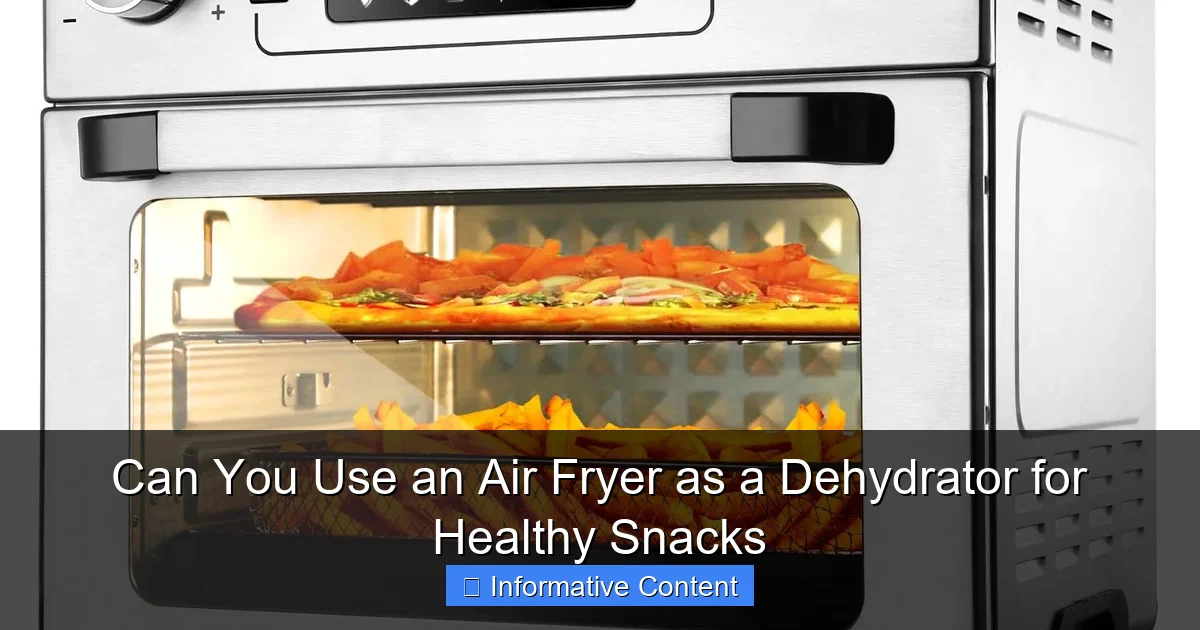
Visual guide about can you use an air fryer as a dehydrator
Image source: images-na.ssl-images-amazon.com
Fruits: Crispy Chips and Chewy Leather
Apples, bananas, pears, and mangoes are all stars in the air fryer dehydrator. Slice them thin—about 1/8 inch (3 mm)—and they’ll dehydrate in 3–6 hours at 135°F. I love making apple chips: core and slice apples, toss with cinnamon, and dehydrate until crisp. They’re crunchier than oven-dried versions and retain more flavor.
For fruit leathers, puree ripe fruit (peaches, strawberries, or mixed berries), spread it 1/4 inch thick on a parchment-lined tray, and dehydrate for 6–8 hours. The air fryer’s airflow helps prevent sticking and speeds up drying. Just be sure to use a liner—fruit can drip and burn on the heating element.
Tip: Soak apple or pear slices in lemon juice (1 tbsp per cup of water) for 5 minutes before dehydrating to prevent browning. No need for sugar—the natural fruit sugars concentrate as they dry.
Vegetables: Kale Chips, Zucchini, and More
Kale chips are a game-changer. Wash and dry kale, remove stems, tear into bite-sized pieces, and toss with a little olive oil and salt. Dehydrate at 135°F for 2–3 hours. They come out crispy, not chewy, and last weeks in an airtight container.
Zucchini, carrots, and bell peppers also work well. Slice thin, blanch briefly (1–2 minutes in boiling water) to preserve color and nutrients, then dehydrate. These are great for soups or rehydrating in stews.
Caution: Avoid high-moisture veggies like cucumbers or watermelon. They’ll take forever to dry and may turn rubbery instead of crisp.
Herbs: Preserve Freshness for Months
Fresh basil, mint, thyme, and rosemary dry beautifully at 120°F. Spread them in a single layer and dehydrate for 1–2 hours. They’ll crumble easily when done. I store mine in mason jars—no more wilted herbs in the crisper!
Bonus: Dried herbs from the air fryer taste fresher than store-bought because you control the process. No preservatives, no long storage.
Meat and Jerky: Proceed with Caution
Jerky is tricky. Most air fryers can’t maintain the low, steady temps needed to safely dehydrate raw meat (below 160°F for poultry, 165°F for beef). Plus, meat needs to be sliced very thin and marinated for flavor and safety.
I’ve tried it—and while it works, it’s risky. The FDA recommends heating meat to 160°F (71°C) before dehydrating to kill bacteria. If your air fryer can’t hold a temp below that, you’re better off using a dedicated dehydrator or oven. For occasional jerky, I use my oven at 170°F with the door cracked open for airflow. Safer and more reliable.
That said, fully cooked meats (like leftover roast beef or turkey) can be safely dehydrated at 135°F for 4–6 hours. Just slice thin and watch for crispness.
Step-by-Step Guide: How to Dehydrate in Your Air Fryer
Ready to try it? Here’s my tested, step-by-step method for turning your air fryer into a dehydrating powerhouse.
Step 1: Prep Your Food
- Wash and dry produce thoroughly.
- Slice fruits and veggies uniformly (1/8–1/4 inch thick). Use a mandoline for precision.
- Remove pits, stems, and seeds.
- For fruits, consider soaking in lemon water (1 tbsp lemon juice per cup of water) for 5 minutes to prevent browning.
- For herbs, pat dry with a towel—no chopping needed.
Step 2: Set Up the Air Fryer
- Line the basket with parchment paper or a silicone mat. This prevents sticking and makes cleanup easy.
- Arrange food in a single layer. No overlapping! Airflow is critical.
- If your air fryer has a dehydrate setting, select it. If not, set the lowest temperature (ideally 120°F–135°F).
- For models with a central hole, place food around the edges to avoid blocking airflow.
Step 3: Dehydrate and Monitor
- Start with the recommended time (see table below), but check every hour.
- Rotate or flip food halfway through for even drying.
- Look for these signs of doneness:
- Fruits: crisp or leathery, no moisture when squeezed.
- Veggies: brittle, not chewy.
- Herbs: crumble easily between fingers.
Step 4: Cool and Store
- Let food cool completely (15–30 minutes). Warm food can create condensation in storage.
- Store in airtight containers or vacuum-sealed bags. I use mason jars with silica gel packets to absorb any residual moisture.
- Label with date and contents. Most dried foods last 6–12 months in a cool, dark place.
Step 5: Clean the Air Fryer
Dehydrating can leave sticky residue. Soak the basket in warm, soapy water for 10 minutes, then scrub with a soft sponge. Wipe the heating element with a damp cloth—never submerge the unit.
Pros and Cons: Air Fryer vs. Dedicated Dehydrator
Let’s be real—using an air fryer as a dehydrator isn’t perfect. Here’s how it stacks up against a traditional dehydrator, based on my experience.
Pros: Why the Air Fryer Wins
- Space-saving: One appliance for frying, roasting, and dehydrating. No need for a bulky dehydrator.
- Faster drying: Air fryers have stronger fans, so foods dehydrate 20–30% faster than in most dehydrators.
- Better texture: Fruits come out crispier, not leathery. Kale chips are crunchier.
- Energy efficient: Uses less power than running an oven for 8 hours.
- Easy to use: Familiar interface. No learning curve if you already own one.
Cons: Where It Falls Short
- Capacity: Most air fryer baskets hold 3–5 quarts. Dehydrators can have 5+ trays. You’ll need to dehydrate in batches.
- Temperature limits: Budget models may not go low enough. Check your manual.
- Uneven drying: Without proper rotation, food dries faster on the edges.
- Noisy: The fan runs constantly, which can be loud in small kitchens.
- Risk of burning: Over-drying can turn herbs to dust or fruit to charcoal.
When to Use Each
Use your air fryer for:
- Small batches (1–2 cups at a time).
- Quick projects (herbs, kale chips).
- Foods that benefit from crispiness (apple chips, zucchini).
Use a dedicated dehydrator for:
- Large batches (like 10+ apples for fruit leather).
- Long-term projects (jerky, mushrooms, tomatoes).
- Foods that need ultra-low, steady heat (raw meat, yogurt).
Dehydrating Time and Temperature Guide (Air Fryer)
Here’s a handy reference table based on my trials. Times vary by model, thickness, and humidity, so always check early and often.
| Food | Temperature | Time | Texture | Tips |
|---|---|---|---|---|
| Apples | 135°F (57°C) | 3–5 hours | Crisp chips | Soak in lemon water first |
| Bananas | 135°F (57°C) | 4–6 hours | Crisp or chewy | Slice thin; flip halfway |
| Kale | 135°F (57°C) | 2–3 hours | Brittle chips | Toss with oil and salt |
| Herbs (basil, mint) | 120°F (49°C) | 1–2 hours | Crumble easily | No chopping needed |
| Zucchini | 135°F (57°C) | 4–5 hours | Brittle | Blanch first for color |
| Strawberry Leather | 135°F (57°C) | 6–8 hours | Flexible, not sticky | Use parchment paper |
| Cooked Turkey | 135°F (57°C) | 4–6 hours | Leathery, not tough | Slice very thin |
Final Thoughts: Is It Worth Trying?
So, can you use an air fryer as a dehydrator for healthy snacks? Absolutely—with some caveats. It’s not a perfect replacement for a dedicated dehydrator, but for most home cooks, it’s a fantastic, space-saving alternative. I’ve made everything from crisp apple chips to vibrant kale snacks, and my family devours them. The best part? No extra gadgets, no clutter, and no compromise on taste.
That said, it’s not magic. You’ll need to pay attention to temperature, rotate trays, and work in batches. But if you’re already comfortable using your air fryer, the learning curve is minimal. And the payoff? A pantry full of wholesome, preservative-free snacks that cost a fraction of store-bought versions.
My advice? Start small. Try dehydrating a batch of herbs or a single apple. See how it feels. If you love it, expand to fruit leathers or veggie chips. And if you find yourself making large batches weekly, maybe that dehydrator isn’t such a bad idea after all. But for most of us, the air fryer pulls double duty just fine.
So go ahead—fire up that machine. Turn your kitchen into a snack factory. And the next time someone asks, “Can you use an air fryer as a dehydrator?” you can smile and say, “Yes, and here’s how.” Happy dehydrating! 🍏🍌🌿
Frequently Asked Questions
Can you use an air fryer as a dehydrator for making healthy snacks?
Yes, many air fryers can function as a dehydrator for healthy snacks like fruit chips or jerky, especially if they have a dedicated dehydrate setting or precise temperature control (below 160°F). Just ensure you slice ingredients thinly and arrange them in a single layer for even drying.
What foods can I dehydrate in an air fryer?
You can dehydrate fruits (apples, bananas, mango), vegetables (tomatoes, zucchini), herbs, and even make beef or turkey jerky. The key is using low temperatures and extended cooking times to remove moisture without burning.
Is an air fryer dehydrator combo worth it for saving space?
An air fryer that doubles as a dehydrator is great for small kitchens, as it replaces two appliances. However, dedicated dehydrators often offer more space and airflow for large batches—ideal for serious snack makers.
How long does it take to dehydrate food in an air fryer?
Dehydrating in an air fryer typically takes 2–6 hours, depending on the food’s thickness and moisture content. For example, apple slices may take 3–4 hours at 135°F, while jerky can require 4–6 hours at 155°F.
Can you use an air fryer as a dehydrator without a preset button?
Yes! Even without a dehydrate preset, you can manually set the air fryer to its lowest temperature (usually 120–160°F) and use the fan to circulate air. Just check progress frequently to avoid overcooking.
What are the pros and cons of using an air fryer as a dehydrator?
Pros include convenience, faster drying than oven methods, and energy efficiency. Cons are limited capacity (smaller batches) and potential uneven drying if racks aren’t rotated—common in budget air fryer models.