

Featured image for faberware air fryer instructions guide
Image source: desiredcuisine.com
Master your Faberware air fryer with this essential instructions guide designed to deliver crispy, golden results every time—whether you’re cooking frozen snacks, fresh veggies, or juicy meats. Follow simple, step-by-step directions to preheat, set time and temperature, and flip food for even cooking, ensuring restaurant-quality meals with minimal oil. Perfect for beginners and pros alike, this guide unlocks the full potential of your air fryer.
Key Takeaways
- Preheat for crispiness: Always preheat your Faberware air fryer before cooking for optimal results.
- Use minimal oil: Achieve crispy textures with just 1 tsp of oil per serving.
- Shake the basket: Flip or shake food halfway for even browning and crispiness.
- Follow time guides: Stick to recommended cook times to avoid under/overcooking meals.
- Clean after use: Wipe the basket and tray immediately to maintain performance and longevity.
- Layer wisely: Avoid overcrowding food to ensure proper air circulation and crispiness.
📑 Table of Contents
- Getting Started with Your Faberware Air Fryer
- Unboxing and Initial Setup: First Steps to Success
- Understanding the Control Panel and Settings
- Step-by-Step Cooking Guide: From Prep to Plate
- Cleaning and Maintenance: Keep It Running Smoothly
- Mastering Recipes and Advanced Techniques
- Data Table: Faberware Air Fryer Cooking Times & Temperatures
- Final Thoughts: Your Air Fryer, Your Rules
Getting Started with Your Faberware Air Fryer
So, you’ve just unboxed your shiny new Faberware air fryer—congrats! Whether you’re swapping out your old deep fryer or upgrading your kitchen gadgets, this little appliance is about to become your go-to for quick, crispy meals. But let’s be real: that excitement can quickly turn to confusion when you open the manual and see buttons, settings, and cooking times you’ve never heard of. Don’t worry—I’ve been there too. I remember staring at my first air fryer, wondering if I’d accidentally bought a spaceship.
The good news? Once you get the hang of it, your Faberware air fryer makes cooking faster, healthier, and (dare I say) fun. No more soggy oven fries or splattering oil from pan-frying. Just golden, crunchy results with little to no oil. In this guide, we’ll walk through every step—from setup to storage—so you can master your air fryer and cook perfect meals every single time. Think of this as your friendly, no-nonsense Faberware air fryer instructions guide—written by someone who’s burned a few batches of chicken tenders (so you don’t have to).
Unboxing and Initial Setup: First Steps to Success
What’s in the Box?
Before you even plug it in, take a moment to check what you’ve got. Most Faberware air fryer models come with:
Visual guide about faberware air fryer instructions guide
Image source: adventuresineverydaycooking.com
- The main air fryer unit with digital control panel
- Removable cooking basket with non-stick coating
- Air fryer drawer (the base that holds the basket)
- User manual with safety info and basic recipes
- Optional accessories (like a crisper plate or multi-layer rack, depending on model)
Pro tip: Keep the box and foam inserts for at least a few weeks. If something’s missing or damaged, you’ll need them for returns or exchanges. I learned this the hard way when I tossed my box after realizing the crisper plate was missing—had to wait an extra week for a replacement.
Cleaning Before First Use
Never skip this step! Even though your Faberware air fryer is new, the basket and drawer may have factory residue or dust from shipping. Here’s how to clean it properly:
- Wash the basket and drawer in warm, soapy water. Use a soft sponge—no steel wool or abrasive scrubbers, as they can scratch the non-stick coating.
- Rinse thoroughly and dry completely with a lint-free towel.
- Wipe the exterior with a damp cloth. Avoid getting water near the heating element or control panel.
- Do not immerse the main unit in water—this is a big no-no.
Once clean, place the basket inside the drawer and slide it into the main unit. You’re ready to plug it in!
Initial Test Run (Yes, It’s Necessary)
Many people skip this, but running a “dry test” helps burn off any manufacturing oils and confirms everything works. Here’s how:
- Plug in the air fryer and place the empty basket inside.
- Set the temperature to 350°F (175°C) and time to 5 minutes.
- Press start. You might notice a slight plastic or chemical smell—this is normal during the first few uses. Just make sure the room is well-ventilated.
- After the cycle ends, unplug and let it cool. Wipe the basket and drawer again with a damp cloth.
This step ensures your air fryer is functioning and ready for food. Plus, it gives you a chance to get familiar with the controls before cooking your first meal.
Understanding the Control Panel and Settings
Digital vs. Manual Models
Faberware offers both digital and manual (dial-controlled) air fryers. The digital models usually have a touchscreen or button interface with preset programs, while manual versions use knobs for time and temperature. Here’s what to expect:
- Digital models (e.g., Faberware 5.3 Quart Digital Air Fryer): Feature presets like “Fries,” “Chicken,” “Fish,” “Bake,” and “Reheat.” You can also manually adjust time and temp. The display shows remaining time and current temperature.
- Manual models (e.g., Faberware 3.2 Quart Analog Air Fryer): Have two knobs—one for time (up to 30 minutes) and one for temperature (180°F to 400°F). No presets, but they’re simpler to use and less prone to touchscreen issues.
Both types work great. If you’re a tech lover, go digital. If you prefer simplicity and durability, manual might be your jam.
Decoding the Presets
Presets are designed to take the guesswork out of cooking. But don’t treat them as “set it and forget it.” They’re starting points. Here’s how to use them wisely:
- Fries: Usually 375°F for 15–20 minutes. Great for frozen fries, but fresh-cut potatoes may need less time.
- Chicken: Typically 360°F for 20–25 minutes. Use for boneless, skinless breasts or tenders. Whole chicken? Not ideal—stick to oven roasting.
- Fish: Around 350°F for 10–15 minutes. Perfect for fillets like salmon or cod. Avoid breading that’s too thick.
- Bake: Around 325°F for 25–30 minutes. Try muffins, brownies, or even lasagna (in oven-safe dishes).
- Reheat: Usually 300°F for 5–8 minutes. Works for pizza, fries, or leftovers—just don’t overdo it, or food gets dry.
Pro tip: Always check food halfway through and flip or shake the basket for even cooking. Presets are helpful, but your eyes and instincts matter more.
Manual Mode: When to Take Control
Sometimes, you’ll want to cook something not covered by presets—like roasted veggies, homemade spring rolls, or even dehydrating fruit. That’s when manual mode shines.
- Set time and temperature based on food type. For example:
- Vegetables: 375°F for 12–15 minutes
- Shrimp: 380°F for 8–10 minutes
- Homemade chips: 350°F for 10–12 minutes
- Use the “shake” or “flip” reminder: Every 5–7 minutes, pause the fryer and shake the basket (or flip food with tongs) for even crispiness.
- Don’t overcrowd—leave space for hot air to circulate. A single layer is best for crispy results.
Remember: Lower temps (300–325°F) are better for delicate foods (like fish or pastries), while higher temps (375–400°F) work for fries, chicken, and veggies.
Step-by-Step Cooking Guide: From Prep to Plate
Prepping Your Food Like a Pro
Great results start before you even press “start.” Here’s how to prep for success:
- Cut evenly: Uniform pieces cook at the same rate. Think: 1-inch fries, 1-inch chicken cubes, or ½-inch thick salmon fillets.
- Pat dry: Wet food (like frozen fries or marinated chicken) won’t crisp well. Use paper towels to remove excess moisture.
- Light oil spray: A quick spritz of oil (canola, avocado, or olive) helps food crisp and prevents sticking. No need to drown it—just a light coat.
- Seasoning: Add spices, herbs, or marinades before cooking. Avoid wet marinades (like teriyaki) unless you’re using the “bake” function—they can drip and cause smoke.
Example: For crispy air fryer chicken tenders, I coat them in seasoned panko, spray with oil, and cook at 375°F for 12 minutes, flipping halfway. Perfect crunch every time.
Loading the Basket: The Golden Rule of Air Frying
Overcrowding is the #1 mistake people make. Hot air needs to circulate freely, or food steams instead of crisps. Follow these tips:
- Fill the basket no more than ⅔ full.
- For small items (like fries or nuggets), use a single layer. If you need more, cook in batches.
- For larger items (like chicken breasts), leave space between pieces.
- Use the crisper plate (if included) to elevate food and improve airflow.
Pro tip: If you’re cooking multiple batches, keep the first batch warm in a 200°F oven while you cook the rest. This keeps everything hot and ready to serve.
Monitoring and Adjusting During Cooking
Your Faberware air fryer doesn’t need constant attention, but checking halfway through makes a huge difference:
- Open the drawer (the fryer pauses automatically). Use tongs or a spatula to flip or shake food.
- Check for even browning. If one side is darker, flip or rearrange pieces.
- If food is browning too fast, lower the temperature by 25°F or shorten the remaining time.
- If it’s not crisping, add 2–3 minutes (but don’t overcook!).
Example: I once cooked sweet potato fries and forgot to shake them. The bottom layer was perfect, but the top was soggy. Now, I set a timer for halfway—problem solved.
Cleaning and Maintenance: Keep It Running Smoothly
Daily Cleaning Routine
After each use, clean the basket and drawer while they’re still slightly warm (not hot!). Here’s the quick method:
- Soak the basket and drawer in warm, soapy water for 10–15 minutes to loosen food residue.
- Scrub with a soft sponge or nylon brush. For stubborn bits, use a paste of baking soda and water.
- Rinse and dry thoroughly. Moisture can lead to rust or mold.
- Wipe the heating element (on the top) with a dry cloth. Never use water or cleaners here.
Pro tip: Line the basket with parchment paper or a silicone mat for easy cleanup (just don’t cover the entire surface—airflow matters).
Deep Cleaning (Monthly)
Once a month, give your Faberware air fryer a deep clean to prevent buildup and odors:
- Remove the basket and drawer. Soak in hot, soapy water for 30 minutes.
- Use a toothbrush to clean the crevices and around the heating element (unplug first!).
- For the exterior, wipe with a damp cloth and mild cleaner. Avoid bleach or ammonia—they can damage the finish.
- Check the fan vent (usually on the back). Use a soft brush or vacuum attachment to remove dust.
Note: Never use abrasive cleaners, steel wool, or metal utensils—they’ll scratch the non-stick coating and reduce lifespan.
Troubleshooting Common Issues
Even the best air fryers have hiccups. Here’s how to solve common problems:
- Smoke or burning smell: Usually caused by food residue or oil buildup. Clean the basket and drawer thoroughly. Avoid cooking high-fat foods (like bacon) without lining the basket.
- Food sticking: Ensure the basket is clean and lightly oiled. Don’t use non-stick spray with PTFE (check the label—some brands leave residue).
- Uneven cooking: Check if the basket is properly seated. Shake or flip food halfway. Preheat the air fryer for 3–5 minutes before adding food.
- Error codes (digital models): Unplug for 30 seconds, then restart. If it persists, consult the manual or contact Faberware support.
Remember: Regular cleaning prevents most issues. A little upkeep goes a long way.
Mastering Recipes and Advanced Techniques
Beyond Fries: 5 Must-Try Recipes
Your Faberware air fryer can do way more than frozen snacks. Try these:
- Air Fryer Salmon: Season fillets with lemon, garlic, and dill. Cook at 375°F for 10–12 minutes. Juicy inside, crispy skin outside.
- Crispy Brussels Sprouts: Toss with olive oil, salt, and pepper. Cook at 375°F for 15 minutes, shaking halfway. Add balsamic glaze after.
- Chicken Parmesan: Bread chicken cutlets, spray with oil, cook at 380°F for 12 minutes. Top with sauce and cheese, broil for 2 minutes.
- Homemade Donuts: Use canned biscuit dough. Cut holes, spray with oil, cook at 350°F for 5–6 minutes. Glaze while warm.
- Reheated Pizza: Place slice in basket. Cook at 300°F for 5 minutes. Crispy crust, melted cheese—better than the microwave!
Pro tip: For baked goods, use an oven-safe dish that fits in the basket (like a small cake pan or ramekin).
Batch Cooking and Meal Prep
Air fryers are great for prepping meals ahead. Here’s how:
- Cook proteins (like chicken or salmon) in bulk. Store in airtight containers for 3–4 days.
- Roast veggies (broccoli, carrots, cauliflower) and freeze in portion-sized bags. Reheat in the air fryer for 5–7 minutes.
- Make crispy toppings (like breadcrumbs or croutons) and store in jars for salads or soups.
Example: I cook 2 lbs of chicken tenders on Sunday, divide into 4 portions, and reheat them in the air fryer for 5 minutes during the week. Saves time and keeps them crispy.
Using Accessories for More Versatility
Many Faberware air fryer models work with accessories that expand what you can cook:
- Crisper plate: Elevates food for better airflow. Great for wings, fries, or veggies.
- Multi-layer rack: Lets you cook two layers at once (e.g., veggies on top, chicken on bottom).
- Baking pan or silicone mold: Perfect for muffins, brownies, or even mini quiches.
Note: Check your model’s compatibility before buying accessories. Not all fit every unit.
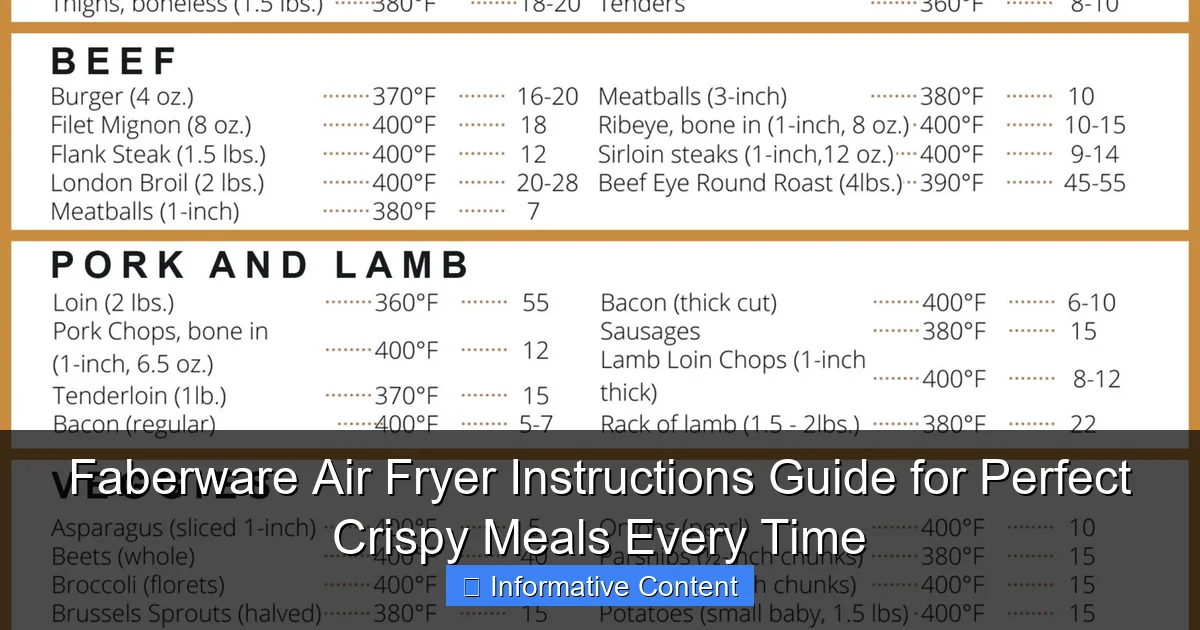
Data Table: Faberware Air Fryer Cooking Times & Temperatures
| Food | Temperature (°F) | Time (Minutes) | Tips |
|---|---|---|---|
| Frozen Fries | 375 | 15–20 | Shake halfway; spray with oil for extra crisp |
| Chicken Tenders | 375 | 12–15 | Flip halfway; use panko for crunch |
| Salmon Fillet | 375 | 10–12 | Season well; avoid overcooking |
| Brussels Sprouts | 375 | 15–18 | Toss with oil; shake basket halfway |
| Shrimp | 380 | 8–10 | Peel and devein; don’t overcrowd |
| Homemade Chips | 350 | 10–12 | Slice thinly; soak in water first to remove starch |
| Reheated Pizza | 300 | 5–7 | Place directly in basket; avoid cheese dripping |
Final Thoughts: Your Air Fryer, Your Rules
By now, you’ve got the tools to master your Faberware air fryer—and trust me, it gets easier every time you use it. I still remember my first batch of “crispy” fries that turned out more like mush. But with practice (and a few burnt chicken nuggets), I learned the rhythm: prep right, don’t overcrowd, check halfway, and clean promptly.
The best part? Your air fryer isn’t just for “fried” food. It’s a roaster, a baker, a reheater, and a time-saver. Whether you’re cooking for one or feeding a family, it helps you make meals that are crispy, juicy, and healthy—without the guilt of deep frying. So go ahead: try that recipe, experiment with seasonings, or even invent your own. Your Faberware air fryer is ready for it. And remember—every great cook started with a little trial, error, and a lot of delicious mistakes. Now get cooking!
Frequently Asked Questions
How do I use the Faberware Air Fryer for the first time?
Before first use, wash the basket and tray with warm, soapy water and dry thoroughly. Refer to the Faberware Air Fryer instructions guide for preheating steps and recommended cooking times for different foods.
What are the best settings for crispy fries in my Faberware Air Fryer?
For crispy fries, preheat the air fryer to 400°F (200°C) and cook for 12–15 minutes, shaking the basket halfway. Always lightly coat fries with oil for optimal crunch.
Can I cook frozen foods in my Faberware Air Fryer without thawing?
Yes, the Faberware Air Fryer instructions guide recommends cooking frozen foods directly—just add 2–5 minutes to the cooking time. Adjust temperature and time based on package directions.
How do I clean my Faberware Air Fryer properly?
Remove the basket and tray, then wash them with warm, soapy water or place them in the dishwasher if labeled safe. Wipe the exterior with a damp cloth and avoid submerging the main unit.
Why is my food not getting crispy in the Faberware Air Fryer?
Overcrowding the basket or using too much oil can prevent crispiness. Follow the Faberware Air Fryer instructions guide for proper food spacing and oil application techniques.
Can I bake or roast in my Faberware Air Fryer?
Absolutely! The Faberware Air Fryer works for baking, roasting, and reheating. Use oven-safe pans or parchment paper and adjust time/temperature as needed for recipes.