
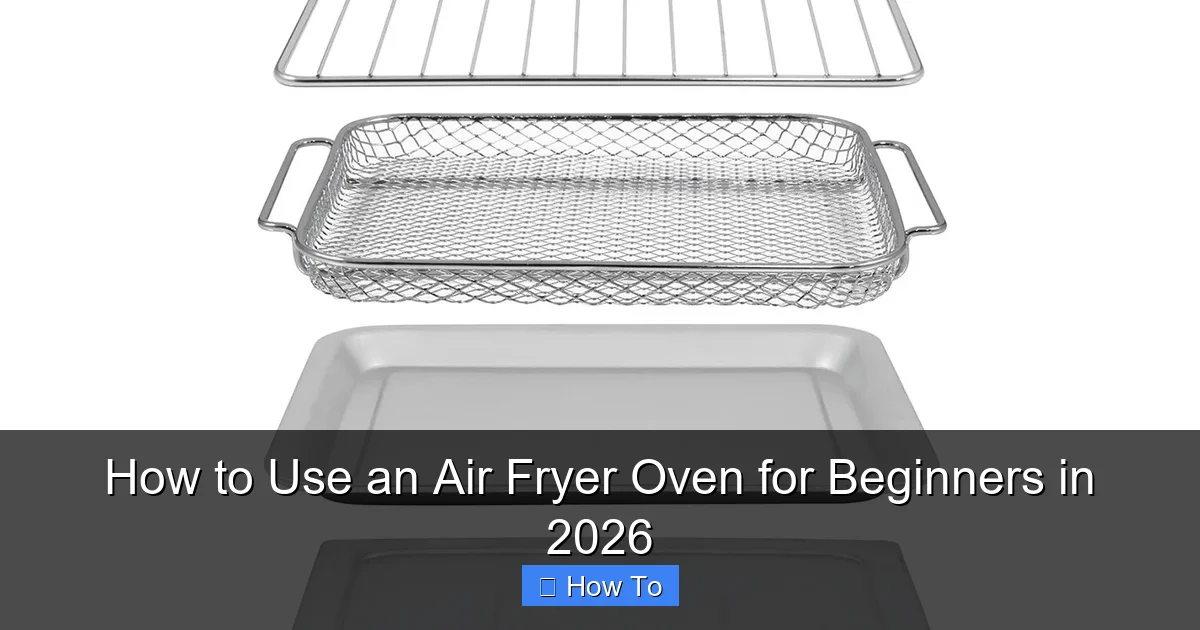
Featured image for how to use an air fryer oven for beginners
Image source: cdn-s3.touchofmodern.com
Master your air fryer oven in 2026 with simple, foolproof steps designed for beginners. From preheating and setting the right temperature to mastering basket placement and timing, this guide breaks down everything you need for crispy, delicious results every time. No experience? No problem—start cooking confidently with expert tips and easy recipes.
How to Use an Air Fryer Oven for Beginners in 2026
Key Takeaways
- Preheat your air fryer oven for consistent, crispy results every time.
- Use minimal oil—just 1 tsp is enough for healthier meals.
- Arrange food in a single layer to ensure even cooking and crispiness.
- Shake or flip halfway through cooking for uniform browning and texture.
- Clean the basket after each use to prevent smoke and maintain performance.
- Follow recipe times closely as air fryers cook faster than conventional ovens.
Why This Matters / Understanding the Problem
Let’s be honest: the first time I unboxed my air fryer oven, I stared at it like it was a spaceship. All those buttons, racks, and settings felt overwhelming. I just wanted crispy fries without the guilt of deep frying. Sound familiar?
You’re not alone. In 2026, air fryer ovens have become kitchen staples—but many new owners struggle with how to use an air fryer oven for beginners in 2026. They’re not just glorified toaster ovens. They’re powerful convection machines that circulate hot air to crisp food with little to no oil.
The real problem? Most people either undercook, overcook, or overcrowd the basket. And that leads to soggy chicken wings or burnt zucchini slices. But here’s the good news: once you learn the basics, your air fryer oven becomes your best kitchen buddy.
Whether you’re cooking for one, feeding a family, or trying to eat healthier, mastering how to use an air fryer oven for beginners in 2026 means faster meals, less mess, and food that actually tastes good.
“I used to think air fryers were a fad. Then I made perfectly crispy sweet potato fries in 18 minutes. Now I use mine 4 times a week.” — Sarah, first-time user
What You Need
You don’t need a fancy kitchen to get started. Here’s what you’ll need to begin your air fryer journey:

Visual guide about how to use an air fryer oven for beginners
Image source: cdn-s3.touchofmodern.com
- Air fryer oven (obviously) – I recommend a model with at least 6-quart capacity and multiple racks (like the Ninja Foodi or Instant Vortex)
- Oven-safe cookware – silicone molds, metal pans, or ceramic ramekins (check your manual for approved materials)
- Non-stick cooking spray or oil spray bottle – a light mist helps crisp without excess fat
- Tongs and silicone spatula – for flipping and removing food without scratching the basket
- Meat thermometer – essential for checking doneness, especially with meats
- Paper towels or cooling rack – to drain excess oil after cooking
- Basic ingredients – frozen foods, fresh veggies, proteins, or leftovers (yes, even pizza!)
Pro tip: Skip the non-stick metal utensils. They can scratch the coating and ruin your air fryer over time. Stick with silicone, wood, or plastic.
And don’t forget: how to use an air fryer oven for beginners in 2026 isn’t about buying more gadgets. It’s about using what you already have—safely and wisely.
Step-by-Step Guide to How to Use an Air Fryer Oven for Beginners in 2026
Step 1: Unbox and Clean Before First Use
Your air fryer oven might look ready to go, but never skip this step. Remove all packaging, trays, and racks.
- Wash the basket, crisper tray, and any removable parts in warm, soapy water.
- Dry thoroughly—water in the heating element is a no-no.
- Wipe down the interior and exterior with a damp cloth.
Now, here’s a little trick: do a “dry run.” Plug in the unit, set it to 400°F (200°C), and run it empty for 5–10 minutes. This burns off any factory oils and eliminates that “new appliance” smell.
Warning: Don’t use abrasive sponges or steel wool. They’ll scratch the non-stick coating. A soft sponge or dishcloth works best.
Step 2: Read the Manual (Yes, Really)
I know, manuals are boring. But your air fryer oven has unique settings, safety features, and rack positions that matter.
- Check which accessories are safe for the oven (some racks aren’t for baking mode).
- Note the max fill line for the basket—overfilling is a common mistake.
- Learn the difference between “Air Fry,” “Roast,” “Bake,” and “Dehydrate” modes.
For example, my Ninja model has a “Max Crisp” setting that goes up to 450°F—perfect for frozen fries. But it’s not ideal for delicate fish.
This step is crucial for how to use an air fryer oven for beginners in 2026 because every model works slightly differently.
Step 3: Preheat (Most of the Time)
Here’s where many beginners go wrong: skipping preheat.
Preheating ensures even cooking and that crispy finish we all love. Most air fryer ovens take 3–5 minutes to reach temperature.
- Set the temperature you plan to cook at.
- Let it run for 3–5 minutes with the basket inside.
- You’ll hear the fan kick in—that’s normal.
Exception: For frozen foods like chicken nuggets or fries, you can skip preheat. They go from frozen to hot quickly.
But for fresh meats, veggies, or homemade dishes? Always preheat. It makes a huge difference in texture.
Personal insight: I once made garlic bread without preheating. It was warm in the middle, but the edges were still soft. Lesson learned.
Step 4: Prep Your Food Properly
How you prep food before cooking affects the outcome more than you think.
- Cut evenly: Same-sized pieces cook evenly. Try 1-inch cubes for veggies, 1/2-inch strips for chicken.
- Dry off moisture: Pat chicken, fish, or veggies with paper towels. Water = steam = soggy food.
- Oil lightly: A quick spray or 1/2 tsp of oil (olive, avocado, or spray) helps crisp without greasiness.
- Season after oiling: Salt draws out moisture. Add it after a light oil coat to prevent sogginess.
For frozen foods? No thawing needed. Just place them straight in.
And remember: overcrowding is the enemy. Leave space between pieces so hot air can circulate. Think of it like social distancing for food.
Step 5: Load the Basket or Rack Correctly
This is where your air fryer oven’s design shines.
- Use the crisper tray (the perforated one) for most foods—it allows air to flow under and over.
- For baking or roasting, use the solid tray or oven-safe dish.
- If your model has multiple racks, use the middle position for most cooking. Top for browning, bottom for even heat.
Never block the air vents. That’s like putting a blanket over your oven fan.
For delicate items (like fish or small veggies), use a silicone liner or parchment paper with holes. It prevents sticking and makes cleanup easier.
And if you’re cooking in batches, keep cooked food warm in a low oven (200°F) while you finish the rest.
Step 6: Set Time and Temperature
Now the fun begins. But don’t guess—use a guide.
Here’s a quick reference for common foods (adjust based on your model):
- Frozen fries: 400°F, 12–15 mins, shake halfway
- Chicken breast (6 oz): 375°F, 18–22 mins, flip once
- Broccoli: 390°F, 10–12 mins, shake halfway
- Salmon fillet: 400°F, 10–12 mins, no flip
- Homemade pizza: 380°F, 12–15 mins
Most air fryer ovens have presets, but I recommend starting with manual settings. You’ll learn what works best for your unit and taste.
Pro tip: Start with less time. It’s easier to add 2–3 minutes than to un-burn food.
And don’t forget: how to use an air fryer oven for beginners in 2026 means learning your machine’s quirks. Some run hot, some run slow. Adjust accordingly.
Step 7: Monitor and Shake (When Needed)
Air fryer ovens cook fast, but they’re not set-and-forget like slow cookers.
- Open the drawer halfway to shake or flip food. This ensures even crisping.
- Use tongs or a spatula—never metal utensils.
- For meats, check internal temperature with a thermometer:
- Chicken: 165°F (74°C)
- Beef: 145°F (63°C) for medium-rare
- Pork: 145°F (63°C)
Shaking isn’t always needed. Delicate fish or baked goods should stay put.
But for fries, veggies, or chicken wings? Shake or flip at the halfway mark. It’s the secret to restaurant-quality crispiness.
Step 8: Remove and Rest
Don’t rush this step. Just like with a regular oven, resting lets juices redistribute.
- Use tongs or a spatula to remove food.
- Place on a cooling rack or paper towels to drain excess oil.
- Let meats rest 3–5 minutes before slicing.
For veggies or fries, serve immediately for maximum crunch.
If you’re making a meal, keep sides warm in a low oven or covered with foil.
Step 9: Clean Up Smart
Cleaning is easy if you do it while the unit is still warm (but unplugged).
- Let the basket cool for 10 minutes.
- Wash with warm, soapy water. Soak if needed.
- For stuck-on bits, use a silicone scrubber or non-abrasive sponge.
- Dry completely before storing.
Never submerge the main unit in water. Wipe the exterior with a damp cloth.
And if you used parchment paper or a liner? Just toss it. No scrubbing needed.
Regular cleaning keeps your air fryer oven running efficiently and prevents smoke from burnt residue.
Step 10: Experiment and Adapt
Now you’re ready to play. The best part of how to use an air fryer oven for beginners in 2026 is discovering what works for you.
- Try leftovers: reheat pizza, chicken tenders, or even lasagna.
- Bake: cookies, muffins, or mini quiches.
- Roast: whole chickens, pork tenderloin, or root veggies.
- Dehydrate: make fruit chips or beef jerky (if your model has this setting).
Start simple. Then level up. I made my first “recipe” by air frying frozen mozzarella sticks. Now I’m baking sourdough rolls in it.
Keep a small notebook or app to log what worked. Note: time, temp, results. It’s your personal air fryer cheat sheet.
Pro Tips & Common Mistakes to Avoid
“The biggest mistake beginners make? Treating the air fryer like a microwave. It’s not. It’s a mini convection oven with superpowers.” — Chef Marcus, home cooking coach
Here are the real lessons I’ve learned after 3 years of daily use:
- Don’t overcrowd the basket. I tried cooking 2 pounds of fries at once. Result? Half were soggy, half were burnt. Rule of thumb: fill no more than 2/3 full.
- Use oil, but sparingly. A light spray is enough. Too much oil pools and steams food instead of crisping it.
- Flip or shake, but not too much. Once at the halfway point is usually enough. Constant opening lets heat escape.
- Don’t use non-oven-safe containers. Glass, ceramic, or metal is fine. Plastic? Nope. It melts.
- Check your model’s max temp. Some go to 400°F, others to 450°F. Know your limits.
- Let it cool between uses. Running it back-to-back can overheat the motor. Wait 10–15 minutes.
- Use the right mode. “Air Fry” is for crisping. “Bake” is for moist, even heat. Using “Air Fry” for a cake? It’ll dry out.
And here’s a game-changer: double-cooking. For extra-crispy chicken, cook at 375°F for 15 mins, then raise to 400°F for 3–5 mins to brown the skin.
Also, don’t fear frozen foods. Air fryer ovens are perfect for them. Just adjust time by 1–2 minutes.
One more thing: how to use an air fryer oven for beginners in 2026 isn’t about perfection. It’s about progress. Your first attempt might not be Michelin-star quality—and that’s okay.
FAQs About How to Use an Air Fryer Oven for Beginners in 2026
Q: Can I cook frozen food without thawing?
A: Absolutely! That’s one of the best features. Just add 1–3 minutes to the time. I cook frozen dumplings and fish sticks straight from the freezer all the time.
Q: Is an air fryer oven healthier than a deep fryer?
A: Yes, by a long shot. You use 70–90% less oil. A study by the University of Oslo found air-fried chicken had 50% less fat than deep-fried. But—don’t overdo processed frozen foods. Fresh veggies and lean meats are best.
Q: Can I put aluminum foil in my air fryer oven?
A: Yes, but with caution. Use it only on the crisper tray, never blocking air vents. And don’t let it touch the heating element. I use foil to catch drips when roasting chicken, but remove it for crisping.
Q: Why does my food taste burnt or smell weird?
A: Usually from residue or food particles stuck in the heating element. Clean the basket and tray after every use. If the smell persists, do a dry run at 400°F for 10 minutes to burn off residue.
Q: Can I use metal pans or baking dishes?
A: Only if they’re oven-safe and fit with space around the sides for air flow. I use a 7-inch cast iron skillet for frittatas. But don’t use plastic or paper plates—they’ll melt.
Q: How do I know when food is done?
A: Use a meat thermometer for proteins. For veggies and fries, check for golden brown edges and crisp texture. When in doubt, cut a piece open. And remember: it continues cooking a bit after removal.
Q: Can I cook a whole chicken in an air fryer oven?
A: Yes! A 4-pound chicken takes about 45–55 minutes at 350°F. Spatchcock it (remove backbone) for even cooking. Baste with oil or butter halfway. The skin gets incredibly crispy.
Final Thoughts
Learning how to use an air fryer oven for beginners in 2026 isn’t about memorizing rules. It’s about building confidence—one batch of fries, one chicken breast, one roasted veggie at a time.
Start simple. Master the basics: preheat, prep, don’t overcrowd, shake halfway. Then experiment. Try new foods. Adjust times. Make it yours.
Your air fryer oven isn’t just a gadget. It’s a tool for healthier, faster, and more delicious meals. And once you get the hang of it, you’ll wonder how you ever cooked without it.
So go ahead. Plug it in. Preheat it. Toss in some frozen fries. In 15 minutes, you’ll be eating crispy, golden goodness—with less oil, less mess, and zero guilt.
And if you mess up? That’s part of the journey. I’ve burned my fair share of zucchini slices. But every mistake taught me something.
Now it’s your turn. Your kitchen is waiting. Your air fryer oven is ready. And your next meal? It’s going to be amazing.
Happy air frying!