
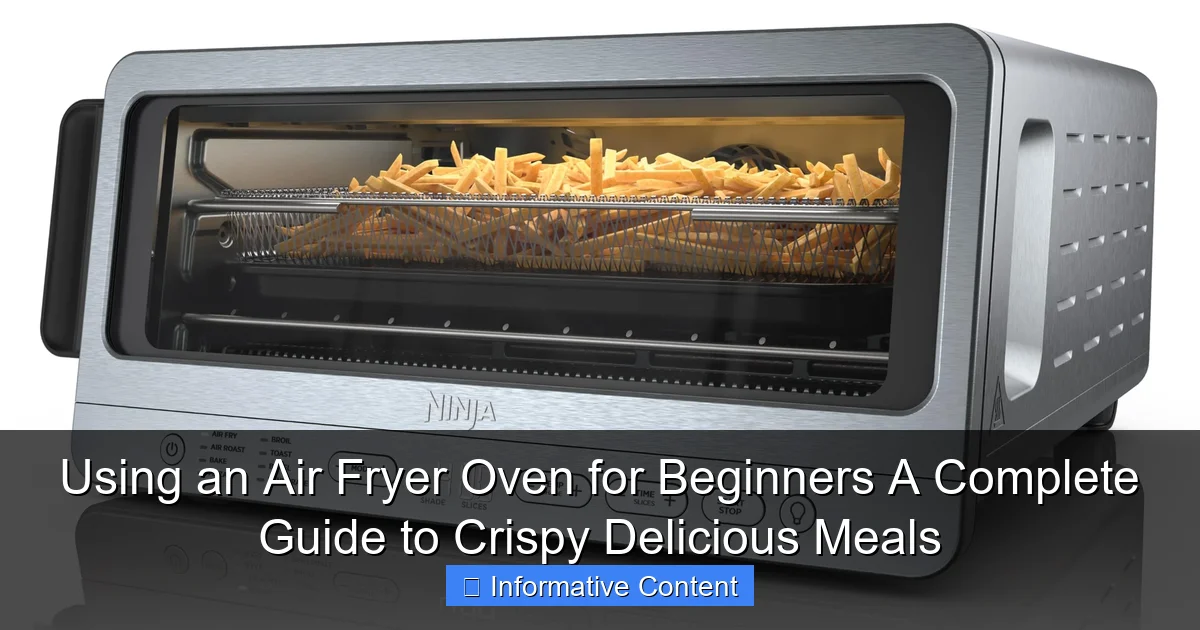
Featured image for using an air fryer oven for beginners
Image source: m.media-amazon.com
An air fryer oven is the ultimate beginner-friendly kitchen tool for achieving crispy, delicious meals with little to no oil. With simple controls, rapid cooking times, and versatile functions, it’s perfect for whipping up everything from golden fries to juicy chicken without the guesswork. Just preheat, load, and let the air fryer work its magic—crispy perfection every time.
Key Takeaways
- Preheat your air fryer oven for even cooking and crispier results every time.
- Use minimal oil—a light spray is enough to enhance texture without excess fat.
- Arrange food in a single layer to ensure maximum air circulation and browning.
- Shake or flip halfway through cooking for uniform crispiness on all sides.
- Check doneness early—air fryers cook faster than conventional ovens; avoid overcooking.
- Clean the basket after each use to prevent smoke and maintain optimal performance.
📑 Table of Contents
- Getting Started with Your Air Fryer Oven: What to Expect
- What Is an Air Fryer Oven (And How Does It Work)?
- Your First 5 Easy Meals to Try (And Why They Work)
- Essential Tips for Success (From Someone Who Burned Their First Batch)
- Mastering Temperature and Time: The Air Fryer Oven Cheat Sheet
- Beyond the Basics: Creative Ways to Use Your Air Fryer Oven
- Final Thoughts: Embrace the Learning Curve
Getting Started with Your Air Fryer Oven: What to Expect
So you’ve finally taken the plunge and bought an air fryer oven. Maybe you saw a viral TikTok of someone crisping up chicken wings in half the time of a regular oven, or perhaps a friend raved about how they made guilt-free sweet potato fries without a single drop of oil. Whatever the reason, you’re now standing in your kitchen, staring at this sleek, futuristic-looking appliance, wondering: “Where do I even begin?”
Don’t worry—you’re not alone. I remember my first time too. I opened the box, pulled out the trays, and immediately Googled, “Can I put aluminum foil in an air fryer oven?” (Spoiler: yes, but carefully!) I was excited, yes, but also a little overwhelmed. The buttons seemed endless, the racks confusing, and the fear of burning my first batch of food was real. But after a few weeks of trial, error, and a few slightly overcooked Brussels sprouts, I realized something: air fryer ovens aren’t just for tech-savvy foodies. They’re for anyone who wants quick, crispy, delicious meals with less oil, less mess, and less time in the kitchen.
What Is an Air Fryer Oven (And How Does It Work)?
Let’s clear up a common misconception first: despite the name, air fryer ovens don’t actually “fry” food. Instead, they use rapid air circulation to cook your food from all angles. Think of it like a mini convection oven with superpowers. A powerful fan pushes hot air around the food at high speed, creating that golden, crispy exterior we all love—without submerging anything in oil.
Visual guide about using an air fryer oven for beginners
Image source: effortlessfoodie.com
The Science Behind the Crisp
Here’s the magic: hot air (usually between 350°F and 400°F) swirls around your food in a sealed chamber. The Maillard reaction—the same chemical process that browns meat and toasts bread—happens faster and more evenly. This is why your chicken skin gets that restaurant-quality crisp, and your roasted veggies come out with a perfect char, all while using 70–80% less oil than traditional frying.
Air Fryer Oven vs. Traditional Air Fryer
You might be wondering: “Wait, isn’t this just a regular air fryer?” Not quite. An air fryer oven is larger, usually with multiple racks or trays, and often includes additional features like baking, roasting, broiling, and even dehydrating. It’s more like a compact convection oven with air frying capabilities. This means you can cook larger batches, stack different foods, and even use it as your main oven on busy nights.
- Capacity: Air fryer ovens typically hold 6–16 quarts, making them ideal for families or meal prep.
- Versatility: Many models come with rotisserie, dehydrator, or toast functions.
- Footprint: They’re bigger than basket-style fryers but still fit on most countertops.
Common Features You’ll See
When you unbox your air fryer oven, here’s what you’ll likely find:
- Wire racks or trays: For holding food. Use the bottom tray for crisping, middle for roasting, and top for delicate items.
- Rotating basket (optional): Great for even cooking of small items like fries or wings.
- Digital controls: Most have preset programs (fries, chicken, fish, etc.), timers, and temperature settings.
- Crisper plate or tray: Perforated metal or non-stick tray that promotes airflow and crispiness.
- Interior light: Lets you peek at your food without opening the door (which drops the temperature).
Pro tip: Always read your model’s manual. Some ovens have quirks—like needing to preheat or not allowing certain tray combinations. I learned that the hard way when I tried to stack two trays of chicken and ended up with one dry and one undercooked.
Your First 5 Easy Meals to Try (And Why They Work)
Now that you understand how it works, let’s get cooking. The best way to build confidence? Start with simple, forgiving recipes that highlight the air fryer oven’s strengths: speed, crispiness, and ease.
1. Classic French Fries
Forget soggy oven fries. Air fryer fries are crispy on the outside, fluffy inside—and ready in 15 minutes.
- What you need: 2 medium russet potatoes, 1 tsp olive oil, salt, pepper, optional paprika.
- How to do it: Cut potatoes into ¼-inch sticks. Toss with oil and seasonings. Place in a single layer on the crisper tray. Air fry at 380°F for 12 minutes, then shake and cook 3–5 more minutes until golden.
- Why it works: The high heat and airflow crisp the outside without overcooking the inside.
Tip: Soak cut potatoes in cold water for 10 minutes before cooking to remove excess starch. This prevents sticking and boosts crispiness.
2. Crispy Chicken Tenders
Perfect for kids (and adults who still love chicken fingers). No deep fryer needed.
- What you need: 4 chicken tenders, ½ cup breadcrumbs, 1 egg, 1 tbsp milk, garlic powder, salt.
- How to do it: Beat egg with milk. Dip tenders in egg, then breadcrumbs mixed with seasonings. Lightly spray with oil. Air fry at 400°F for 10 minutes, flip, then 5 more minutes.
- Why it works: The oil spray creates a golden crust, while the inside stays juicy.
3. Roasted Vegetables
No more mushy broccoli. Air fryer ovens caramelize veggies beautifully.
- What you need: 2 cups mixed veggies (broccoli, bell peppers, carrots), 1 tbsp olive oil, salt, pepper, garlic powder.
- How to do it: Toss veggies with oil and seasonings. Spread on tray. Air fry at 375°F for 12–15 minutes, shaking halfway.
- Why it works: The hot air roasts veggies evenly, bringing out natural sweetness.
4. Frozen Fish Sticks
A great test of your oven’s ability to handle frozen foods without thawing.
- What you need: 6 frozen fish sticks.
- How to do it: Place in a single layer. Air fry at 400°F for 10–12 minutes, flipping halfway.
- Why it works: No need to preheat. The oven crisps the breading without drying out the fish.
5. Baked Potato
Yes, you can bake a potato in an air fryer oven—and it’s faster than a regular oven.
- What you need: 1 russet potato, olive oil, salt.
- How to do it: Pierce potato with a fork. Rub with oil and salt. Air fry at 390°F for 40–45 minutes, flipping halfway.
- Why it works: The hot air penetrates the skin, creating a fluffy interior with a slightly crisp exterior.
Beginner bonus: These meals use minimal prep, common ingredients, and don’t require flipping every 2 minutes. They’re perfect for building your confidence.
Essential Tips for Success (From Someone Who Burned Their First Batch)
Let’s be real: even with the best appliance, things can go sideways. I’ve had my share of kitchen fails. But each one taught me something valuable. Here are the must-know tips every beginner should follow.
Don’t Overcrowd the Tray
This is the #1 mistake. When food is piled high, hot air can’t circulate. The result? Soggy, unevenly cooked food. Always leave space between items—think of it like social distancing for your fries.
- Rule of thumb: Food should be in a single layer with at least ½ inch between pieces.
- For larger batches: Cook in multiple rounds. It’s better than sacrificing crispiness.
Use Oil—But Sparingly
You don’t need a lot of oil to get that crispy texture. A light spray or 1 tsp per serving is enough. Too much oil can drip onto the heating element and smoke.
- Best oils: Avocado, canola, or grapeseed (high smoke point).
- Avoid: Olive oil (unless you’re using a spray bottle to lightly mist).
Preheat When Needed
Some models require preheating (usually 3–5 minutes). Others don’t. Check your manual. Preheating ensures consistent cooking from the start.
- When to preheat: For foods that need a quick sear (like chicken skin or fish).
- When to skip: For longer-cooking items like roasted veggies or potatoes.
Flip or Shake Halfway
Even with 360° airflow, flipping or shaking your food halfway ensures even browning. I use silicone tongs or a spatula for delicate items like fish.
- Pro move: Open the door quickly to avoid heat loss. I count to 10 before closing.
Use the Right Tools
Not all cookware fits. Stick to oven-safe, air fryer-safe materials.
- Safe: Metal trays, silicone mats, parchment paper (with holes), oven-safe glass.
- Unsafe: Plastic, non-stick pans (unless rated for high heat), paper towels (they can catch fire).
Clean It Right
After cooking, let the oven cool. Then remove trays and wash with warm, soapy water. For stuck-on food, soak for 10 minutes. Avoid abrasive scrubbers on non-stick surfaces.
- Quick clean hack: Line the bottom tray with foil (with holes) to catch drips. Replace after each use.
Mastering Temperature and Time: The Air Fryer Oven Cheat Sheet
One of the biggest challenges for beginners? Figuring out the right temperature and cook time. Unlike a regular oven, air fryer ovens cook faster due to concentrated heat and airflow. That means you often need to reduce time by 20–25% compared to conventional recipes.
General Conversion Guidelines
Here’s a simple way to adapt your favorite recipes:
- Oven temp: If a recipe says 375°F, use 350°F in your air fryer oven.
- Cook time: Reduce by 20%. If it’s 20 minutes in the oven, try 16 minutes in the air fryer.
- Check early: Start checking 3–5 minutes before the estimated time. Air fryers can cook faster than expected.
Common Foods & Their Cook Times
Below is a quick-reference table for popular foods. Remember: these are starting points. Always check for doneness.
| Food | Temperature | Cook Time | Notes |
|---|---|---|---|
| Frozen Fries | 400°F | 12–15 min | Shake halfway |
| Chicken Breast | 375°F | 18–22 min | Flip halfway; check internal temp (165°F) |
| Salmon Fillet | 390°F | 10–12 min | Lightly oil; don’t overcook |
| Broccoli | 375°F | 12–15 min | Toss with oil; shake halfway |
| Frozen Pizza | 380°F | 10–12 min | Use crisper tray; watch for cheese browning |
| Hard-Boiled Eggs | 270°F | 15 min | Cool in ice water; easy peel |
| Reheating Leftovers | 350°F | 3–5 min | Great for fries, pizza, chicken |
When to Adjust
- Thicker cuts (like chicken breasts): Lower temp (350°F) and cook longer to avoid drying.
- Delicate foods (like fish or tofu): Use lower heat (325–350°F) and shorter time.
- Frozen foods: No need to thaw. Add 2–3 minutes to cook time.
Real talk: I once tried to cook a whole chicken at 400°F for 30 minutes. The skin burned, and the inside was still raw. Lesson learned: bigger foods need lower heat and longer time. Now I use 350°F for 45–50 minutes and baste with oil halfway.
Beyond the Basics: Creative Ways to Use Your Air Fryer Oven
Once you’ve mastered the basics, it’s time to get creative. Your air fryer oven can do way more than fries and chicken. Here are some fun, unexpected uses that might surprise you.
Reheating Leftovers (Yes, Really)
Forget soggy microwave meals. Air fryer ovens reheat food with a crispy texture.
- Reheated pizza: 350°F for 3–4 minutes. Crust stays crispy, cheese melts perfectly.
- Fried rice: 375°F for 5 minutes, stirring halfway. No more rubbery grains.
- Fried chicken: 350°F for 5–6 minutes. Skin regains its crunch.
Baking (Yes, Baking!)
You can bake cookies, muffins, and even small cakes. Use oven-safe ramekins or a small cake pan that fits.
- Chocolate chip cookies: 325°F for 8–10 minutes. Smaller batches work best.
- Banana bread: 350°F for 25–30 minutes. Check with a toothpick.
Dehydrating Fruits and Veggies
Many air fryer ovens have a dehydrate function (usually 120–160°F).
- Apple chips: Thin slices, 140°F for 2–3 hours. Flip halfway.
- Beef jerky: Marinate strips, then dehydrate at 160°F for 4–5 hours.
Toasting Nuts and Seeds
Perfect for salads or snacking. 325°F for 5–8 minutes, shaking every 2 minutes.
Making Homemade Chips
- Sweet potato chips: Thinly slice, toss with oil and salt, air fry at 375°F for 10–12 minutes.
- Kale chips: Massage kale with oil, air fry at 350°F for 8–10 minutes.
Rotisserie (If Your Model Has It)
Some ovens come with a rotisserie spit. Use it for whole chickens, pork roasts, or even pineapples for grilling prep.
My favorite discovery: I used my air fryer oven to make “air-fried” donuts using canned biscuit dough. I cut a hole in each, brushed with melted butter, sprinkled with cinnamon sugar, and cooked at 350°F for 6 minutes. They came out light, fluffy, and crispy—without a single drop of oil. Total game-changer.
Final Thoughts: Embrace the Learning Curve
Using an air fryer oven for beginners isn’t about perfection. It’s about progress. You’ll have batches that are too dry, trays that are overcrowded, and maybe even a smoke alarm that goes off once (or twice). And that’s okay. Every kitchen tool takes time to master.
What I love most about air fryer ovens is how they fit into real life. Whether you’re a busy parent, a college student, or someone just trying to eat healthier, this appliance makes cooking faster, cleaner, and more enjoyable. You’re not just saving time—you’re getting better texture, less guilt, and more variety in your meals.
Start simple. Use the tips above. Experiment with one new recipe a week. Keep a little notebook (or phone note) of what works and what doesn’t. Over time, you’ll develop your own rhythm—your go-to settings, your favorite trays, your signature crispy dish.
And remember: the goal isn’t to replace your oven or stove. It’s to add a powerful, versatile tool to your kitchen arsenal. So go ahead—pop those fries in, set the timer, and enjoy the smell of perfectly crispy food filling your kitchen. You’ve got this.
Frequently Asked Questions
What is an air fryer oven, and how does it work?
An air fryer oven is a countertop appliance that circulates hot air around food using convection cooking, creating a crispy exterior with little to no oil. It mimics deep frying but with up to 80% less fat, making it a healthier alternative for crispy meals.
Can I use an air fryer oven for beginners without prior cooking experience?
Absolutely! Air fryer ovens are designed for ease of use, with pre-programmed settings and simple controls. Just follow recipe times and temps, and you’ll get delicious, crispy results with minimal effort.
What are the best beginner-friendly foods to cook in an air fryer oven?
Start with frozen foods like fries, nuggets, or mozzarella sticks—they require no prep and cook perfectly. You can also try chicken wings, roasted vegetables, or even reheating leftovers for a quick, crispy finish.
Do I need to preheat my air fryer oven before cooking?
Yes, preheating (usually 3–5 minutes) ensures even cooking and crispiness, especially for foods like chicken or baked goods. Many models have a preheat setting, but if not, just run it empty at your desired temp before adding food.
Can I use aluminum foil or parchment paper in an air fryer oven?
Yes, but ensure foil or parchment is weighed down by food to prevent it from flying into the heating element. Use parchment paper with holes for airflow, or opt for reusable silicone liners for easy cleanup.
How do I clean and maintain my air fryer oven for long-term use?
Remove and wash the basket, tray, and pan with warm, soapy water after each use. Wipe the interior with a damp cloth, and avoid abrasive cleaners to protect non-stick surfaces—regular maintenance keeps your air fryer oven in top shape.