
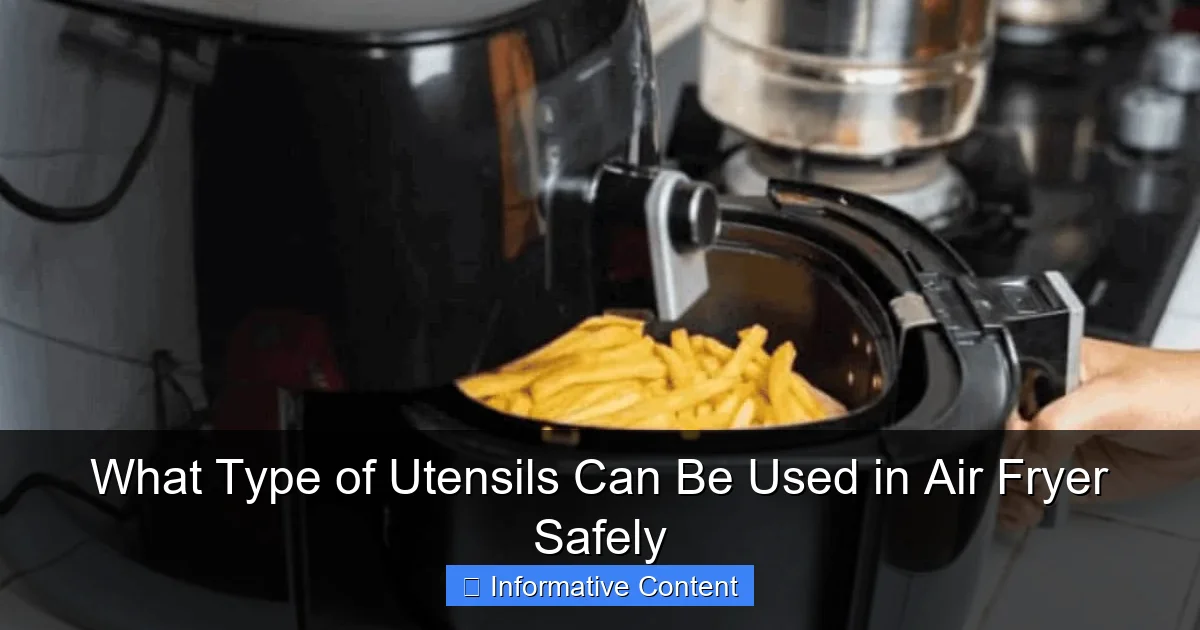
Featured image for what type of utensils can be used in air fryer
Image source: cookeryspace.com
Only use utensils made of heat-safe, non-abrasive materials like silicone, wood, or metal (without non-stick coatings) in your air fryer to prevent damage to the basket and ensure safe, even cooking. Avoid plastic, bamboo, or utensils with painted or coated handles, as they can melt, warp, or release harmful fumes at high temperatures.
Key Takeaways
- Use metal utensils like stainless steel—they’re durable and safe for high heat.
- Choose silicone tools to avoid scratching non-stick baskets; heat-resistant up to 450°F.
- Opt for wooden utensils—gentle on coatings and won’t conduct heat dangerously.
- Avoid plastic or nylon—they melt or warp under air fryer temperatures.
- Check for heat resistance—ensure any utensil is rated for 400°F+ before use.
- Skip sharp edges—prevent basket damage and potential safety hazards.
📑 Table of Contents
- The Air Fryer Revolution: A Kitchen Game-Changer
- Why Utensil Choice Matters in Air Fryers
- Safe Utensil Materials for Air Fryers
- Top 10 Air Fryer-Safe Utensils You Need
- Utensils That Are NOT Safe for Air Fryers (And Why)
- Pro Tips for Using Utensils in Your Air Fryer
- Data Table: Air Fryer Utensil Safety Guide
- Final Thoughts: Cook Safely, Eat Well
The Air Fryer Revolution: A Kitchen Game-Changer
Remember when the air fryer first burst onto the scene? I was skeptical too—another gadget promising crispy fries without oil? But after one bite of golden, crunchy chicken wings, I was sold. Now, it’s the MVP of my kitchen, whipping up everything from veggies to desserts. But here’s the thing: as much as I love my air fryer, I’ve made some *questionable* choices about what to put inside it. Like the time I tried to cook a grilled cheese sandwich using a metal fork as a makeshift skewer. Spoiler: it didn’t end well. The fork sparked, and my sandwich turned into a charcoal briquette. That’s when I learned: not all utensils are air fryer-friendly.
If you’ve ever wondered what type of utensils can be used in an air fryer safely, you’re not alone. The air fryer’s high-heat, rapid-air circulation system is powerful, but it’s also picky about what it tolerates. Using the wrong tools can damage your appliance, ruin your food, or even create safety hazards. But don’t worry—this guide will walk you through exactly what works, what doesn’t, and how to get the most out of your air fryer without turning your kitchen into a science experiment gone wrong.
Why Utensil Choice Matters in Air Fryers
Let’s start with the basics: air fryers work by circulating superheated air (usually between 300°F and 400°F) around your food. This creates that crispy, fried texture without drowning your meal in oil. But this process also means the basket, rack, and surrounding areas get *hot*—and fast. The wrong utensil can interfere with airflow, scratch non-stick coatings, or even melt into your food. Here’s why choosing the right tools is non-negotiable.

Visual guide about what type of utensils can be used in air fryer
Image source: vinotecarestaurant.com
Heat Resistance Is Key
Air fryers reach temperatures that would warp or melt ordinary kitchen tools. Imagine pulling out a silicone spatula only to find it’s turned into a gooey mess. Not fun. The utensils you use must withstand high heat without degrading. For example, metal tongs are great because they’re heat-resistant, but plastic or wooden ones might soften or catch fire if they touch the heating element.
Non-Stick Basket Protection
Most air fryer baskets have a non-stick coating. Scratching it with sharp metal tools (like forks or knives) can ruin the surface, making food stick and reducing the lifespan of your appliance. I learned this the hard way when I used a metal spoon to stir fries—now my basket has permanent gouges. Oops.
Safety and Airflow
Air fryers need space for hot air to circulate. Blocking airflow with oversized or poorly placed utensils can lead to uneven cooking or even overheating. Plus, metal tools that touch the heating element (like the fork incident I mentioned) can cause sparks or short circuits. Always keep tools away from the heating coil—usually located at the top or back of the unit.
Material Matters: What to Avoid
- Plastic: Melts at high temps (even heat-resistant ones can warp). Never use plastic utensils.
- Wood: Can dry out, crack, or catch fire if it gets too close to the heating element.
- Sharp metal: Forks, knives, or thin skewers can scratch the basket or create sparks.
Safe Utensil Materials for Air Fryers
Now that we know what *not* to use, let’s talk about what’s safe. The best air fryer utensils are designed to handle high heat, protect your basket, and let air flow freely. Here’s the lowdown on the top materials.
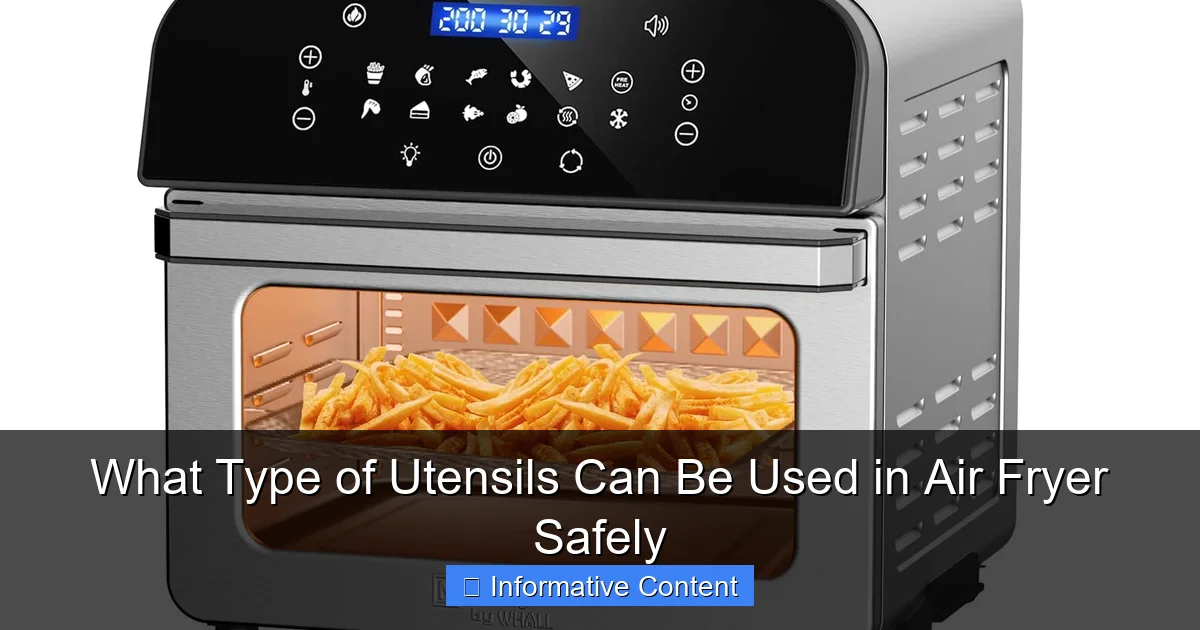
Visual guide about what type of utensils can be used in air fryer
Image source: m.media-amazon.com
1. Food-Grade Silicone
Pros: Heat-resistant (up to 450°F–500°F), flexible, non-scratch, and dishwasher-safe. Cons: Can absorb odors if not cleaned properly.
Best for: Spatulas, tongs, and brushes. I use a silicone-tipped tong to toss veggies mid-cooking—it’s gentle on the basket and never gets hot enough to burn me. Look for 100% food-grade silicone (avoid cheap knockoffs).
2. Stainless Steel (With Caution)
Pros: Durable, heat-resistant, and won’t melt. Cons: Can scratch non-stick coatings if used carelessly.
Best for: Metal skewers (for kebabs), racks, or grill inserts. Pro tip: If your air fryer comes with a metal rack, use it! But avoid scraping the basket with metal tools. Instead, use silicone or wooden handles to grip metal tools safely.
3. Ceramic and Oven-Safe Glass
Pros: Heat-resistant, non-reactive, and great for even cooking. Cons: Heavy and can crack if dropped.
Best for: Baking dishes, ramekins, or small casserole pans. I love making individual portions of mac and cheese in ceramic ramekins. Just ensure the dish fits without blocking airflow.
4. Parchment Paper and Air Fryer Liners
Pros: Prevents sticking, easy cleanup, and won’t scratch the basket. Cons: Can block airflow if overused.
Best for: Lining the basket for sticky foods (like marinated meats or baked goods). Cut liners to size, and poke holes to let air circulate. Avoid aluminum foil unless your manual says it’s safe—some models warn against it due to fire risk.
5. Heat-Resistant Nylon (Rare but Useful)
Pros: Lightweight, non-scratch, and safe up to 400°F. Cons: Less durable than silicone or metal.
Best for: Slotted spoons or turners. I’ve seen these in high-end kitchen stores, but they’re harder to find. If you spot them, grab a set!
Top 10 Air Fryer-Safe Utensils You Need
Let’s get practical. Here’s a list of my go-to tools, tested and approved for air fryer use. These strike the perfect balance between safety, functionality, and durability.
1. Silicone-Tipped Tongs
My #1 pick. They grip food without scratching the basket. Look for ones with a locking mechanism—they’re easier to store. I use mine for flipping chicken wings, tossing fries, or removing delicate items like fish fillets.
2. Silicone Spatula
Perfect for scraping batter or sauce from the basket. The flexible edge gets into corners without damaging the coating. Bonus: it won’t melt if you accidentally leave it in for a minute.
3. Stainless Steel Skewers
For kebabs or veggie sticks. Use them with a silicone handle or grip them with tongs to avoid burns. I thread marinated chicken and peppers onto skewers—crispy on the outside, juicy inside.
4. Ceramic Baking Dish
Fits in most air fryers (check dimensions first). Ideal for casseroles, quiches, or even mini lasagnas. The ceramic distributes heat evenly, so no hot spots.
5. Parchment Paper Liners
Pre-cut liners save time. I use them for sticky foods like honey-glazed salmon or chocolate chip cookies. Just trim the edges so they don’t touch the heating element.
6. Silicine Basting Brush
For marinades or melted butter. The silicone bristles won’t melt, and they hold just enough liquid for even coating. I brush my air-fried chicken with garlic butter—delicious!
7. Metal Air Fryer Rack
If your model includes one, use it! It elevates food for better airflow. I use it to cook multiple layers of fries or to reheat pizza slices.
8. Oven-Safe Glass Container
Small Pyrex dishes work great for reheating leftovers or cooking single servings. I make mini frittatas in these—no sticking, no mess.
9. Silicone Egg Rings
For perfect fried eggs or pancakes. They’re flexible, easy to remove, and won’t scratch the basket. I love air-fried eggs with runny yolks!
10. Heat-Resistant Gloves
Not a utensil, but essential! I use silicone oven mitts to handle hot baskets or dishes. They’re grippy and protect my hands from steam burns.
Utensils That Are NOT Safe for Air Fryers (And Why)
Now, let’s talk about the *don’ts*. These utensils might seem harmless, but they can cause serious problems. Here’s what to avoid—and what to use instead.
1. Plastic Utensils
Plastic melts at high temps. Even “heat-resistant” plastic can warp or release harmful chemicals. I once used a plastic spoon to stir fries—it melted onto the basket, and I had to scrub for hours. Alternative: Use silicone or stainless steel.
2. Wooden Spoons and Spatulas
Wood can dry out, crack, or catch fire if it touches the heating element. Plus, it harbors bacteria if not cleaned thoroughly. Alternative: Use silicone or nylon.
3. Aluminum Foil (In Some Models)
Some air fryer manuals warn against foil because it can block airflow or reflect heat, causing overheating. If your manual says it’s okay, use it sparingly and never let it touch the heating element. Alternative: Parchment paper or silicone liners.
4. Non-Oven-Safe Glass
Regular glass can shatter from sudden temperature changes. Only use containers labeled “oven-safe” or “air fryer-safe.” Alternative: Ceramic or tempered glass.
5. Sharp Metal Tools
Forks, knives, or thin skewers can scratch the basket or create sparks. I learned this after my grilled cheese disaster. Alternative: Use silicone-tipped tongs or wide metal skewers with blunt ends.
6. Non-Stick Coated Metal Utensils
The coating can flake off into food. Stick to solid metal or silicone. Alternative: Stainless steel with silicone handles.
Pro Tips for Using Utensils in Your Air Fryer
Even with the right tools, there’s a technique to using them safely and effectively. Here are my top tips to avoid common pitfalls.
1. Pre-Cut Parchment Liners
Measure your basket and pre-cut parchment liners. Store them in a container for easy access. I keep a stack ready—no more fumbling with scissors mid-cooking.
2. Use Tongs to Handle Hot Metal
If you’re using metal skewers or racks, grip them with silicone-tipped tongs. Never touch bare metal with your hands—it’ll burn you.
3. Don’t Overcrowd the Basket
Leave space between food for air to circulate. Overcrowding leads to uneven cooking and steam buildup. I cook in batches if needed.
4. Check Utensil Fit Before Heating
Make sure your utensil (like a baking dish) fits without touching the heating element. If it’s too close, it could melt or catch fire.
5. Clean Utensils Immediately
Silicone and metal tools clean easily with soapy water. For stubborn residue, soak them in hot water first. I avoid abrasive scrubbers to keep the non-stick coating intact.
6. Rotate Food Mid-Cooking
Use silicone tongs to flip or rearrange food halfway through. This ensures even browning. I do this with fries, wings, and even baked potatoes.
7. Avoid Spray Oils in Metal Containers
Some spray oils (like Pam) can degrade non-stick coatings. Use a silicone brush with oil instead. I lightly brush my air-fried veggies with olive oil—crispy perfection!
Data Table: Air Fryer Utensil Safety Guide
| Utensil | Material | Max Temp | Safe for Air Fryer? | Notes |
|---|---|---|---|---|
| Silicone Tongs | Food-grade silicone | 450–500°F | Yes | Non-scratch, flexible |
| Stainless Steel Skewers | Stainless steel | 1000°F+ | Yes (with caution) | Use silicone handle or tongs |
| Ceramic Baking Dish | Ceramic | 500°F+ | Yes | Check fit before use |
| Parchment Paper | Paper | 420°F | Yes | Cut to size, poke holes |
| Wooden Spoon | Wood | 300°F | No | Can burn or splinter |
| Plastic Spatula | Plastic | 250–300°F | No | Melts at high temps |
| Aluminum Foil | Metal | 1200°F | Sometimes | Check manual; avoid heating element |
| Glass Container | Oven-safe glass | 500°F+ | Yes | Label must say “oven-safe” |
Final Thoughts: Cook Safely, Eat Well
Your air fryer is a powerhouse, but it needs the right tools to shine. By choosing the right utensils—silicone, stainless steel, ceramic, and parchment—you’ll protect your appliance, cook delicious food, and avoid kitchen disasters (like my grilled cheese fiasco). Remember: when in doubt, check your air fryer manual or opt for silicone. It’s the safest bet for most situations.
Now that you know what type of utensils can be used in an air fryer safely, you’re ready to experiment with confidence. Whether you’re making crispy tofu, fluffy muffins, or a whole chicken, the right tools make all the difference. So go ahead—toss those plastic spoons, grab your silicone tongs, and let your air fryer work its magic. Happy cooking!
Frequently Asked Questions
What type of utensils can be used in air fryer without damaging it?
You can safely use silicone, wooden, bamboo, or heat-resistant plastic utensils in your air fryer. Avoid metal utensils, as they can scratch the non-stick coating or damage the basket.
Can I use metal utensils in my air fryer?
It’s not recommended to use metal utensils in an air fryer, especially if it has a non-stick coating, as they can cause scratches and reduce the appliance’s lifespan. Opt for silicone or wooden alternatives instead.
Are silicone utensils safe for air fryers at high temperatures?
Yes, high-quality silicone utensils labeled as heat-resistant (up to 400°F/200°C or higher) are safe for use in air fryers. Always check the manufacturer’s guidelines to ensure they’re suitable for high-heat cooking.
What type of utensils can be used in air fryer if I’m cooking delicate foods?
For delicate foods like fish or baked goods, use soft silicone or wooden utensils to prevent sticking or tearing. These materials are gentle on both food and the air fryer’s surface.
Can I use parchment paper or aluminum foil with air fryer utensils?
Yes, you can use parchment paper or aluminum foil to line the basket, but avoid letting them touch the heating element. When using utensils, ensure they don’t puncture the liner to maintain safety and airflow.
Are there any special utensils designed for air fryers?
Yes, some brands offer air fryer-specific utensils, like silicone-tipped tongs or spatulas, designed to handle high heat and fit the basket’s shape. These can make flipping or removing food easier and safer.