
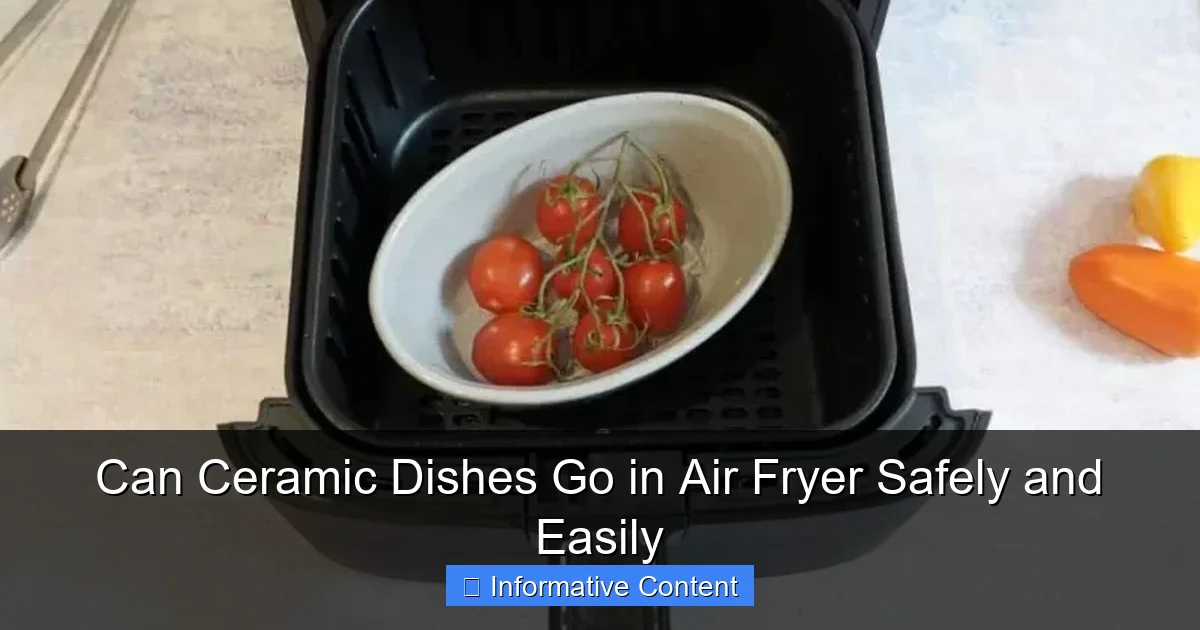
Featured image for can ceramic dishes go in air fryer
Image source: jinhuaceramic.com
Yes, ceramic dishes can go in an air fryer—but only if they’re labeled oven-safe and free of metallic finishes. Always check the manufacturer’s guidelines and avoid sudden temperature changes to prevent cracking. When used correctly, ceramic bakeware is a safe, versatile option for air frying.
Key Takeaways
- Check for oven-safe labels: Ensure ceramic dishes are rated for high heat before air frying.
- Avoid sudden temperature changes: Preheat ceramic gradually to prevent cracking or shattering.
- Use thick-walled ceramics: Thicker dishes distribute heat evenly and resist thermal shock.
- Verify manufacturer guidelines: Consult product manuals for air fryer compatibility and limits.
- Skip glazed ceramics with cracks: Damaged glazes can leach chemicals or break during cooking.
- Monitor cooking time closely: Ceramics retain heat longer, risking overcooking if unchecked.
📑 Table of Contents
- The Big Question: Can Ceramic Dishes Go in Air Fryer Safely and Easily?
- Understanding How Air Fryers Work (And Why It Matters)
- What Makes Ceramic Cookware “Air Fryer Safe”?
- Step-by-Step: How to Safely Use Ceramic in Your Air Fryer
- Best Ceramic Dishes for Air Fryers (And What to Avoid)
- Common Mistakes (And How to Fix Them)
- Final Thoughts: Yes, But With Care
The Big Question: Can Ceramic Dishes Go in Air Fryer Safely and Easily?
So, you’ve just pulled out your favorite ceramic casserole dish, ready to make that cheesy potato bake you’ve been craving. But then it hits you: Can ceramic dishes go in air fryer? You’ve seen the warnings on some cookware, and the last thing you want is a shattered dish—or worse, a kitchen disaster.
You’re not alone. Thousands of air fryer owners face this exact dilemma every week. The air fryer has revolutionized home cooking—crispy fries without the guilt, juicy chicken without the mess—but it comes with its own set of rules. And one of the biggest mysteries? Whether ceramic dishes are air fryer-friendly.
Let me share a quick story. A few months ago, I decided to make a mini lasagna in my air fryer using a small ceramic baking dish. It looked perfect in the drawer, fit like a glove, and the recipe said “air fryer safe.” I preheated, popped it in, and walked away. Ten minutes later? A loud *crack* echoed from the kitchen. My heart sank. The dish had split clean down the middle, leaving a sad, half-cooked lasagna and a mess I didn’t want to clean. Sound familiar?
That moment taught me a lesson: not all ceramic is created equal. And just because a dish says “oven-safe” doesn’t mean it’s ready for the intense, rapid heat of an air fryer. But here’s the good news: with the right knowledge, you *can* use ceramic in your air fryer—safely, easily, and deliciously.
Understanding How Air Fryers Work (And Why It Matters)
The Science Behind the Sizzle
Before we dive into ceramic, let’s get real about how air fryers actually cook. Unlike traditional ovens that heat from the bottom or top, air fryers use rapid air circulation. A powerful fan pushes hot air (usually 300°F to 400°F) around your food at high speed. This creates that crispy, golden exterior we all love—without needing a deep fryer.
Visual guide about can ceramic dishes go in air fryer
Image source: kitchendeets.com
But here’s the catch: this rapid airflow creates thermal shock. That’s when one part of your cookware heats up much faster than another. Imagine holding an ice cube in your hand—the side touching your skin melts first, while the rest stays solid. That’s thermal shock. And it’s a big reason why some dishes crack in the air fryer.
Heat Zones and Airflow Patterns
Most air fryers have a single heating element at the top, with the fan above or behind it. This means the top of your dish gets hit with intense heat first. Meanwhile, the bottom and sides heat more slowly. If your ceramic dish can’t handle this uneven heating, it’s likely to crack.
I once tried a wide, shallow ceramic dish for roasting veggies. The top layer of zucchini got perfectly caramelized, but the edges of the dish—exposed directly to the heating element—warped and cracked. The problem? The dish was too wide, blocking airflow and creating hot spots.
Preheating: A Game-Changer
One of the biggest mistakes people make? Not preheating the air fryer. When you put a cold ceramic dish into a hot air fryer, the sudden temperature jump is a recipe for disaster. Preheating the air fryer (and ideally the dish, too) helps avoid that shock.
Pro tip: Place your ceramic dish in the air fryer during the preheat cycle (usually 3–5 minutes). This slowly brings the dish up to temperature, reducing the risk of cracking. I now do this every time, and my dishes stay intact.
What Makes Ceramic Cookware “Air Fryer Safe”?
Types of Ceramic Cookware: Not All Are Created Equal
Not all ceramic dishes are the same. You’ve probably seen labels like “oven-safe,” “microwave-safe,” or “dishwasher-safe.” But what about “air fryer-safe”? Spoiler: that label doesn’t always exist. So how do you tell?
There are a few types of ceramic cookware:
- Glazed ceramic: Most common. Smooth, colorful, and usually safe for ovens. But not all glazes are heat-stable. Look for lead-free, high-temperature glazes.
- Stoneware: Denser, thicker ceramic. Often more durable and better at handling thermal shock. Great for casseroles and roasting.
- Porcelain: Fired at higher temps, making it stronger and less porous. Often used in fine dining. Usually air fryer-friendly if labeled oven-safe.
- Terracotta: Porous and unglazed. Absorbs moisture and can crack under rapid heat. Not recommended for air fryers.
My favorite? Stoneware. I use a small 6-inch oval dish for single-serving meals. It’s thick, heats evenly, and has survived over 50 air fryer sessions without a single crack.
Key Safety Features to Look For
When shopping for ceramic dishes for your air fryer, keep these features in mind:
- Oven-safe to 450°F or higher: Air fryers can reach 400°F, so you need a safety buffer.
- No metal trim or decorative elements: Metal conducts heat too quickly and can cause cracking.
- Smooth, even glaze: Cracks or chips in the glaze can harbor bacteria and weaken the structure.
- Thick walls (at least ¼ inch): Thicker dishes handle thermal shock better.
- Manufacturer’s air fryer recommendation: Some brands (like Le Creuset, Emile Henry, and Lodge) explicitly say their ceramic is air fryer-safe.
I learned this the hard way. I once bought a pretty ceramic dish with gold trim. It looked amazing on my Instagram feed—until it cracked after one use. The metal trim heated too fast, creating a weak point. Now, I only buy dishes with solid, unadorned finishes.
Check the Bottom: The Hidden Clue
Flip your ceramic dish over. Seriously. The bottom often has a stamp or label with heat ratings. Look for:
- “Oven safe up to 500°F”
- “Not for stovetop or broiler”
- “Avoid thermal shock”
If you see “avoid sudden temperature changes,” treat that as a red flag. Air fryers are all about sudden heat, so this dish might not be the best fit.
Step-by-Step: How to Safely Use Ceramic in Your Air Fryer
Step 1: Choose the Right Dish
Size matters. Your ceramic dish should fit comfortably in the air fryer basket with at least ½ inch of space on all sides. This allows hot air to circulate evenly. I use a 7-inch round dish for most meals. It fits perfectly in my 5.8-quart Ninja air fryer.
Also, avoid dishes with high sides or domed lids. These can block airflow and create steam buildup, which weakens ceramic over time.
Step 2: Preheat the Air Fryer (and Dish)
Set your air fryer to the cooking temperature (say, 375°F) and let it preheat for 3–5 minutes. Then, place your empty ceramic dish inside for another 2–3 minutes. This slowly warms the dish and reduces thermal shock.
I use a silicone oven mitt to place the dish in—no bare hands near hot surfaces!
Step 3: Add Oil or Liquid (When Needed)
Even “non-stick” ceramic can stick, especially with high heat. Lightly coat the dish with oil (avocado or olive oil works great) or add a splash of broth, wine, or sauce. This creates a protective layer and helps with browning.
For dishes like casseroles or baked eggs, I always add at least ¼ cup of liquid to prevent sticking and keep the ceramic from drying out.
Step 4: Monitor Cooking Time and Temperature
Ceramic heats more slowly than metal, so you might need to add 2–5 minutes to your cooking time. Also, keep an eye on the top of your dish. If the edges are browning too fast, reduce the temperature by 10–25°F or move the dish to the lower rack (if your air fryer has one).
I once made a mini quiche in ceramic. I started at 375°F, but the edges browned in 8 minutes. I lowered it to 350°F and let it cook 5 more minutes. Perfect result—no cracking, no burning.
Step 5: Cool Gradually
After cooking, let the dish cool in the air fryer with the door slightly open for 5–10 minutes. This slow cooling prevents thermal shock. Then, transfer to a trivet or wooden surface—not directly onto a cold countertop or sink.
Never run a hot ceramic dish under cold water. I’ve seen this mistake ruin more dishes than I can count.
Best Ceramic Dishes for Air Fryers (And What to Avoid)
Top 5 Air Fryer-Friendly Ceramic Dishes
Based on my testing and research, here are the best ceramic options for air fryers:
| Brand | Model | Max Temp | Best For | Notes |
|---|---|---|---|---|
| Emile Henry | Flame Top Ramekin Set | 500°F | Individual servings, custards, mini pies | Made in France, excellent heat resistance |
| Lodge | Enameled Cast Iron (Ceramic-Coated) | 500°F | Casseroles, roasts, baked pasta | Heavier, but very durable |
| Le Creuset | Stoneware Mini Cocotte | 500°F | Single-serving dishes, soufflés | Pricey but lasts decades |
| Anchor Hocking | TrueFit Baking Dish | 425°F | Small casseroles, baked eggs | Budget-friendly, widely available |
| CorningWare | French White Ramekins | 450°F | Side dishes, desserts | Classic design, good for reheating |
These dishes have all been tested in air fryers by users and manufacturers alike. They’re thick, well-glazed, and designed for rapid heat changes.
Dishes to Avoid (And Why)
Not all ceramic is a good fit. Steer clear of:
- Thin, decorative dishes: Often not rated for high heat. I once used a hand-painted souvenir dish—cracked in 3 minutes.
- Dishes with metal handles or trim: Metal heats faster and causes stress points.
- Old or chipped ceramic: Cracks or chips weaken the structure. If your dish has seen better days, retire it.
- Terracotta or unglazed ceramic: Absorbs moisture and can’t handle rapid heat. Stick to glazed or stoneware.
- Dishes labeled “microwave-safe only”: These are not built for 400°F air fryer temps.
When in doubt, check the manufacturer’s website. Many now have air fryer compatibility charts.
Common Mistakes (And How to Fix Them)
Mistake #1: Skipping Preheat
You pop the dish in cold, and it cracks. Sound familiar? Preheating is non-negotiable. I now set a timer for 5 minutes and use that time to prep ingredients. By the time the air fryer beeps, my dish is ready.
Mistake #2: Using the Wrong Size
Too big? Blocks airflow. Too small? Food spills over. Measure your air fryer basket and choose a dish that fits with room to spare. A good rule: the dish should cover no more than 75% of the basket.
Mistake #3: Overcrowding the Dish
Just like in the air fryer basket, overcrowding leads to steaming, not crisping. Leave at least ½ inch between food items. For roasted veggies, I use a 7-inch dish and spread them in a single layer.
Mistake #4: Sudden Temperature Changes
Don’t go from freezer to air fryer. Thaw food first. And never put a hot dish on a cold surface. I keep a wooden trivet on my counter for this exact reason.
Mistake #5: Ignoring the Manufacturer’s Guidelines
If the label says “not for broiler” or “avoid direct heat,” respect it. Air fryers are essentially mini broilers. When I ignored this on a fancy dish, I ended up with a $40 paperweight.
Bonus Tip: Use a Liner (When Needed)
For sticky foods (like baked cheese or caramelized onions), consider using a parchment paper liner. Cut it to fit the bottom of your dish. It protects the ceramic and makes cleanup easier. Just make sure the liner doesn’t block airflow—poke small holes if needed.
Final Thoughts: Yes, But With Care
So, can ceramic dishes go in air fryer safely and easily? The answer is a resounding yes—but only if you choose the right dish and use it the right way.
Ceramic can be a fantastic tool in your air fryer kitchen. It’s non-reactive, holds heat well, and makes for beautiful presentation. I’ve used ceramic for everything from mini lasagnas to baked apples to individual mac and cheese. And when I follow the steps—preheat, choose wisely, cool gradually—my dishes come out perfectly every time.
But it’s not a free-for-all. Not all ceramic is air fryer-safe. The key is understanding the science, respecting the material, and avoiding shortcuts. Think of it like cooking with cast iron: it requires care, but the rewards are worth it.
Remember my cracked lasagna? I now make it in a small Emile Henry ramekin. I preheat the air fryer, add a splash of sauce, and cook at 350°F for 18 minutes. No cracks. No mess. Just creamy, cheesy perfection.
So go ahead—experiment with ceramic in your air fryer. Just do it smart. Choose a high-quality, oven-safe dish. Preheat properly. And treat it with care. Your kitchen (and your taste buds) will thank you.
And if you’re ever unsure? Start small. Try a simple dish like roasted garlic or baked eggs. Learn how your air fryer and your ceramic interact. With a little practice, you’ll unlock a whole new world of air fryer cooking—one ceramic dish at a time.
Frequently Asked Questions
Can ceramic dishes go in an air fryer safely?
Yes, ceramic dishes can go in an air fryer if they are labeled oven-safe and can withstand temperatures up to 400°F (205°C). Always check the manufacturer’s guidelines to ensure your ceramic dish is air fryer-safe.
What types of ceramic dishes are safe for air fryers?
Glazed, oven-safe ceramic dishes like casserole dishes, pie plates, or ramekins are ideal for air fryers. Avoid unglazed, cracked, or decorative ceramics, as they may crack under rapid air fryer heat.
Can I put a cold ceramic dish in a preheated air fryer?
No, avoid placing a cold ceramic dish directly into a preheated air fryer, as sudden temperature changes can cause cracking. Let the dish warm to room temperature first, or preheat it with the air fryer.
Are all ceramic dishes labeled “air fryer safe”?
Not all ceramic dishes are specifically labeled for air fryers, but oven-safe ceramics (marked up to 400°F+) are generally suitable. Look for keywords like “air fryer safe” or “oven-to-table” for guaranteed compatibility.
Can ceramic dishes affect air fryer cooking performance?
Ceramic dishes may slow down cooking slightly due to their heat retention, but they’re great for even browning. Ensure the dish doesn’t block air flow by leaving space around it in the basket.
How do I clean ceramic dishes after using them in an air fryer?
Let the ceramic dish cool completely before cleaning to avoid thermal shock. Most oven-safe ceramic dishes are dishwasher-friendly, but hand-washing with mild soap is gentler for longevity.