Can You Cook Ribs in the Air Fryer
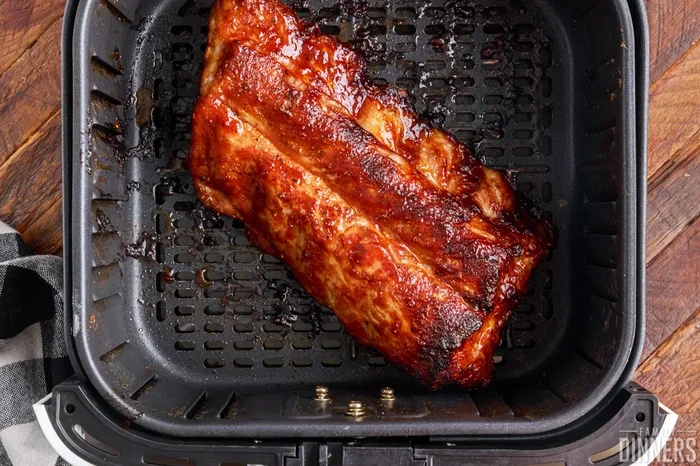
Featured image for air fryer ribs closeup
Image source: familydinners.com
Cooking ribs in an air fryer is not only possible but delivers incredibly tender, flavorful results in a fraction of the time of traditional methods. This guide covers everything from selecting the best cut and mastering the “low and slow then high and fast” technique to pro tips for the perfect bark and sauce glaze.
You love ribs. You love your air fryer. But you have probably stared at that bulky rack of pork and wondered if the two can actually work together. The short answer is a resounding yes. The long answer involves a little bit of science, a few pro tricks, and the realization that you can have fall-off-the-bone tender ribs on a Tuesday night without firing up a smoker or heating your whole kitchen.
Think of your air fryer as a miniature convection oven on steroids. It circulates superheated air rapidly around the food. For ribs, this creates a unique environment: it renders fat and collagen quickly while simultaneously dehydrating the surface just enough to form a beautiful bark. It is the ultimate weeknight hack for a weekend favorite.
Key Takeaways
- Speed Meets Quality: Air fryers cook ribs in 45–60 minutes compared to 3–6 hours in an oven or smoker, without sacrificing tenderness.
- Cut Matters: Baby back ribs fit best in standard baskets; St. Louis style or spare ribs may require cutting the rack in half to fit.
- The Two-Stage Method Is Key: Start at a lower temperature (300°F/150°C) to render fat and tenderize, then crank the heat (400°F/200°C) to caramelize the sauce.
- Don’t Skip the Membrane Removal: Peeling the silver skin off the bone side allows seasoning penetration and prevents chewy texture.
- Sauce at the End: Apply barbecue sauce only during the final 5–10 minutes to prevent burning the sugars.
- Rest Before Cutting: Let ribs rest 10 minutes after cooking; this redistributes juices for maximum moisture retention.
- Reheat Like a Pro: The air fryer is the absolute best tool for reheating leftover ribs, restoring the bark and heat in 3–5 minutes at 350°F.
📑 Table of Contents
- Why the Air Fryer Works for Ribs: The Science of Speed
- Choosing the Right Ribs for Your Air Fryer
- Step-by-Step: How to Cook Ribs in the Air Fryer
- Pro Tips for Fall-Off-The-Bone Results
- Common Mistakes to Avoid
- Serving, Storing, and Reheating
- Air Fryer Ribs vs. Other Methods: The Honest Truth
- Flavor Variations: Beyond Basic BBQ
- Frequently Asked Questions (Deep Dive)
- Conclusion: Your New Weeknight Superpower
Why the Air Fryer Works for Ribs: The Science of Speed
Convection Power vs. Traditional Heat
Traditional ovens rely on radiant heat and natural convection. Hot air rises, cool air sinks, and the temperature fluctuates. Smokers rely on low, indirect heat and smoke penetration over many hours. An air fryer forces hot air around the meat at high velocity using a powerful fan. This forced convection transfers heat energy to the meat surface much faster than still air.
Did You Know? Forced convection can reduce cooking times by 20 to 30 percent compared to a standard convection oven because the moving air strips away the cool boundary layer that forms around the food.
The Collagen-to-Gelatin Transformation
Ribs are tough cuts. They are packed with connective tissue called collagen. Collagen begins to dissolve into gelatin around 160°F (71°C). In a smoker at 225°F, this takes hours. In an air fryer at 300°F to 350°F, the rapid heat transfer pushes the internal temperature through that collagen-melting zone quickly. The result? Tender, juicy meat in under an hour.
Imagine collagen like a tight rubber band. Low heat slowly relaxes it. High, forced heat snaps it into a relaxed state (gelatin) rapidly. The air fryer is the snap.
The “Bark” Factor
Bark is the flavorful, dark crust on the outside of great ribs. It forms through the Maillard reaction (browning proteins) and the caramelization of sugars in your rub. Because the air fryer blasts the surface with hot, dry air, it excels at bark formation. It creates a dehydrated, flavor-packed exterior that rivals a smoker, just in a different texture profile—less “smoky,” more “roasted intensity.”
Choosing the Right Ribs for Your Air Fryer
Baby Back Ribs: The Perfect Fit
Baby back ribs (loin ribs) come from the upper rib cage near the spine. They are smaller, curved, and leaner than spare ribs. A full rack usually weighs 1.5 to 2 pounds. This is the gold standard for air fryers. Most standard 5- to 6-quart basket air fryers can fit a full rack of baby backs if you curve them along the basket wall or stand them upright in a rib rack accessory.
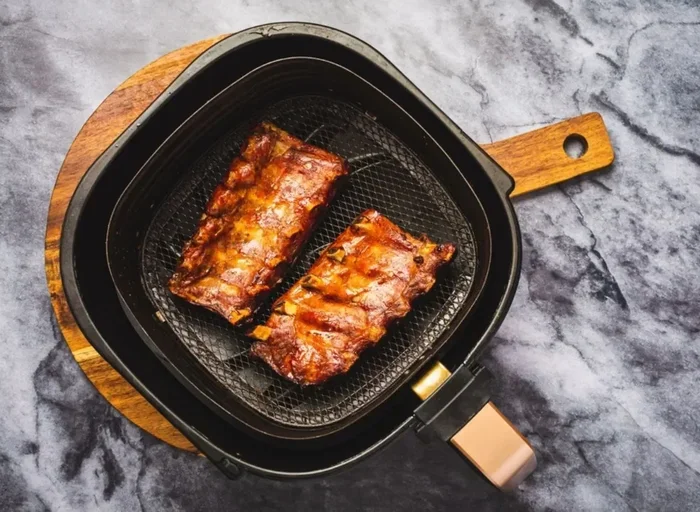
Visual guide about air fryer ribs closeup
Image source: eatthis.com
St. Louis Style & Spare Ribs: Trim to Fit
Spare ribs come from the belly side. They are larger, flatter, and meatier (and fattier). St. Louis style are spare ribs trimmed into a neat rectangle. A full rack weighs 2.5 to 3.5 pounds. These usually will not fit whole in a standard basket. You have two options: cut the rack in half (or thirds) to fit flat, or use a rib rack stand to stack them vertically. Cutting them actually increases surface area for more bark, which is a win.
Country-Style Ribs: Not Actually Ribs
Despite the name, country-style ribs are cut from the blade end of the pork loin (shoulder area). They are meatier, often boneless or with a small blade bone. They cook faster—usually 20 to 25 minutes at 375°F. Treat them more like thick pork chops than traditional ribs.
Beef Ribs: The Big Boys
Beef back ribs (dinosaur ribs) and short ribs are massive. Beef back ribs have meat between the bones; plate short ribs have meat on top. You can cook beef back ribs in an air fryer (cut into 2-3 bone sections), but plate short ribs are too thick for the rapid air method—they need low-and-slow braising. Stick to pork for the best air fryer experience.
Step-by-Step: How to Cook Ribs in the Air Fryer
Prep: The Non-Negotiables
Before you even think about seasoning, you must remove the membrane (silver skin) on the bone side. It is tough, chewy, and blocks rub penetration. Slide a butter knife under the membrane at one end, grab it with a paper towel for grip, and peel it off in one sheet. It takes 30 seconds and changes the final texture entirely.
Pat the ribs bone-dry with paper towels. Moisture is the enemy of bark. Wet meat steams; dry meat sears.
The Dry Rub: Build Your Flavor Base
You need salt, sugar, and spice. A basic ratio: 2 parts brown sugar, 1 part kosher salt, 1 part paprika (smoked is best), 1/2 part garlic powder, 1/2 part onion powder, 1/4 part black pepper, 1/4 part chili powder or cayenne. Rub it generously on all sides. Press it in. Let the ribs sit at room temperature for 15 to 20 minutes while the air fryer preheats. This “dry brine” pulls moisture to the surface, dissolves the salt, and reabsorbs it, seasoning the meat deeply.
Stage 1: Low and Slow (Tenderize)
Preheat your air fryer to 300°F (150°C) for 5 minutes. Place ribs in the basket bone-side down (meat side up). If using a rack stand, stand them up. Cook for 25 to 30 minutes for baby backs; 35 to 40 minutes for spare/St. Louis cuts.
Why this temp? 300°F is the sweet spot. It is hot enough to render fat and melt collagen but gentle enough not to burn the sugar in your rub before the meat is tender. The air fryer fan keeps the air moving, preventing hot spots.
Stage 2: The Sauce & Sear (Glaze)
After Stage 1, the ribs should be tender (a toothpick slides in with zero resistance) and the internal temp should be around 190°F to 195°F. Now, brush on your favorite barbecue sauce. Go heavy on the meat side, light on the bone side. Crank the air fryer to 400°F (200°C). Cook for 3 to 5 minutes. Watch closely! The sugars in the sauce will caramelize fast. You want sticky, glossy, dark red—not black and bitter.
If you like a thick lacquer, repeat: sauce, 2 minutes, sauce, 2 minutes.
The Rest: Don’t Skip It
Move ribs to a cutting board. Tent loosely with foil. Wait 10 minutes. This is mandatory. Cutting hot meat lets juices run out onto the board. Resting lets muscle fibers relax and reabsorb the juices. You waited 45 minutes; wait 10 more.
Pro Tips for Fall-Off-The-Bone Results
Use a Rib Rack for Vertical Cooking
If you cook ribs often, buy a $10 stainless steel rib rack. It holds 3 to 4 racks vertically. This doubles your capacity and ensures 360-degree air flow. No flipping required. It also prevents the bottom rack from sitting in rendered fat.
The Foil Packet “Cheat” for Extra Tenderness
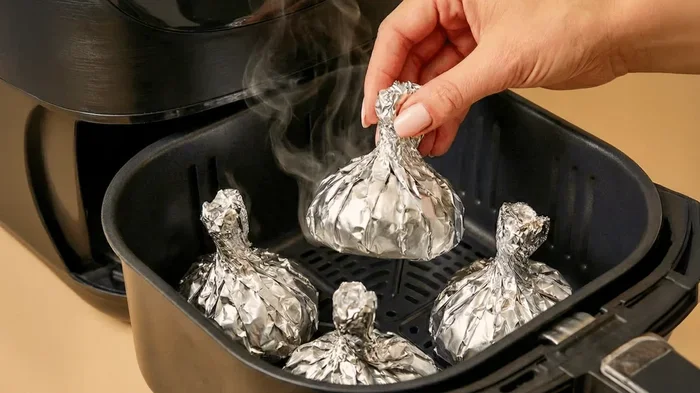
Want guaranteed “fall off the bone” (which competition pitmasters actually call “overcooked,” but hey, it’s your dinner)? After Stage 1, wrap the ribs tightly in a double layer of foil with a splash of apple juice, beer, or butter. Put them back in at 300°F for 10 minutes. This braises them in their own juices. Unwrap, sauce, and do the 400°F sear. The texture will be incredibly soft.
Spritz for Moisture and Smoke Flavor
Every 10 minutes during Stage 1, spritz the ribs with apple cider vinegar, apple juice, or water using a spray bottle. This cools the surface slightly, slowing bark formation so the interior catches up, and adds a subtle tang. For a “smoky” note without a smoker, add 1/2 teaspoon of liquid smoke to your spritz bottle. A little goes a long way.
Don’t Overcrowd the Basket
Air must circulate. If ribs are piled up touching each other, the contact points stay pale and steamed. Cook in batches if needed. Cooked ribs hold beautifully in a 170°F oven (or “warm” setting on the air fryer) for 30 minutes while the second batch finishes.
Check Temp, Not Just Time
Air fryer wattages vary. Basket sizes vary. Rib thickness varies. Time is a guideline; temperature is truth. Target 195°F to 203°F internal for maximum collagen melt. Use an instant-read probe thermometer. Probe between bones, not touching bone.
Common Mistakes to Avoid
Saucing Too Early
This is the number one error. Barbecue sauce is high in sugar (tomato, molasses, brown sugar, corn syrup). Sugar burns at 265°F (130°C). If you sauce at the start of a 40-minute cook at 300°F, you get carbon, not caramel. Sauce only in the last 5 minutes at high heat.
Skipping the Membrane Removal
We mentioned it, but it bears repeating. That membrane shrinks as it cooks, squeezing the meat like a corset. It turns into a plastic-like sheet on the bone. Your teeth cannot cut it. Your rub cannot penetrate it. Peel it. Always.
Cooking Straight from the Fridge
Cold meat hits hot air = condensation on the surface. Condensation = steam. Steam = no bark. Let ribs sit out for 20 minutes. It also promotes more even cooking from edge to center.
Using the Wrong Temperature
Cooking at 400°F the whole time dries out the exterior before the interior collagen melts. You get tough meat with a burnt rub. Cooking at 250°F the whole time takes forever and yields pale, soft bark. The two-stage method (300°F then 400°F) solves both problems.
Not Cleaning the Drip Tray
Ribs render a lot of fat. That fat drips into the bottom tray. If you don’t empty it between batches (or before the high-heat sear), it will smoke. Badly. Your kitchen will smell like burnt grease, and the smoke can flavor the next batch. Line the tray with foil or a disposable liner for easy cleanup.
Serving, Storing, and Reheating
How to Cut Ribs Like a Pro
Flip the rack bone-side up. You can see the bones clearly. Use a sharp chef’s knife. Cut down the center of each intercostal meat section (the meat between bones). Don’t saw; use one smooth, downward stroke. This gives you perfect single-bone ribs with maximum meat on each.
Best Sides for Air Fryer Ribs
Since the air fryer is occupied, use the stove or oven for sides. Classic pairings: coleslaw (acid cuts fat), baked beans (sweet/savory), cornbread, mac and cheese, grilled corn, or a simple green salad with vinaigrette. For a low-carb meal, serve with roasted broccoli or cauliflower mash.
Storing Leftovers
Cool ribs to room temperature (within 2 hours). Store in an airtight container or wrapped tightly in foil. Refrigerate 3 to 4 days. Freeze up to 3 months. Vacuum sealing is best for freezing; it prevents freezer burn on the precious bark.
The Air Fryer Reheat: The Secret Weapon
This is where the air fryer shines brightest. Microwave ruins bark (makes it soggy). Oven takes 20 minutes. Air fryer: 350°F, 3 to 5 minutes. The bark crisps back up. The fat renders again. The sauce re-glazes. They taste freshly cooked. If reheating sauced ribs, check at 3 minutes to prevent sauce burning.
Air Fryer Ribs vs. Other Methods: The Honest Truth
Vs. Smoker (The Gold Standard)
Smoker wins on: Deep smoke ring, complex smoke flavor, massive bark texture, capacity (cook 10 racks at once). Air fryer wins on: Speed (45 min vs 6 hrs), convenience (set and forget), zero fuel management, year-round indoor use, easier cleanup. The air fryer gives you 85% of the texture for 15% of the effort.
Vs. Oven (The Standard Indoor Method)
Oven wins on: Capacity (full sheet pan of ribs), even cooking on large cuts. Air fryer wins on: Speed (convection is faster), bark quality (forced air dehydrates surface better), energy efficiency (heats a tiny box, not a huge cavity). For 1-2 racks, air fryer is superior.
Vs. Instant Pot / Pressure Cooker
Pressure cooker wins on: Ultimate tenderness (fall-off-bone guaranteed in 25 min), infusing liquid flavor deep into meat. Air fryer wins on: Texture (pressure cooker makes meat mushy, zero bark), flavor concentration (pressure cooking dilutes flavor into the broth), and the ability to finish with a crispy glaze. Pro Move: Pressure cook ribs 25 min, then air fry at 400°F for 5 min with sauce. Best of both worlds.
Vs. Grill (Direct Heat)
Grilling ribs directly over flame is a recipe for burnt outside, raw inside. Grilling indirect (two-zone) works well but requires temp management. Air fryer is “set and forget” indirect heat on steroids.
Flavor Variations: Beyond Basic BBQ
Dry-Rubbed “Memphis Style” (No Sauce)
Skip the sauce entirely. Use a heavy rub with extra black pepper, cayenne, and celery salt. Cook at 300°F for 30 min, then 375°F for 5 min to crisp the rub. Serve with sauce on the side for dipping. The rub is the flavor.
Asian-Style Glazed Ribs
Rub: Chinese five-spice, garlic powder, ginger powder, white pepper, salt. Glaze: Hoisin sauce, honey, soy sauce, rice vinegar, garlic, ginger, sesame oil. Brush glaze in the last 5 minutes at 380°F (lower temp prevents honey burning). Garnish with sesame seeds and scallions.
Korean Kalbi-Style (Flanken Cut)
Use beef short ribs cut thin across the bone (flanken). Marinate 2 hours in soy sauce, brown sugar, Asian pear (or apple) puree, garlic, ginger, sesame oil, mirin. Air fry at 380°F for 8-10 minutes, flipping halfway. Thin cut = fast cook. Incredible caramelization.
Lemon-Herb “White” Ribs
Rub: Lemon zest, dried oregano, thyme, rosemary, garlic powder, salt, pepper, olive oil. No sugar in rub = no burn risk. Cook 300°F 25 min, 400°F 5 min. Finish with a drizzle of lemon-herb vinaigrette. Light, fresh, perfect for summer.
Spicy Chipotle-Honey
Rub: Chili powder, cumin, smoked paprika, garlic powder. Glaze: Honey, adobo sauce (from chipotle in adobo can), lime juice, butter. The adobe brings smoke and heat; honey brings sticky sweet. Watch the high-heat sear closely—honey burns faster than tomato sauce.
Frequently Asked Questions (Deep Dive)
Can I stack ribs in the air fryer?
Only if you use a rib rack accessory that holds them vertically with space between. Stacking flat on top of each other blocks airflow, creating steamed, pale spots. If you don’t have a rack, cook in batches or cut racks to fit in a single layer.
Do I need to flip ribs in the air fryer?
If cooking flat in a basket: yes, flip once halfway through Stage 1 (around the 15-minute mark) for even bark. If using a vertical rib rack: no flip needed. The air hits all sides.
What temperature are ribs done in the air fryer?
Target 195°F to 203°F (90°C to 95°C) internal temperature. At this range, collagen has fully melted into gelatin. “Fall off the bone” happens around 203°F. “Competition bite” (meat pulls cleanly but stays on bone) is 195°F. Probe between bones.
Can I cook frozen ribs in the air fryer?
Yes, but not ideally. Add 10-15 minutes to Stage 1 at 300°F. The rub won’t adhere well to frozen meat. Best practice: thaw overnight in fridge. If you must cook frozen, season after the first 15 minutes when the surface has thawed enough to hold the rub.
Why did my ribs come out tough?
Three likely culprits: 1) Temperature too high the whole time (collagen didn’t melt). 2) Ribs too thick/large for the time given (spare ribs need more Stage 1 time than baby backs). 3) Didn’t rest (juices ran out, leaving dry fibers). Use a thermometer next time.
Can I use aluminum foil in the air fryer for ribs?
Yes. You can line the basket bottom (not the holes—air must flow up) for easy cleanup. You can wrap ribs in foil for the “Texas Crutch” braise step (see Pro Tips). Do not cover the entire basket bottom solidly; it blocks the convection that makes the air fryer work.
Conclusion: Your New Weeknight Superpower
You now know the truth: the air fryer is a legitimate rib machine. It doesn’t replace a 12-hour oak-smoked masterpiece, and it never claimed to. What it does is put genuinely tender, deeply flavored, beautifully barked ribs on your dinner table on a Wednesday night with 15 minutes of active work. That is a superpower.
Master the two-stage temperature method. Respect the membrane removal. Sauce at the end. Rest before cutting. These four rules apply to almost every protein you cook in the air fryer, but they are the difference between “okay” ribs and “when are we having these again?” ribs. Experiment with rubs. Try the foil wrap for guaranteed tenderness. Use the reheat function to make leftovers exciting.
Your air fryer just became the most valuable player in your kitchen lineup. Fire it up. Grab a rack. Happy cooking.