
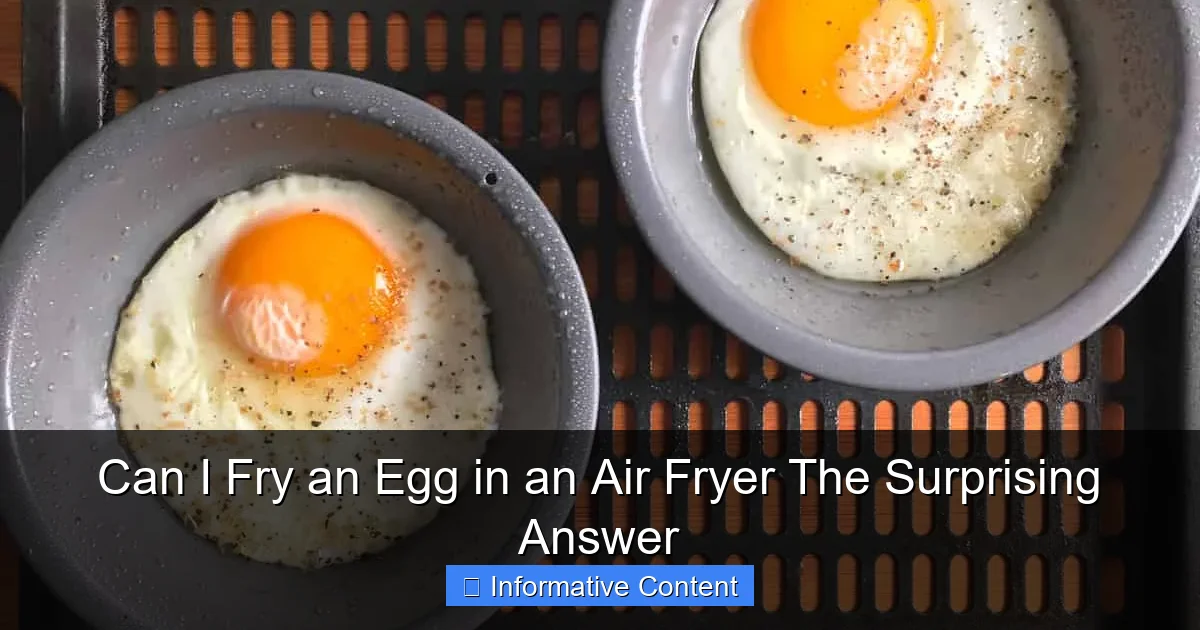
Featured image for can i fry an egg in an air fryer
Image source: circaairfryer.com
Yes, you can fry an egg in an air fryer—and it’s easier than you think, yielding a perfectly cooked egg with crispy edges in under 5 minutes. No oil or flipping required, thanks to the air fryer’s rapid, even heat circulation that mimics a traditional fry pan.
Key Takeaways
- Yes, you can fry an egg in an air fryer with minimal oil.
- Preheat the air fryer to 375°F for even cooking.
- Use a small oven-safe dish to prevent egg from spreading.
- Cook for 5-7 minutes for a runny yolk, longer for firmer.
- Lightly grease the dish to avoid sticking and ease cleanup.
- Experiment with timing to achieve your preferred yolk consistency.
- Try seasoning after cooking to enhance flavor without splattering.
📑 Table of Contents
- The Big Question: Can You Really Fry an Egg in an Air Fryer?
- How Air Fryers Work and Why Eggs Are a Unique Challenge
- Step-by-Step: How to Fry an Egg in an Air Fryer (Without Disaster)
- Creative Variations: Beyond Basic Fried Eggs
- Common Mistakes and How to Avoid Them
- Air Fryer Eggs vs. Traditional Frying: A Side-by-Side Comparison
- Final Thoughts: Should You Fry Eggs in Your Air Fryer?
The Big Question: Can You Really Fry an Egg in an Air Fryer?
Let’s be honest—air fryers have become the kitchen superheroes of the past few years. They promise crispy, delicious food with little to no oil, making them a favorite for health-conscious eaters and lazy cooks alike (guilty as charged). But as someone who loves eggs in every form—scrambled, poached, sunny-side up—I started wondering: *Can I fry an egg in an air fryer?* I mean, it sounds almost too convenient, right? No splattering oil, no sticky pans, just a perfect fried egg with minimal effort.
So, I did what any curious home cook would do: I grabbed a few eggs, preheated my air fryer, and got to experimenting. What I discovered was surprising, a little messy at first, but ultimately game-changing. Whether you’re a breakfast enthusiast, a busy parent, or just someone who hates cleaning up greasy pans, this might be the answer you’ve been waiting for. Spoiler alert: yes, you can fry an egg in an air fryer—but it’s not quite as simple as dropping it in and walking away. Let’s dive into the details, the tricks, and the little surprises I learned along the way.
How Air Fryers Work and Why Eggs Are a Unique Challenge
Before we jump into the egg-frying process, it’s important to understand how air fryers actually work. Unlike traditional frying, which uses oil to conduct heat, air fryers use rapid air circulation to mimic the crispiness of deep frying. A heating element warms the air, and a powerful fan circulates it around the food, creating a convection effect. This method works wonders for fries, chicken wings, and even roasted veggies—but eggs? They’re a whole different beast.
The Science of Eggs and Heat
Eggs are delicate. The proteins in the whites and yolks denature (or “cook”) at different temperatures, which is why a properly fried egg has a tender, runny yolk and a set, slightly crisp white. In a pan, the direct contact with hot oil or butter ensures even, controlled heat. But in an air fryer, there’s no direct contact—just hot air. This means the egg needs a little help to cook evenly without drying out or turning into a rubbery mess.
I learned this the hard way on my first attempt. I cracked an egg directly into the air fryer basket, set it to 375°F, and walked away. Ten minutes later, I returned to a sad, dried-out white with a yolk that had somehow managed to cook through completely. Not exactly the breakfast I was hoping for. The issue? Air fryers can be *too* efficient at drying things out, especially something as moisture-rich as an egg.
Why You Need a Little Oil (Or a Substitute)
Here’s the key takeaway: **you need something to conduct heat and prevent sticking**. In a traditional pan, that’s oil or butter. In an air fryer, you can still use a small amount of oil (just a light spray or brush), or opt for non-stick solutions like silicone muffin cups or parchment paper. I’ve tried all three, and each has its pros and cons. For example, a light spray of avocado oil gives the egg a slightly crisp edge, while parchment paper keeps it soft but prevents sticking. Silicone cups? They’re reusable and easy to clean, but they don’t give you that classic “fried” texture.
Step-by-Step: How to Fry an Egg in an Air Fryer (Without Disaster)
Now that we’ve covered the science, let’s get practical. Here’s the method I’ve perfected after countless (and I mean *countless*) attempts. This approach gives you a tender, runny yolk with a slightly crisp white—just like a pan-fried egg, but with way less mess.
What You’ll Need
- 1-2 large eggs
- Light cooking oil (avocado, olive, or canola) or cooking spray
- A small ramekin, silicone cup, or piece of parchment paper (optional but recommended)
- Air fryer
- Spatula (for easy removal)
The Process
- Preheat the air fryer to 350°F (175°C) for 3-5 minutes. This ensures even cooking from the start. I’ve found that preheating makes a huge difference—cold air fryers tend to undercook the bottom of the egg.
- Prep your cooking surface. If using a ramekin or silicone cup, lightly grease it with oil or cooking spray. If using parchment paper, cut it into a small round or square that fits snugly in the air fryer basket. No ramekin? You can crack the egg directly into the basket, but be prepared for some sticking and potential mess.
- Crack the egg into your chosen container. Be careful not to break the yolk. I like to crack my eggs into a small bowl first, then transfer them to the ramekin—it’s easier to control.
- Cook at 350°F for 5-7 minutes. For a runny yolk, aim for 5 minutes. For a medium yolk, go for 6 minutes. For a fully cooked yolk, 7 minutes is perfect. I recommend starting with 5 minutes and checking the egg—you can always add more time if needed.
- Remove carefully. Use a spatula or silicone tongs to lift the egg out. If using parchment paper, just lift the whole thing out. Let it cool for 30 seconds before serving.
Pro Tips for Success
- Don’t overcrowd. Air fryers need space for air circulation. If you’re cooking multiple eggs, use separate ramekins or cook them one at a time.
- Season *after* cooking. Salt can draw moisture out of the egg, making it watery. I like to add salt, pepper, or hot sauce after the egg is done.
- Experiment with temperatures. If your air fryer runs hot, try 340°F. If it’s slower, bump it up to 360°F. Every model is a little different.
Creative Variations: Beyond Basic Fried Eggs
Once you’ve mastered the classic fried egg, the possibilities are endless. Air fryers are surprisingly versatile, and eggs are the perfect canvas for creativity. Here are a few of my favorite variations that have become staples in my breakfast rotation.
Bacon-Wrapped Fried Eggs
Yes, you read that right. Wrap a slice of raw bacon around a greased ramekin, then crack an egg inside. Cook at 350°F for 7-8 minutes, and you’ll have a crispy, savory bacon cup filled with a perfectly cooked egg. The bacon fat keeps the egg moist, and the result is *chef’s kiss*. I serve this with a side of toast for a hearty brunch.
Cheesy Egg Muffins
For a protein-packed breakfast, try this: grease a silicone muffin cup, then add a spoonful of shredded cheddar or mozzarella. Crack an egg on top, then sprinkle with a little more cheese. Cook at 350°F for 6-7 minutes. The cheese melts into the egg, creating a gooey, delicious bite. I’ve even added diced ham or spinach for a full-on breakfast casserole vibe.
Sunny-Side Up with a Twist
Want that classic diner-style fried egg but with a little extra flavor? Before cooking, add a teaspoon of butter to the ramekin. Once the egg is done, it’ll have a rich, buttery flavor and a slightly crisp edge. For a spicy kick, drizzle with sriracha or hot honey after cooking. I also love adding a sprinkle of Everything Bagel seasoning for an umami boost.
Common Mistakes and How to Avoid Them
Even with the best intentions, things can go wrong when frying eggs in an air fryer. Here are the most common mistakes I’ve made—and how to fix them.
The Egg Sticks to the Basket
This was my first (and most frustrating) issue. The egg whites cook faster than the yolk, and if they stick, you’ll end up with a broken yolk and a messy basket. The solution? Always use a greased ramekin, silicone cup, or parchment paper. If you *do* end up with a sticky mess, let the egg cool for a minute—the proteins contract slightly, making it easier to remove.
The Yolk Is Overcooked
Air fryers can be unpredictable, and if you’re not careful, you’ll end up with a hard yolk. The fix? Start with less time. I always set my timer for 5 minutes, then check the egg. If the white is set but the yolk is still jiggly, it’s done. If not, add 30 seconds and check again. It’s better to undercook slightly and adjust than to overcook.
The Egg Dries Out
Eggs are mostly water, and air fryers can be *too* efficient at drying them out. To prevent this, use a ramekin or cup—it traps some of the steam, keeping the egg moist. You can also add a teaspoon of water to the bottom of the ramekin before adding the egg. The steam helps cook the egg more gently.
Air Fryer Eggs vs. Traditional Frying: A Side-by-Side Comparison
So, how does air fryer egg frying stack up against the classic stovetop method? I put both to the test with a side-by-side experiment, and the results were interesting—but not what I expected.
Texture and Taste
The air fryer egg has a slightly crispier white (especially if you use a little oil), but the yolk is just as tender and runny. The stovetop egg, on the other hand, has a richer flavor thanks to the oil or butter, but it’s also greasier. If you’re watching your fat intake, the air fryer wins. If you love the taste of buttery eggs, stick with the pan.
Cleanup
This is where the air fryer *shines*. No splattered oil, no sticky pan to scrub. Just rinse the ramekin or silicone cup, and you’re done. The stovetop method always leaves me with a greasy pan and a sink full of dishes—not ideal on a busy morning.
Time and Effort
Both methods take about the same amount of time (5-7 minutes), but the air fryer requires less attention. With stovetop frying, you need to watch the heat and flip the egg (if you like it over-easy). The air fryer? Set it and forget it.
| Factor | Air Fryer Eggs | Traditional Pan Eggs |
|---|---|---|
| Texture | Slightly crisp white, tender yolk | Rich, buttery, slightly greasy |
| Cleanup | Minimal (just ramekin or cup) | Greasy pan, splatter cleanup |
| Time | 5-7 minutes (set and forget) | 5-7 minutes (requires attention) |
| Healthiness | Low-fat, minimal oil | Higher fat, more oil/butter |
Final Thoughts: Should You Fry Eggs in Your Air Fryer?
So, back to the original question: *Can you fry an egg in an air fryer?* The answer is a resounding **yes**—but with a few caveats. It’s not as foolproof as stovetop frying, and it requires a little experimentation to get the timing and method right. But once you nail it, you’ll wonder why you ever used a pan in the first place.
The air fryer offers a cleaner, healthier, and more hands-off way to cook eggs. It’s perfect for busy mornings, small kitchens, or anyone who hates cleaning up greasy pans. And while it might not replace your favorite buttery, pan-fried egg *every* time, it’s a fantastic alternative that’s worth trying. Whether you’re making a simple fried egg, a bacon-wrapped masterpiece, or a cheesy egg muffin, the air fryer can handle it—with a little patience and the right technique.
So go ahead, give it a try. Grab your air fryer, a few eggs, and a little oil, and see what happens. You might just discover your new favorite way to cook breakfast. And if you mess it up? Don’t worry—I’ve been there, and I’ve got your back. Happy frying!
Frequently Asked Questions
Can I fry an egg in an air fryer without making a mess?
Yes, you can fry an egg in an air fryer cleanly by using a small oven-safe dish or silicone mold to contain the egg. This prevents splatter and ensures even cooking.
What’s the best way to fry an egg in an air fryer?
For perfect results, preheat the air fryer to 350°F (175°C), lightly grease a ramekin, crack the egg into it, and cook for 4–6 minutes depending on desired doneness.
Do I need oil to fry an egg in an air fryer?
A light spray of oil or non-stick spray helps prevent sticking, especially if using a metal or ceramic dish. However, non-stick silicone molds often don’t require oil.
Can I fry an egg in an air fryer with other foods?
Yes, but avoid overcrowding. Cook the egg in a small dish on top of other items or use a two-tier rack to ensure proper air circulation and even cooking.
How long does it take to air fry an egg?
Air frying an egg typically takes 4–7 minutes at 350°F (175°C). Adjust time for runny, medium, or hard yolks—check at 4 minutes for best results.
Is it safe to fry an egg in an air fryer?
Absolutely! As long as you use oven-safe cookware and avoid direct contact with heating elements, frying an egg in an air fryer is safe and efficient.