

Featured image for can you scramble eggs in an air fryer
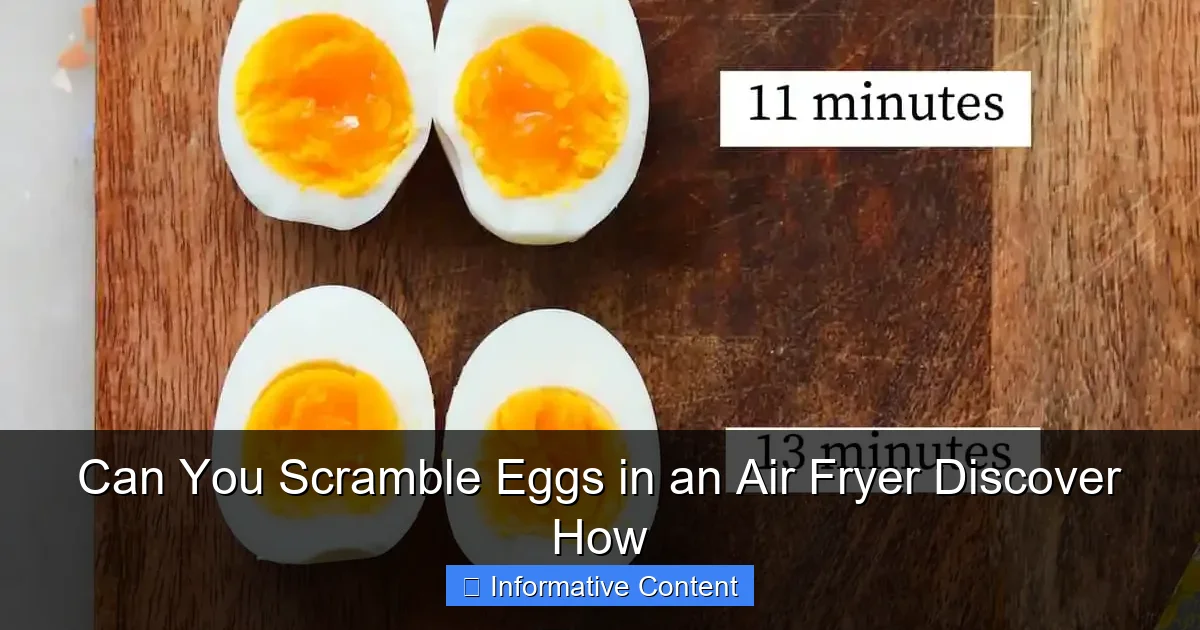
Image source: airfryertips.dk
Yes, you can scramble eggs in an air fryer—and it’s a quick, mess-free method that delivers fluffy, evenly cooked results every time. With no need for constant stirring or flipping, simply whisk your eggs, pour them into a greased air fryer-safe dish, and cook at 300°F for 8–10 minutes, stirring once halfway through for perfect texture.
Key Takeaways
- Yes, you can scramble eggs in an air fryer with great results.
- Use a heat-safe dish to prevent sticking and ensure even cooking.
- Preheat the air fryer for consistent, fluffy scrambled eggs every time.
- Stir halfway through cooking for soft, evenly cooked curds.
- Add milk or butter for creamier texture and richer flavor.
- Clean immediately after to avoid residue buildup in the basket.
📑 Table of Contents
- Can You Scramble Eggs in an Air Fryer? Let’s Find Out!
- Why Would You Even Try Scrambling Eggs in an Air Fryer?
- How to Scramble Eggs in an Air Fryer: A Step-by-Step Guide
- Tips and Tricks for Perfect Air Fryer Scrambled Eggs
- Common Mistakes and How to Fix Them
- Air Fryer Scrambled Eggs vs. Stovetop: Which Is Better?
- Data Table: Air Fryer Scrambled Eggs Cooking Guide
- Final Thoughts: Is It Worth It?
Can You Scramble Eggs in an Air Fryer? Let’s Find Out!
When I first got my air fryer, I was all about the crispy fries and juicy chicken wings. But one morning, standing in my kitchen with a carton of eggs and a growling stomach, I had a thought: Can you scramble eggs in an air fryer? I’d heard whispers online, but no one seemed to have a definitive answer. So, like any curious home cook, I decided to experiment. Spoiler alert: yes, you can scramble eggs in an air fryer—and it’s not just possible, it can actually be pretty great. But like any kitchen hack, it comes with its quirks.
Air fryers have revolutionized the way we think about cooking. From reheating leftovers to roasting veggies, these countertop wonders use hot air to mimic deep frying with a fraction of the oil. But eggs? That’s a whole different ballgame. They’re delicate, prone to overcooking, and need careful handling to achieve that fluffy, creamy texture we all love. So, is the air fryer up to the task? Let’s dive in, explore the science, share some tried-and-true tips, and see how this method stacks up against the stovetop.
Why Would You Even Try Scrambling Eggs in an Air Fryer?
At first glance, scrambling eggs in an air fryer might seem like overkill. After all, the stovetop is fast, familiar, and gives you total control. But here’s why this method is worth considering—especially if you’re short on time, space, or just love a good kitchen experiment.
Visual guide about can you scramble eggs in an air fryer
Image source: i0.wp.com
1. Hands-Off Cooking
One of the biggest perks? You don’t have to stand over a hot stove, constantly stirring. Once your eggs are in the air fryer, you can prep toast, brew coffee, or even get the kids ready for school while they cook. No more juggling pans or worrying about burning.
2. Great for Small Kitchens or Dorm Rooms
If you’re living in a tiny apartment, college dorm, or RV, countertop space is precious. An air fryer can replace multiple appliances—and yes, that includes your frying pan. Plus, it’s much safer than a hot burner in tight quarters.
3. Energy Efficiency
Air fryers use less electricity than a full-sized oven and often heat up faster than a stovetop. For a quick breakfast, this means lower energy bills and less heat in your kitchen—perfect for summer mornings.
4. Consistency and Even Cooking
The circulating hot air ensures your eggs cook evenly, with no hot spots or undercooked patches. This is especially helpful if you’re new to cooking or just want a foolproof method.
5. Multi-Tasking Made Easy
While your eggs cook, you can use the air fryer’s basket or a separate tray to toast bread, warm up bacon, or even steam veggies. It’s like having a mini kitchen in one appliance.
Now, I won’t sugarcoat it: the air fryer isn’t perfect for eggs. But for certain situations—like when you’re in a rush or don’t have access to a stove—it’s a surprisingly solid option. And with the right technique, you can get results that are just as good (if not better) than traditional methods.
How to Scramble Eggs in an Air Fryer: A Step-by-Step Guide
Ready to give it a try? Here’s my tried-and-true method, refined over multiple batches. The key is using the right container, temperature, and timing to avoid rubbery or dried-out eggs.

Visual guide about can you scramble eggs in an air fryer
Image source: myairfryerkitchen.com
What You’ll Need
- 2-3 large eggs (or more, depending on your air fryer size)
- 1-2 tablespoons milk, cream, or water (for fluffiness)
- Salt and pepper to taste
- 1 teaspoon butter or cooking oil (optional, for richness)
- Oven-safe container (silicone, ceramic, or metal—just make sure it fits in your air fryer basket)
- Whisk or fork
- Non-stick spray (optional)
Step 1: Choose the Right Container
This is critical. The container must be oven-safe and small enough to fit in your air fryer basket. I prefer silicone muffin cups (great for individual portions) or a small ceramic ramekin. Avoid anything too deep—shallow containers allow heat to circulate better, preventing soggy bottoms.
Pro tip: Lightly grease the container with butter or non-stick spray to make cleanup easier.
Step 2: Mix the Eggs
Crack your eggs into the container. Add milk, salt, and pepper. Whisk vigorously until the yolks and whites are fully combined and slightly frothy. The air from whisking helps create a fluffier texture—don’t skip this step!
If you’re feeling fancy, add a pinch of cheese, herbs, or even a dash of hot sauce. Just avoid adding too many wet ingredients (like tomatoes or salsa) until after cooking, as excess moisture can lead to steam buildup.
Step 3: Preheat the Air Fryer (Optional)
Some air fryers benefit from preheating (3-5 minutes at 350°F/175°C). This ensures consistent cooking from the start. But if you’re in a hurry, you can skip it—just add an extra minute to the cook time.
Step 4: Cook the Eggs
- Place the container in the air fryer basket. If using a silicone cup, you can place it directly in the basket.
- Cook at 320°F (160°C) for 5-7 minutes. This lower temperature prevents overcooking.
- After 3 minutes, pause the air fryer and gently stir the eggs with a silicone spatula. This mimics the stovetop stirring and helps break up curds for a softer texture.
- Return to the air fryer and cook for another 2-4 minutes, depending on desired doneness. For creamy eggs, aim for 6 minutes total. For firmer, more “scrambled” texture, go up to 8 minutes.
Watch closely: Air fryers vary in intensity. If your eggs are browning too quickly, lower the temperature to 300°F (150°C).
Step 5: Finish and Serve
Remove the container (use oven mitts—it’ll be hot!). Give the eggs one final stir. If they look a little underdone, let them sit for 30 seconds—residual heat will finish the job. Season with extra salt, pepper, or fresh herbs.
Serve immediately! Pair with toast, avocado, or even a side of crispy bacon cooked in the same air fryer.
Tips and Tricks for Perfect Air Fryer Scrambled Eggs
Even with the best method, air fryer eggs can be finicky. Here are my top tips to avoid common pitfalls and get the best results every time.
1. Don’t Overfill the Container
Fill the container no more than ¾ full. Overfilling leads to uneven cooking—the edges will dry out while the center stays runny. If cooking for a crowd, use multiple smaller containers or cook in batches.
2. Stir Midway (But Not Too Much)
Stirring once halfway through ensures even cooking. But avoid over-stirring—this can make the eggs dense and rubbery. A gentle fold is all you need.
3. Use the Right Temperature
320°F (160°C) is the sweet spot for creamy eggs. Higher temperatures (above 350°F/175°C) risk overcooking and browning. If your air fryer runs hot, start at 300°F (150°C).
4. Add Dairy for Fluffiness
Milk, cream, or even a splash of water adds moisture and helps create air pockets. For ultra-rich eggs, use heavy cream. For a lighter texture, stick to milk or water.
5. Don’t Skip the Grease
Even non-stick containers benefit from a light coating of butter or oil. This prevents sticking and adds flavor. If using a silicone cup, a quick spritz of non-stick spray works too.
6. Experiment with Add-Ins
Want cheesy eggs? Add shredded cheddar or Parmesan to the egg mixture before cooking. For veggie-packed eggs, stir in cooked spinach, bell peppers, or onions. Just avoid raw, watery veggies—they’ll release too much moisture.
7. Use Parchment Paper (Optional)
For easier cleanup, line your container with parchment paper. It also helps prevent sticking. Just make sure the paper is trimmed to fit and won’t block airflow.
8. Adjust for Your Air Fryer
Every air fryer is different. Some cook faster, others slower. Keep notes on time and temperature for your model. A small notebook or phone note can save you from overcooking next time.
Common Mistakes and How to Fix Them
Even seasoned air fryer users run into issues with scrambled eggs. Here’s how to troubleshoot the most common problems—and how to avoid them in the future.
Mistake 1: Rubbery or Dry Eggs
Why it happens: Overcooking or high temperature.
How to fix: Lower the temperature to 320°F (160°C) and reduce cook time. Remove eggs just before they look fully set—residual heat will finish them. For next time, set a timer and check early.
Mistake 2: Eggs Sticking to the Container
Why it happens: Not enough grease or using the wrong container.
How to fix: Grease the container well with butter, oil, or non-stick spray. Use silicone or ceramic containers, which are naturally non-stick. If eggs stick, soak the container in warm, soapy water before scrubbing.
Mistake 3: Uneven Cooking (Soggy Center, Dry Edges)
Why it happens: Overfilling or not stirring.
How to fix: Fill containers no more than ¾ full. Stir the eggs halfway through cooking. For next time, use a shallower container to improve heat circulation.
Mistake 4: Eggs Browning Too Much
Why it happens: High temperature or too long cook time.
How to fix: Lower the temperature to 300°F (150°C) and check eggs at the 5-minute mark. For next time, avoid temperatures above 320°F (160°C).
Mistake 5: Steam Build-Up (Soggy Texture)
Why it happens: Adding wet ingredients (like raw veggies) or covering the container.
How to fix: Cook add-ins separately first. Never cover the container—steam needs to escape. For next time, sauté veggies in the air fryer first, then add eggs.
Air Fryer Scrambled Eggs vs. Stovetop: Which Is Better?
Now for the big question: how does air fryer scrambled eggs stack up against the classic stovetop method? Let’s break it down.
Texture and Flavor
- Stovetop: Offers unparalleled control. You can adjust heat and stirring in real-time, creating soft, creamy curds or firm, fluffy scrambles. Butter or cream adds rich, savory flavor.
- Air fryer: Tends to produce slightly firmer, more “set” eggs. The circulating air can dry them out if overcooked. But with careful timing, you can achieve a creamy texture. Flavor is milder—less butter browning, but still delicious.
Speed and Convenience
- Stovetop: Faster (3-5 minutes) and requires no preheating. Ideal for quick meals.
- Air fryer: Takes 6-8 minutes (plus optional preheating). But it’s hands-off—you can multitask while it cooks. Great for busy mornings or small kitchens.
Cleanup
- Stovetop: Pan and spatula to wash. Can be messy if eggs stick.
- Air fryer: Only the container and spatula. Silicone cups are dishwasher-safe. Less mess overall.
Versatility
- Stovetop: Better for complex dishes (like omelets or frittatas) and delicate techniques (e.g., slow-cooked custardy eggs).
- Air fryer: Excels at simple scrambles, especially with add-ins. Also great for cooking eggs alongside other breakfast items (bacon, toast, etc.).
Energy Use
- Stovetop: Uses more energy (especially gas burners).
- Air fryer: More energy-efficient for small portions. Cooks faster than an oven and uses less power than a full stove.
Verdict
For flavor and control, the stovetop wins. But for convenience, multitasking, and small spaces, the air fryer is a fantastic alternative. I often use the stovetop for lazy Sundays and the air fryer for weekday mornings when I’m rushing out the door.
Data Table: Air Fryer Scrambled Eggs Cooking Guide
| Container Type | Eggs | Temperature | Cook Time (Minutes) | Stirring | Best For |
|---|---|---|---|---|---|
| Silicone Muffin Cup | 1-2 | 320°F (160°C) | 5-6 | Yes (after 3 min) | Individual portions, easy cleanup |
| Ceramic Ramekin | 2-3 | 320°F (160°C) | 6-7 | Yes (after 3 min) | Creamy texture, add-ins |
| Metal Pan (Oven-Safe) | 3-4 | 300°F (150°C) | 7-8 | Yes (after 4 min) | Large batches, crispy edges |
| Silicone Egg Bite Mold | 1 | 320°F (160°C) | 5 | No | Portable, meal prep |
| Glass Dish | 2-3 | 320°F (160°C) | 6-7 | Yes (after 3 min) | Even cooking, visibility |
Note: Times are approximate. Adjust based on your air fryer model and desired doneness.
Final Thoughts: Is It Worth It?
So, can you scramble eggs in an air fryer? Absolutely. Is it the best method for everyone? Not necessarily. But here’s the thing: cooking isn’t about finding one “perfect” way—it’s about having options. And the air fryer gives you another tool in your breakfast arsenal.
For me, it’s a game-changer on busy mornings. I love that I can set it, forget it, and come back to perfectly cooked eggs—no babysitting required. And when I’m craving a hearty breakfast without turning on the stove, it’s a lifesaver. But I’ll still reach for the stovetop when I want that classic, buttery scramble or when I’m cooking for a crowd.
The key is understanding the trade-offs: slightly less control, a different texture, and a bit more time. But with the right technique, you can get delicious results that rival (or even surpass) traditional methods. Plus, it’s a fun way to experiment and expand your air fryer skills.
So go ahead—give it a try. Whip up a batch, tweak the timing to your taste, and see how it fits into your routine. Who knows? You might just discover your new favorite way to scramble eggs. And if you’re anything like me, you’ll be amazed at what this little appliance can do. Happy cooking!
Frequently Asked Questions
Can you scramble eggs in an air fryer?
Yes, you can scramble eggs in an air fryer! It’s a quick and convenient method that yields fluffy, evenly cooked eggs with minimal effort.
How do you scramble eggs in an air fryer?
Whisk eggs with a splash of milk, salt, and pepper, then pour them into a greased or lined air fryer-safe container. Cook at 320°F (160°C) for 5–7 minutes, stirring halfway through.
Is scrambling eggs in an air fryer better than stovetop?
Scrambling eggs in an air fryer is great for even cooking and less hands-on time, but stovetop offers more control for creamy, soft eggs. Both methods work well—choose based on your preference!
What kind of container can you use to scramble eggs in an air fryer?
Use oven-safe, air fryer-friendly containers like silicone molds, ceramic ramekins, or parchment paper-lined metal pans. Avoid plastic or non-heat-safe materials.
Do you need to preheat the air fryer to scramble eggs?
Preheating isn’t required, but doing so (3–5 minutes at 320°F) ensures even cooking and prevents sticking. It’s especially helpful if your air fryer heats unevenly.
Can you add cheese or veggies when scrambling eggs in an air fryer?
Absolutely! Add shredded cheese, diced veggies, or cooked meats to the egg mixture before cooking. Just ensure veggies are pre-cooked or finely chopped to avoid undercooking.