
Featured image for can you have a air fryer in dorm
Yes, you can have an air fryer in your dorm—if your school allows it. Most dorms permit small, energy-efficient appliances like air fryers, but always check housing rules first to avoid violations. Compact, quiet models are ideal for small spaces and make cooking quick, healthy meals a breeze.
Key Takeaways
- Check dorm rules first: Confirm if air fryers are allowed to avoid violations.
- Opt for compact models: Choose space-saving, small-capacity air fryers for tight dorm spaces.
- Prioritize safety features: Select models with auto-shutoff and cool-touch exteriors for security.
- Use a power strip: Protect circuits by plugging into a surge protector, not directly into walls.
- Clean regularly: Prevent odors and messes with quick wipe-downs after each use.
- Schedule cooking times: Avoid noise complaints by air frying during shared quiet hours.
📑 Table of Contents
- Can You Have an Air Fryer in a Dorm? A Complete Guide for Students
- Understanding Dorm Policies and Safety Rules
- Choosing the Right Air Fryer for Your Dorm
- Space-Saving Tips and Hacks for Dorm Life
- Air Fryer Recipes for Busy Students
- Common Mistakes to Avoid (And How to Fix Them)
- Alternatives to Air Fryers (When They’re Not an Option)
- Final Thoughts: Is an Air Fryer Right for Your Dorm?
Can You Have an Air Fryer in a Dorm? A Complete Guide for Students
Let’s face it: dorm life can be tough, especially when you’re stuck with a meal plan that feels more like a punishment than a perk. Or maybe you’re trying to eat healthier, but the only cooking options are a microwave and a communal kitchen you share with 50 other students. Enter the air fryer—a sleek, countertop appliance that promises crispy fries, juicy chicken wings, and even baked potatoes with minimal oil and mess. But can you have an air fryer in a dorm? It’s a question I’ve asked myself (and my RA) more than once. The short answer? It depends. But don’t worry—we’ll break it all down so you can make an informed decision.
As someone who’s lived in a dorm (and survived on ramen and vending machine snacks), I get the struggle. You want convenience, affordability, and a little taste of home—without breaking the rules or burning down the building. Air fryers seem like the perfect solution, but dorms come with their own set of challenges: limited space, strict fire codes, and the ever-present fear of getting caught with a “forbidden” appliance. In this guide, we’ll explore everything you need to know about bringing an air fryer to your dorm, from safety and policies to space-saving tips and recipe ideas. Let’s dive in!
Understanding Dorm Policies and Safety Rules
Before you even think about plugging in an air fryer, you need to check your dorm’s rules. Not all dorms are created equal, and what’s allowed in one might be a fire hazard in another. Here’s how to navigate the red tape.
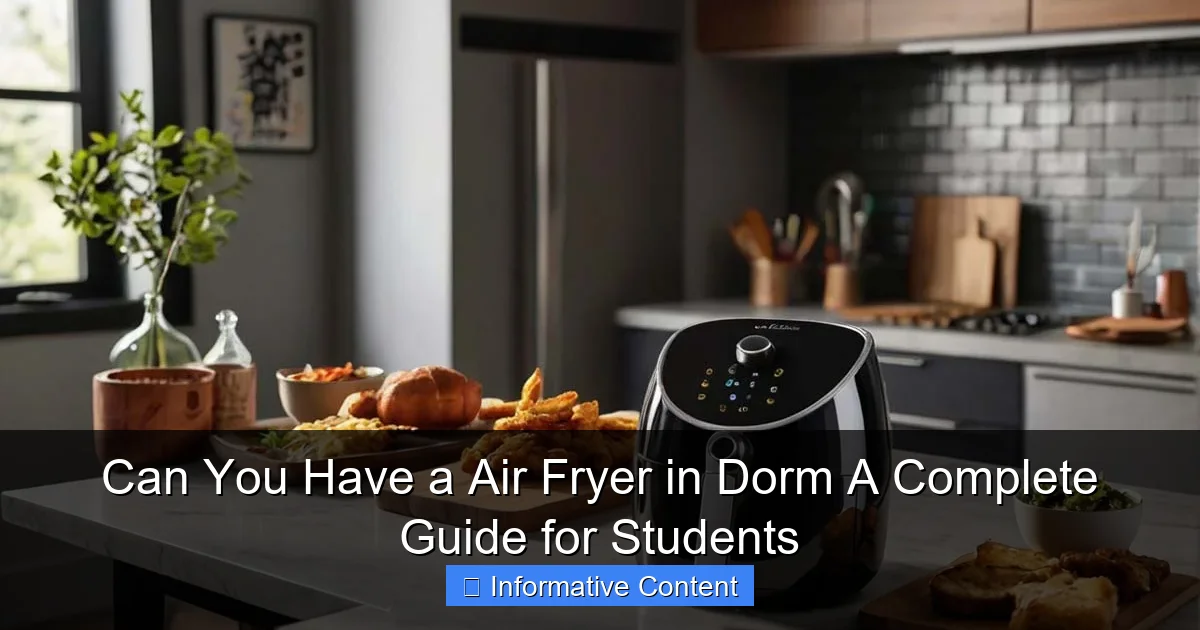
Visual guide about can you have a air fryer in dorm
Image source: kitgiz.com
Check Your Dorm’s Appliance Policy
Most dorms have a list of “approved” and “prohibited” appliances, and these rules are usually outlined in your housing contract or posted on the dorm’s website. Here’s what to look for:
- Open-coil appliances: Many dorms ban toasters, hot plates, and griddles because of their fire risk. Air fryers, however, are usually not open-coil, so they’re often in a gray area.
- Wattage limits: Dorms often cap appliance wattage (usually around 700-1000 watts). Most air fryers fall within this range, but always double-check.
- Fire safety: Some dorms allow air fryers but require them to have an automatic shutoff feature or be UL-listed (a safety certification).
Pro tip: If the policy isn’t clear, email your RA or housing office. A simple, “Hey, would an air fryer be allowed in my room?” can save you from getting fined (or worse, evicted).
Fire Safety and Ventilation
Air fryers get hot—really hot. Here’s how to use yours safely:
- Keep it away from walls and curtains: Air fryers need at least 5-6 inches of clearance on all sides to vent properly.
- Never leave it unattended: Like any cooking appliance, it’s a fire risk if you walk away while it’s on.
- Use a heat-resistant surface: Don’t place it directly on a wooden desk or plastic tray. A silicone mat or trivet works well.
Real-life example: My friend once tried to air fry chicken nuggets on her desk (which was covered in textbooks and papers). The heat warped her desk, and she got a warning from her RA. Learn from her mistakes!
What If It’s Not Allowed?
If your dorm bans air fryers outright, don’t panic. You have options:
- Ask for an exception: Some dorms make exceptions if you explain your need (e.g., dietary restrictions).
- Use the communal kitchen: Many dorms have shared kitchens with ovens and microwaves. It’s less convenient, but it’s better than getting caught.
- Look for alternatives: Some dorms allow induction cooktops or slow cookers, which can achieve similar results.
Choosing the Right Air Fryer for Your Dorm
Not all air fryers are created equal, and the last thing you want is to lug a bulky appliance to campus only to realize it’s too big (or too loud) for your tiny room. Here’s what to consider when picking the perfect dorm-friendly air fryer.
Size and Capacity
Dorm rooms are small, so you’ll want a compact model. Look for air fryers with a 2-4 quart capacity—this is enough for 1-2 servings, which is ideal for a single student. Here are some great options:
- Dash Compact Air Fryer (2.6 qt): Fits in a corner, weighs just 5 lbs, and comes in fun colors (like aqua and red).
- Ninja Foodi DualZone (4 qt): If you want more space, this model has two baskets so you can cook two foods at once (e.g., fries and chicken).
- Cosori Air Fryer (3.7 qt): A bit pricier, but it’s quiet and has preset cooking modes.
Pro tip: Measure your countertop (or desk) before buying. You’ll want at least 6 inches of clearance around the air fryer for ventilation.
Noise Level
Air fryers aren’t silent—they have fans that circulate hot air. If you’re in a quiet dorm or share a room, noise might be a dealbreaker. Here’s how to test it:
- Read reviews: Look for keywords like “quiet” or “loud” in customer reviews.
- Ask to test it: If you’re buying in-store, ask if you can turn it on to hear the noise.
Real-life example: My roommate once bought a cheap air fryer that sounded like a hairdryer. It was so loud, we couldn’t watch TV while it was running. Not ideal!
Ease of Use and Cleaning
Let’s be real: you don’t want to spend 20 minutes scrubbing your air fryer after every meal. Look for:
- Dishwasher-safe parts: The basket and tray should be easy to clean (or go in the dishwasher).
- Non-stick coating: This prevents food from sticking and makes cleanup a breeze.
- Simple controls: Digital displays with preset modes (e.g., “fries,” “chicken,” “bake”) are easier than manual dials.
Space-Saving Tips and Hacks for Dorm Life
Dorm rooms are tiny, and every square inch counts. Here’s how to fit an air fryer (and your other essentials) into your limited space.
Use Vertical Storage
Instead of letting your air fryer take up precious countertop space, store it vertically when not in use. Here’s how:
- Under the bed: Slide it under your bed in a storage bin or on a rolling cart.
- On a shelf: If you have open shelving, place it on a high shelf (but make sure it’s secure so it doesn’t fall).
- Behind the door: Use an over-the-door organizer or hook to hang it (if it’s light enough).
Pro tip: Keep a small towel or silicone mat nearby to wipe down the air fryer before storing it. This prevents dust from building up.
Multi-Task Your Countertop
If you have a microwave or mini-fridge, you can use the space around it for your air fryer. For example:
- Place the air fryer on top of a microwave cart (with proper ventilation).
- Use a tiered shelf to stack appliances (e.g., air fryer on the bottom, microwave on top).
Keep It Portable
If you’re tight on space, consider a portable air fryer. Some models are designed to be lightweight and easy to move—perfect for taking to the communal kitchen or a friend’s room. Look for:
- Handles: Makes it easier to carry.
- Compact design: Fits in a backpack or tote bag.
Air Fryer Recipes for Busy Students
One of the best things about air fryers is how quick and easy they are to use. Here are some dorm-friendly recipes that won’t break the bank (or your patience).
5-Minute Meals (No Prep Required)
Perfect for when you’re running late to class or just too tired to cook:
- Frozen fries: Spray with oil, air fry at 400°F for 10-12 minutes. Shake halfway through.
- Chicken nuggets: Air fry at 390°F for 10 minutes. Serve with ketchup or ranch.
- Tater tots: Air fry at 400°F for 12 minutes. Add cheese for extra flavor.
Pro tip: Keep a stash of frozen foods in your mini-fridge. It’s a lifesaver on busy days!
Healthy and Affordable Options
Eating healthy doesn’t have to be expensive. Try these budget-friendly recipes:
- Roasted chickpeas: Toss canned chickpeas with olive oil and spices (like paprika or garlic powder), then air fry at 400°F for 15 minutes. Crunchy and protein-packed!
- Baked sweet potatoes: Prick a sweet potato with a fork, rub with oil, and air fry at 390°F for 20-25 minutes. Top with butter or cinnamon.
- Eggs in avocado: Cut an avocado in half, crack an egg into each half, and air fry at 375°F for 10-12 minutes. Add salt and pepper to taste.
One-Pot Dinners (Minimal Cleanup)
For when you want a full meal without the hassle:
- Air fryer grilled cheese: Place bread, cheese, and butter in the air fryer basket. Cook at 360°F for 5-6 minutes until golden brown.
- Chicken and veggies: Toss chicken breasts and chopped veggies (like broccoli and carrots) with oil and spices. Air fry at 380°F for 15-20 minutes, shaking halfway through.
Common Mistakes to Avoid (And How to Fix Them)
Even if you’re allowed to have an air fryer, there are some common pitfalls that can ruin your experience. Here’s how to avoid them.
Overcrowding the Basket
Air fryers work by circulating hot air, so if you pack the basket too full, your food won’t cook evenly. Here’s the fix:
- Use a single layer: Leave at least 1 inch of space between pieces of food.
- Cook in batches: If you’re making a big meal, cook it in 2-3 rounds.
Real-life example: I once tried to air fry an entire bag of frozen fries in one go. The result? Soggy on the bottom, burnt on the top. Lesson learned!
Not Preheating (When Needed)
Some air fryer models don’t require preheating, but for others, it makes a big difference. Always check your manual, but as a rule:
- Preheat for 3-5 minutes before cooking frozen foods or meats.
- Skip preheating for fresh foods (like vegetables or fish).
Ignoring the Smoke
Air fryers can produce smoke, especially if you’re cooking fatty foods (like bacon or chicken wings). To minimize smoke:
- Line the basket: Use parchment paper or aluminum foil (but don’t cover the holes—air needs to circulate!).
- Use a drip tray: Some models come with a tray that catches grease. If yours doesn’t, place a small baking sheet underneath.
Alternatives to Air Fryers (When They’re Not an Option)
If your dorm bans air fryers (or you’re just not ready to invest in one), don’t worry—there are plenty of alternatives that can give you similar results.
Microwave Hacks
Microwaves aren’t just for reheating leftovers. Try these tricks:
- Microwave crisping: Place food on a microwave-safe crisper pan (like the Nordic Ware Microwave Grill) to get a crispy texture.
- Steam bags: Use microwave steam bags for quick veggies or frozen meals.
Slow Cookers and Instant Pots
If your dorm allows them, slow cookers and Instant Pots are great for hands-off cooking:
- Slow cooker: Perfect for soups, stews, and pulled pork.
- Instant Pot: Can air fry (with an air fryer lid), pressure cook, and sauté—all in one!
Tabletop Convection Ovens
These are like mini ovens that sit on your countertop. They’re more expensive than air fryers, but they offer more versatility (e.g., baking, roasting, toasting).
Final Thoughts: Is an Air Fryer Right for Your Dorm?
So, can you have an air fryer in a dorm? The answer depends on your dorm’s rules, your cooking needs, and your willingness to follow safety guidelines. But if you’re allowed to have one, it can be a game-changer—saving you money, time, and trips to the dining hall. Just remember:
- Always check the rules first. A little research can save you a big headache.
- Choose a compact, quiet model. Your roommate (and your RA) will thank you.
- Use it safely. Keep it clean, ventilated, and never leave it unattended.
At the end of the day, dorm life is all about making the best of what you have. An air fryer isn’t a necessity, but if it helps you eat healthier, save money, or just enjoy a home-cooked meal, it’s worth considering. Happy cooking—and happy studying!
Frequently Asked Questions
Can you have an air fryer in a dorm room?
Most dorms allow small appliances like air fryers, but you’ll need to check your school’s housing policy first. Many students successfully use compact, dorm-safe air fryers for quick meals without triggering fire alarms.
Are air fryers allowed in dorms with strict appliance rules?
Some dorms ban high-wattage appliances, so opt for low-wattage air fryers (under 800W) to comply. Always confirm with your dorm’s “approved appliances” list before bringing one.
What’s the best air fryer for dorm rooms?
Look for compact, 2-3 quart air fryers with cool-touch exteriors and automatic shut-off features. The air fryer for dorm market offers space-saving models like the Dash Compact or Ninja AF101.
Do air fryers set off smoke detectors in dorms?
Modern air fryers rarely trigger alarms, but avoid greasy foods or overcrowding the basket. Use parchment liners and cook in well-ventilated areas to minimize smoke.
Can you use an air fryer in a dorm without a kitchen?
Yes! Air fryers are perfect for no-kitchen dorms—they require only an outlet and minimal counter space. They can reheat leftovers or cook frozen meals in under 15 minutes.
How do you clean a dorm air fryer safely?
Unplug and cool the air fryer first, then wipe the basket with soapy water or a damp cloth. Never submerge the main unit, and avoid harsh scrubbers to protect the non-stick coating.