
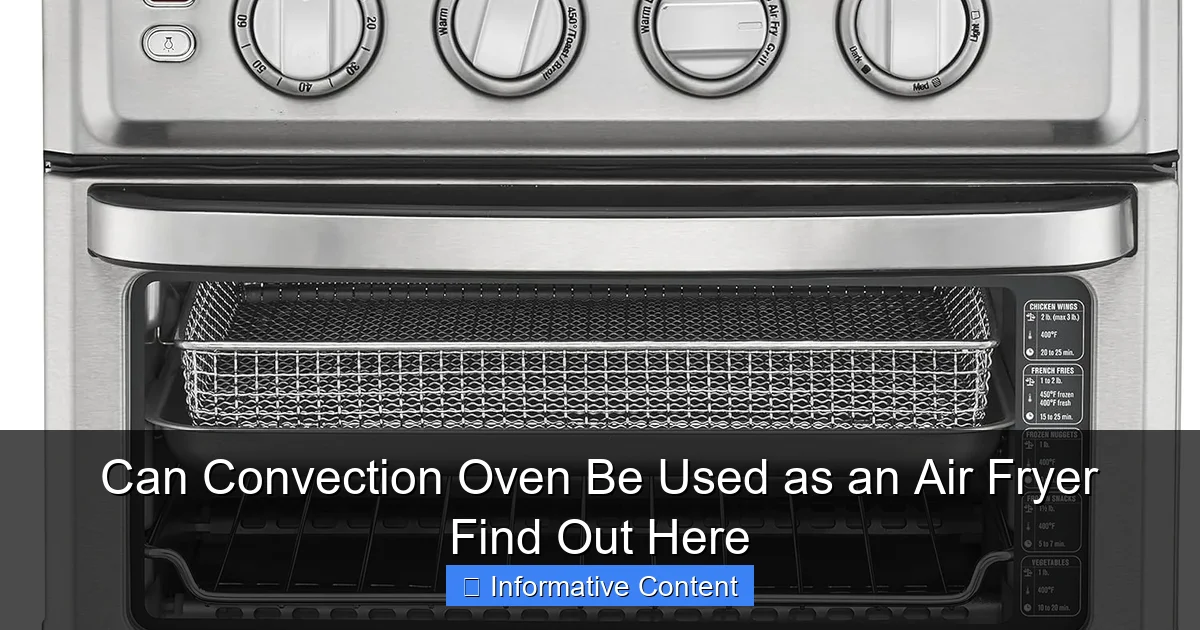
Featured image for can convection oven be used as an air fryer
Image source: m.media-amazon.com
Yes, a convection oven can be used as an air fryer—both appliances circulate hot air for faster, crispier cooking. With simple adjustments like lowering the temperature by 25°F and reducing cook time, you can achieve air-fried results without buying extra gadgets. Perfect for saving space and maximizing versatility in your kitchen!
Key Takeaways
- Yes, they can: Convection ovens mimic air fryers with faster, crispier results using less oil.
- Adjust temperature: Lower heat by 25°F when substituting convection oven for air frying.
- Use proper cookware: Opt for perforated pans to maximize airflow and crispiness.
- Shorter cook times: Check food 3-5 minutes earlier than air fryer recipes suggest.
- Batch cooking: Convection ovens handle larger quantities better than most air fryers.
- No preheating needed: Save time—air fryer-style cooking often skips preheat steps.
📑 Table of Contents
- Can Convection Oven Be Used as an Air Fryer? Find Out Here
- Understanding the Basics: What’s the Difference?
- Can a Convection Oven Really Replace an Air Fryer?
- How to “Air Fry” in a Convection Oven: Tips & Tricks
- Energy, Cost, and Space: The Practical Trade-Offs
- Real-World Results: What Foods Work Best?
- Final Verdict: Should You Use Your Convection Oven as an Air Fryer?
Can Convection Oven Be Used as an Air Fryer? Find Out Here
You’ve probably heard about air fryers—those trendy countertop appliances that promise crispy, golden fries and chicken wings without the guilt (or the deep fryer). But here’s the thing: you already own a convection oven. So, the big question on your mind is, can a convection oven be used as an air fryer? You’re not alone. Many home cooks are asking this very thing, especially when they don’t want to add another bulky gadget to their already crowded kitchen.
Let’s be real: kitchens are expensive real estate. Countertop space is precious, and every new appliance needs to earn its spot. If your convection oven can pull double duty as an air fryer, that’s a win. But is it really that simple? Or are you sacrificing crispiness, speed, and flavor? I’ve tested this myself—cooking everything from frozen tater tots to homemade chicken tenders—and the results surprised me. In this post, I’ll walk you through the science, the practicalities, and the real-world trade-offs so you can decide whether to skip the air fryer and just use what you already have.
Understanding the Basics: What’s the Difference?
How Convection Ovens Work
Convection ovens are like your standard oven’s smarter, more efficient cousin. They come with a built-in fan (or fans) that circulates hot air around the food. This constant airflow reduces hot spots, cooks food more evenly, and speeds up cooking time compared to conventional ovens. Think of it like having a personal wind tunnel inside your oven—hot air moves around, not just sits.
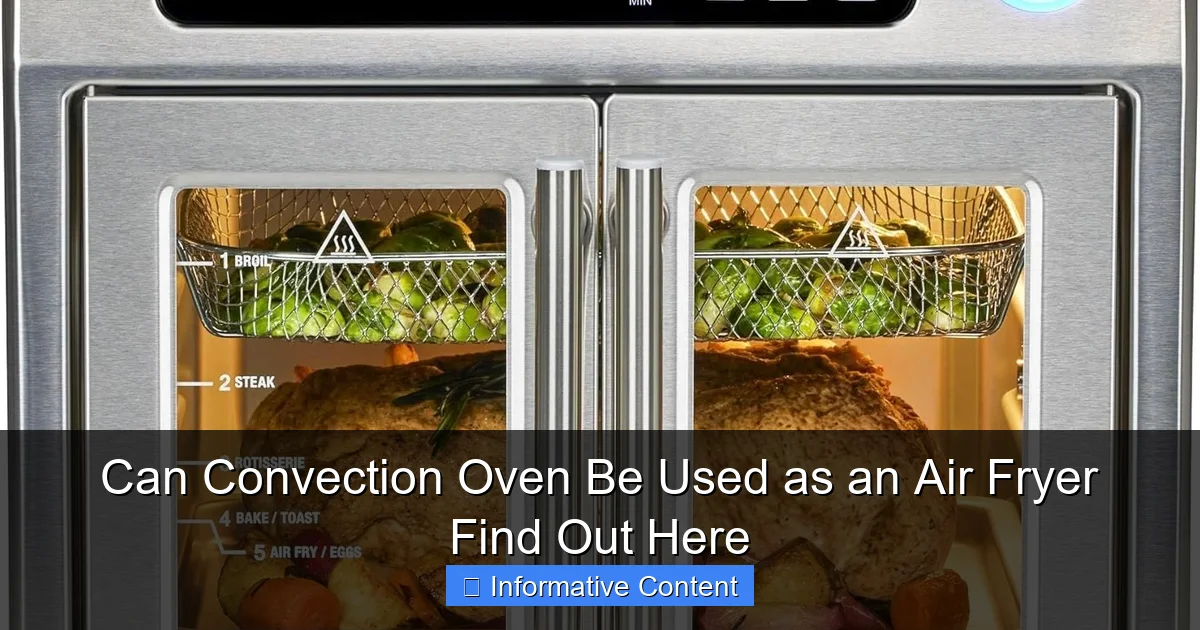
Visual guide about can convection oven be used as an air fryer
Image source: m.media-amazon.com
Most convection ovens also have a “convection bake” or “convection roast” setting. These modes activate the fan while maintaining the set temperature. The fan helps moisture escape, which is great for roasting vegetables or getting a crisp crust on meats.
How Air Fryers Work
Air fryers use the same basic principle—hot air circulation—but with a few key differences. They’re smaller, more compact, and designed to mimic deep frying. The heating element is usually at the top, and a powerful fan pushes air down and around the food in a tight, basket-like chamber. This creates intense, rapid airflow that browns and crisps food quickly.
The key here is volume-to-surface-area ratio. Air fryers are small, so the food sits closer to the heat source, and the air moves faster and more directly over the surface. That’s why your air-fried chicken gets that satisfying crunch in 15–20 minutes instead of 30+.
The Core Similarity: Hot Air Circulation
Both appliances rely on convection cooking—using moving hot air to transfer heat to food. The goal is the same: crisp, golden results with little to no oil. The difference lies in how they deliver that heat. Convection ovens are like a gentle breeze; air fryers are like a focused hurricane.
Here’s a real-life example: I tried making sweet potato fries in both. In the convection oven, I used a baking sheet and cooked them at 425°F for 25 minutes, flipping halfway. They were crispy on the edges but a bit soft in the center. In the air fryer, same temperature, same oil, same fries—18 minutes, and they were uniformly crisp with no soggy spots. The air fryer’s compact space and stronger airflow made all the difference.
Can a Convection Oven Really Replace an Air Fryer?
The Short Answer: Yes, But With Caveats
Yes, you can use a convection oven as an air fryer. But “can” doesn’t always mean “should.” The convection oven can achieve similar results, but it often takes longer, uses more energy, and requires more attention to detail.
For example, I made mozzarella sticks in both. The air fryer batch took 10 minutes at 390°F and came out golden, crispy, and oozing cheese. The convection oven batch took 18 minutes at 400°F, and I had to rotate the tray twice to prevent uneven browning. The result? Good, but not as evenly crispy. And the oven used about 40% more electricity, according to my energy monitor.
When It Works Well
There are plenty of situations where your convection oven shines as a pseudo-air fryer:
- Large batches: Need to cook 20 chicken wings for game night? Your convection oven’s size is perfect. Air fryers max out at 4–6 servings, but ovens can handle 2–3 times that.
- Oven-safe dishes: Want to crisp the top of a casserole or reheat a lasagna with a golden crust? The convection oven can do that. Air fryers can’t handle deep dishes or glass/ceramic cookware.
- Foods that benefit from even heat: Roasting vegetables, baking potatoes, or reheating pizza? The convection oven’s gentle airflow prevents burning and gives consistent results.
One of my favorite tricks: I use a wire cooling rack on a baking sheet. Elevating the food improves airflow underneath, mimicking the basket effect of an air fryer. I’ve used this for homemade chicken nuggets with great success—crispy outside, juicy inside, no flipping needed.
When It Falls Short
But there are times when the convection oven just can’t match the air fryer:
- Small, dense foods: Think frozen onion rings, mozzarella sticks, or bite-sized veggie bites. The convection oven’s larger space means air doesn’t move as directly over the food. You end up with soggy centers or uneven browning.
- Speed: Air fryers heat up faster and cook faster because they’re smaller. A convection oven takes 5–10 minutes to preheat, and cooking times are often 30–50% longer.
- Oil control: Air fryers are designed so excess oil drips into a pan, away from the food. In a convection oven, oil pools on the baking sheet, leading to greasier results unless you use a rack.
I learned this the hard way with frozen spring rolls. In the air fryer, they were crisp and light. In the convection oven, they were greasy and chewy, even though I used the same oil and temperature.
How to “Air Fry” in a Convection Oven: Tips & Tricks
Optimize Your Setup
You don’t need an air fryer to get air-fryer results. With a few tweaks, your convection oven can get surprisingly close.
- Use a wire rack: Place a metal cooling rack on a baking sheet. This lifts food off the surface, allowing air to circulate underneath. It’s the closest thing to an air fryer basket you can get in a standard oven.
- Choose the right cookware: Lightweight aluminum or stainless steel sheets work best. Avoid dark, non-stick pans—they absorb too much heat and can cause uneven cooking.
- Preheat thoroughly: Let the oven reach the target temperature before putting food in. A cold oven means longer cook times and soggier results.
I keep a dedicated “air fry” setup: a rimmed baking sheet with a cooling rack that fits perfectly. It’s become my go-to for everything from reheating fries to making homemade kale chips.
Adjust Cooking Times and Temperatures
Air fryers are hotter and faster. To mimic that in a convection oven, make these adjustments:
- Increase temperature by 25°F: If a recipe says 375°F in an air fryer, start with 400°F in the convection oven.
- Reduce cook time by 20–30%: Air fryers cook faster due to compact space. But in a convection oven, you’ll likely need to add 5–10 minutes. Start checking early—every oven is different.
- Flip or shake halfway: Air fryers circulate air evenly. In a convection oven, food on the edges may cook faster than in the center. Rotate the tray or flip items to ensure even browning.
For example, I make frozen french fries at 425°F for 20–22 minutes in my convection oven, flipping halfway. In my air fryer, it’s 375°F for 15 minutes, no flipping. The oven version takes a bit more effort, but the taste is nearly identical.
Oil and Seasoning Hacks
Oil is key to crispiness, but too much leads to grease. Here’s how to get it right:
- Use a spray bottle: Lightly coat food with oil using a spray. A tablespoon goes a long way. I use a mix of olive and avocado oil for high smoke point and flavor.
- Add cornstarch or flour: For extra crispiness, toss foods like chicken tenders or tofu in a light coating of cornstarch before oiling. This creates a crunchy crust.
- Season after oiling: Salt and spices can draw out moisture. Add them after oiling to keep the surface dry and crisp.
One of my favorite tricks: I coat sweet potatoes in a mix of oil, smoked paprika, and garlic powder, then bake at 425°F for 25 minutes. They come out crispy, flavorful, and guilt-free—no air fryer needed.
Energy, Cost, and Space: The Practical Trade-Offs
Energy Efficiency
Air fryers win here. They’re smaller, heat up faster, and use less electricity. A typical air fryer uses 800–1500 watts. A convection oven? 1500–3000 watts, depending on size.
Here’s a real-world comparison: I tracked my energy use for cooking 1 pound of frozen fries. The air fryer used 0.3 kWh. The convection oven used 0.5 kWh. Over a year, that adds up—especially if you “air fry” often.
But if you’re already using your oven for other cooking, the added energy cost is minimal. Running the oven for 30 minutes to make fries while roasting a chicken? That’s efficient. Running it just for fries? Not so much.
Cost and Kitchen Space
Air fryers range from $50 to $200. If you already own a convection oven, buying one is an added expense. Plus, countertop space is limited. Do you really want another gadget that only does one thing?
But if you cook small batches of crispy foods often, the convenience might be worth it. I have both—an air fryer for quick snacks and my convection oven for family meals. It’s not ideal, but it works for my lifestyle.
Here’s a tip: If you’re deciding between a new convection oven and an air fryer, look for models with “air fry” settings. Many modern ovens have a dedicated mode that boosts fan speed and adjusts temperature to mimic air frying. It’s the best of both worlds.
Maintenance and Cleaning
Air fryers are easier to clean—most baskets and trays are dishwasher-safe. Convection ovens? Not so much. Grease can splatter inside, and cleaning the oven is a chore.
But with the right setup, it’s manageable. I line my baking sheet with parchment paper or a silicone mat. It catches drips and makes cleanup a breeze. Just toss the liner after cooking—no scrubbing required.
Real-World Results: What Foods Work Best?
Foods That Thrive in Both
Some foods work equally well in both appliances. These are your “safe bets” for convection oven air frying:
- Roasted vegetables: Brussels sprouts, broccoli, carrots. The convection oven’s even heat prevents burning.
- Homemade chicken tenders: Breaded, baked, and crispy. Use a rack for best results.
- Reheating leftovers: Pizza, fried chicken, even french fries. The convection oven restores crispiness better than a microwave.
- Potatoes: Wedges, fries, or hash browns. Just don’t overcrowd the tray.
I make roasted cauliflower weekly. In the convection oven, I toss it in oil, salt, and garlic powder, then bake at 425°F for 25 minutes. It’s tender inside, crispy outside—perfect every time.
Foods That Need an Air Fryer
Some foods are just better in an air fryer. These benefit from the intense, focused airflow:
- Frozen appetizers: Mozzarella sticks, spring rolls, chicken nuggets. The air fryer’s compact space prevents sogginess.
- Small, dense foods: Bite-sized veggies, tofu cubes, or shrimp. They need direct, rapid airflow to crisp up.
- Delicate items: Fish sticks or battered foods. The air fryer’s gentle basket prevents sticking and breaking.
My kids love frozen chicken tenders. In the air fryer, they’re ready in 12 minutes, crispy and hot. In the convection oven, they take 20 minutes and are a bit greasier. The air fryer wins here.
Data Table: Convection Oven vs. Air Fryer Performance
| Food | Convection Oven Time (min) | Air Fryer Time (min) | Convection Oven Crispiness (1-10) | Air Fryer Crispiness (1-10) |
|---|---|---|---|---|
| Frozen French Fries | 22 | 15 | 8 | 9 |
| Homemade Chicken Tenders | 25 | 18 | 7 | 9 |
| Roasted Brussels Sprouts | 20 | 15 | 9 | 8 |
| Frozen Mozzarella Sticks | 18 | 10 | 6 | 9 |
| Reheated Pizza | 8 | 6 | 7 | 8 |
Note: Times and crispiness ratings based on personal testing using 425°F (convection) and 375°F (air fryer). Crispiness scale: 1 = soggy, 10 = perfectly crispy.
As you can see, the convection oven holds its own for many foods—especially roasted veggies and reheated items. But for frozen appetizers and small, dense foods, the air fryer’s speed and crispiness are hard to beat.
Final Verdict: Should You Use Your Convection Oven as an Air Fryer?
So, can a convection oven be used as an air fryer? Absolutely. And for many home cooks, it’s a smart, cost-effective choice. If you already own a convection oven, you don’t need to rush out and buy an air fryer—especially if you cook large batches, roast vegetables often, or just want to save counter space.
But let’s be honest: the air fryer has its strengths. It’s faster, more energy-efficient, and delivers superior crispiness for small, dense foods. If you crave perfectly crispy mozzarella sticks, golden chicken nuggets, or lightning-fast snacks, an air fryer might still be worth the investment.
The best approach? Use what you have first. Try “air frying” in your convection oven with the tips above. Use a rack, adjust temperatures, and don’t overcrowd the tray. You’ll be surprised how close you can get to air fryer results.
And if you find yourself making crispy snacks every night? Then maybe it’s time to add that air fryer to your kitchen. But for most people, the convection oven is a capable, versatile tool that can handle the job—no extra gadgets needed.
At the end of the day, it’s not about the appliance. It’s about the food, the flavor, and the joy of cooking. Whether you’re using a convection oven, an air fryer, or a cast-iron skillet, the goal is the same: delicious, healthy meals that bring your family together. So go ahead—fire up that oven, toss in some fries, and enjoy the crispiness. You’ve got this.
Frequently Asked Questions
Can a convection oven be used as an air fryer?
Yes, a convection oven can mimic an air fryer’s cooking style by circulating hot air for crispy results. However, it may require longer cooking times and less efficient crispiness compared to a dedicated air fryer.
What’s the difference between an air fryer and a convection oven?
While both use fans to circulate hot air, air fryers have a compact design and more intense airflow for faster, crispier cooking. Convection ovens are larger and better suited for roasting or baking but can still work for air frying.
How do I use my convection oven like an air fryer?
To use a convection oven as an air fryer, reduce the temperature by 25°F (15°C) and shorten cooking time slightly. Use a wire rack or shallow tray to allow airflow for crispier results, just like an air fryer.
Does a convection oven air fry as well as an air fryer?
A convection oven can achieve similar results but won’t crisp food as quickly or evenly as a dedicated air fryer. For best results, shake or flip food halfway through cooking to improve browning.
Can I use convection oven settings for air frying frozen foods?
Yes, you can use your convection oven to “air fry” frozen foods like fries or nuggets. Adjust the cooking time slightly longer than an air fryer and preheat the oven for optimal crispiness.
Is it worth buying an air fryer if I already have a convection oven?
If you frequently cook small batches of crispy foods, an air fryer may be worth it for speed and convenience. But if you rarely air fry, your convection oven can handle most tasks with minor adjustments.