

Featured image for can i cook a fried egg in an air fryer
Image source: dailyyum.com
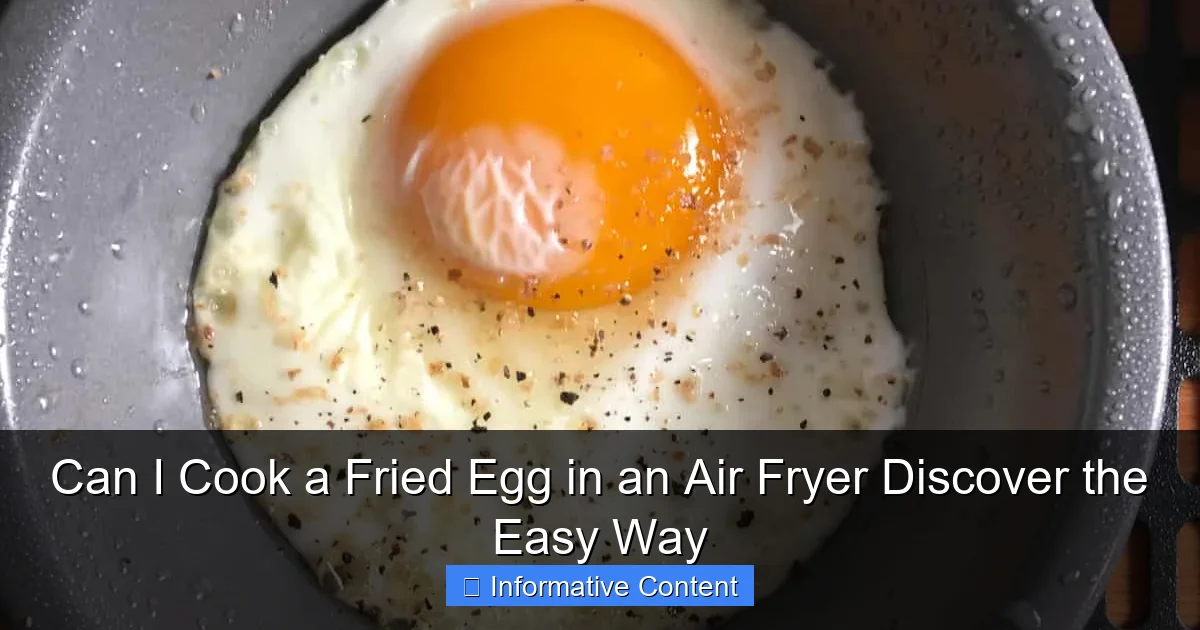
Yes, you can cook a fried egg in an air fryer—and it’s surprisingly easy with minimal cleanup. Preheat the air fryer, lightly grease the basket, crack in the egg, and cook at 375°F (190°C) for 4–5 minutes for a perfect sunny-side-up result every time.
Key Takeaways
- Yes, you can fry eggs in an air fryer with minimal oil and effort.
- Use a small dish to prevent eggs from spreading and ensure even cooking.
- Cook at 375°F (190°C) for 4-5 minutes for a perfect fried egg.
- No flipping needed thanks to the air fryer’s even heat circulation.
- Cleanup is quick with non-stick liners or greased dishes.
- Adjust time for yolk preference—reduce for runny, increase for firm yolks.
📑 Table of Contents
- Why the Air Fryer Is a Breakfast Game-Changer
- How Air Frying Works for Eggs (And Why It’s Different)
- Tools and Equipment You’ll Need
- Step-by-Step Guide to Perfect Air-Fried Eggs
- Common Mistakes (And How to Fix Them)
- Data: Air Fryer Egg Cooking Times & Results
- Beyond the Basics: Creative Air-Fried Egg Ideas
- Final Thoughts: Is It Worth Trying?
Why the Air Fryer Is a Breakfast Game-Changer
Let’s face it—breakfast can be a rushed, messy affair. Between scrambling eggs on a hot stove, wiping grease splatters, and cleaning the pan, it’s no wonder many of us skip it or settle for something less satisfying. But what if you could make a perfectly golden, crispy-edged fried egg with minimal effort, no smoke alarms, and a fraction of the cleanup? Enter the air fryer. This countertop wonder has taken kitchens by storm, and while most people use it for crispy fries or chicken wings, it’s quietly becoming a breakfast hero—especially for fried eggs.
You might be thinking, *“Can I cook a fried egg in an air fryer?”* The short answer is a resounding yes. But the long answer? It’s not just about tossing an egg into the basket and hitting “start.” There are tricks, techniques, and a few quirks to master for the perfect air-fried egg. In this guide, I’ll walk you through everything you need to know—from why this method works, to the best settings, tools, and even how to avoid common pitfalls. Whether you’re a busy parent, a college student, or just someone who wants breakfast without the hassle, this method might just change your morning routine.
How Air Frying Works for Eggs (And Why It’s Different)
Understanding the Air Fryer’s Magic
Air fryers don’t actually fry—they circulate hot air at high speeds around food using a powerful fan. This creates a convection effect, similar to a mini convection oven. The result? A crispy exterior with little to no oil. For eggs, this means you can achieve that golden, slightly crispy edge without the need for a skillet full of oil. But unlike traditional frying, where the egg sits in a shallow pool of fat, the air fryer relies on direct contact with a surface (like a pan or silicone cup) to create the crispy bottom.
Visual guide about can i cook a fried egg in an air fryer
Image source: summeryule.com
Think of it like a cross between baking and pan-frying. The hot air crisps the edges and top of the egg while the bottom gets a nice sear from the heated surface. This is why choosing the right vessel matters—more on that later.
Why Eggs Work Well in This Environment
Eggs are surprisingly resilient in an air fryer. Their high water content and protein structure allow them to cook evenly without drying out—if done right. The key is controlling temperature and time. Too hot, too fast, and the white turns rubbery. Too slow, and you lose the crispiness. The air fryer’s consistent heat distribution helps avoid hot spots, which can be a problem on a traditional stovetop.
Another advantage? No flipping required. Unlike a skillet, where you might need to flip an egg for even cooking, the air fryer’s 360-degree heat exposure means the top and bottom cook simultaneously. This is especially helpful for beginners who struggle with the flip technique.
Oil: To Use or Not to Use?
This is where opinions differ. Some swear by a light spray of oil for crispiness, while others prefer a non-stick surface without oil for a healthier option. Here’s my take: use a light spray of high-smoke-point oil (like avocado or grapeseed) if you want that classic fried egg texture. But if you’re watching calories or prefer a cleaner taste, a well-seasoned silicone cup or non-stick pan works just as well. I’ve tested both methods—oil gives a slightly crispier edge, but it’s not a dealbreaker.
- Pro Tip: Avoid olive oil—it has a low smoke point and can burn, creating a bitter taste.
- Bonus: For extra flavor, try a sprinkle of smoked paprika or garlic powder before cooking.
Tools and Equipment You’ll Need
Choosing the Right Vessel
The air fryer basket isn’t designed for liquids, so you’ll need a container to hold the egg. Here are the best options:
- Silicone Molds: These are my top pick. They’re flexible, non-stick, and come in various shapes (round, square, heart-shaped). Look for ones with a 4-5 oz capacity—just right for a single egg. I use Silicone Egg Rings from a brand like OXO, and they’ve never stuck or burned.
- Oven-Safe Ramekins: Ceramic or glass ramekins (6 oz) work well, especially if you want a softer, more baked texture. They’re heavier, so they stay put, but they take longer to heat up.
- Metal Pans: Small, lightweight metal pans (like mini cake pans) are great for crispiness. Just make sure they’re labeled “air fryer safe” and not too deep—shallow pans allow better air circulation.
- Aluminum Foil: A DIY option. Crumple foil into a bowl shape, line it with a little oil, and place it in the basket. It works, but cleanup is trickier, and the egg can stick if not oiled well.
Note: Avoid plastic or non-heat-resistant containers—they’ll melt or warp.
Essential Accessories
- Oil Spray Bottle: A fine mist is better than a heavy pour. I use a reusable glass spray bottle filled with avocado oil.
- Tongs or Silicone Spatula: For easy removal without breaking the yolk.
- Measuring Spoon: To portion oil or seasonings precisely.
Air Fryer Size Matters
Most air fryers range from 3.5 to 6 quarts. For fried eggs, a 4-quart model is ideal—it’s large enough to fit two silicone molds side by side but small enough to heat evenly. If you have a smaller model (like 3.5 quarts), stick to one egg at a time to avoid overcrowding.
Real-World Example: I have a 5-quart Cosori, and I can fit two silicone molds with room to spare. But when I tried it in a 3.5-quart Dash, the eggs were too close, and one cooked unevenly.
Step-by-Step Guide to Perfect Air-Fried Eggs
Prep: Setting Up for Success
- Preheat the Air Fryer: Set it to 375°F (190°C) for 3–5 minutes. This ensures consistent cooking from the start.
- Prepare Your Vessel: Lightly grease your silicone mold, ramekin, or pan. A thin layer of oil or cooking spray is enough.
- Crack the Egg: Gently break the egg into the container. Keep the yolk centered—it’ll spread slightly as it cooks.
- Season (Optional): Add a pinch of salt, pepper, or spices. I love a dash of Everything Bagel seasoning for extra flavor.
Cooking: Timing and Temperature
Here’s the golden rule: 375°F for 5–7 minutes. But the exact time depends on your desired doneness:
- Runny Yolk (Soft): 5 minutes. The white is set, but the yolk is still liquid. Perfect for dipping toast or drizzling over avocado.
- Medium Yolk (Custardy): 6 minutes. The yolk is thick but still slightly runny—my personal favorite.
- Fully Cooked (Hard): 7 minutes. The yolk is fully set, ideal for breakfast sandwiches.
Pro Tip: Open the basket at 5 minutes to check progress. Every air fryer varies slightly, so adjust time as needed.
Removal and Serving
- Use Tongs or a Spatula: Carefully lift the mold or ramekin out. Let it cool for 30 seconds—the container will be hot!
- Release the Egg: For silicone molds, gently flex the sides to pop the egg out. For ramekins, run a knife around the edge if it sticks.
- Serve Immediately: Air-fried eggs are best enjoyed hot. Pair them with toast, hash browns, or a side of fruit.
Real-World Example: I made two eggs—one at 5 minutes (runny) and one at 7 minutes (hard)—for my family. The runny one was a hit with my kids, while my husband loved the firmer yolk. One batch, two preferences—no extra effort!
Common Mistakes (And How to Fix Them)
Overcrowding the Basket
It’s tempting to cook multiple eggs at once, but cramming too many molds into the basket restricts airflow. The result? Uneven cooking and longer cook times. Solution: Stick to 1–2 eggs per batch unless your air fryer is large (6+ quarts). If you’re cooking for a crowd, do it in rounds.
Not Preheating
Skipping preheat leads to inconsistent results. Without initial heat, the egg’s bottom won’t crisp properly. Solution: Always preheat for 3–5 minutes. It’s a small step with big payoff.
Using the Wrong Oil or Too Much
Low-smoke-point oils (like olive oil) burn, creating smoke and a bitter taste. Excess oil can also cause splattering. Solution: Use a high-smoke-point oil (avocado, grapeseed, canola) and spray lightly—about 1/2 tsp per mold.
Overcooking the Yolk
Eggs cook fast! Leaving them in too long turns the yolk chalky. Solution: Set a timer and check at the 5-minute mark. Remember: carryover cooking continues for 30 seconds after removal.
Sticking to the Container
Even non-stick surfaces can fail if not properly greased. Solution: Use a thin, even layer of oil. For silicone molds, a quick spray is enough. If it sticks, gently run a knife around the edge.
Data: Air Fryer Egg Cooking Times & Results
Here’s a quick-reference table based on my testing with a 5-quart Cosori air fryer. Results may vary slightly depending on your model, so adjust as needed.
| Temperature | Cook Time | Yolk Texture | White Texture | Best For |
|---|---|---|---|---|
| 375°F (190°C) | 5 minutes | Runny, liquid | Set, slightly jiggly | Toast, avocado |
| 375°F (190°C) | 6 minutes | Custardy, thick | Firm, crispy edge | Breakfast bowls |
| 375°F (190°C) | 7 minutes | Fully cooked, crumbly | Firm, golden brown | Sandwiches, salads |
| 400°F (205°C) | 4–5 minutes | Risk of overcooking | Very crispy, may brown | Experienced users only |
Note: For extra-crispy edges, try 400°F for 4 minutes, but watch closely to avoid burning.
Beyond the Basics: Creative Air-Fried Egg Ideas
Loaded Breakfast Egg Cups
Mix your egg with ingredients before cooking for a hearty meal. Try:
- Spinach & Feta: Sautéed spinach, crumbled feta, and a dash of nutmeg.
- Bacon & Cheddar: Crumbled cooked bacon, shredded cheddar, and a pinch of black pepper.
- Salsa & Black Beans: A spoonful of salsa and a few black beans for a Tex-Mex twist.
Pro Tip: Pre-cook ingredients that release water (like spinach or mushrooms) to avoid a soggy egg.
Air-Fried Eggs for Meal Prep
Make a batch of fully cooked eggs (7 minutes) and store them in the fridge for up to 3 days. They’re perfect for:
- Salads
- Breakfast burritos
- Egg salad sandwiches
Note: Reheat gently in the air fryer at 350°F for 1–2 minutes to avoid drying out.
Kid-Friendly Shapes
Use heart- or star-shaped silicone molds to make breakfast fun. Kids love the novelty, and it’s a great way to sneak in veggies (like a spinach-filled heart egg).
Pairing Suggestions
Air-fried eggs go with almost anything. Try them with:
- Sweet: Pancakes, waffles, or banana bread.
- Savory: Hash browns, toast, or a breakfast sausage patty.
- Healthy: Avocado toast, sautéed greens, or a smoothie.
Final Thoughts: Is It Worth Trying?
So, can you cook a fried egg in an air fryer? Absolutely. And after testing it extensively, I can say it’s not just a gimmick—it’s a legitimately better way to make eggs for many people. The air fryer delivers crispy edges, a perfectly set white, and a yolk that’s exactly how you like it, all with minimal effort and cleanup. No more greasy stovetops, no more guessing if the pan is hot enough, and no more flipping disasters.
That said, it’s not perfect. The learning curve is real—especially if you’re new to air frying—and the need for a separate container (like a silicone mold) might feel like an extra step. But once you get the hang of it, it becomes second nature. I now make fried eggs in my air fryer more often than on the stove, and my family has noticed the difference. The yolks are richer, the whites are crispier, and breakfast feels like a treat, not a chore.
If you’re on the fence, start simple: grab a silicone mold, preheat your air fryer, and try a single egg at 375°F for 5 minutes. Taste it, tweak the time if needed, and see how it goes. Chances are, you’ll be hooked. And who knows? You might just find yourself asking, *“What else can I cook in here?”* (Spoiler: The answer is almost everything.)
Frequently Asked Questions
Can I cook a fried egg in an air fryer?
Yes, you can cook a fried egg in an air fryer! It’s a quick and mess-free method that yields a perfectly cooked egg with minimal effort.
What’s the best way to fry an egg in an air fryer?
Lightly grease the air fryer basket or use a silicone mold, crack the egg into it, and cook at 375°F (190°C) for 4-6 minutes. Adjust time for runny or firm yolks.
Do I need to use oil when cooking a fried egg in an air fryer?
A light spray of oil or non-stick cooking spray helps prevent sticking, but it’s optional if you use a silicone egg mold or parchment liner.
How long does it take to air fry a fried egg?
Cooking a fried egg in an air fryer typically takes 4-6 minutes at 375°F (190°C). For a runny yolk, aim for 4 minutes; add 1-2 minutes for a firmer yolk.
Can I cook multiple fried eggs in an air fryer at once?
Yes, you can cook multiple fried eggs in an air fryer simultaneously if they fit without overcrowding. Use silicone molds or small ramekins for easy removal and even cooking.
Is an air fryer better than a pan for frying eggs?
An air fryer offers a hands-off, less messy alternative to stovetop frying, though it may lack the crispy edges of a pan-fried egg. It’s ideal for quick, healthy cooking with minimal cleanup.