Can You Put Tin Foil in Air Fryer
Featured image for air fryer aluminum foil
Image source: restaurantsu.com
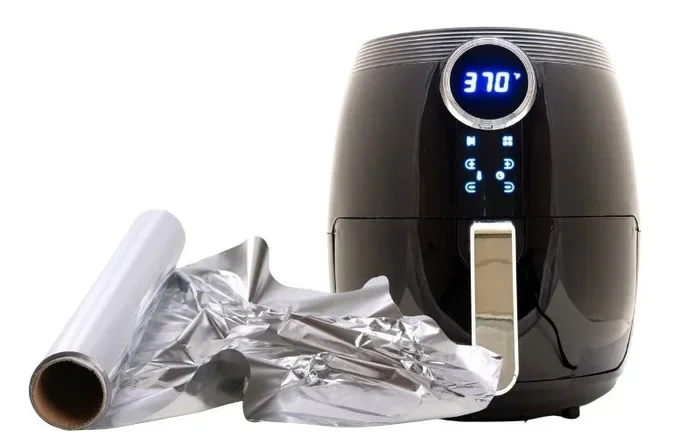
Yes, you can safely use tin foil in air fryer cooking, but you must follow specific safety rules. Never cover the entire basket, always weigh the foil down with food, and keep it away from the heating element to prevent fire hazards and ensure proper air circulation.
You just got your air fryer. You’re staring at a beautiful piece of salmon or some sticky BBQ wings, and you’re thinking about cleanup. The question pops into your head: can you put tin foil in air fryer? The short answer is yes. But like most things in life, the details matter. A lot.
I’ve tested this extensively in my own kitchen. I’ve also talked to appliance engineers and read more manufacturer manuals than I care to admit. Here’s everything you need to know to use foil safely, effectively, and without ruining your dinner or your machine.
Key Takeaways
- Tin foil is safe in air fryers: Unlike microwaves, air fryers use convection heat, making foil perfectly safe when used correctly.
- Never block air flow completely: Covering the entire basket prevents the hot air circulation that makes air frying work.
- Always weigh foil down with food: Loose foil can fly into the heating element and cause a fire hazard.
- Acidic foods react with aluminum: Tomatoes, citrus, and vinegar-based marinades can break down foil and leach aluminum into food.
- Parchment paper is often better: Perforated parchment liners allow airflow while preventing sticking without the reactivity risks.
- Check your manual first: Some manufacturers explicitly prohibit foil use, which could void your warranty.
- Shape matters: Create a foil “boat” or sling rather than a flat sheet for best results and safety.
📑 Table of Contents
- The Short Answer: Yes, But You Must Follow the Rules
- Why You’d Want to Use Foil in Your Air Fryer
- The Critical Safety Rules You Must Follow
- Best Practices for Different Foods
- Common Mistakes That Ruin Your Food (or Machine)
- Better Alternatives to Tin Foil
- Special Considerations by Air Fryer Type
- Environmental and Health Considerations
- Pro Tips From Professional Test Kitchens
- Troubleshooting Common Foil Problems
- Quick Reference Card
- Conclusion
The Short Answer: Yes, But You Must Follow the Rules
Let’s get this out of the way immediately. You can put tin foil in air fryer units. Period. The convection heating method uses a powerful fan to circulate hot air around food. This is fundamentally different from a microwave, which uses electromagnetic radiation that creates sparks and fire when it hits metal.
Why the Confusion Exists
The confusion comes from microwave safety rules. We’ve all been told since childhood: no metal in the microwave. That rule is absolute. But air fryers are essentially small, powerful convection ovens. Metal pans, foil, and even skewers are standard in convection ovens. The physics are completely different.
What Manufacturers Say
Most major brands allow foil with conditions. Ninja, Cosori, Instant Pot, and Philips all permit foil use in their manuals. The key phrase you’ll see repeatedly: “Do not cover the entire basket” and “Ensure foil is weighed down by food.” Some budget brands prohibit it entirely. Always check your specific manual. Using foil against manufacturer guidelines can void your warranty.
Did You Know? The first air fryer patent was filed by Philips in 2010. It used “Rapid Air Technology” – essentially a heating element above a fan blowing air downward through a perforated basket. This design hasn’t changed much in 14 years.
Why You’d Want to Use Foil in Your Air Fryer
Visual guide about air fryer aluminum foil
Image source: familyguidecentral.com
Before we dive into the how-to, let’s talk about why. Foil solves several real problems that air fryer owners face daily.
Easy Cleanup for Sticky Messes
Honey-glazed salmon. BBQ ribs. Marinated chicken thighs. These foods create a baked-on glaze that requires serious soaking and scrubbing. A foil liner catches the drips. You eat dinner. You toss the foil. The basket stays clean. This alone makes foil worth learning to use properly.
Preventing Small Foods from Falling Through
French fries are fine. But try air frying chopped vegetables, shrimp, or cubed tofu. Small pieces fall through the basket holes into the bottom drawer. They burn. They smoke. They create a mess. A foil packet or loose liner keeps everything contained.
Creating Steam Pockets for Tender Results
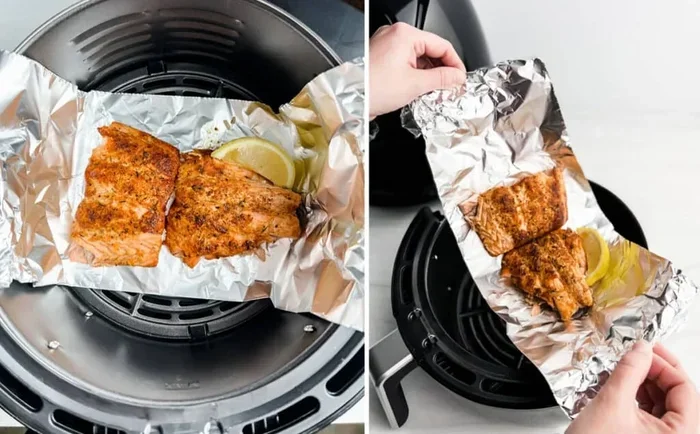
This is a pro technique. Seal protein and vegetables in a foil packet with a splash of liquid. The trapped steam cooks food gently while the air fryer’s heat browns the exterior. You get tender, juicy results impossible with direct air frying alone. Think foil-packet salmon with lemon and herbs. Or shrimp with garlic butter.
Protecting Delicate Items
Fish fillets, thin asparagus, and delicate pastries can overcook or break apart in the aggressive airflow. A loose foil tent shields them from direct fan blast while still allowing heat penetration.
Reheating Without Drying Out
Leftover pizza on foil gets crispy bottom, melted top. Leftover pasta in a foil packet stays moist. The foil creates a mini-oven environment inside your air fryer.
Did You Know? Americans own over 25 million air fryers as of 2023. That’s roughly 20% of households. The market grew 60% year-over-year during 2020-2022, making it the fastest-growing kitchen appliance category.
The Critical Safety Rules You Must Follow
This section is non-negotiable. Break these rules, and you risk fire, machine damage, or ruined food.
Rule 1: Never Cover the Entire Basket
This is the number one mistake. Your air fryer works by circulating hot air through the basket holes, around the food, and back through the system. Cover the whole bottom? You block that circulation. Food steams instead of fries. Cooking times double. Results are soggy.
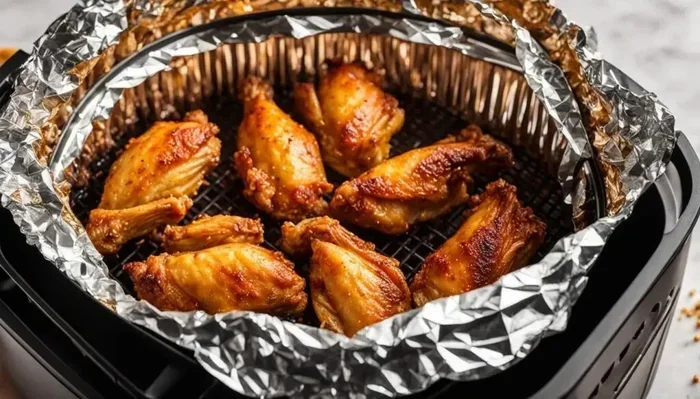
Instead: Cut foil to fit the bottom only, leaving the perimeter holes exposed. Or create a foil boat that sits inside the basket with gaps around the edges. Air must move freely.
Rule 2: Always Weigh Foil Down With Food
Empty foil is lightweight. Your air fryer’s fan moves serious air volume – often 1500+ RPM. Unsecured foil becomes a projectile. It wraps around the fan. It touches the heating element. It causes fires.
I’ve seen foil sucked into the heating coil on a Cosori 5.8-quart. The machine shut off automatically, but the foil melted onto the element. The smell lasted for weeks. Never preheat with foil inside unless food is already on top.
Rule 3: Keep Foil Away From the Heating Element
Most air fryers have the heating element directly above the basket. Foil that puffs up or shifts during cooking can contact it. Aluminum melts at 1,220°F. Your air fryer maxes at 400-450°F. But direct contact with a 450°F coil can still cause melting, smoking, and fire risk.
Maintain at least one inch of clearance. Don’t let foil curl up the sides of the basket toward the top.
Rule 4: Don’t Use Foil With Acidic Foods
This surprises people. Tomatoes, citrus juices, vinegar marinades, wine-based sauces – these are acidic. Aluminum reacts with acid. The foil breaks down, creating tiny holes. Aluminum leaches into your food. You get a metallic taste. The foil can disintegrate entirely during a 20-minute cook.
Use parchment paper or silicone liners for acidic foods instead. Or use a glass or ceramic dish inside the air fryer.
Rule 5: Check for Perforated vs. Solid Foil
Standard household foil is solid. Some specialty “air fryer foils” come pre-perforated. The holes allow some airflow. But they still restrict circulation significantly compared to bare basket. I don’t recommend them. Cut your own holes if needed – a fork works fine.
Rule 6: Never Use Foil in the Bottom Drawer Alone
Some people put foil in the bottom drawer (the drip tray) to catch grease, then cook directly on the basket above. This seems smart. But grease accumulates on that foil. The drawer gets hot. The foil can melt or ignite accumulated fat. Clean the drawer instead. It takes 30 seconds.
Did You Know? The Consumer Product Safety Commission reports approximately 150 air fryer-related fires annually in the US. Most involve grease buildup or improper foil use blocking ventilation.
Best Practices for Different Foods
Different foods need different foil techniques. Here’s your playbook.
Protein: Fish, Chicken, Steak
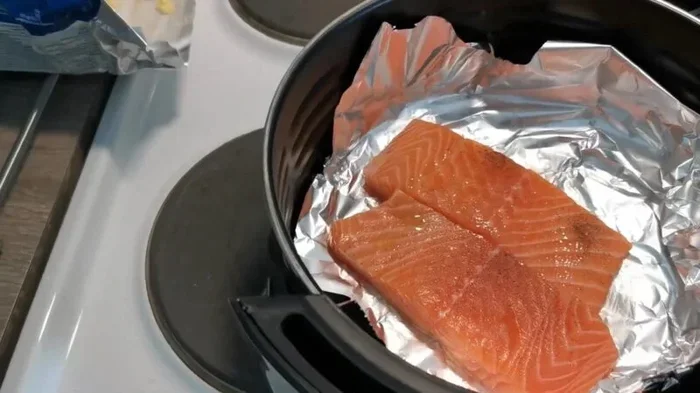
Fish fillets: Create a foil boat. Fold up the sides. Add fish, seasoning, butter, herbs. Seal the top loosely or leave open. Cook at 375°F for 8-12 minutes depending on thickness. The boat catches juices, prevents sticking, makes cleanup instant.
Chicken wings: Don’t use foil for crispy wings. You want maximum airflow. But for sauced wings? Cook naked first at 400°F for 20 minutes. Toss in sauce. Return to foil-lined basket for 2-3 minutes to set the glaze. Best of both worlds.
Steak: Foil not needed. But a foil tent during the 5-minute rest keeps heat in without steaming the crust.
Vegetables
Root vegetables (potatoes, carrots, beets): Foil packets work beautifully. Dice uniformly. Toss with oil, salt, herbs. Seal in foil packet. Cook at 390°F for 15-20 minutes, shaking once. They steam-roast to perfection.
Delicate vegetables (asparagus, green beans, zucchini): Loose foil tent. Prevents the fan from blowing lightweight veg around. Removes tent for last 2 minutes if you want char.
Small chopped vegetables: Foil boat with folded edges. Keeps pieces contained. Shake the boat halfway through like you’d shake the basket.
Baked Goods and Breakfast
Bacon: This is controversial. Some swear by foil for easy cleanup. But bacon fat needs to drain away for crispiness. Foil traps fat. Result: chewy bacon. Better: Use a bacon rack insert. Or cook on parchment with holes punched in it.
Eggs (baked, frittata): Foil sling is essential. Make a cross-shaped foil piece. Press into basket. Pour in egg mixture. The sling lets you lift the finished frittata out cleanly.
Cinnamon rolls, biscuits, cookies: Parchment is superior here. Foil conducts heat too aggressively on the bottom. Burnt bottoms, raw tops. If you must use foil, double-layer it and reduce temp by 25°F.
Frozen Foods
Frozen fries, nuggets, vegetables: No foil needed. These are designed for direct air frying. Foil makes them soggy.
Frozen fish sticks, breaded items: Light foil liner prevents coating from sticking to basket. But perforate it heavily.
Reheating
Pizza: Foil directly on basket. One slice per piece. 350°F for 3-4 minutes. Crispy crust, melted cheese.
Pasta, rice dishes, curries: Foil packet with tablespoon of water. Sealed. 350°F for 5-8 minutes. Steams perfectly.
Fried chicken, roasted vegetables: Open foil boat. 350°F for 4-6 minutes. Recrisps without drying.
Did You Know? Air fryers reduce acrylamide formation by up to 90% compared to deep frying. Acrylamide is a potentially carcinogenic compound formed when starchy foods cook at high temperatures. Foil packets can further reduce this by lowering direct surface temperature.
Common Mistakes That Ruin Your Food (or Machine)
I’ve made all of these. Learn from my errors.
Mistake 1: Preheating With Foil Inside
You preheat. The fan spins up. The foil lifts. It touches the element. Smoke. Smell. Potential fire. Always add foil and food together after preheating. Or skip preheating entirely for foil-packet meals – the packet creates its own microclimate.
Mistake 2: Using Foil as a Permanent Basket Liner
Some people line the basket once and leave it. Grease accumulates between foil and basket. Next cook, that old grease smokes. Bacteria grow. The foil degrades. Replace foil every single use. It costs pennies.
Mistake 3: Wrapping Food Too Tightly
Tight foil packets = steamed food. Sometimes you want steam. But for “fried” texture, leave the top open or loosely tented. Air must reach the food surface.
Mistake 4: Using Cheap, Thin Foil
Dollar store foil tears easily. It develops micro-holes. Grease leaks through. It sticks to food. Heavy-duty foil costs 50% more but performs 300% better. Worth it.
Mistake 5: Ignoring the “Max Fill” Line With Foil Packets
A foil packet is thicker than loose food. A full basket with packets can sit too close to the heating element. Leave extra headroom. Cook in batches if needed.
Mistake 6: Foil in Dual-Basket Models
Ninja Foodi DualZone, Instant Vortex Plus Dual – these have two independent baskets. Foil in one basket can affect airflow in the other if the shared fan pulls it. Secure foil extra carefully. Or just use parchment liners designed for dual baskets.
Mistake 7: Using Foil With the Rotisserie Function
Some air fryers have rotisserie spits. Foil near a rotating spit is a disaster waiting to happen. The foil catches, tears, wraps around the motor. Never combine foil and rotisserie.
Did You Know? Heavy-duty aluminum foil is typically 0.0015 inches thick vs. 0.0007 inches for standard. That’s over twice the thickness. It resists tearing, handles heavier foods, and creates better heat distribution in packets.
Better Alternatives to Tin Foil
Foil has its place. But these alternatives often work better.
Parchment Paper Liners
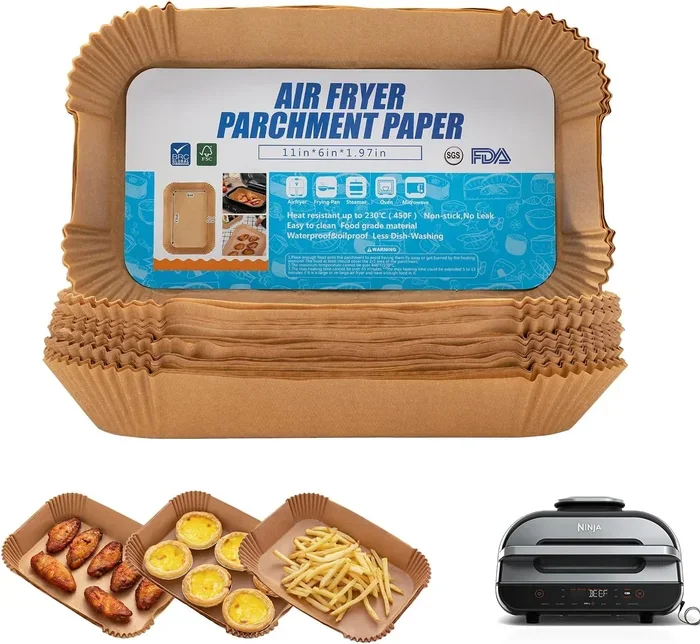
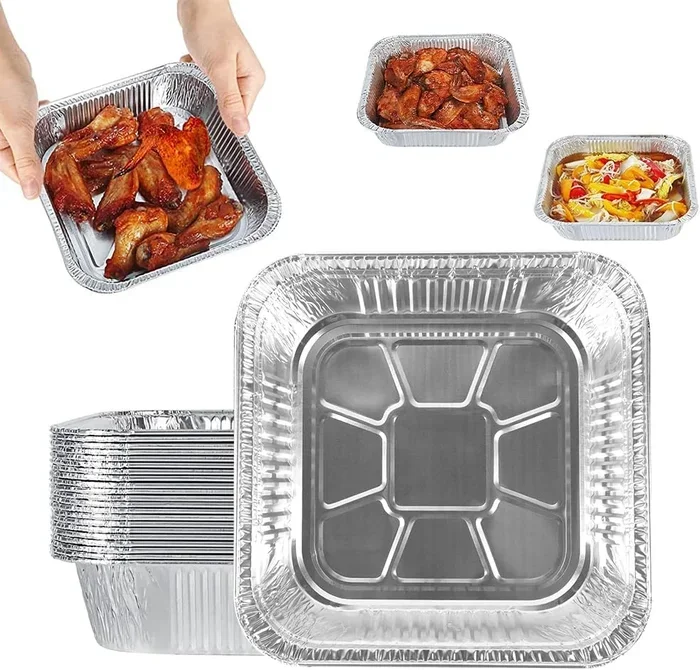
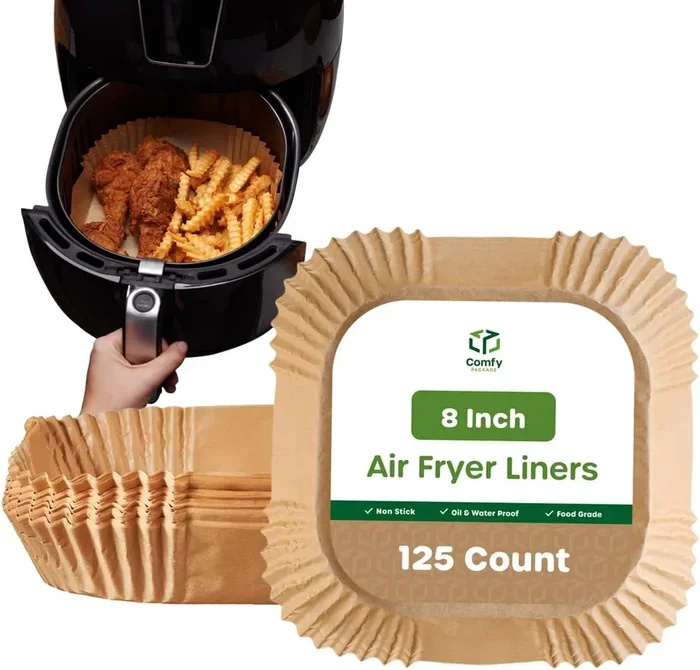
Pre-cut, perforated parchment rounds are the gold standard. They withstand 450°F. They’re non-stick. They allow full airflow through the holes. They’re compostable. They cost about $10 for 100 pieces. Get the right size for your basket (usually 7.5″, 8″, or 9″).
Silicone Liners and Mats
Reusable. Dishwasher safe. Last for years. They have raised ridges for airflow and grease drainage. They’re heavier than foil – won’t blow around. They’re non-reactive with acidic foods. Downside: they don’t conform to food shapes like foil packets.
Silicone Pots and Cups
For eggs, oatmeal, mini cakes, dips. These sit inside the basket. They’re essentially reusable foil boats. Much easier to clean than foil. They don’t tear.
Oven-Safe Glass and Ceramic Dishes
Ramekins, small casserole dishes, pie plates. If it fits in your basket and is oven-safe to 450°F, it works. Perfect for foil-packet style meals without the foil. Great for acidic tomato-based dishes.
Wire Racks and Skewer Racks
For maximum airflow, elevate food. Wire racks let air hit all sides. Skewer racks hold kebabs vertically. No liner needed. Cleanup is just the rack.
Nothing At All
Honestly? Most foods need no liner. The non-stick coating on modern baskets is excellent. A light spray of oil prevents sticking. Cleanup is a quick soak and scrub. Save foil for the genuinely messy stuff.
Did You Know? Silicone air fryer liners can withstand temperatures from -40°F to 450°F. They’re made from food-grade silicone that’s BPA-free and FDA-approved. A quality liner lasts 2-3 years with regular use.
Special Considerations by Air Fryer Type
Not all air fryers are created equal. Your specific model changes the foil rules.
Basket-Style Air Fryers
The classic pull-out drawer. Foil works well here. The basket holes provide airflow from bottom and sides. Just follow the perimeter rule – leave edges exposed.
Oven-Style Air Fryers (Toaster Oven Hybrids)
These have wire racks, not baskets. Foil is easier here – lay it on the rack, leave gaps. But the heating elements are closer (top and bottom). Maintain 1.5+ inch clearance. The door seal can also trap foil edges. Tuck foil well inside.
Paddle-Style Air Fryers (Tefal ActiFry, etc.)
These have a rotating paddle that stirs food. Foil is a nightmare here. The paddle catches foil, tears it, wraps it around the motor shaft. Don’t use foil. Use the paddle. That’s what it’s for.
Dual-Basket Air Fryers
As mentioned earlier, secure foil extra carefully. The shared fan system creates cross-currents. Some manufacturers provide specific foil guidelines for dual-basket models. Check the manual.
Pressure Cooker/Air Fryer Combos (Ninja Foodi, Instant Pot Duo Crisp)
These have two lids. The air fryer lid has the heating element very close to the basket. Foil clearance is tighter. Be extra careful about foil height. The pressure cooking pot can also be used with foil packets inside, then air fried after – but that’s advanced technique.
Did You Know? The global air fryer market was valued at $1.2 billion in 2022 and is projected to reach $2.1 billion by 2030. North America accounts for 40% of sales. The average household uses their air fryer 3-4 times per week.
Environmental and Health Considerations
Let’s talk about the bigger picture.
Aluminum Exposure
Cooking with aluminum foil increases dietary aluminum intake. The WHO establishes a tolerable weekly intake of 2mg per kg of body weight. For a 150lb person, that’s ~136mg weekly. A single foil-packet meal adds 1-5mg typically. Not alarming for occasional use. But daily foil cooking with acidic foods could approach limits.
Recycling Reality
Used foil with food residue rarely gets recycled. Most municipal programs reject it. It goes to landfill. Aluminum takes 200-500 years to decompose. Reusable silicone liners eliminate this waste entirely.
Energy Efficiency
Foil packets can actually reduce cooking time for some foods by creating a steam-pressure environment. But foil blocking airflow increases cook times. Net effect depends on technique.
Did You Know? Aluminum is the third most abundant element in Earth’s crust (8.1%). But it’s never found free in nature – always bound in compounds like bauxite ore. Refining it requires massive electricity, making recycled aluminum 95% more energy-efficient than new.
Pro Tips From Professional Test Kitchens
I’ve compiled techniques from America’s Test Kitchen, Serious Eats, and appliance manufacturer test labs.
The “Foil Sling” Technique
Cut a piece of foil 2x the basket width. Fold lengthwise into a 2-inch wide strip. Place crosswise in basket. Press down. Add food. The overhanging ends become handles to lift the entire meal out. Perfect for frittatas, delicate fish, sticky wings.
The “Perforated Packet” Method
Make your foil packet. Before sealing, stab the top 10-15 times with a skewer or fork. Steam escapes. Air enters. You get tender interior with lightly browned exterior. Best for vegetables you want roasted, not steamed.
The “Double-Layer” Trick for Even Heating
Two layers of foil with air gap between. The bottom layer protects the basket. The top layer holds food. The air gap insulates, preventing scorched bottoms. Works for cookies, biscuits, reheating pastries.
The “Foil Collar” for Tall Foods
Whole chicken, roast, tall cake. The top browns too fast. Make a foil ring (like a crown). Sit it on top of the food. Shields the top while sides and bottom cook. Remove for last 5 minutes if you want browning.
The “Grease Channel” Design
For fatty meats (pork belly, duck breast, sausages). Shape foil into a shallow V-channel down the center of the basket. Fat drains into channel, away from food. Food sits on foil ridges. Crisper results, less smoke.
Did You Know? Professional test kitchens typically test each recipe 12-15 times before publishing. For air fryer recipes, they test across 4-6 different models because airflow patterns vary significantly between brands.
Troubleshooting Common Foil Problems
Problem: Foil Stuck to Food
Fix: Lightly oil the foil before adding food. Or use non-stick foil (coated side toward food). For baked goods, parchment is better.
Problem: Food Steamed Instead of Crisped
Fix: Open the packet. Or switch to perforated parchment. Or cook uncovered for last 3-5 minutes.
Problem: Foil Blew Around During Cooking
Fix: Food wasn’t heavy enough. Add a foil weight (folded foil piece) on corners. Or use magnetic air fryer clips (they exist).
Problem: White Powdery Residue on Food
Fix: Aluminum oxide from foil reacting with acid or salt. Discard food if significant. Switch to parchment for that recipe next time.
Problem: Smoke Smell From Previous Foil Use
Fix: Run empty at 400°F for 10 minutes with lemon water in bottom drawer. Or clean heating element with vinegar-dampened cloth (cool, unplugged).
Quick Reference Card
Print this. Tape it inside your cabinet.
- DO: Use heavy-duty foil. Weigh it down. Leave basket edges exposed. Create boats/slings/packets. Use for sticky, small, or delicate foods.
- DON’T: Cover whole basket. Preheat with empty foil. Use with acidic foods. Let foil touch heating element. Reuse foil. Use in paddle models.
- BEST FOR: Fish packets, sticky wings, chopped veg, reheating pizza, foil slings for lifting.
- USE INSTEAD: Perforated parchment (most things), silicone liners (daily use), glass dishes (acidic foods), nothing (simple proteins).
Conclusion
Can you put tin foil in air fryer? Absolutely. Should you? Often, yes. It’s a tool – powerful when used correctly, problematic when used carelessly.
The rules are simple: secure it, vent it, don’t block airflow, avoid acid. Follow those, and foil becomes your secret weapon for easier cleanup, better texture on delicate foods, and expanded recipe possibilities.
But also know when not to use it. Most nights, a light oil spray on the bare basket is all you need. Save the foil for the honey-garlic salmon, the foil-packet vegetables, the reheated pizza. Your air fryer will thank you. Your dishwasher will thank you. And your food will taste better.
Now go make something delicious. And maybe keep a roll of heavy-duty foil in the drawer next to your air fryer. You’ll use it more than you think.
Frequently Asked Questions
Can you put aluminum foil in an air fryer?
Yes, aluminum foil is safe in air fryers when used correctly. Unlike microwaves, air fryers use convection heat that doesn’t cause sparking. Always weigh the foil down with food, leave basket edges exposed for airflow, and keep foil away from the heating element.
Will foil damage my air fryer?
Foil won’t damage your air fryer if you follow safety guidelines. Damage occurs when loose foil contacts the heating element, blocks all airflow causing overheating, or when acidic foods react with aluminum creating residue on the basket coating.
Can you put foil in the bottom of an air fryer?
You can line the basket bottom with foil, but never cover the entire surface. Cut foil to fit the flat bottom only, leaving the perforated sides and edges completely open. This allows the hot air to circulate properly around your food.
Is parchment paper better than foil in an air fryer?
Parchment paper is often better for daily use. It’s non-reactive with acidic foods, allows better airflow when perforated, eliminates aluminum exposure concerns, and is compostable. Foil wins for creating sealed packets and handling very heavy or sharp foods.
Can you cook acidic foods like tomatoes in foil in an air fryer?
No, avoid cooking acidic foods (tomatoes, citrus, vinegar marinades) in aluminum foil. The acid breaks down the foil, causing aluminum to leach into food and creating a metallic taste. Use parchment paper, silicone liners, or glass dishes for acidic ingredients instead.
Why did my foil catch fire in the air fryer?
Foil fires happen when loose foil contacts the heating element, when grease-soaked foil in the bottom drawer ignites, or when foil completely blocks airflow causing overheating. Always secure foil with food weight, maintain clearance from the top element, and never preheat with empty foil inside.