Can You Put Aluminum Foil in an Air Fryer
Featured image for aluminum foil in air fryer
Image source: northernyum.com
Yes, you can put aluminum foil in an air fryer as long as you follow a few simple rules. Proper placement keeps airflow moving, prevents fire risk, and makes cleanup a breeze. Use foil only to line the basket, wrap food, or create a small pan, and always poke holes for air circulation.
If you have ever wondered can you put aluminum foil in an air fryer, you are not alone. The short answer is yes, but only when you respect the way an air fryer moves hot air around the food. Think of the air fryer like a tiny convection oven that relies on a fast‑moving stream of heat — similar to a highway where cars (air) need clear lanes. When foil blocks those lanes, cooking becomes uneven and safety risks rise.
Manufacturers design air fryers with a perforated basket that lets air travel up, down, and around every piece of food. Adding a sheet of foil can be helpful for catching drips, shaping a makeshift pan, or wrapping delicate items, yet it must never seal the basket completely. In the next sections we break down the who, what, where, when, and why of using foil, share a few “Did You Know” facts, and give you practical steps to get crispy results without damaging your appliance.
Key Takeaways
- Foil is allowed: You can put aluminum foil in an air fryer when it does not block the fan or heating element.
- Airflow matters: Cut foil to fit the basket and poke several holes so hot air can circulate.
- Avoid acidic foods: Tomatoes, citrus, and vinegar can react with foil and affect flavor.
- Never cover the heating element: Foil touching the top coil can cause sparking or fire.
- Use alternatives for delicate items: Parchment paper, silicone mats, or air‑fryer liners work well and are reusable.
- Clean promptly: Remove foil after each use to prevent stuck‑on residue and maintain performance.
- Check your manual: Some manufacturers explicitly forbid foil; always verify the guidelines for your model.
📑 Table of Contents
What Happens When You Use Foil in an Air Fryer
Airflow Basics
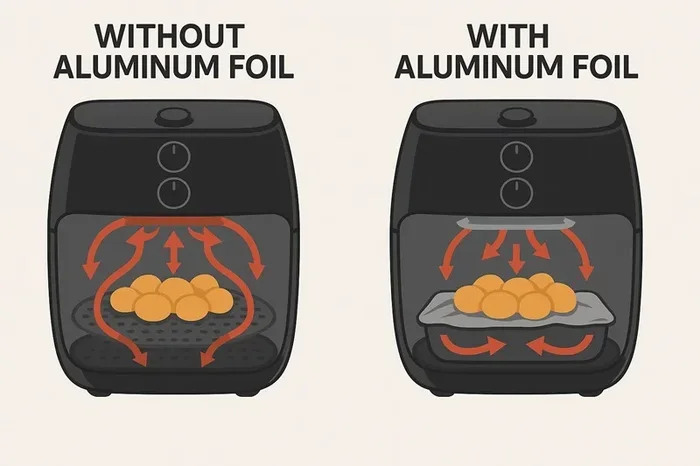
An air fryer works by pulling air through a heating element and pushing it through the basket at high speed. This rapid circulation creates the Maillard reaction that gives food a golden crust. When you place a solid sheet of foil over the entire basket, you essentially close the highway. The fan still spins, but the air cannot reach the food evenly, leading to soggy spots and longer cook times.
Heat Distribution
Foil reflects heat. A small piece placed under a burger patty can act like a mirror, sending extra heat upward and helping the top brown faster. However, a large piece that covers the whole bottom can trap heat underneath, causing the bottom of the food to burn while the top stays pale. The key is balance — use foil only where you need a little extra reflection or containment.
Safety Considerations
Did you know that foil touching the heating coil can create tiny sparks? The coil runs at temperatures above 400 °F (200 °C). If a loose edge of foil lifts and contacts the coil, the metal can arc, potentially damaging the element or starting a fire. Always keep foil at least a half‑inch away from the top of the basket and never let it drape over the heating element.
When Is It Safe to Use Aluminum Foil?
Lining the Basket
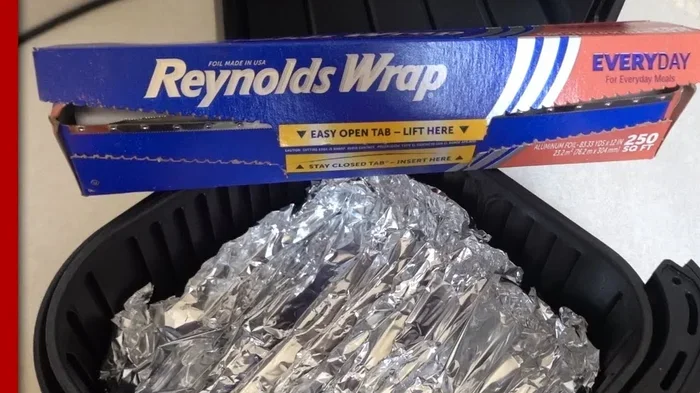
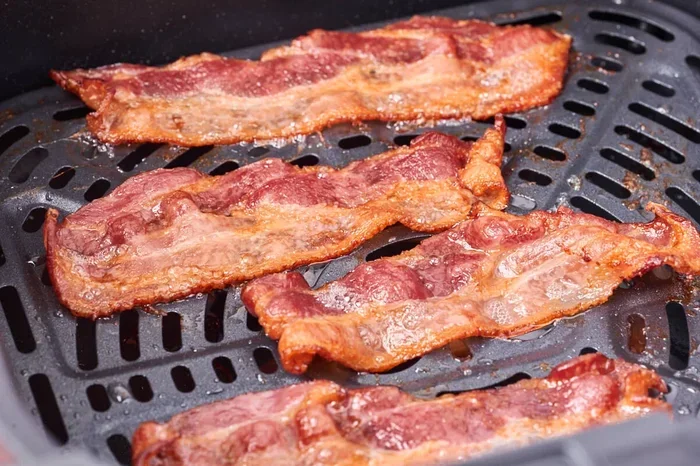
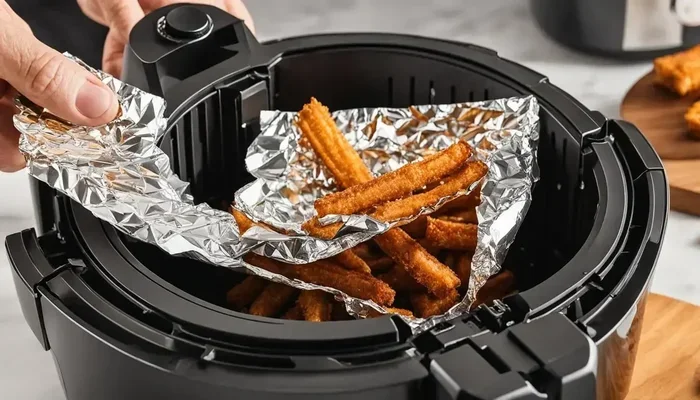
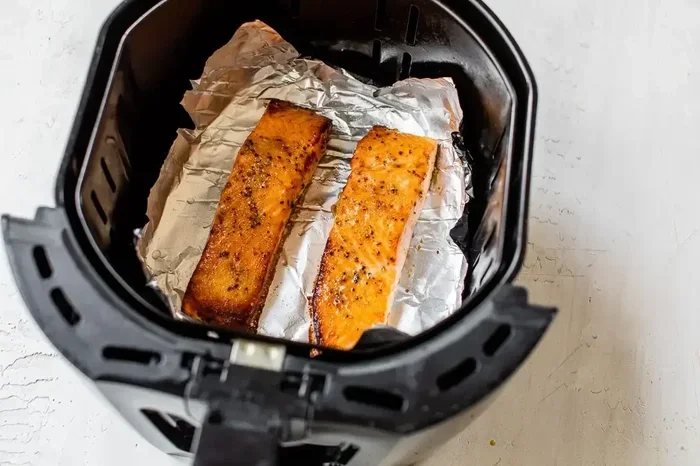
One of the most common reasons people ask can you put aluminum foil in an air fryer is to make cleanup easier. Cutting a piece of foil to the exact size of the basket floor, then poking 8‑10 holes with a fork, lets grease drip through while still catching the bulk of the mess. This works well for foods that release a lot of oil, such as bacon, chicken wings, or breaded fish.
Visual guide about aluminum foil in air fryer
Image source: airfryeraid.com
Wrapping Foods
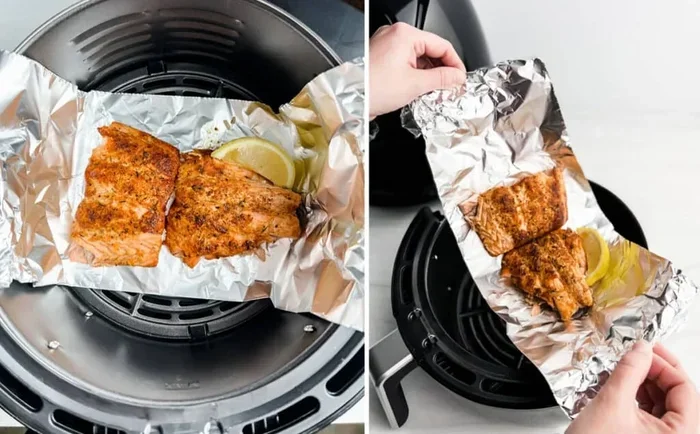
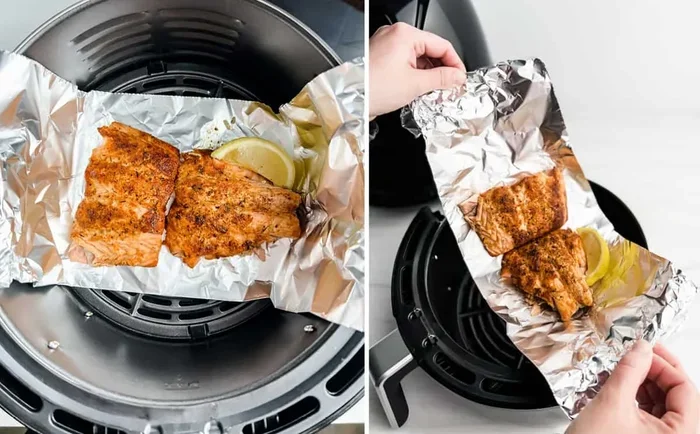
Wrapping individual portions — like a salmon fillet with herbs and lemon — creates a steam pocket that keeps the fish moist. The foil packet should be loose enough for air to flow around it, not vacuum‑sealed. Place the packet on the basket, not directly on the heating element, and keep the top of the packet open or vented.
Creating a Makeshift Pan
If you want to bake a small cake or cook a casserole, you can fold foil into a shallow tray that fits inside the basket. Make sure the tray’s sides are low (no higher than 1 inch) so air can still circulate over the top. This trick is handy when you don’t have an air‑fryer‑specific baking pan.
When Should You Avoid Foil?
High‑Fat Foods
Foods that render a lot of fat, such as pork belly or duck breast, can cause foil to become saturated with grease. Hot grease on foil can ignite if it reaches the heating element. For these items, skip the foil and let the basket’s perforations drain the fat away.
Visual guide about aluminum foil in air fryer
Image source: alfoilcontainers.com
Acidic Ingredients
Tomatoes, citrus juices, vinegar‑based marinades, and wine can react with aluminum, leaching tiny amounts of metal into the food and giving a metallic taste. The reaction also weakens the foil, making it more likely to tear. Use parchment paper or a silicone mat instead.
Non‑Stick Coatings
Some air fryer baskets have a ceramic or PTFE non‑stick coating. Sharp foil edges can scratch that coating, reducing its lifespan. If your basket is non‑stick, consider a reusable silicone liner that protects the surface without the risk of scratches.
Best Practices for Using Foil in an Air Fryer
Cut to Size
Measure the interior dimensions of your basket and cut the foil a few millimeters smaller on each side. This prevents the foil from curling up the sides and blocking the fan. A kitchen scissors works fine; no need for a precision cutter.
Poke Holes for Airflow
Use a fork or a skewer to make a grid of holes — roughly one hole per square inch. The holes let the hot air travel through the foil, preserving the convection effect that makes air frying fast and even.
Secure the Edges
Fold the foil’s edges over the basket rim or tuck them under the basket’s handle. Loose edges can flutter in the strong airflow, potentially touching the heating element. A snug fit also stops food from sliding under the foil.
Don’t Overlap Sheets
If you need a larger piece, overlap two sheets by at least an inch and crimp the seam tightly. Overlapping without sealing creates gaps where air can escape, defeating the purpose of a continuous barrier.
Monitor the First Use
The first time you try foil in a new air fryer, watch the cooking cycle for the first 2‑3 minutes. Look for any foil movement, smoke, or unusual smells. If anything looks off, stop the machine and adjust the foil placement.
Alternatives to Aluminum Foil
Parchment Paper
Parchment paper is heat‑resistant up to 450 °F (230 °C) and non‑reactive. Pre‑cut rounds with perforations are sold specifically for air fryers. They let air flow while catching drips, and they are disposable.
Silicone Mats
Reusable silicone mats can be trimmed to fit any basket. They are dishwasher safe, non‑stick, and eliminate the need for single‑use foil. Many home cooks report that silicone gives a slightly more even crust because it distributes heat gently.
Air Fryer‑Specific Liners
Several brands sell perforated liners made from food‑grade paper or thin metal mesh. These liners are engineered to match the airflow pattern of popular models, so you get the convenience of a liner without guessing hole placement.
Cleaning and Maintenance Tips
Removing Foil Residue
After cooking, let the basket cool for a minute, then peel the foil away slowly. Any stuck bits can be loosened with a soft brush and warm, soapy water. Avoid abrasive scrubbers that could damage the basket’s coating.
Preventing Build‑Up
Even with foil, grease can accumulate on the heating element over time. Once a month, run the air fryer empty at 350 °F (175 °C) for 5 minutes. The heat burns off residue, keeping the element efficient and reducing smoke on future runs.
In summary, the question can you put aluminum foil in an air fryer has a clear yes — provided you respect airflow, keep foil away from the heating coil, and choose the right foods for foil use. By following the guidelines above you’ll enjoy easier cleanup, perfectly browned dishes, and a longer‑lasting appliance. Happy air frying!
Frequently Asked Questions
Can you put aluminum foil in an air fryer for every recipe?
No. Foil works well for lining the basket, wrapping food, or making a small pan, but it should not be used with highly acidic ingredients, very fatty items, or when it would block the fan completely.
Does foil affect the cooking time in an air fryer?
If foil restricts airflow, cooking can take longer and results may be uneven. Properly perforated foil that matches the basket size usually has minimal impact on time.
Is it safe to put foil directly on the heating element?
Never place foil on or touching the heating element. The intense heat can cause sparking, damage the coil, or start a fire.
What are the best foil alternatives for air fryers?
Parchment paper with perforations, reusable silicone mats, and manufacturer‑approved air fryer liners are excellent alternatives that preserve airflow and are easier to clean.
How many holes should I poke in the foil?
Aim for roughly one hole per square inch of foil. A fork or skewer works well; the goal is to let hot air pass through while still catching drips.
Will using foil void my air fryer warranty?
Most warranties remain valid if you follow the manufacturer’s guidelines. Some brands explicitly forbid foil, so check your manual before using it.