
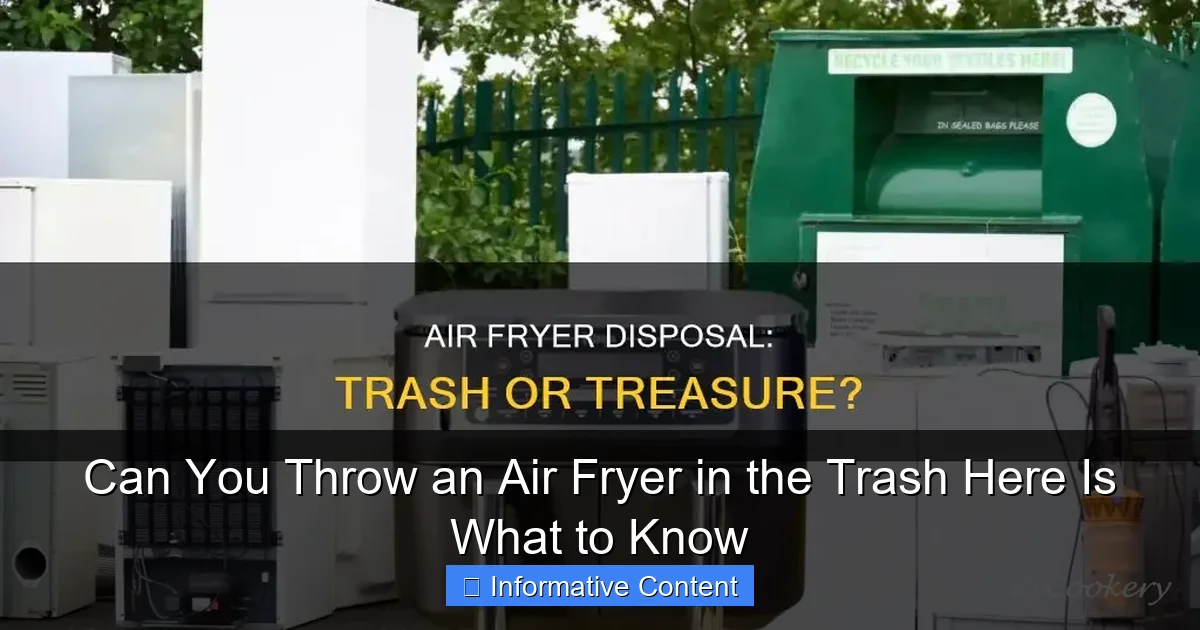
Featured image for can you throw an air fryer in the trash
Image source: cycookery.com
No, you should not throw an air fryer in the trash due to its electronic components and potential environmental hazards. Proper disposal through e-waste recycling or retailer take-back programs ensures safety and compliance with local regulations—always check guidelines before tossing.
Key Takeaways
- Never trash air fryers curbside: They contain electronics requiring special disposal.
- Check local e-waste rules: Many areas mandate recycling for small appliances.
- Remove non-stick coatings first: Some components need separate hazardous waste handling.
- Retailer take-back programs: Stores like Best Buy often accept old appliances.
- Factory recycling options: Brands like Philips offer mail-in recycling programs.
- Data wipe smart models: Reset connected air fryers before disposal.
📑 Table of Contents
- What Happens When Your Air Fryer Gives Up the Ghost?
- Why You Shouldn’t Just Toss Your Air Fryer in the Trash
- How to Properly Dispose of Your Air Fryer (The Right Way)
- What If Your Air Fryer Is Beyond Repair? (Salvage & Upcycle Ideas)
- Common Mistakes People Make (And How to Avoid Them)
- Data Table: Air Fryer Disposal Options by Region (2024)
- The Bottom Line: Be Part of the Solution
What Happens When Your Air Fryer Gives Up the Ghost?
So, your trusty air fryer—the kitchen hero that crisped up chicken wings, reheated pizza to perfection, and made guilt-free fries—has finally given up the ghost. Maybe it sparked, stopped heating, or just won’t turn on anymore. Now you’re staring at it, wondering, “Can I just toss this thing in the trash?” It’s a fair question. We’ve all been there, wrestling with bulky appliances and the guilt of adding more junk to landfills. But before you drag that air fryer to the curb, let’s talk about what’s actually inside it, why tossing it carelessly could be a problem, and what better options you have.
Air fryers are more than just plastic and metal. They contain electrical components, heating elements, circuit boards, and sometimes even small amounts of hazardous materials. While they’re not classified as “toxic waste” like old batteries or paint cans, they’re not exactly harmless either. Think of it like this: you wouldn’t throw a laptop or a toaster in the regular trash, right? The same logic applies here. And with more people embracing air fryers (sales have skyrocketed by over 400% in the last five years), knowing how to dispose of them responsibly is more important than ever. Let’s break down what you need to know—no fluff, just real talk.
Why You Shouldn’t Just Toss Your Air Fryer in the Trash
The Hidden Components Inside Your Air Fryer
Sure, your air fryer looks simple from the outside—plastic shell, metal basket, maybe a digital screen. But inside, it’s a mini electronics lab. Here’s what’s really in there:
Visual guide about can you throw an air fryer in the trash
Image source: cycookery.com
- Heating element: Usually a metal coil that gets hot. Not toxic, but metal recycling is valuable.
- Fan and motor: Small electric motor with copper wiring. Copper is recyclable and worth salvaging.
- Circuit board: Contains small amounts of lead, cadmium, and other heavy metals (even in tiny amounts).
- Plastic housing: Often made from ABS or polycarbonate, which can be recycled but rarely is when mixed with other materials.
- Power cord: Rubber-insulated copper wire. Again, recyclable but not landfill-friendly.
These aren’t just “junk”—they’re resources. And when you throw them in the trash, they end up in landfills, where heavy metals can slowly leach into soil and water over time. Not to mention, you’re wasting materials that could be reused. Think of it like tossing a gold ring because the stone fell out. The ring’s still valuable.
The Environmental Impact of E-Waste
You’ve probably heard the term “e-waste,” but what does it really mean? It’s any electronic product that’s reached the end of its life—phones, laptops, microwaves, and yes, air fryers. The scary part? The world generates over 50 million metric tons of e-waste every year, and less than 20% is recycled properly. That’s like dumping 4,000 Eiffel Towers’ worth of electronics annually, and most of it ends up in landfills or shipped to developing countries where it’s dismantled unsafely.
When you throw your air fryer in the trash, you’re adding to that pile. And while one air fryer might seem small, multiply it by millions of households replacing their units every few years, and the impact adds up fast. Plus, landfills aren’t designed to handle electronics. They’re compacted, buried, and left to break down over decades—releasing toxins and wasting valuable materials.
Legal and Municipal Considerations
Here’s something many people don’t realize: in many areas, it’s actually illegal to throw small electronics in the trash. Cities and states have different rules, but more and more are banning e-waste from regular waste streams. For example:
- In California, the Electronic Waste Recycling Act requires proper disposal of all electronic devices.
- New York City has strict e-waste drop-off rules, and fines apply for improper disposal.
- Many counties in Texas and Florida have designated e-waste collection days or centers.
Even if your area doesn’t have strict laws, your local waste management company might still reject your air fryer if they see it in the trash. They’ll often leave a note or tag it for pickup later—but only if it’s set aside properly. So not only is tossing it bad for the planet, it might also get you on your city’s “bad neighbor” list.
How to Properly Dispose of Your Air Fryer (The Right Way)
Step 1: Check for Recycling Programs Near You
The first thing you should do? Google “electronics recycling near me” or visit your city or county’s waste management website. Most municipalities have at least one option. Here are the most common:
Visual guide about can you throw an air fryer in the trash
Image source: hmr.ph
- Household Hazardous Waste (HHW) events: Many cities host seasonal events where you can drop off electronics, batteries, paint, etc. These are free and safe.
- Permanent drop-off centers: Some recycling facilities accept small appliances year-round. They’re usually open during business hours and don’t require an appointment.
- Retailer take-back programs: Stores like Best Buy, Staples, and Office Depot often accept small electronics for recycling—sometimes even without a purchase.
For example, I once had a broken toaster oven. I called my city’s waste hotline, and they directed me to a drop-off site just 10 minutes away. I brought it in, they scanned it, and within 10 minutes, it was on its way to be disassembled and recycled. Easy.
Step 2: Use Manufacturer or Brand Take-Back Programs
Some air fryer brands actually offer recycling programs. It’s worth checking their website or calling customer service. Here are a few real examples:
- Ninja: While they don’t have a direct mail-back program, they partner with Call2Recycle and other e-waste networks. You can find drop-off locations through their site.
- Instant Pot (for their air fryer models): Offers a “Trade-In & Recycle” program where you can send back old appliances for recycling (sometimes with a discount on a new one).
- Cosori: Works with third-party recyclers and provides a list of drop-off centers based on your ZIP code.
Pro tip: If the brand doesn’t have a program, try contacting them anyway. I once emailed a smaller brand about recycling, and they sent me a prepaid shipping label—no charge. You never know until you ask.
Step 3: Donate or Sell If It Still Works (Even Partially)
Not every “broken” air fryer is beyond saving. If it still heats or powers on (even if the timer’s broken), consider donating it. Here’s how:
- Thrift stores: Goodwill, Salvation Army, and local thrift shops often accept working appliances. Call ahead to confirm.
- Community centers or shelters: Many need kitchen gear. A slightly dinged air fryer could be a game-changer for someone.
- Online marketplaces: List it on Facebook Marketplace or Craigslist as “for parts or repair.” Someone might want it for DIY projects or to fix it themselves.
I once sold a slightly scratched air fryer (the basket handle was loose) for $25. The buyer said they’d use it for camping—perfect! It’s amazing how many people are happy to take something “imperfect” off your hands.
What If Your Air Fryer Is Beyond Repair? (Salvage & Upcycle Ideas)
Salvage the Valuable Parts Yourself
If you’re handy (or just curious), you can take apart your air fryer and salvage usable parts. Here’s what you might find:
- Copper wire from the motor and power cord: Can be sold to scrap metal recyclers (check local prices—copper’s worth a few bucks per pound).
- Heating element: Metal coils can be recycled with other scrap metal.
- Plastic housing: If it’s clean and intact, some recyclers will take it (though mixed plastics are harder to process).
- Fan blades: Sometimes reusable in other DIY projects.
Just be careful: unplug it, let it cool, and avoid cutting live wires. I once took apart an old air fryer and found a small fan motor I later used in a homemade desk fan. It was fun, and I kept the copper wire for scrap.
Upcycling: Turn It Into Something New
Feeling creative? Upcycling turns waste into something useful. Here are a few ideas:
- Planter: Remove the heating element and basket. Use the plastic shell as a quirky planter for succulents or herbs.
- Tool storage: The basket makes a great organizer for small tools or craft supplies.
- Art project: Paint the exterior and turn it into a sculpture or decorative piece.
- Pet bed (if large enough): Line the basket with fabric for a cool, elevated pet bed (just make sure it’s safe and stable).
A friend of mine turned her old air fryer into a “mini greenhouse” for seedlings. She drilled holes in the basket, added soil, and used the plastic lid as a cover. It worked surprisingly well!
Common Mistakes People Make (And How to Avoid Them)
Throwing It in the Trash Without Research
The biggest mistake? Assuming it’s “just a kitchen gadget.” Many people toss air fryers in the trash because they don’t know better. But remember: electronics = e-waste = not trash. Always check local rules first. A quick 5-minute search can save you from a fine and help the planet.
Waiting Too Long to Dispose of It
Don’t let your air fryer sit in the garage for months. The longer it sits, the more likely it is to get damaged (rusted, chewed by pests, etc.), making recycling harder. Set a reminder to deal with it within a week or two. Procrastination is the enemy of responsible disposal.
Not Removing Personal Data (For Smart Models)
If you have a smart air fryer (with Wi-Fi, app connectivity, or saved settings), reset it first. Even though it’s not a phone, it might store your network info. Here’s how:
- Unplug it.
- Hold down the “power” and “menu” buttons for 10+ seconds (check your manual for exact steps).
- Wait for a reset confirmation (usually a light flash or beep).
I once forgot to reset a smart air fryer and later heard from a recycler that my Wi-Fi password was still in the system. Oops. Better safe than sorry.
Data Table: Air Fryer Disposal Options by Region (2024)
| Region | Drop-Off Centers | Retailer Recycling | Manufacturer Programs | Legal Status (Trash Ban?) |
|---|---|---|---|---|
| California | 500+ HHW events/year | Best Buy, Staples | Ninja, Instant Pot | Yes (strict) |
| Texas | County-run centers | Best Buy (select stores) | Cosori (via third parties) | No (but recommended) |
| New York | NYC e-waste collection sites | Office Depot, Staples | Instant Pot, Ninja | Yes (city-wide) |
| Florida | Seasonal HHW events | Best Buy, Walmart (select) | None direct (check local) | No (but encouraged) |
| Canada (Ontario) | Ontario Electronic Stewardship | Staples, Best Buy | Most brands via OES | Yes (province-wide) |
Note: Always verify with local authorities—programs change frequently. This table is based on 2024 data from municipal websites and e-waste organizations.
The Bottom Line: Be Part of the Solution
So, can you throw an air fryer in the trash? Technically, you could—but you really shouldn’t. It’s not just about following rules; it’s about making a choice that respects the planet and future generations. Every air fryer you recycle or donate is a win: less e-waste, fewer toxins in landfills, and valuable materials given a second life.
Here’s the good news: doing the right thing is easier than ever. Between drop-off centers, retailer programs, and DIY options, there’s no reason to default to the trash. And if you’re ever unsure, just ask. Call your city, email the manufacturer, or post in a local Facebook group. Chances are, someone’s done it before and can guide you.
Next time your air fryer bites the dust, don’t see it as a problem—see it as an opportunity. An opportunity to learn, to help, and to be a little more mindful. After all, we all want to live in a world where our kitchen gadgets don’t outlive us in a landfill. Let’s make that happen, one air fryer at a time.
Frequently Asked Questions
Can you throw an air fryer in the trash?
No, you shouldn’t simply throw an air fryer in the trash due to its electronic components and potential environmental impact. Many areas have specific e-waste disposal regulations for appliances like air fryers.
What is the proper way to dispose of an old air fryer?
The best way to dispose of an old air fryer is through an e-waste recycling program or a retailer’s take-back program. Some local waste management facilities also accept small appliances for proper recycling.
Are air fryers considered hazardous waste?
While not typically classified as hazardous waste, air fryers contain circuit boards, wiring, and other electronic parts that shouldn’t go in landfills. Recycling ensures these materials are safely handled and reusable parts are salvaged.
Can you throw an air fryer in the trash if it’s broken?
Even if your air fryer is broken, you shouldn’t throw it in the trash. Contact your local e-waste facility or check for repair-and-recycle programs to handle it responsibly.
Does an air fryer need special disposal because of its non-stick coating?
Yes, the non-stick coating on air fryer baskets can release harmful chemicals if incinerated improperly. Recycling facilities can safely manage these components instead of sending them to landfills.
Where can I recycle my old air fryer?
You can recycle your old air fryer at certified e-waste centers, electronics retailers like Best Buy, or through municipal hazardous waste collection events. Always call ahead to confirm acceptance policies.