
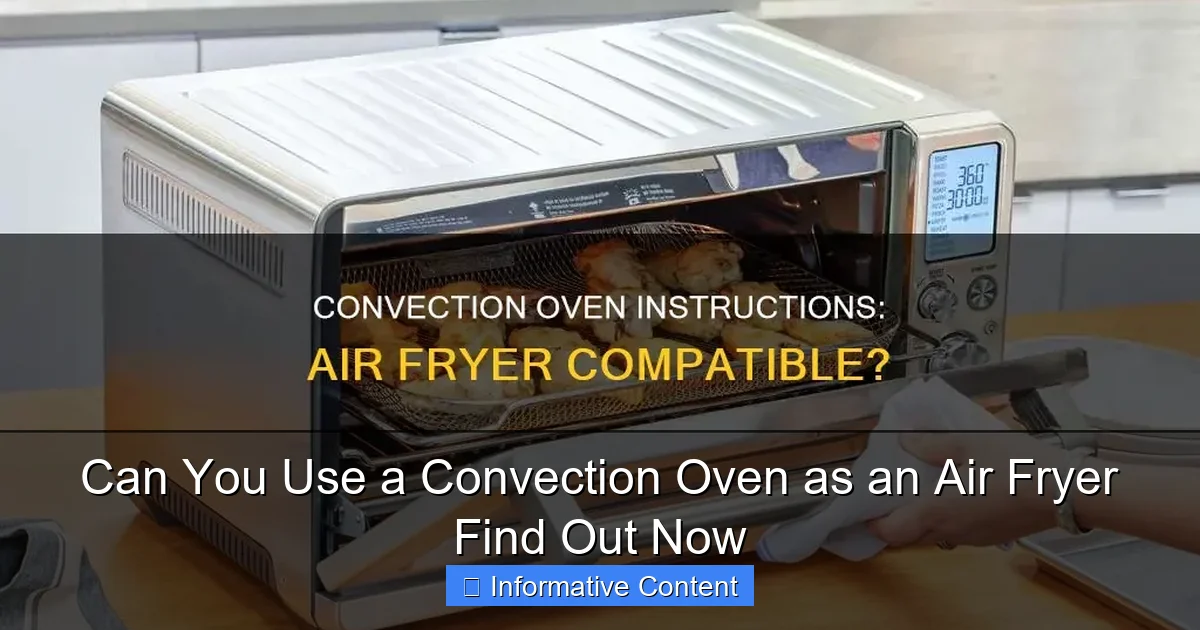
Featured image for can you use a convection oven as an air fryer
Image source: cycookery.com
Yes, you can use a convection oven as an air fryer—both appliances circulate hot air for crispy, even cooking with little to no oil. However, air fryers are more compact and efficient, delivering faster results and superior crispiness for smaller batches, while convection ovens work better for larger meals with minor adjustments to time and temperature.
Key Takeaways
- Yes, you can: A convection oven mimics air frying with similar results.
- Adjust cooking time: Reduce time by 25% to avoid overcooking food.
- Use lower temps: Set 25°F lower than air fryer recipes suggest.
- Maximize airflow: Use oven racks or trays for crispier textures.
- Skip preheating: Not always needed—saves time and energy.
- Monitor closely: Check food early to prevent burning or drying.
- Ideal for batches: Convection ovens handle larger quantities better.
📑 Table of Contents
- Can You Use a Convection Oven as an Air Fryer? Let’s Settle the Debate
- How Convection Ovens and Air Fryers Actually Work
- Can You Actually Use a Convection Oven as an Air Fryer?
- Pro Tips to Get Air Fryer-Like Results
- When a Dedicated Air Fryer Might Be Worth It
- Real-World Test: Air Fryer vs. Convection Oven Side by Side
- Final Thoughts: Should You Bother?
Can You Use a Convection Oven as an Air Fryer? Let’s Settle the Debate
So you’ve been eyeing that shiny new air fryer on the kitchen counter of your favorite food blogger. Crispy wings, golden fries, even roasted veggies that actually *stay* crispy — it all sounds too good to be true. But then you look at your trusty convection oven, sitting there doing its thing, and a question pops up: can you use a convection oven as an air fryer?
It’s a fair question — and one I asked myself a few years ago when I was trying to avoid buying another gadget that would end up collecting dust. After all, both appliances use hot air to cook food, right? They both promise crispy results without drowning your meals in oil. So why not just use what you already have? I spent weeks testing, comparing, and even burning a few batches of chicken tenders (RIP, batch #3) to find out. And what I discovered might surprise you.
Spoiler: yes, you *can* use a convection oven as an air fryer — but it’s not a one-to-one swap. There are nuances, tweaks, and a few “aha!” moments that make all the difference. Whether you’re short on counter space, trying to save money, or just curious about how these two kitchen workhorses compare, this guide will walk you through everything you need to know — with real-life examples, practical tips, and zero fluff.
How Convection Ovens and Air Fryers Actually Work
The Science of Hot Air Cooking
Let’s start with the basics. Both convection ovens and air fryers rely on convection cooking — a method where a fan circulates hot air around the food. This constant airflow speeds up cooking, promotes even browning, and helps create that crispy exterior we all love.
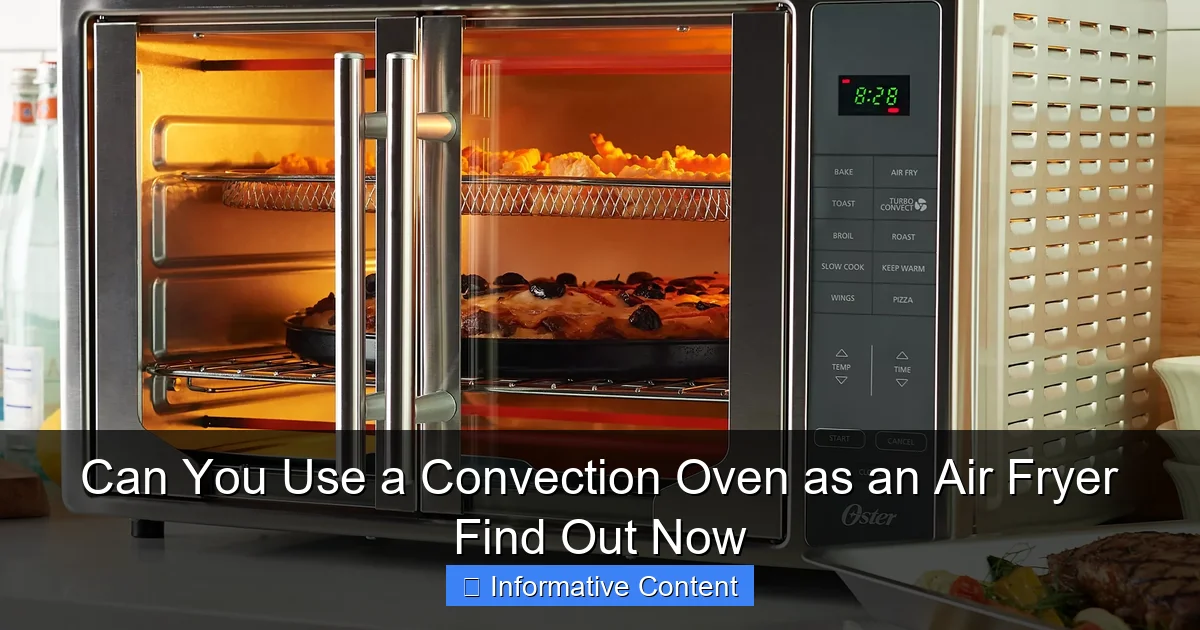
Visual guide about can you use a convection oven as an air fryer
Image source: qvc.scene7.com
Think of it like this: a regular oven is like a still room with a heater in the corner. The heat rises, but it doesn’t move much. A convection oven is like that same room, but with a fan blowing the hot air around. The air hits all sides of your food, so it cooks faster and more evenly. No more rotating trays halfway through!
Air fryers take this idea and go full throttle. They’re basically mini convection ovens with a much more powerful fan, tighter space, and better airflow. Because the cooking chamber is smaller, the hot air moves faster and more intensely — kind of like a wind tunnel for your chicken tenders.
Key Differences in Design and Performance
Here’s where things get interesting. While both use convection, the design and airflow intensity are what really set them apart.
- Size matters: Air fryers are compact — typically 3 to 6 quarts. This small space means hot air swirls around your food much faster than in a full-sized convection oven (which can be 20+ quarts).
- Fan power: Air fryers have high-speed fans that push air at a much higher velocity. This creates that intense “frying” effect with minimal oil.
- Heat concentration: Because air fryers are smaller, heat doesn’t dissipate as easily. Your food gets hotter, faster — and stays hot.
- Placement of the fan: In most air fryers, the fan is on top, blowing air straight down onto the food. In convection ovens, fans are often on the back or side, leading to less direct airflow.
I learned this the hard way when I tried making frozen mozzarella sticks in my convection oven for the first time. They turned out okay — not soggy, but definitely not the golden, crispy perfection I’d gotten from my friend’s air fryer. The cheese didn’t bubble as much, and the coating felt… meh. That’s when I realized: it’s not just about hot air — it’s about how the air moves.
Can You Actually Use a Convection Oven as an Air Fryer?
Yes — With Some Adjustments
The short answer? Yes, you can use a convection oven as an air fryer — but you’ll need to tweak a few things to get close to that air fryer crispiness.
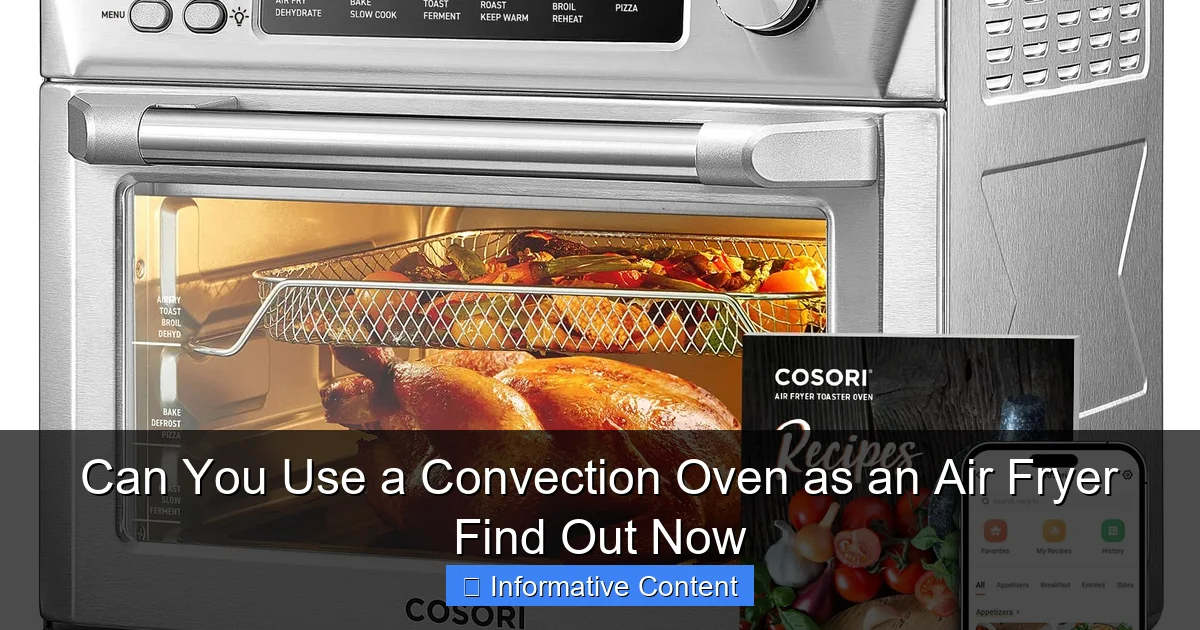
Visual guide about can you use a convection oven as an air fryer
Image source: m.media-amazon.com
Convection ovens already have the core technology: a fan and heating element. So in theory, they can mimic air frying. But because of the larger cavity and slower airflow, you’ll need to:
- Lower the temperature: Air fryers cook at higher effective temperatures due to airflow. So if a recipe says “air fry at 400°F,” try 375°F in your convection oven.
- Shorten the cooking time: Food cooks faster in convection ovens (10–25% faster than regular ovens). Start checking 5–10 minutes earlier than the air fryer time.
- Use a shallow, perforated pan or wire rack: This is crucial. A flat baking sheet blocks airflow. Use a wire rack on a baking sheet or a perforated metal tray (like a pizza pan with holes) to let air circulate under the food.
- Don’t overcrowd: Just like in an air fryer, you need space between items. Overcrowding = steamed food, not crispy food.
- Flip or rotate halfway: Since airflow isn’t as even, flipping helps ensure both sides get crispy.
For example, I tried making sweet potato fries. Air fryer version: 12 minutes at 400°F, no oil, perfectly crisp. Convection oven version: 375°F, on a wire rack, flipped halfway — took 18 minutes, but the results were 85% as good. Not bad for zero extra cost!
What Foods Work Best (and Worst)
Some foods translate better than others. Here’s what I’ve found works — and what doesn’t — when using a convection oven as an air fryer:
- ✅ Best for convection “air frying”:
- Frozen foods (tater tots, mozzarella sticks, chicken nuggets)
- Vegetables (brussels sprouts, broccoli, cauliflower)
- Small cuts of meat (chicken tenders, salmon fillets)
- Baked goods (mini quiches, stuffed mushrooms)
- ⚠️ Tricky or needs extra care:
- French fries (thinner cuts dry out; use a rack + light oil spray)
- Breaded items (breading can fall off; press gently and use a rack)
- Delicate fish (can dry out; lower temp, check early)
- ❌ Not ideal:
- Large cuts (whole chicken, pork shoulder — too big, cooks unevenly)
- Foods needing constant flipping (like stir-fries — just use a skillet)
- Recipes designed for rapid browning (e.g., “crispy” tofu in 8 minutes)
One of my go-to tricks? Use a light spritz of oil — even just 1/2 tsp per serving — to boost crispiness. I keep a spray bottle with avocado or olive oil handy. It makes a huge difference, especially for roasted veggies.
Pro Tips to Get Air Fryer-Like Results
Use the Right Tools and Setup
You don’t need fancy gear, but a few smart choices can make your convection oven *feel* like an air fryer.
- Wire rack on a baking sheet: This is your MVP. It elevates food so hot air can circulate underneath. I use a 12×17-inch rimmed baking sheet with a matching cooling rack. Works like a charm.
- Perforated metal trays: If you have one (or can find a cheap pizza pan with holes), use it instead of a solid sheet. More airflow = better crisp.
- Silicone baking mats with holes: These are newer, but they work! They’re non-stick, easy to clean, and let air flow through.
- Oven-safe wire baskets: Some people use small metal colanders or strainers for smaller items like shrimp or green beans. Just make sure they’re oven-safe!
Pro tip: if you don’t have a wire rack, try folding a piece of parchment paper into a grid and placing it under your food. It’s not perfect, but it helps a little.
Adjust Timing and Temperature Like a Pro
Here’s a simple rule of thumb I use:
- For frozen foods: Start at 375°F and check 5–10 minutes before the air fryer time. (Example: air fryer says 12 minutes → check at 7 minutes in convection.)
- For fresh veggies or meats: Use 350–375°F, and flip halfway. Add 5–10 minutes to air fryer time.
- For breaded items: Lightly spray with oil, use a rack, and bake at 375°F. Flip once.
I keep a little notebook on my fridge with “air fryer → convection” conversions. After a few tries, you’ll start to trust your instincts. But early on, write it down!
Don’t Forget the Oil (But Use It Wisely)
Air fryers use so little oil because the intense airflow does the work. In a convection oven, you might need a tiny bit more — but still way less than traditional frying.
- Use a high-smoke-point oil like avocado, grapeseed, or refined olive oil.
- Spray or brush — don’t pour. A light coat is all you need.
- For veggies, toss in 1–2 tsp oil per pound. For meats, just a spray or wipe.
One time, I forgot to oil my cauliflower florets before roasting them. They turned out dry and a little bitter. Lesson learned: even in convection, a little oil helps with browning and flavor.
When a Dedicated Air Fryer Might Be Worth It
Speed and Convenience
Let’s be real: air fryers win on speed and ease. They heat up faster, cook smaller batches in less time, and are easier to clean (many baskets are dishwasher-safe).
If you’re cooking for one or two people and want crispy food in under 15 minutes, an air fryer is a dream. I use mine for quick lunches: 10-minute chicken tenders, 12-minute roasted veggies, even 8-minute hard-boiled eggs (yes, really).
Convection ovens take longer to preheat (5–10 minutes vs. 2–3 for air fryers) and are better for larger portions. So if you’re feeding a family of four and want to cook two trays of chicken at once, the oven is your friend.
Special Features You Might Miss
Many air fryers come with handy extras:
- Pre-programmed settings: “Fries,” “wings,” “veggies” — one button, no guesswork.
- Compact size: Fits on countertops, easy to store.
- Better airflow design: As we said, that intense wind-tunnel effect is hard to beat.
- Non-stick baskets: Less scrubbing, more eating.
I tried to replicate the “fry” setting on my convection oven using a timer and thermometer. It worked… but it took more effort than pressing a button. If you value convenience, an air fryer might be worth the investment — especially if you use it daily.
Real-World Test: Air Fryer vs. Convection Oven Side by Side
To really test this, I ran a simple experiment: I made three batches of frozen french fries — one in my air fryer, one in my convection oven (with a wire rack), and one in a regular baking sheet (no rack). Same brand, same oil spray, same temperature (375°F). Here’s what happened:
| Appliance | Cook Time | Crispiness | Oil Used | Notes |
|---|---|---|---|---|
| Air Fryer (5.8 qt) | 12 minutes | Very crispy, even browning | 0.5 tsp spray | Perfect texture, no flipping needed |
| Convection Oven (wire rack) | 18 minutes | Crispy on top, slightly soft on bottom | 0.5 tsp spray | Flipped halfway, still good but not as uniform |
| Regular Baking Sheet | 25 minutes | Soft, soggy, uneven | 1 tsp spray | Bottom stuck to pan, needed extra oil |
The results? The air fryer won — no surprise. But the convection oven with a rack came very close, especially if you’re okay with slightly longer cook times. The regular sheet was a disaster — proof that airflow matters more than you’d think.
I also tested brussels sprouts and chicken wings. The wings in the convection oven needed 22 minutes (vs. 18 in the air fryer) and a flip, but the skin was still crispy and flavorful. The sprouts were nearly identical — both caramelized beautifully with a little balsamic glaze.
Final Thoughts: Should You Bother?
So, can you use a convection oven as an air fryer? Absolutely — and you should, especially if you already own one.
It’s not magic, and it won’t replace a dedicated air fryer for speed or convenience. But with a few smart tweaks — the right pan, proper spacing, adjusted time/temp, and a light oil spray — you can get really close to air fryer results without buying another appliance.
Think of it this way: your convection oven is like a Swiss Army knife. It can do a lot of things, including “air frying.” An air fryer is a specialized tool — great for one job, but takes up space and costs money. If you’re short on counter space, budget-conscious, or just don’t want to add more gadgets, stick with your oven and use it wisely.
And if you’re still on the fence? Try this: pick one recipe — maybe frozen fries or roasted veggies — and cook it in your convection oven using the tips above. See how it turns out. Chances are, you’ll be surprised at how good it is. You might even save yourself $80 on an air fryer.
At the end of the day, great food comes from smart cooking, not just fancy machines. Whether you’re using a convection oven, an air fryer, or a cast-iron skillet, the real secret is knowing how your tools work — and using them to their best advantage. Happy (air) frying!
Frequently Asked Questions
Can you use a convection oven as an air fryer?
Yes, you can use a convection oven as an air fryer since both appliances circulate hot air for faster, crispier cooking. However, convection ovens typically require longer preheating and cooking times compared to dedicated air fryers.
What’s the difference between a convection oven and an air fryer?
While both use convection heating, air fryers are smaller with more powerful fans, creating crispier results in less time. Convection ovens have larger cavities and less concentrated airflow, so they mimic air frying but with slightly less efficiency.
How do I adjust recipes when using a convection oven instead of an air fryer?
To use a convection oven as an air fryer, reduce the temperature by 25°F (or 15°C) and increase cooking time by 20–30%. Always preheat the oven and use a wire rack or perforated tray to improve air circulation.
Do I need special cookware to air fry in a convection oven?
Yes, use shallow, oven-safe pans or wire racks to allow maximum airflow around the food. Avoid covering the entire oven rack with solid baking sheets, as this blocks convection airflow critical for air frying results.
Can a convection oven replace an air fryer for healthier cooking?
Absolutely! A convection oven can replace an air fryer for oil-free, crispy dishes like fries or chicken wings. Just ensure proper spacing between food items to achieve the same “air-fried” texture with minimal oil.
Why isn’t my convection oven making food as crispy as an air fryer?
Convection ovens often lack the intense, rapid airflow of air fryers. To improve crispiness, preheat longer, use a wire rack, and avoid overcrowding—key steps when using a convection oven as an air fryer.