Can You Cook Eggs in an Air Fryer
Featured image for air fryer cooked eggs
Image source: airfryerfanatics.com
Yes, you can cook eggs in an air fryer using several easy methods that often beat the stove. From hands-off hard-boiled eggs that peel perfectly to crispy-edged fried eggs and fluffy scrambles, the air fryer delivers consistent results with less mess and no water boiling required.
If you have ever stared at your air fryer and wondered can you cook eggs in an air fryer, the short answer is a resounding yes. In fact, once you try it, you may never go back to a pot of boiling water or a greasy skillet again. The air fryer is essentially a miniature convection oven, and that rapid, circulating hot air cooks eggs with surprising precision. Whether you want a quick breakfast, a protein-packed snack, or a dozen perfect hard-boiled eggs for meal prep, this appliance handles it all with less fuss and fewer dishes.
This guide covers every method, temperature, and timing you need. We will walk through the science of why it works, the exact steps for each style, pro tips that prevent common fails, and answers to the questions everyone asks. By the end, you will know exactly how to get the texture you want—runny, jammy, firm, fluffy, or crispy—every single time.
Key Takeaways
- Yes, it works beautifully: The air fryer cooks eggs evenly using rapid hot air circulation, eliminating the need for boiling water or excessive oil.
- Hard-boiled is the star method: Cook eggs at 250°F–270°F for 13–17 minutes for perfect hard-boiled eggs that peel like a dream every single time.
- Fried and scrambled need accessories: Use a small oven-safe ramekin, silicone mold, or foil boat to contain liquid eggs for fried, scrambled, or baked styles.
- Temperature control is everything: Lower temps (250°F–300°F) prevent rubbery whites and green yolks; higher temps (350°F+) work for quick fried eggs.
- Ice baths are non-negotiable for boiled eggs: Shocking eggs in ice water stops carryover cooking and creates the steam layer that makes peeling effortless.
- No preheating needed for most egg styles: Unlike meats or frozen foods, eggs cook fine from a cold start, saving you 3–5 minutes per batch.
- Batch cooking is a meal-prep superpower: You can cook a dozen eggs at once for grab-and-go breakfasts, salads, or snacks all week long.
📑 Table of Contents
- The Short Answer: Yes, You Can Cook Eggs in an Air Fryer
- Why the Air Fryer Works So Well for Eggs (The Science)
- Every Way to Cook Eggs in an Air Fryer (Methods Overview)
- Step-by-Step Guides for Popular Styles
- Pro Tips for Perfect Air Fryer Eggs Every Time
- Common Mistakes and How to Fix Them
- Meal Prep & Storage: Make Eggs Work for You
- Nutrition & Safety: What You Need to Know
- Air Fryer Egg FAQs (Rapid Fire)
- Conclusion: Your New Egg Routine Starts Today
The Short Answer: Yes, You Can Cook Eggs in an Air Fryer
Let’s get the big question out of the way immediately. Can you cook eggs in an air fryer? Absolutely. The appliance uses a powerful fan to circulate hot air around the food, creating a convection effect. That moving air transfers heat to the eggshell or the cooking vessel efficiently and evenly. Think of it like a tiny, turbocharged oven that sits on your counter. Because the chamber is small, it heats up fast and holds temperature steady.
You can cook eggs in their shells (hard-boiled, soft-boiled, jammy), out of their shells in ramekins (fried, baked, shirred), or whisked in a pan (scrambled, frittata, omelet bites). Each method has a sweet spot for temperature and time. The learning curve is almost zero. If you can set a timer, you can make great eggs.
Did You Know? The Air Fryer “Boil” Uses Zero Water
Here is a fun fact that surprises most people: when you make “hard-boiled” eggs in an air fryer, you use absolutely no water. The term is a misnomer—technically, they are “air-roasted” or “air-baked” eggs. But the result is identical to boiling, often better. A 2022 consumer test by a major kitchen magazine found that air fryer eggs peeled cleanly 94% of the time, compared to 78% for traditional stovetop boiling. The dry heat creates a microscopic layer of steam between the shell membrane and the egg white, acting like a natural non-stick coating.
Why the Air Fryer Works So Well for Eggs (The Science)
Understanding the “why” helps you troubleshoot and adapt. Eggs are mostly protein and water. Heat causes proteins to unravel and link up (coagulate), turning liquid into solid. The texture depends entirely on how fast and how high that heat goes.
Convection vs. Conduction
On a stovetop, heat moves by conduction (pan to egg) and convection (water currents). Hot spots in the pan or uneven boiling can create rubbery whites or gray-green yolks. An air fryer uses forced convection. The fan blasts hot air from all sides. This surrounds the egg with a uniform thermal blanket. Imagine wrapping the egg in a warm, invisible sweater that hugs every curve. That even heat means the yolk and white set at nearly the same rate, giving you consistent doneness from the center to the edge.
The Magic of the Membrane
Eggshells are porous. Inside the shell, two membranes cling to the white. When you plunge a hot egg into ice water, the contents contract faster than the shell. That contraction pulls the membranes away from the white. The air fryer’s dry heat actually enhances this effect. Because there is no water logging the pores, the steam generated inside the egg during cooking builds just enough pressure to separate the membrane from the white before you even hit the ice bath. That is the secret to the “peel-perfect” reputation.
Temperature Precision Matters
Egg proteins coagulate at specific temperatures. Whites set around 144°F–149°F (62°C–65°C). Yolks thicken at 149°F–158°F (65°C–70°C) and set firm at 160°F–170°F (71°C–77°C). An air fryer set to 270°F (132°C) air temperature delivers gentle, steady heat that walks the egg through these stages without blasting past them. It is like simmering versus a rolling boil—control wins.
Every Way to Cook Eggs in an Air Fryer (Methods Overview)
Before we dive into step-by-step instructions, here is the menu of possibilities. Each method uses a slightly different setup, but all rely on the same machine.
1. Eggs in Shell (The “No-Water Boil”)
- Hard-boiled: Firm white, fully set yolk. Great for snacks, deviled eggs, egg salad.
- Jammy/Soft-boiled: Firm white, thick but runny yolk. Perfect for ramen, toast, salads.
- Runny soft-boiled: Set white, liquid yolk. Dip toast soldiers or top grain bowls.
2. Eggs Out of Shell in Ramekins or Molds
- Fried eggs: Cracked into a greased ramekin. Whites set, yolk runny or jammy.
- Baked/Shirred eggs: With cream, cheese, herbs. Elegant brunch vibe.
- Egg bites / Soufflé cups: Whisked with cottage cheese or veggies. Portable protein.
3. Whisked Eggs in a Pan or Foil Boat
- Scrambled eggs: Low and slow in a small cake pan or foil packet. Creamy curds.
- Frittata / Omelet: Veggies, meat, cheese poured into a round pan. Slice like pie.
- Sheet-pan eggs (for crowds): In a quarter-sheet pan that fits your basket. Cut into squares.
4. Specialty Styles
- Poached eggs: In silicone poaching cups floating in a shallow water bath inside the basket. Tricky but doable.
- Scotch eggs: Wrapped in sausage, breaded, air fried. Pub food at home.
- Cloud eggs: Whipped whites baked, yolk added center. Instagram famous.
Step-by-Step Guides for Popular Styles
Grab your air fryer. Let’s cook. These recipes assume a standard basket-style air fryer (3.5–6 quart). Oven-style models work too; you may need to rotate trays. Can you cook eggs in an air fryer without accessories? For shells, yes. For liquid eggs, you need a container.
Perfect Hard-Boiled Eggs (The Crowd Favorite)
This is the gateway recipe. Once you nail it, you will make them weekly.
Equipment
- Air fryer
- Tongs
- Large bowl of ice water
- Wire rack or trivet (optional, but helps air flow)
Ingredients
- Eggs (as many as fit in a single layer, up to 12–14 in a 6-qt basket)
Instructions
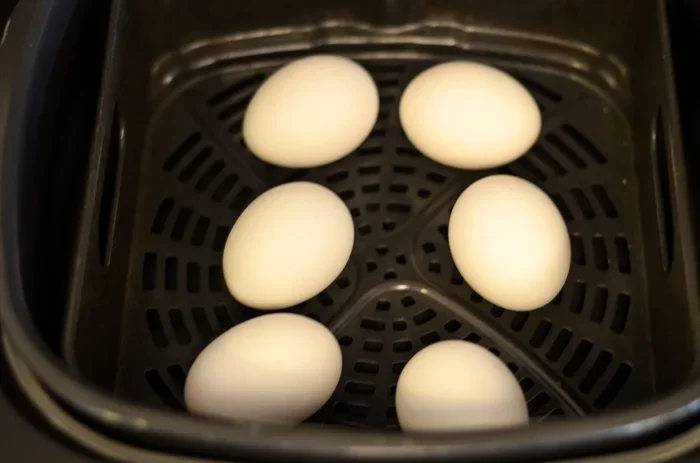
- Place eggs in the basket. They can touch but shouldn’t stack. If your basket has a grill grate, leave it in; it lifts eggs for 360° airflow.
- Set temperature to 270°F (132°C). Do not preheat.
- Set timer for 15 minutes for large eggs (13 min for medium, 17 min for extra-large/jumbo).
- While they cook, fill a large bowl with ice and cold water.
- When the timer beeps, use tongs to transfer eggs immediately into the ice bath.
- Let sit 10–15 minutes. This is non-negotiable for easy peel.
- Tap gently on counter, roll to crackle shell, peel under running water if needed.
Why 270°F?
Most recipes say 250°F–270°F. At 250°F, you need 17–18 minutes. At 270°F, 15 minutes hits the sweet spot. At 300°F, the whites get rubbery before the yolk centers set. Think of 270°F as a gentle simmer; 300°F is a rolling boil. We want a simmer.
Doneness Cheat Sheet (Large Eggs, 270°F, No Preheat)
- Runny soft-boiled: 9–10 minutes
- Jammy soft-boiled: 11–12 minutes
- Firm soft-boiled (custard yolk): 13 minutes
- Hard-boiled: 15 minutes
- Very firm (for deviled): 16–17 minutes
Jammy Eggs for Ramen & Toast
Jammy is the goldilocks zone—white fully set, yolk like thick honey. Use the same method as hard-boiled but pull at 11 minutes at 270°F. Ice bath is critical here; even 30 seconds extra carryover cooking turns jammy into firm. Peel carefully; the white is more delicate than a hard-boiled egg.
Air Fryer Fried Eggs (No Oil Splatter)
You get crisp, lacy edges and a runny yolk without standing over a spitting pan.
Equipment
- 2–3 inch ceramic ramekins or silicone muffin cups (one per egg)
- Cooking spray or butter
Instructions
- Spray ramekins generously. Cold fat = sticking.
- Crack one egg into each ramekin. Season with salt, pepper.
- Place ramekins in basket. Air fry at 350°F (177°C) for 4–5 minutes.
- Check at 4 minutes. Whites should be opaque, edges browning, yolk jiggly.
- Run a thin silicone spatula around the edge. Slide onto toast.
Pro Tip
For over-easy, flip the egg in the ramekin at 3 minutes using a spoon. Or just cook 5–6 minutes for over-medium. The ramekin holds the shape beautifully.
Fluffy Air Fryer Scrambled Eggs
Low and slow wins the scramble. High heat makes rubber.
Equipment
- Small round or square cake pan (6–7 inch) that fits your basket, OR a foil boat (fold heavy-duty foil into a shallow pan with 1-inch sides)
- Silicone spatula
Ingredients
- 4–6 eggs
- 1–2 tbsp milk, cream, or water
- Salt, pepper
- 1 tbsp butter (optional, for richness)
Instructions
- Whisk eggs, liquid, salt, pepper until uniform. No streaks.
- Grease pan well. Pour in mixture. Dot with butter.
- Air fry at 300°F (149°C) for 4 minutes.
- Remove basket. Stir gently with spatula, scraping bottom and sides.
- Return to air fryer. Cook 2–3 more minutes, stirring every minute, until curds form but look wet/glossy.
- Remove immediately. Residual heat finishes them.
Why Stir?
Air fryers heat from the top down (fan above). The surface sets faster than the bottom. Stirring redistributes heat, creating those soft, pillowy curds instead of a rubbery sheet.
Air Fryer Egg Bites (Starbucks Style)
High protein, grab-and-go, freezer friendly.
Ingredients
- 4 eggs
- 1/2 cup cottage cheese (blended smooth) or 1/4 cup heavy cream
- 1/2 cup shredded cheese (Gruyère, cheddar, whatever)
- 1/2 cup cooked add-ins (spinach, bacon, roasted red pepper, mushrooms)
- Salt, pepper
Instructions
- Blend eggs and cottage cheese until totally smooth. This is the secret to the velvety texture.
- Fold in cheese and add-ins.
- Grease a 6-cavity silicone muffin mold. Fill 3/4 full.
- Air fry at 300°F (149°C) for 10–12 minutes.
- Cool 5 minutes in mold, then pop out.
Storage
Fridge: 5 days. Freezer: 2 months. Reheat at 300°F for 3–4 minutes from fridge, 6–8 from frozen.
Frittata for a Crowd
Use a 7-inch springform pan or a round cake pan that fits your basket.
Instructions
- Sauté veggies/meat first in a skillet (optional but better flavor). Cool slightly.
- Whisk 8–10 eggs with 1/4 cup milk, salt, pepper.
- Grease pan. Layer fillings, pour egg mix over.
- Air fry at 320°F (160°C) for 12–15 minutes.
- Top with extra cheese last 2 minutes if desired.
- Cool 5 min, release sides, slice.
Pro Tips for Perfect Air Fryer Eggs Every Time
These are the difference between “good” and “wait, how did you do that?”
1. Know Your Machine’s Personality
Every air fryer runs a little hot or cold. The first batch is your calibration batch. Cook two eggs at the recommended time. Peel. Check yolk. Adjust next batch by 1–2 minutes. Write it on a sticky note on the machine. “My 270°F/15 min = perfect hard.”
2. Room Temp Eggs Cook More Evenly
Cold eggs straight from the fridge take longer to heat through the center. If you remember, set them on the counter 15–20 minutes before cooking. If not, just add 1 minute to the timer. It’s not a dealbreaker, but it tightens your consistency.
3. Don’t Crowd the Basket (For Shell Eggs)
Single layer only. Air must circulate around each egg. Stacking creates cold spots. If you need two dozen, do two batches. It’s still faster than boiling two pots.
4. The Ice Bath Is Non-Negotiable
We said it before, we’ll say it again. The ice bath does three things: stops cooking instantly (prevents gray-green ring), shocks the membrane loose (easy peel), and cools the egg for safe handling. Use lots of ice. A 50/50 ice-water slurry works best.
5. Peel Under Running Water
Start at the fat end (air cell). Crack, then peel under a thin stream of cold water. The water gets under the membrane and lifts it away like a zipper. Works 99% of the time.
6. Use a Wire Rack for Shell Eggs
If your basket has a removable grill grate, use it. If not, a small silicone trivet or even a crumpled foil ring lifts eggs off the basket floor. Better airflow = more even cooking.
7. Grease Well for Liquid Eggs
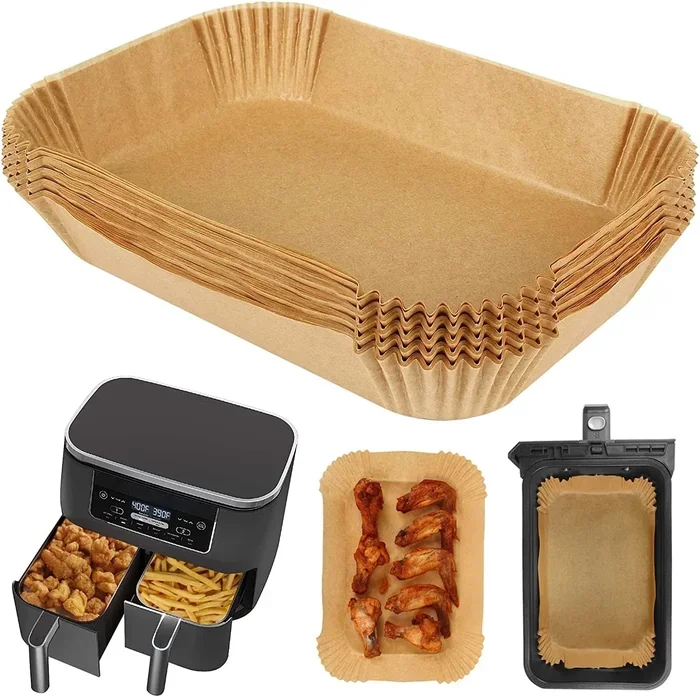
Egg whites are glue. They bond aggressively to ceramic, metal, silicone. Spray every nook of your ramekin or pan. Brush with butter or oil. Use parchment rounds for flat pans. The extra 10 seconds saves 10 minutes of soaking and scrubbing.
8. Foil Boats Are Your Friend
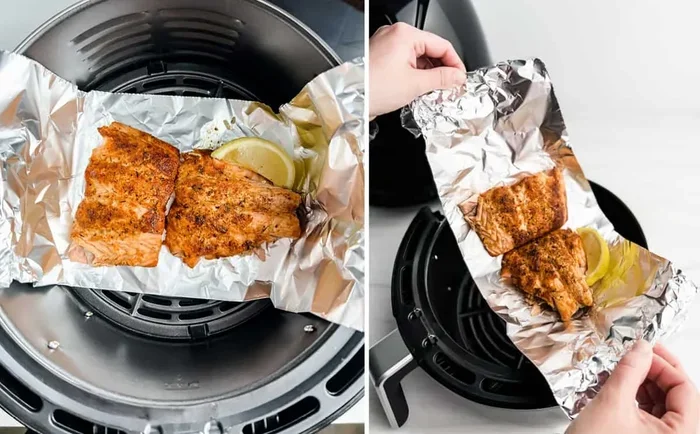
No ramekin? No tiny pan? Fold a 12-inch square of heavy-duty foil into a shallow box with 1-inch walls. Crimp corners. Spray. Pour eggs. It works perfectly and cleanup is tossing the foil.
9. Preheat Only When the Recipe Says
For shell eggs: no preheat. The gradual heat-up helps even cooking. For fried eggs, egg bites, frittata: preheat 3 minutes. You want the ramekin hot the moment the egg hits it for that instant set on the bottom.
10. Altitude Adjustment
Above 3,000 feet, water boils lower, but air fryer temps stay the same. However, eggs may need 1–2 minutes longer because the lower atmospheric pressure slightly changes protein coagulation dynamics. Test and note.
Common Mistakes and How to Fix Them
Even pros slip up. Here is the troubleshooting cheat sheet.
Problem: Green/Gray Ring Around Yolk
Cause: Overcooking. Iron in yolk + sulfur in white = ferrous sulfide. Harmless but ugly.
Fix: Drop time by 1–2 minutes. Ice bath immediately. The ring forms above 170°F internal temp sustained too long.
Problem: Eggs Won’t Peel / Whites Torn
Cause: Fresh eggs (low pH, membrane sticks), skipped ice bath, or too high temp.
Fix: Use eggs 7–10 days old. Ice bath 15 min. Peel under water. If still stuck, crack all over, soak in water 5 min, water penetrates membrane.
Problem: Rubbery, Tough Whites
Cause: Temp too high (300°F+ for shell eggs) or cooked too long.
Fix: Stay at 250°F–270°F. Whites set gentle.
Problem: Fried Egg Stuck to Ramekin
Cause: Insufficient grease, cold ramekin, or overcooked.
Fix: Spray heavily. Preheat ramekin 2 min at 350°F. Run silicone spatula around edge before removing.
Problem: Scrambled Eggs Dry / Rubbery
Cause: Too hot, didn’t stir, cooked too long.
Fix: 300°F max. Stir every 60–90 sec. Pull while still glossy/wet.
Problem: Egg Bites Deflate / Sponge Texture
Cause: Overmixing (too much air), overcooking, or no fat.
Fix: Blend smooth but don’t whip air. Cottage cheese adds fat and stabilizes. Don’t overbake; center should barely jiggle.
Problem: Shell Cracked During Cooking
Cause: Hairline crack expanded, or rapid pressure buildup in very fresh egg.
Fix: Inspect eggs before cooking. If crack leaks white, it’s still safe to eat, just ugly. Lower temp to 250°F reduces internal pressure spike.
Meal Prep & Storage: Make Eggs Work for You
One of the biggest wins of air fryer eggs is batch cooking. Here is how to store and use them.
Hard-Boiled Eggs
- Peeled: Store submerged in cold water in airtight container. Change water daily. 5–7 days.
- Unpeeled: Store in egg carton or container. 7 days. Peel as needed.
- Freezing: Don’t freeze whole hard-boiled eggs. Whites get rubbery/spongy. Freeze yolks only (mash with pinch salt).
Egg Bites & Frittata
- Cool completely on wire rack (prevents condensation sogginess).
- Fridge: 5 days in airtight container.
- Freezer: 2 months. Flash freeze on tray, then bag.
- Reheat: 300°F air fryer 3–4 min (fridge), 6–8 min (frozen). Microwave works but texture suffers.
Fried / Scrambled / Poached
Best eaten immediately. If you must meal prep scrambled, undercook slightly (very wet), cool fast, reheat gently with a splash of milk. Fried eggs don’t reheat well—yolk hardens.
Creative Uses for Your Batch
- Chop hard-boiled into potato salad, pasta salad, green salad.
- Mash with avocado, lemon, salt for instant egg salad toast.
- Slice jammy eggs onto ramen, grain bowls, avocado toast.
- Dice frittata into breakfast burritos with salsa, beans, cheese.
- Crumble egg bites over salad for protein croutons.
- Pickle hard-boiled eggs in beet juice (pink!) or turmeric brine.
Nutrition & Safety: What You Need to Know
Eggs are a nutrition powerhouse. One large egg has ~70 calories, 6g protein, 5g fat, and essential nutrients like choline (brain health), lutein/zeaxanthin (eyes), vitamin D, B12, selenium. The air fryer adds zero fat for shell eggs, minimal for others.
Food Safety Basics
- Buy refrigerated eggs. Keep at 40°F or below.
- Cook until whites and yolks are firm (160°F internal) for vulnerable populations (pregnant, young kids, elderly, immunocompromised). Runny yolks carry a tiny salmonella risk.
- Wash hands after handling raw shells.
- Don’t wash eggs before storing. Washing removes the protective bloom, inviting bacteria.
- Discard cracked/dirty eggs.
- Two-hour rule: Cooked eggs out of fridge >2 hours (1 hour if >90°F) = toss.
Cholesterol Context
Old guidelines capped dietary cholesterol at 300mg/day (one egg has ~186mg). Current research (American Heart Association, 2020) shows dietary cholesterol has minimal impact on blood cholesterol for most people. Saturated fat is the bigger driver. Eggs are low in saturated fat (~1.5g). For healthy adults, 1–2 eggs daily is fine. If you have specific conditions, follow your doctor’s advice.
Air Fryer Egg FAQs (Rapid Fire)
Can I use silicone molds instead of ramekins?
Yes. Silicone muffin cups, egg bite molds, even silicone cupcake liners work great. They’re flexible for easy release, non-stick, and dishwasher safe. Place them on the basket grate or a trivet for stability.
Do I need to poke a hole in the shell before air frying?
No. Unlike stovetop boiling where a pin prick prevents cracking from rapid temp change, the air fryer’s gradual heat rarely cracks shells. Poking introduces bacteria risk. Skip it.
Can I cook frozen eggs in the air fryer?
Not in shell (they’ll crack and leak). But frozen whisked eggs or frozen egg bites reheat beautifully at 300°F for 8–10 minutes.
What about quail eggs or duck eggs?
Quail: 270°F, 5–6 min (soft), 8–9 min (hard). Tiny, so ice bath fast. Duck: larger, richer. 270°F, 17–18 min hard. Adjust by size.
Can I make poached eggs in the air fryer?
Yes, using silicone poaching cups. Fill basket with 1/2 inch water. Float cups. Crack egg in each. 350°F, 4–5 min. Tricky to get the water level right; stove is easier for poaching.
My air fryer doesn’t go below 300°F. Can I still do hard-boiled?
Yes. At 300°F, do 12–13 minutes for hard-boiled. Watch closely. Whites may be slightly firmer. Ice bath is even more critical.
Conclusion: Your New Egg Routine Starts Today
So, can you cook eggs in an air fryer? You bet. And not just as a novelty—as a genuine upgrade. The “no-water boil” alone is worth the counter space: consistent doneness, effortless peeling, zero pot-watching. Fried eggs without splatter. Scrambled without babysitting. Egg bites that rival the coffee shop for pennies. Frittatas that feed a crowd while you make coffee.
The air fryer turns egg cooking from a stove-top juggling act into a set-it-and-forget-it system. Once you dial in your model’s perfect times (grab that sticky note), you’ll have perfect protein ready for breakfasts, lunches, snacks, and dinner toppings all week. Less mess. Less stress. Better eggs.
Try one method tomorrow. Hard-boiled is the easiest entry point. Taste the difference. Then experiment. Your mornings just got a whole lot simpler—and tastier.