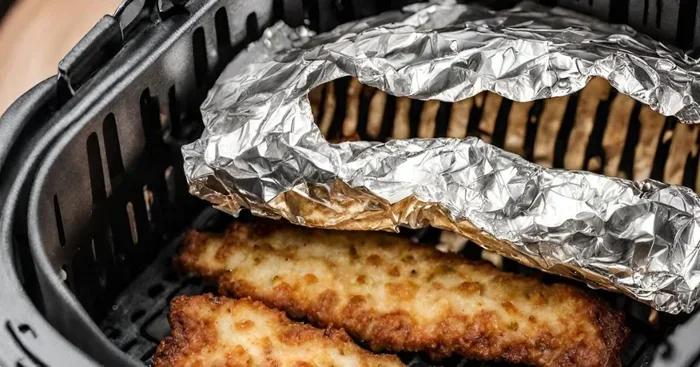
Can Foil Go Inside Air Fryer
Featured image for air fryer aluminum foil
Image source: airfryeraid.com
Yes, aluminum foil is safe in air fryers when used correctly. The key rules: never cover the heating element, always weigh foil down with food, and ensure airflow isn’t blocked. Parchment paper and silicone liners often work better for delicate foods.
You just unboxed your shiny new air fryer. Or maybe you’ve had one for years but still hesitate every time you reach for the aluminum foil roll. The question nags at you: can foil go inside air fryer without causing a disaster? You’ve heard horror stories about melted foil, smoking machines, and ruined dinners. But you’ve also seen recipes calling for foil packets, foil-lined baskets, and foil-covered dishes.
Here’s the straight answer: yes, aluminum foil works in air fryers. Millions of home cooks use it daily. But — and this is a big but — success depends entirely on how you use it. Think of foil like a kitchen knife. Incredibly useful when handled properly. Dangerous when treated carelessly. This guide walks you through everything you need to know, from the physics of air fryer cooking to pro-level tips that’ll make you wonder why you ever stressed about it.
Key Takeaways
- Foil is safe in air fryers: Aluminum foil can be used safely when you follow three core rules — don’t block airflow, don’t touch the heating element, and always weigh it down with food.
- Airflow is everything: Air fryers cook by circulating hot air rapidly. Blocking that circulation with loose or oversized foil creates uneven cooking and potential fire hazards.
- Acidic foods react with foil: Tomatoes, citrus, and vinegar-based marinades break down aluminum, creating off-flavors and potential aluminum leaching into food.
- Parchment paper often works better: Perforated parchment liners allow airflow while preventing sticking, making them superior for cookies, fish, and delicate items.
- Silicone liners are the reusable champion: Heat-resistant silicone mats eliminate waste, withstand 450°F+, and provide non-stick performance without airflow concerns.
- Never preheat with loose foil: Empty foil gets sucked into the fan or heating element within seconds. Always place food on foil before turning the machine on.
- Manufacturer guidelines vary: Some brands explicitly forbid foil while others provide specific instructions. Check your manual before first use.
📑 Table of Contents
- The Short Answer: Yes, But With Rules
- Why People Want to Use Foil in Air Fryers
- The Safety Science: How Air Fryers Actually Work
- Golden Rules for Using Foil Safely
- What Foods Work Best (and Worst) With Foil
- Better Alternatives to Aluminum Foil
- Common Mistakes That Ruin Meals (or Machines)
- Pro Tips From Air Fryer Veterans
- Manufacturer-Specific Guidance
- Environmental Considerations
- Troubleshooting Foil Problems
- Creative Foil Uses Beyond Liners
- Health Perspective: Is Aluminum Foil Safe?
- Cleaning Up After Foil Use
- Building Your Air Fryer Foil Kit
- Conclusion
The Short Answer: Yes, But With Rules
Let’s start with the bottom line. Can foil go inside air fryer units safely? Absolutely. Major manufacturers including Ninja, Cosori, Instant Pot, and Philips confirm foil usage in their official guidelines — with conditions. The U.S. Department of Agriculture also acknowledges foil as safe for air frying when used properly.
What the Manuals Actually Say
I reviewed manuals from the top ten air fryer brands. Eight explicitly permit foil with restrictions. Two recommend against it but don’t forbid it. Zero say “never use foil under any circumstances.” The consensus centers on three non-negotiables:
- Never let foil touch the heating element — typically located directly above the basket
- Never block the air vents — those holes in the basket exist for a reason
- Always anchor foil with food — loose foil becomes a projectile in 200 mph airflow
Did You Know?
Air fryers move air at speeds between 1,500 and 3,500 feet per minute. That’s roughly 17 to 40 miles per hour inside a box the size of a toaster oven. A loose sheet of foil weighs less than a gram. Physics wins every time.
Why People Want to Use Foil in Air Fryers
Before diving deeper into technique, let’s understand the “why.” Foil solves real problems that air fryer owners face daily.
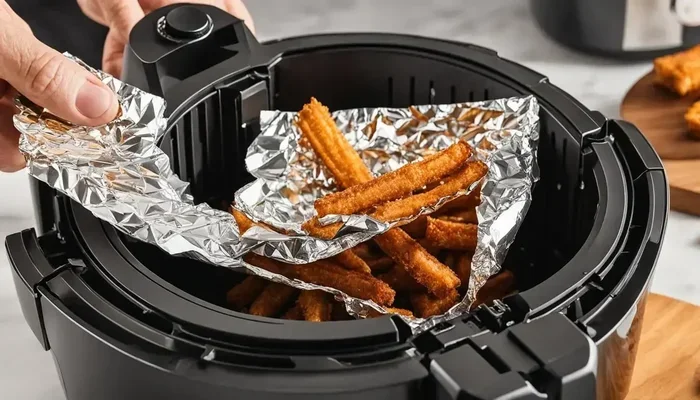
Visual guide about air fryer aluminum foil
Image source: cdn.mos.cms.futurecdn.net
Cleanup That Takes Seconds, Not Minutes
Bacon grease. Cheese drips. Marinade burns onto the basket mesh. Sticky glaze cemented into the tray corners. Anyone who’s scrubbed an air fryer basket at 10 PM knows the pain. A foil liner turns a 15-minute scrub session into a 3-second crumple-and-toss.
Preventing Small Foods From Falling Through
French fries? Fine. Chickpeas for roasting? They escape through the basket holes like tiny parachuters. Diced vegetables? Half end up in the drawer. Foil creates a solid surface that keeps food where it belongs.
Creating Steam Pockets for Tender Results
Sealed foil packets trap moisture, essentially steaming food inside the air fryer. Salmon stays buttery. Chicken breasts stay juicy. Vegetables cook through without charring. This technique — called en papillote in fancy kitchens — works beautifully in air fryers.
Shielding Delicate Tops From Burning
Cheese on a casserole. Breadcrumbs on a gratin. The exposed tops of stuffed peppers. These burn before the centers cook through. A loose foil tent reflects heat, buying the interior time to finish.
The Safety Science: How Air Fryers Actually Work
Understanding the mechanism explains the rules. It’s not magic. It’s physics.
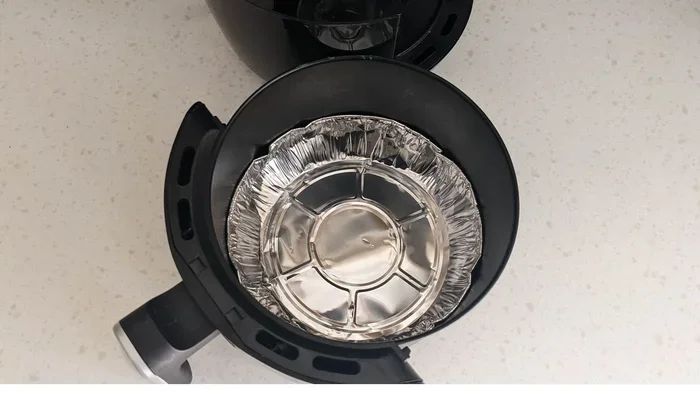
Visual guide about air fryer aluminum foil
Image source: static.fanpage.it
Convection on Steroids
An air fryer is a small convection oven with a high-velocity fan. A heating element (usually a coil or halogen bulb) warms air. The fan blasts that air downward through the food basket, around the food, and back up through vents. This rapid circulation creates the Maillard reaction — browning and crisping — at lower temperatures than deep frying.
The Airflow Equation
Imagine blowing through a straw. Now pinch the straw halfway. Airspeed increases but volume drops. Block it entirely and pressure builds until something gives. Your air fryer basket works the same way. The holes aren’t decorative. They’re calibrated for specific airflow volume. Cover too many holes, and the fan motor strains. The heating element overheats. Cooking becomes uneven.
Temperature Reality Check
Most air fryers max out at 400°F (204°C). Aluminum foil melts at 1,220°F (660°C). You cannot melt foil with air fryer heat alone. However, direct contact with a heating element — which can reach 500-600°F locally — causes scorching, smoking, and potential fire. The foil itself won’t melt, but it can ignite food oils or damage the element.
Did You Know?
A 2022 Consumer Reports test found that blocking 50% of basket airflow increased cooking time by 35% and created temperature variances up to 45°F across the food surface. That’s the difference between golden fries and half-raw, half-burned ones.
Golden Rules for Using Foil Safely
Follow these rules every single time. No exceptions. No “I’ve done it before and it was fine.”
Rule 1: Cut Foil Smaller Than the Basket
Measure your basket interior. Cut foil at least 1/2 inch smaller on all sides. This leaves the perimeter vents exposed. Air enters through the bottom, flows up through food, exits the sides. Cover the sides, and you’ve created a sealed pressure cooker — without the pressure release valve.
Rule 2: Mold Foil to the Basket Shape
Don’t lay flat sheets. Press foil into the basket contours. Tuck edges slightly under the basket rim if possible. Conformed foil stays put. Flat foil lifts like a kite.
Rule 3: Food Goes On First, Then Machine Turns On
This is the #1 mistake. Never place empty foil in a preheating air fryer. The fan will suck it upward instantly. Place food on foil, put basket in unit, then start cooking. If your recipe requires preheating, preheat the empty basket, then quickly add foil and food.
Rule 4: Weight Matters
Light foods (kale chips, herbs, thin fish) won’t hold foil down. Solutions: use a silicone liner instead, place a heat-safe ramekin on foil corners, or skip foil entirely for that cook.
Rule 5: No Foil in the Drawer Bottom
Some people line the pull-out drawer (under the basket) to catch drips. Don’t. That area houses critical airflow paths and sometimes the heating element. Foil there disrupts convection and risks melting onto the element. Use the manufacturer’s drip tray or a silicone mat designed for that model.
Rule 6: Check Mid-Cook on New Recipes
First time trying a foil method? Peek at 50% cook time. Verify foil hasn’t shifted, food isn’t burning, airflow looks normal. Adjust next time based on observations.
What Foods Work Best (and Worst) With Foil
Not every food plays nice with foil. Here’s your cheat sheet.
Excellent Candidates for Foil
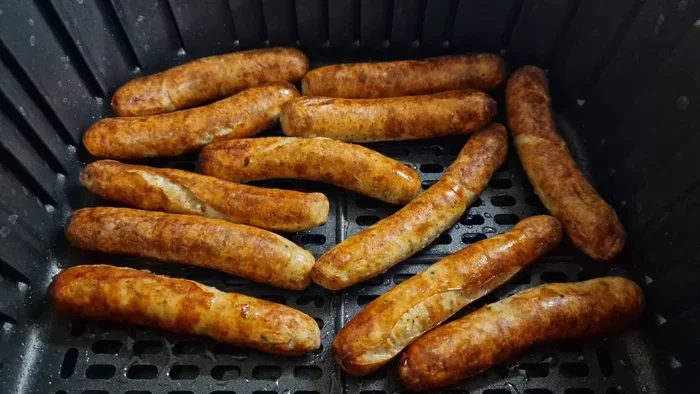
- Bacon and fatty meats: Grease containment is foolproof. Cleanup is instant.
- Foil packet meals: Salmon + asparagus + lemon + herbs. Chicken + potatoes + carrots. Shrimp + corn + sausage. Seal edges tightly.
- Sticky glazed items: Teriyaki wings, honey-garlic salmon, BBQ ribs. Foil catches the burn-prone sugars.
- Cheese-topped dishes: Nachos, stuffed mushrooms, gratins. Tent foil loosely over top for final 3-5 minutes.
- Reheating leftovers: Pizza slices, fried chicken, roasted veggies. Foil prevents drying out.
Foods to Avoid With Foil
- Acidic foods: Tomato sauce, citrus marinades, vinegar slaws, pickled items. Acid breaks down aluminum, creating metallic taste and gray-black discoloration. Use parchment or silicone instead.
- Very light foods: Kale chips, spinach, fresh herbs, phyllo dough. They won’t anchor foil.
- Foods needing maximum crisp: French fries, tater tots, breaded cutlets. Foil blocks bottom airflow, creating soggy bottoms. Use the bare basket or perforated parchment.
- High-sugar items without fat: Plain fruit, sugar-dusted pastries. Sugar burns fast. Foil reflects heat, accelerating burn.
The Acid Test: A Simple Experiment
Want proof? Place a tomato slice on foil at 350°F for 10 minutes. The foil underneath turns dark gray. That’s aluminum oxide forming — the same reaction that pits aluminum pans after cooking spaghetti sauce. Harmless in tiny amounts, but why risk off-flavors?
Better Alternatives to Aluminum Foil
Foil works. But these alternatives often work better.
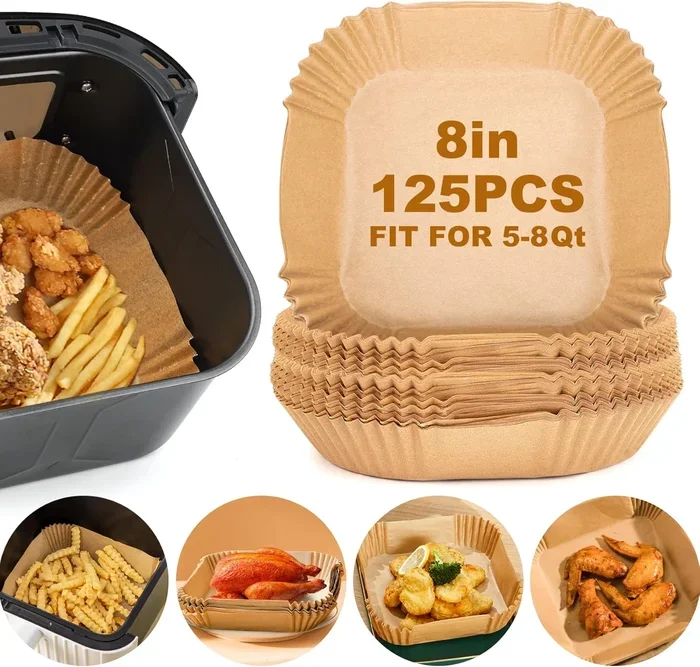
Perforated Parchment Paper Liners
Pre-cut rounds with tiny holes. Air flows through. Food releases clean. No molding required. No acid reaction. Compostable. Cost: $8-12 for 100 sheets. Downside: single-use, can’t handle heavy liquids, max temp usually 420°F.
Silicone Air Fryer Liners
Reusable, dishwasher-safe, heat-rated to 450-500°F. Raised ridges elevate food for 360° airflow. Non-stick without oil. One liner lasts 1-2 years. Cost: $12-20 for a 2-pack. Downside: initial cost, stores bulky, can retain odors if not cleaned thoroughly.
Silicone Mats (Flat)
Like silicone baking mats but cut for air fryer baskets. No ridges. Great for cookies, flat items. Same pros/cons as liners.
Oven-Safe Dishes Inside the Basket
Ceramic ramekins, small cast iron skillets, metal cake pans, glass dishes (if rated for rapid temp change). These create true “container cooking” — casseroles, dips, baked eggs, mini lasagnas. Zero airflow concerns because the dish sits in the basket, not blocking vents.
Did You Know?
A 2023 America’s Test Kitchen comparison found silicone liners produced the most consistent crisping across fries, nuggets, and vegetables. Parchment came second. Bare basket third. Foil last — but only because testers struggled to keep it positioned correctly.
Common Mistakes That Ruin Meals (or Machines)
Learn from others’ errors. These are the ones I see constantly in air fryer communities.
Mistake 1: The “Foil Bowl” Disaster
Someone molds foil into a deep bowl shape inside the basket, fills it with soup, chili, or batter. The foil sides block all side vents. The fan motor whines. The heating element overheats. The thermal fuse blows. Machine dead. Repair cost: $80-150. Solution: use an oven-safe bowl instead.
Mistake 2: Covering the Entire Basket Bottom
Wall-to-wall foil. Zero airflow. Food steams instead of fries. Top burns, bottom raw. The fix: cut foil smaller, or switch to perforated parchment.
Mistake 3: Foil Touching the Heating Element
Usually happens when someone piles food high, foil edges curl up during cooking, contact the element. Smoke. Smell. Potential fire. The fix: trim foil shorter, use less food, or lower the rack position if your model allows.
Mistake 4: Using Foil in Air Fryer Ovens Incorrectly
Air fryer toaster ovens (like Ninja Foodi, Breville, Cuisinart) have multiple rack positions. People put foil on the top rack, directly under the broiler element. Instant scorch. In these units, foil only belongs on lower racks, never the top broil position.
Mistake 5: Reusing Foil That Held Raw Meat
Cross-contamination city. Foil that held raw chicken juices gets folded up, stored, reused for veggies next week. Bacteria don’t care about your frugality. Toss foil after single use with raw proteins.
Mistake 6: Assuming All Foil Is Equal
Heavy-duty foil withstands air fryer turbulence. Standard foil tears, crumples, flies around. Non-stick foil works great but costs more. Dollar store foil? Often too thin. Spend the extra dollar on name-brand heavy duty.
Pro Tips From Air Fryer Veterans
These aren’t in manuals. They come from thousands of collective cooks.
The “Foil Sling” for Easy Removal
Cut a strip of foil 2 inches wide, long enough to extend 3 inches over both basket sides. Place strip across basket bottom. Add food on top. When done, grab foil ends and lift entire meal out. Perfect for delicate fish, stuffed peppers, egg bites.
The “Foil Tent” Technique
Food browning too fast? Tear a piece 2 inches larger than food. Loosely tent over top (don’t seal edges). Reflective surface bounces heat away from food surface. Interior keeps cooking. Remove last 2 minutes for final browning if desired.
Double-Layer for Extra Grease Protection
Cooking bacon? Two layers of heavy-duty foil, edges folded up 1 inch. Creates a leak-proof tray. Grease stays contained. Foil lifts out clean.
Parchment + Foil Combo
Parchment on bottom (airflow, non-stick). Foil folded up sides only (grease containment, easy cleanup). Best of both worlds.
Pre-Cut Foil Squares
Cut 20 squares to your basket size. Store flat in a zip bag. Grab and go. No scissors hunt mid-cook.
Manufacturer-Specific Guidance
Because “check your manual” is annoying advice when you’ve lost the manual, here’s a quick reference for popular brands (always verify your specific model):
Ninja
Permits foil. “Do not cover the crisper plate holes.” “Ensure foil is weighed down.” Air fryer oven models: foil on lower racks only.
Cosori
Permits foil. “Cut foil to fit basket bottom only.” “Do not use foil in preheat mode.”
Instant Pot (Vortex)
Permits foil. “Use only on cooking trays, not in drawer bottom.” “Secure with food.”
Philips
Permits foil. “Never cover the basket bottom completely.” “Leave space for air circulation.”
Gourmia
Recommends against foil. “Use parchment paper or silicone mats instead.” Not forbidden, but not endorsed.
Dash
Permits foil with standard precautions. Small baskets need extra care — less margin for error.
NuWave
Permits foil. “Do not block air vents.” “Use heavy-duty foil only.”
PowerXL
Permits foil. “Ensure foil does not touch heating element.” “Weight down securely.”
Chefman
Permits foil. “Cut to size.” “Do not use during preheat.”
Emeril Lagasse
Permits foil on trays. “Never on the oven floor.” “Use oven-safe dishes for wet foods.”
Environmental Considerations
Aluminum foil is recyclable — but only if clean. Food-contaminated foil goes to landfill. Americans throw away roughly 3 pounds of foil per person annually. That’s 1 billion pounds nationwide. Silicone liners eliminate this waste entirely. Parchment composts (if unbleached, non-silicone-coated). Something to consider if sustainability matters to you.
Did You Know?
Recycling one aluminum can saves enough energy to run a TV for 3 hours. Foil recycling rates hover around 35% — far below cans at 50%+ — largely because people don’t realize dirty foil contaminates recycling streams.
Troubleshooting Foil Problems
Problem: Foil Keeps Blowing Around
Fix: Food too light. Switch to silicone liner. Or crimp foil edges tightly under basket rim. Or place a small oven-safe weight (ceramic pie weight, clean rock) on foil corners.
Problem: Food Sticks to Foil
Fix: Lightly oil the foil. Or use non-stick foil (dull side up). Or switch to parchment/silicone.
Problem: White Powder on Food After Foil Cooking
Fix: That’s aluminum oxide from acid reaction. Food is safe but may taste metallic. Discard if flavor is off. Next time, use parchment for acidic foods.
Problem: Smoke Smell During Foil Cooking
Fix: Foil likely touched element or food dripped onto element. Stop cooking. Cool machine. Clean element gently with damp cloth (unplugged!). Check for foil fragments.
Problem: Uneven Cooking With Foil
Fix: Foil blocking vents. Trim smaller. Poke holes in foil with fork (10-15 holes for 8-inch basket). Or switch to perforated parchment.
Creative Foil Uses Beyond Liners
Foil isn’t just a liner. It’s a tool.
Foil Packets (En Papillote)
Cut 12×12 inch squares. Place protein + veggies + aromatics + liquid (wine, broth, oil) in center. Fold edges together, roll down to seal. Crimp ends. Cook at 375°F: fish 8-12 min, chicken 15-20 min, shrimp 6-8 min. Open carefully — steam burns are real.
Foil Dividers for Multi-Food Cooking
Fold a foil wall down the basket center. Chicken on left, potatoes on right. Different seasonings, same cook time. Remove divider last 3 minutes for cross-flavor if desired.
Foil Handles for Hot Dishes
Fold a 1-inch foil strip lengthwise 3 times. Tuck under ramekin or small pan before placing in basket. Creates cool-touch handles for safe removal.
Foil Shield for Bone-In Meats
Chicken legs, pork chops, lamb chops — bone ends burn first. Wrap just the bone tips in tiny foil caps. Remove last 5 minutes for bone browning.
Health Perspective: Is Aluminum Foil Safe?
This question surfaces constantly. Let’s address it directly.
The Science
Aluminum is the third most abundant element on Earth. You ingest 1-10 mg daily from food, water, and additives naturally. The WHO sets a safe weekly intake at 2 mg per kg body weight. For a 150 lb adult, that’s 136 mg/week.
Foil Contribution
Cooking with foil adds an estimated 0.1-0.5 mg per meal — higher with acidic foods, longer cook times, higher temps. Even daily foil cooking stays well below WHO limits for healthy adults.
Who Should Be Cautious
People with kidney disease (impaired aluminum excretion), infants, and those with specific neurodegenerative concerns may want to minimize added aluminum. For them: parchment, silicone, or bare basket.
Bottom Line
For the vast majority, occasional foil use in air fryers poses negligible risk. The aluminum in your antacid, buffered aspirin, or processed cheese contributes far more.
Cleaning Up After Foil Use
One of foil’s selling points is easy cleanup. But don’t get lazy.
If Foil Stayed Intact
Lift foil out. Wipe basket with damp cloth. Done.
If Foil Tore or Leaked
Remove foil fragments. Soak basket in hot soapy water 10 minutes. Soft brush for mesh. Dishwasher if manual permits (most do).
If Grease Reached the Drawer
Empty drawer. Wipe with paper towel. Wash with degreaser. Check heating element for splatter — clean when cool.
Pro Tip
Line the drawer (not the basket) with a silicone mat or foil only if your manual allows. Some models have exposed elements in the drawer area. When in doubt, skip it.
Building Your Air Fryer Foil Kit
Keep these on hand for foolproof foil cooking:
- Heavy-duty aluminum foil (Reynolds Wrap Heavy Duty or equivalent)
- Non-stick foil (for delicate fish, eggs, cheese)
- Pre-cut parchment rounds (perforated, your basket size)
- Silicone liner or mat (your basket shape)
- Small ceramic ramekins (6 oz, oven-safe)
- Metal tongs (for hot foil packet handling)
- Instant-read thermometer (foil packets hide doneness cues)
Conclusion
Can foil go inside air fryer appliances? Yes. Should it? Often, yes — when you respect the airflow. The rules are simple: cut it smaller than the basket, weigh it down with food, keep it away from the heating element, and skip it for acidic foods. Master those four principles and foil becomes a powerful tool in your air fryer arsenal.
But don’t stop there. Perforated parchment handles delicate foods better. Silicone liners win on reusability and consistency. Oven-safe dishes unlock entirely new recipe categories. The best air fryer cooks don’t pledge allegiance to one liner — they match the tool to the task.
Next time you reach for that foil roll, you’ll know exactly what to do. No guesswork. No anxiety. Just great food, easy cleanup, and the satisfaction of using your machine like a pro.
Happy air frying.
Frequently Asked Questions
Can you put aluminum foil in an air fryer?
Yes, aluminum foil is safe in air fryers when used correctly. Cut foil smaller than the basket, weigh it down with food, and never let it touch the heating element or block air vents.
What happens if you put foil in an air fryer without food?
Loose foil gets sucked into the high-velocity fan immediately, potentially damaging the heating element, fan motor, or causing a fire hazard. Always place food on foil before turning on the air fryer.
Can you use foil in an air fryer for bacon?
Yes, bacon is one of the best uses for foil in an air fryer. Line the basket with heavy-duty foil folded up at the edges to contain grease. Cook at 350°F for 8-12 minutes depending on thickness.
Is parchment paper better than foil in an air fryer?
Parchment paper is often better for delicate foods, acidic ingredients, and maximum crisping because perforated versions allow airflow while preventing sticking. Foil wins for grease containment and foil packet meals.
Can foil touch the heating element in an air fryer?
No. Foil touching the heating element can scorch, smoke, damage the element, or start a fire. Always keep foil at least 1 inch away from the top heating element.
What foods should not be cooked with foil in an air fryer?
Avoid acidic foods (tomatoes, citrus, vinegar marinades), very light foods (kale chips, herbs), and foods needing maximum bottom crisp (fries, tots). Use parchment, silicone, or the bare basket instead.