Can Air Fryer Kill Bacteria
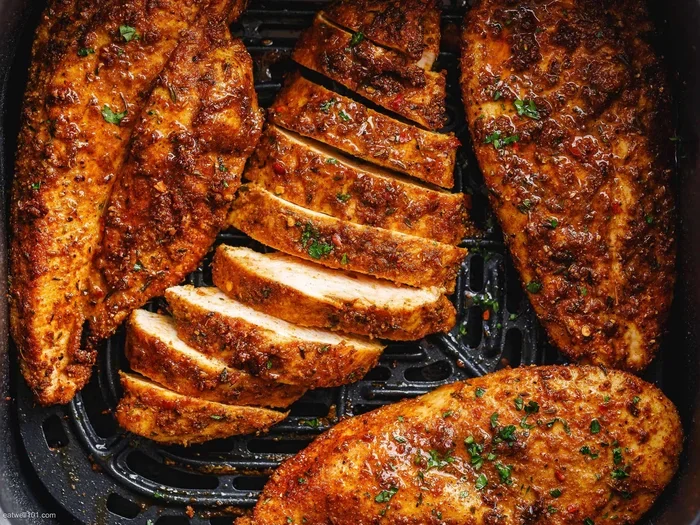
Featured image for air fryer cooking chicken
Image source: recipes.net
Yes, air fryers can kill bacteria when food reaches proper internal temperatures (165°F/74°C for most meats). The hot circulating air acts like a mini convection oven, but the appliance itself doesn’t sanitize surfaces. Always use a food thermometer and clean your air fryer thoroughly between uses to prevent cross-contamination.
You just pulled golden, crispy chicken wings from your air fryer. They look perfect. They smell amazing. But a nagging question pops into your head: Did the heat actually kill the bacteria, or just make them crispy? It’s a fair question. We all want safe food without overcooking everything into leather.
The short answer is yes — an air fryer can kill bacteria — but only when the food inside reaches the right temperature for the right amount of time. The machine itself is just a tool. Think of it like a very efficient, very small convection oven. The fan circulates superheated air around your food. That air transfers heat energy. That heat energy kills microbes. Simple physics, not magic.
Key Takeaways
- Temperature matters most: Bacteria die at specific temperatures, not because of the air fryer technology itself.
- 165°F is the magic number: Most harmful bacteria in poultry and leftovers die instantly at 165°F (74°C).
- Surface cleaning is separate: The air fryer basket and interior need manual washing with hot, soapy water.
- Cross-contamination risk is real: Raw juices on the basket can transfer bacteria to cooked food if not cleaned properly.
- Preheating helps consistency: Preheating ensures food hits safe temperatures faster and more evenly.
- Don’t rely on visual cues: Color and texture aren’t reliable indicators of safety — always use a food thermometer.
- Frozen foods need full cooking: Many frozen products are raw despite appearing cooked; follow package instructions precisely.
📑 Table of Contents
- How Heat Kills Bacteria: The Science Made Simple
- What Temperature Does Your Food Actually Need?
- Air Fryer vs. Oven vs. Microwave: Who Wins on Bacteria?
- The Hidden Danger: Your Air Fryer Basket Is Not Self-Cleaning
- Common Mistakes That Let Bacteria Win
- Special Situations: When Extra Caution Is Needed
- Pro Tips for Safer Air Frying Every Time
- Conclusion: Your Air Fryer Is a Tool — You’re the Safety System
How Heat Kills Bacteria: The Science Made Simple
Think of Bacteria Like Tiny Balloons
Imagine a balloon. It holds its shape because the air inside pushes out against the rubber. Bacteria are similar. They have cell walls and membranes that hold their insides together. Heat makes molecules vibrate faster. Enough vibration, and the structure falls apart. Proteins unravel. Enzymes stop working. The membrane bursts. The bacterium dies.
This process is called thermal death. Every species has a specific temperature where this happens rapidly. For Salmonella, E. coli, and Campylobacter — the usual suspects in food poisoning — that temperature is around 165°F (74°C). At that heat, they die in seconds. At lower temps, it takes longer. Much longer.
The Time-Temperature Relationship
Here’s where it gets interesting. You don’t always need 165°F instantly. Pasteurization is a curve, not a cliff. Hold chicken at 150°F (66°C) for about 3 minutes, and you get the same kill rate as 165°F for a few seconds. The USDA charts this out. But — and this is crucial — you must know the exact internal temperature the whole time. An air fryer’s display shows air temperature, not food temperature. They’re not the same thing.
Did You Know? According to the CDC, 1 in 6 Americans (about 48 million people) get sick from foodborne illnesses each year. Proper cooking temperatures prevent the vast majority of these cases.
What Temperature Does Your Food Actually Need?
The USDA Safe Minimum Internal Temperature Chart
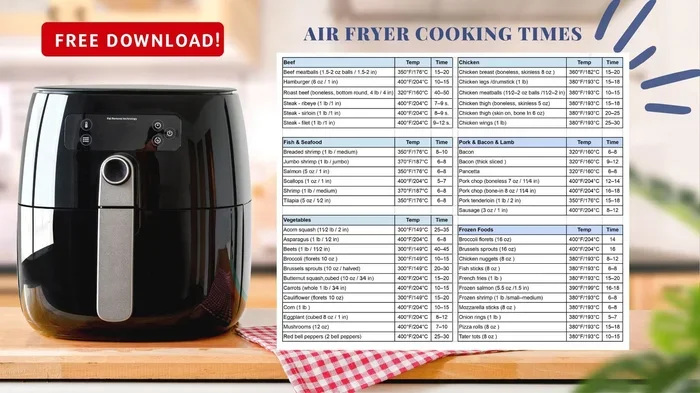
Print this. Stick it on your fridge. These are the internal temperatures your food must reach, measured at the thickest part:
Visual guide about air fryer cooking chicken
Image source: iheartumami.com
- Poultry (chicken, turkey, duck): 165°F (74°C) — instant kill
- Ground meats (beef, pork, lamb, veal): 160°F (71°C)
- Whole cuts of beef, pork, lamb, veal (steaks, roasts, chops): 145°F (63°C) + 3-minute rest
- Fish and shellfish: 145°F (63°C)
- Leftovers and casseroles: 165°F (74°C)
- Egg dishes: 160°F (71°C)
Why “Rest Time” Matters for Steaks and Roasts
That “3-minute rest” for whole cuts isn’t optional. During the rest, the temperature equalizes and continues killing bacteria. The heat penetrates deeper. Cutting early lets juices — and heat — escape. You lose the safety margin. Think of it like letting a hot pan cool on the stove vs. dunking it in cold water. One finishes the job. The other stops it.
Air Fryer vs. Oven vs. Microwave: Who Wins on Bacteria?
All Heat Kills — But Delivery Differs
An oven uses still hot air (unless convection). A microwave excites water molecules. An air fryer blasts hot air at high speed. The killing mechanism is identical: heat. The difference is speed and evenness.
Visual guide about air fryer cooking chicken
Image source: i.pinimg.com
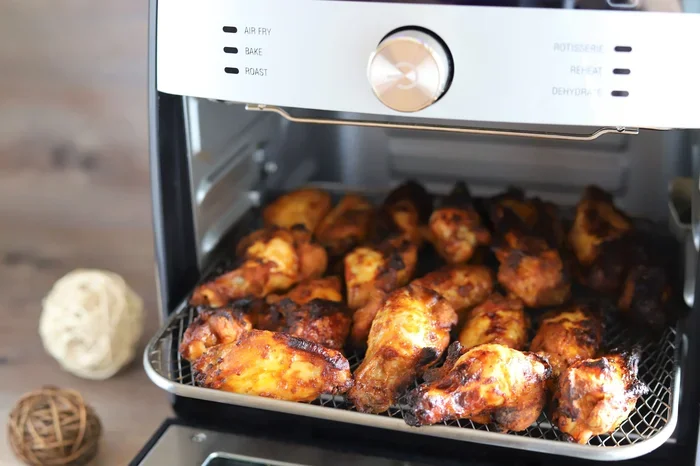
Air fryers win on speed. That compact chamber and powerful fan mean heat transfer happens fast. A chicken breast that takes 25 minutes in a 375°F oven might take 14 minutes in a 375°F air fryer. Less time in the “danger zone” (40°F–140°F / 4°C–60°C) where bacteria multiply rapidly. That’s a safety win.
The Evenness Trap
But air fryers have a flaw. The fan creates hot spots. The top rack cooks faster. The bottom of the basket shields food from direct airflow. A thick burger might hit 165°F on top while the center sits at 130°F. That’s why rotating, flipping, and — most importantly — thermometer probing are non-negotiable.
Did You Know? A 2021 study by the University of Illinois found that air fryers reduced Salmonella on chicken surfaces by 99.9% when cooked to 165°F internal temperature — comparable to conventional ovens.
The Hidden Danger: Your Air Fryer Basket Is Not Self-Cleaning
Cooking Kills Bacteria In Food, Not On The Machine
This is the biggest misconception. People think running the air fryer empty at 400°F “sanitizes” it. It doesn’t. Not fully. Grease splatter, crumbs, and raw meat juices land on the basket, the heating element, the drawer, the exterior handle. The air temperature hits 400°F. The surface of that dried sauce spot? Maybe 200°F. Maybe less. Bacteria survive there. Then you toss in toast for breakfast. Cross-contamination served.
How to Actually Clean Your Air Fryer
Treat it like a cutting board that touches raw chicken. Every. Single. Time.
- Unplug and cool completely. Hot plastic warps. Hot metal burns.
- Remove basket and pan. Soak in hot, soapy water. 10 minutes minimum.
- Scrub with non-abrasive sponge. Steel wool scratches non-stick coating. Scratches harbor bacteria.
- Wipe interior with damp cloth. Avoid the heating element if possible. If you must clean it, use a barely damp cloth when stone cold.
- Dry everything thoroughly. Moisture = mold. Mold = not what you want in your next batch of fries.
- Deep clean weekly: Baking soda paste for stuck grease. Vinegar wipe for odors. Dishwasher-safe parts? Top rack only.
The Silicone Liner Hack
Silicone liners or parchment paper liners (perforated for airflow) create a barrier. They catch drips. They lift out. They go in the dishwasher. They don’t replace cleaning — but they make it 10x easier and reduce cross-contamination risk dramatically.
Common Mistakes That Let Bacteria Win
Mistake #1: Trusting the Timer, Not the Thermometer
Recipes say “12 minutes at 380°F.” Your chicken breast is thicker than the recipe tester’s. Your air fryer runs 15°F cool. The center is raw. Always probe. Instant-read thermometers cost $10. Food poisoning costs days of misery — or worse.
Mistake #2: Cooking Frozen Raw Breaded Stuff Without Thawing
Frozen chicken nuggets, cordon bleu, stuffed breasts — many are raw inside. The breading is pre-fried for color. The meat never saw heat. Air fryer instructions on the box assume you’ll cook to temp. If you just “heat until golden,” you eat raw chicken. Always check temp on frozen raw products.
Mistake #3: Piling Food Too Deep
Air fryers need airflow. A 2-inch mound of fries? The bottom ones steam. The top ones burn. The middle? Danger zone city. Single layer. Shake halfway. Cook in batches. It takes longer. It’s safer. It tastes better anyway.
Mistake #4: Reheating Leftovers to “Warm” Instead of “Hot”
Leftovers need 165°F. Not “steaming.” Not “hot to touch.” 165°F. That leftover rice? Bacillus cereus spores survive cooking. They germinate at room temp. They produce toxin that heat doesn’t destroy. Reheating to 165°F kills the bacteria — but not the toxin already made. Cool leftovers fast. Reheat thoroughly. Don’t keep rice more than 1 day.
Special Situations: When Extra Caution Is Needed
Cooking for High-Risk Groups
Pregnant women, young children, elderly, immunocompromised — for them, food poisoning isn’t just miserable. It can be fatal. Zero tolerance for pink chicken. Zero tolerance for rare burgers. Cook to the higher end of safe temps. Use a thermometer every single time. Clean the air fryer like a surgical instrument.
Marinades and Sauces: The Double-Dip Danger
You marinate chicken. You brush sauce on during the last 5 minutes. You serve extra sauce on the side. Stop. That brush touched raw chicken juice. That sauce bowl now has Salmonella. Reserve fresh sauce for serving. Boil used marinade 1 minute if you must reuse it. Better yet: don’t.
Dehydrating and Low-Temp Functions
Some air fryers have “dehydrate” at 120°F–160°F. This is not cooking. This is drying. Jerky made at 160°F for 4 hours? Safe if the meat hits 160°F internally the whole time. But most home dehydrators (and air fryers on this setting) fluctuate. For jerky, the USDA recommends pre-heating meat to 160°F before dehydrating. Or use a dedicated dehydrator with verified temp control.
Pro Tips for Safer Air Frying Every Time
Get a Good Thermometer (Or Two)
- Instant-read digital: $15–$25. Thin probe. Reads in 2–3 seconds. Essential.
- Leave-in probe with alarm: $30–$60. Stays in food. Beeps at target temp. Game-changer for roasts.
- Calibrate it: Ice water = 32°F (0°C). Boiling water = 212°F (100°C) at sea level. Adjust or replace if off.
Preheat. Every Time.
3–5 minutes at cook temp. Why? Food goes in, heat hits immediately. No “warm-up lag” where surface bacteria party while the center stays cold. Preheating cuts total cook time and improves texture. Win-win.
Use the “Shake and Check” Method
Halfway through, pull the basket. Shake or flip. Probe the thickest piece. If it’s close, finish. If not, add time. This catches uneven cooking early. It also redistributes food for better airflow.
Keep a Cooking Log
Note: “Chicken breast, 6oz, 380°F, 14 min, flipped at 7, hit 165°F.” Next time, you know. You tweak. You build your own safe, reliable cookbook for your air fryer. Every model runs different. Your log accounts for that.
Conclusion: Your Air Fryer Is a Tool — You’re the Safety System
Can an air fryer kill bacteria? Absolutely. It’s a heat delivery machine. Heat kills bacteria. But the air fryer doesn’t know when your chicken hits 165°F. It doesn’t know if you washed the basket after raw pork. It doesn’t know if you probed the center or just guessed by color.
You do. Or you will, starting now.
Use a thermometer. Clean like you mean it. Respect the danger zone. Cook to temp, not time. Treat your air fryer with the same care you’d give a grill, an oven, a stovetop. Because the physics are the same. The stakes are the same. And the reward — crispy, juicy, safe food — is 100% worth the extra 30 seconds it takes to probe and wipe.
Next time you hear that satisfying ding, you’ll know: it’s not just done. It’s safe. And that’s the best crunch of all.
Frequently Asked Questions
Can air fryer kill bacteria on the basket surface?
No, running an air fryer empty does not reliably sanitize the basket or interior. Grease and food residue can insulate bacteria from the heat. Always wash removable parts with hot, soapy water after each use, especially after cooking raw meat.
What temperature kills bacteria in an air fryer?
Most harmful bacteria die rapidly at 165°F (74°C) internal food temperature. Ground meats need 160°F (71°C), while whole cuts of beef or pork need 145°F (63°C) plus a 3-minute rest. The air fryer’s set temperature is not the same as the food’s internal temperature.
Is it safe to cook raw chicken in an air fryer?
Yes, raw chicken is safe to cook in an air fryer if it reaches 165°F (74°C) internally. Use a meat thermometer to verify. Do not rely on cooking time or color alone. Clean the basket thoroughly afterward to prevent cross-contamination.
Can you get food poisoning from an air fryer?
Yes, if food is undercooked or cross-contamination occurs. Common causes include not reaching safe internal temperatures, using the same utensils for raw and cooked food, and not cleaning the basket between uses. Proper technique prevents virtually all risk.
Does air frying kill more bacteria than oven baking?
No, both methods kill bacteria equally well when food reaches the same internal temperature. Air fryers cook faster due to better heat transfer, which reduces time in the bacterial “danger zone” (40–140°F), but the lethal mechanism — heat — is identical.
How do I know if my air fried food is safe to eat?
Use an instant-read food thermometer inserted into the thickest part of the food. Verify it meets USDA safe minimum internal temperatures. Visual cues like color, texture, or juice clarity are unreliable indicators of safety.