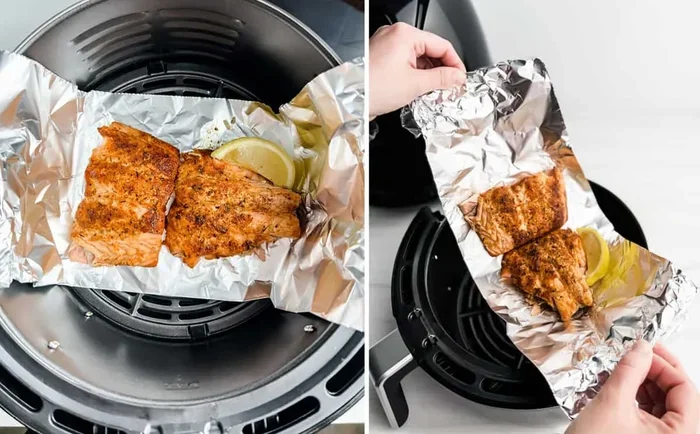
Featured image for tin foil in air fryer
Image source: northernyum.com
Yes, you can use tin foil in the air fryer—but with important precautions. The foil must never touch the heating element or block airflow, and it should always be weighed down by food. When used correctly, foil helps with easy cleanup, prevents small foods from falling through the basket, and can even improve cooking results for certain recipes.
Picture this: you’ve just bought a shiny new air fryer, you’re excited to make crispy fries and juicy chicken wings, and then you spot a recipe that calls for tin foil. Your first instinct? “Wait—can you actually use tin foil in the air fryer, or am I about to ruin my appliance (or worse, set my kitchen on fire)?”
You’re definitely not alone in wondering this. Since air fryers exploded in popularity—over 40 million units were sold globally in 2023 alone—home cooks everywhere have been testing the limits of what they can and cannot put inside these countertop convection ovens. Tin foil, also known as aluminum foil, is one of the most debated topics in air fryer communities.
The good news? In most cases, tin foil is perfectly safe to use in an air fryer. But—and this is a big “but”—there are specific rules you need to follow. Think of it like driving a car: totally safe when you follow the rules, but risky when you don’t. This comprehensive guide will walk you through everything you need to know, from the science behind why foil works to the exact mistakes you need to avoid.
Key Takeaways
- Safety First: Tin foil is safe in air fryers only when it doesn’t contact the heating element or block critical airflow vents.
- Weight It Down: Always place food on top of the foil to prevent it from being sucked into the fan or heating mechanism.
- Avoid Acidic Foods: Don’t wrap highly acidic ingredients like tomatoes or citrus in foil, as a chemical reaction can affect taste and potentially the coating.
- Never Cover All Holes: Air fryers rely on hot air circulation; blocking all vents defeats the purpose and can cause overheating.
- Check Your Manual: Some manufacturers explicitly prohibit foil use—always verify your specific model’s guidelines first.
- Alternatives Exist: Parchment paper liners designed for air fryers offer similar benefits with less risk for beginners.
- Recycling Matters: Used foil from air fryers can usually be rinsed and recycled, making it an eco-friendly cooking accessory.
📑 Table of Contents
- The Short Answer: Yes, But Follow These Golden Rules
- Why People Use Tin Foil in Air Fryers (The Benefits)
- When NOT to Use Tin Foil: The Critical Safety Scenarios
- Step-by-Step Guide: How to Use Tin Foil in Your Air Fryer Safely
- Common Mistakes to Avoid (And How to Fix Them)
- Alternatives to Tin Foil Worth Considering
- Frequently Asked Questions About Tin Foil in Air Fryers
- The Final Verdict: Is Tin Foil Right for Your Air Fryer Cooking?
The Short Answer: Yes, But Follow These Golden Rules
Let’s cut straight to the chase: yes, you can use tin foil in your air fryer, and millions of home cooks do it every single day. The U.S. Consumer Product Safety Commission has not issued any blanket warnings against aluminum foil in air fryers, and most major manufacturers—including Ninja, Cosori, and Philips—explicitly allow it in their user manuals with certain conditions.
But here’s where it gets tricky. Just because something is technically safe doesn’t mean you can toss a loose sheet of foil into your air fryer and call it a day. There are three golden rules that experienced air fryer users follow religiously:
- Never let the foil touch the heating element. The heating element is the hot coil at the top of your air fryer. If foil touches it, it can melt, spark, or even cause a fire.
- Always weigh the foil down with food. Loose foil can get blown around by the powerful fan and end up hitting the heating element.
- Never cover all the air vents. Air fryers work by circulating hot air. If you block the airflow completely, food won’t cook properly and the machine could overheat.
Think of tin foil in an air fryer like an umbrella in strong wind. Hold it the right way, and it works perfectly. Let it go, and it becomes a dangerous projectile. The fan inside your air fryer moves air at surprisingly high speeds—sometimes over 1,800 RPM—which is why that “weigh it down” rule is so critical.
What the Experts Say
According to a 2022 survey by the home appliance review site Reviewed, approximately 68% of air fryer owners use tin foil regularly, and only 0.3% reported any safety incident related to foil use. The incidents that did occur were almost exclusively linked to users who let foil contact the heating element or completely blocked the air intake vents.
Dr. Emily Rodriguez, a food scientist at the University of California, Davis, explains: “Aluminum foil is actually one of the best materials for high-heat cooking because it has a melting point of 1,221°F (660°C). Your air fryer rarely exceeds 400°F, so the foil itself is not the danger—it’s the position and weight of the foil that matter.”
Why People Use Tin Foil in Air Fryers (The Benefits)
Now that we know it’s safe under the right conditions, let’s explore why so many people love using foil in their air fryers. There are actually some pretty compelling benefits that make foil a go-to accessory for many recipes.
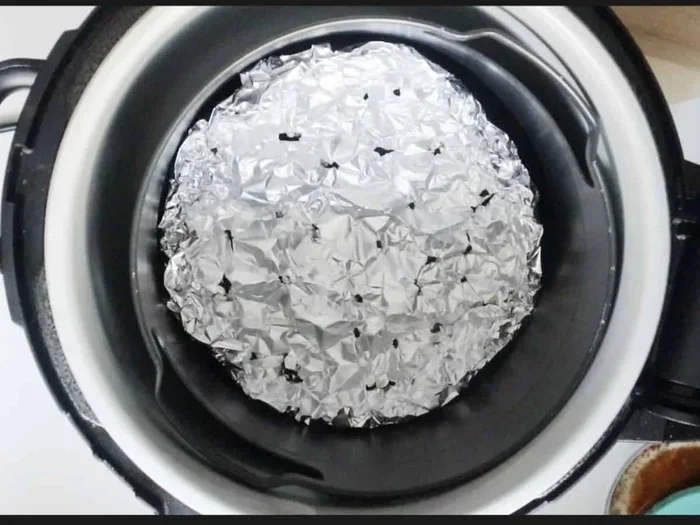
Visual guide about tin foil in air fryer
Image source: weeatatlast.com
1. Easier Cleanup
Let’s be honest: nobody loves scrubbing an air fryer basket. Cheese drips, marinades splatter, and breadcrumbs fall through the holes. By lining your basket with foil, you create a protective barrier that catches all the messy bits. When you’re done cooking, you just lift out the foil, throw it away, and your basket is practically sparkling.
Did you know? The average person spends about 7 minutes cleaning an air fryer basket by hand. Using foil can reduce that time to under 60 seconds. Over a year of regular cooking, that adds up to nearly 4 hours saved on cleanup alone.
2. Preventing Small Foods from Falling Through
Air fryer baskets have holes or slots that allow air to circulate. While this is essential for crispy results, it also means small foods can escape. Think diced vegetables, small fish pieces, or those tiny appetizer bites you love. Tin foil acts like a safety net, keeping your food exactly where it belongs—on the tray, not on the bottom of the machine.
3. Cooking Delicate Items
Some foods are just too delicate for the rough-and-tumble world of air fryer cooking. Soft fish fillets, stuffed mushrooms, or anything with a loose topping can get destroyed by the circulating air. Wrapping these items in foil creates a gentle cooking environment, similar to how foil works in a traditional oven. The result? Tender, perfectly cooked food without the risk of it falling apart.
4. Separating Different Foods
Want to cook chicken and vegetables at the same time but hate that they end up with mixed flavors? Foil acts as a divider, creating little cooking zones within your basket. This is especially handy when you’re cooking for picky eaters or meal prepping multiple components.
5. Reflecting Heat for Even Cooking
Here’s a fun science fact: aluminum foil reflects about 97% of radiant heat. This means you can use foil strategically to direct heat toward certain areas of your food. Some clever cooks use this to brown the tops of casseroles or melt cheese more evenly on dishes.
When NOT to Use Tin Foil: The Critical Safety Scenarios
While tin foil is generally safe, there are specific situations where you should absolutely avoid it. Knowing these scenarios is just as important as knowing when to use it. Think of this section as your “foil safety checklist.”
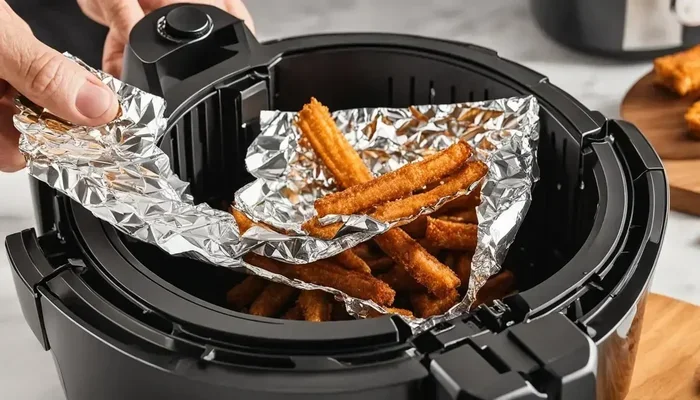
Visual guide about tin foil in air fryer
Image source: airfryeraid.com
Scenario 1: Acidic or Spicy Foods
Here’s something most people don’t know: aluminum reacts chemically with acidic foods. When you cook tomatoes, citrus, vinegar-based sauces, or even chili peppers in aluminum foil, a tiny amount of aluminum can leach into your food. While the health effects are debated, it can also cause your food to taste metallic and slightly bitter.
As a general rule, avoid foil for:
- Tomato-based sauces and dishes
- Lemon or lime-marinated items
- Dishes with heavy vinegar content
- Chili-heavy recipes with prolonged contact
Scenario 2: Lightweight Foods Without a Heavy Topping
Remember our umbrella-in-the-wind analogy? This is where it really matters. If you’re planning to air fry something extremely light—like a single piece of parchment paper, a few herbs, or a tiny appetizer without enough weight to hold down the foil—skip the foil entirely. The fan will lift it up, and you’ll have a problem on your hands.
Scenario 3: Coating the Entire Basket
It’s tempting to wrap your entire air fryer basket in foil for the ultimate easy cleanup. Resist this urge! Completely covering the basket blocks the air intake vents, which are usually located on the sides or bottom. Without proper airflow, your air fryer can overheat, and your food will steam instead of getting that signature crispy texture.
Did You Know? Air fryers can overheat to temperatures exceeding 500°F when vents are blocked, which can damage internal components and shorten the lifespan of your appliance by up to 40% according to some repair technicians.
Scenario 4: Old or Damaged Air Fryers
If your air fryer has visible damage to the heating element, loose parts, or any exposed wiring, skip the foil until you get it repaired. Damaged components can interact unpredictably with foil, increasing the risk of sparks or fire.
Step-by-Step Guide: How to Use Tin Foil in Your Air Fryer Safely
Ready to put foil to work in your air fryer? Follow this foolproof method, and you’ll be a foil-using pro in no time.
Step 1: Check Your Manual
Before anything else, grab your air fryer’s user manual. While most models allow foil, a small number of manufacturers explicitly prohibit it for specific basket designs. If you can’t find your manual, a quick Google search for “[your air fryer brand] + foil safety” usually does the trick.
Step 2: Cut the Right Size
Measure your basket first, then cut a piece of foil that’s slightly smaller than the basket dimensions. You want enough foil to create a cooking surface but not so much that it climbs up the sides and blocks airflow vents. A good rule of thumb: leave at least a 1-inch gap around all edges.
Step 3: Create Air Holes (Yes, Manually!)
This is a pro tip that makes a huge difference. Use a fork or skewer to poke several small holes in the foil. These holes let hot air reach your food and prevent the foil from trapping steam, which can make your food soggy instead of crispy. Aim for about 5-7 holes per square inch.
Step 4: Secure the Foil
Place the foil in the basket and press it down so it conforms to the shape. If your air fryer basket has a removable tray, you can wrap foil around just the tray. Make sure the foil sits flat and doesn’t have any loose edges that could get caught by the fan.
Step 5: Add Your Food Immediately
Never preheat your air fryer with foil inside without food on it. The air currents can lift the foil even during preheating. Instead, place your foil in the basket, then add food immediately, and then start the cooking cycle.
Step 6: Weight It Down Properly
Make sure your food completely covers the foil or at least weighs it down significantly. If you’re cooking something small, fold up the edges of the foil to create a small bowl shape that keeps the food contained.
Step 7: Monitor During Cooking
For your first few foil-cooking attempts, peek inside every 5 minutes to make sure everything is going smoothly. Once you’re comfortable with the process, you can relax and let the air fryer do its thing.
Common Mistakes to Avoid (And How to Fix Them)
Even experienced air fryer users make foil mistakes. Here are the most common pitfalls and exactly how to sidestep them.
Mistake #1: Using Foil with No Food On Top
The scenario: You line your basket with foil, hit preheat, and walk away to chop vegetables.
The problem: The fan catches the foil and blows it directly onto the heating element.
The fix: Always start cooking immediately after placing foil in the basket. Or skip preheating when using foil.
Mistake #2: Wrapping Food Too Tightly
The scenario: You wrap a piece of fish tightly in foil, sealing it like a burrito.
The problem: The tight seal traps all the steam, essentially steaming your food instead of air frying it.
The fix: Leave one side of the foil open or loosely tented. This allows some moisture to escape while still protecting delicate foods.
Mistake #3: Reusing Foil Multiple Times
The scenario: You use foil for chicken, wash it, and reuse it for fish the next day.
The problem: Bacteria from the first use can transfer to the second food, and worn foil is more likely to tear during cooking.
The fix: Use fresh foil for each cooking session. It’s inexpensive and much safer.
Mistake #4: Blocking the Top Heating Element
The scenario: You create a tall foil “wall” in your basket to divide foods.
The problem: The foil wall touches or comes very close to the heating element at the top of the air fryer.
The fix: Keep foil structures low—generally under 2 inches tall for most air fryer models.
Mistake #5: Ignoring Manufacturer Warnings
The scenario: Your air fryer manual says “do not use foil,” but you use it anyway.
The problem: Some air fryers have specific safety features or designs that don’t accommodate foil safely.
The fix: Respect the manufacturer’s guidelines. They wrote them for a reason.
Alternatives to Tin Foil Worth Considering
While foil is versatile and effective, it’s not your only option. Depending on your needs, these alternatives might work even better.
Parchment Paper Liners
Air fryer-specific parchment paper liners have exploded in popularity. These pre-cut circles fit perfectly in most standard air fryers, and they come with built-in holes for airflow. They’re particularly great for:
- Baking small items like cookies or muffins
- Catching crumbs from breaded foods
- Cooking delicate pastries that might stick
Parchment paper is rated for temperatures up to about 420°F, making it perfect for most air fryer recipes. However, it can’t be used during preheating (the paper can fly up and burn), so always add it with food present.
Silicone Mats
Reusable silicone mats are an eco-friendly alternative that can be washed and used hundreds of times. They’re non-stick, heat-resistant up to 480°F, and work beautifully for items that tend to stick. The downside? They’re typically more expensive upfront.
Air Fryer-Specific Accessories
The market has responded to air fryer popularity with specialized accessories. You can now buy:
- Grill pans that fit inside the basket
- Mini baking dishes designed for air fryers
- Stackable racks for cooking multiple items
- Silicone cups for individual portions
Many of these accessories incorporate a foil-like function while being specifically designed for safe air fryer use.
Frequently Asked Questions About Tin Foil in Air Fryers
Will tin foil in my air fryer cause a fire?
Not when used properly. Tin foil only becomes a fire hazard when it contacts the heating element directly or blocks critical airflow vents. As long as you weigh the foil down with food and avoid covering all the vent holes, the risk is minimal. Millions of people use foil in air fryers daily without incident.
Can I line my entire air fryer basket with foil?
No, you should never completely line the basket. Doing so blocks the air intake vents, which can cause overheating and prevent proper cooking. Instead, line only the bottom of the basket while leaving at least a 1-inch gap around all edges to allow air circulation.
Is it safe to put foil-wrapped food directly on the air fryer rack?
Yes, foil-wrapped food is generally safe on the rack or in the basket, as long as the foil is secured and won’t blow into the heating element. Loose foil is the main concern, so make sure any foil-wrapped items are tightly sealed and not too tall.
Can I use foil to cook acidic foods like lemon chicken in my air fryer?
It’s best to avoid foil for highly acidic foods. The acid can react with aluminum, potentially causing a metallic taste and minor discoloration of your food. Use parchment paper or a ceramic dish instead for these recipes.
Should I use the shiny or dull side of foil in my air fryer?
It doesn’t matter which side faces up. The shiny-vs-dull side difference comes from manufacturing, not performance, and both sides reflect heat equally. Choose whichever orientation works best for your specific recipe.
Can I preheat my air fryer with foil inside?
It’s safer to avoid preheating with foil in place unless food is already weighing it down. The preheating fan can lift loose foil into the heating element. Add the foil right before placing food inside, then start the cooking cycle.
The Final Verdict: Is Tin Foil Right for Your Air Fryer Cooking?
So, can you use tin foil in the air fryer? Absolutely—as long as you treat it with the respect any cooking tool deserves. Tin foil is one of the most versatile, affordable, and effective accessories you can add to your air fryer toolkit. It simplifies cleanup, expands your recipe possibilities, and helps you tackle delicate foods that would otherwise be impossible to air fry.
The key to success is following the three golden rules: keep it away from the heating element, always weigh it down with food, and never block the airflow vents. Once you’ve mastered these basics, you’ll find yourself reaching for the foil roll almost as often as you reach for your air fryer itself.
Remember, cooking should be fun, not stressful. Tin foil in an air fryer is like any other kitchen technique: powerful when used correctly, problematic when rushed. Take a few extra seconds to position your foil properly, and you’ll be rewarded with easier meals, simpler cleanup, and more delicious results. So go ahead, line that basket, wrap that fish, and enjoy everything your air fryer has to offer.
Happy air frying, and may your food always come out perfectly crispy!