Featured image for broken air fryer recycling bin
Image source: samrinc.com
No, you should not throw an air fryer in the regular trash. Air fryers contain electronic components, metal parts, and sometimes plastic that require special handling. Instead, consider recycling programs, manufacturer take-back options, or donating working units. Proper disposal protects the environment and complies with local e-waste regulations.
Picture this: your air fryer finally gives up after years of crispy fries and perfectly roasted veggies. Maybe the heating element stopped working, or the touchscreen went on the fritz. Your first instinct might be to drag it to the curb with the regular garbage. But hold on, because tossing an air fryer in the trash isn’t just lazy; it can be illegal, and it’s definitely not great for the planet.
Here’s the deal. Air fryers are small appliances that pack a surprising amount of technology inside. They’ve got heating coils, electronic circuit boards, fans, timers, and a tangle of wires. All of that makes them classified as electronic waste, or “e-waste” for short. And e-waste has its own set of rules when it comes to getting rid of it.
Think of it like this: you wouldn’t throw a dead battery in the kitchen garbage can, right? Same logic applies here. Your air fryer deserves a proper send-off, and lucky for you, there are plenty of easy options that won’t cost you much more than a few minutes of your time.
Key Takeaways
- E-Waste Classification: Air fryers are considered electronic waste due to their electrical components and cannot go in regular household trash in most areas.
- Recycling is the Best Option: Many components like metal, plastic, and circuitry can be recycled through e-waste facilities or specialized programs.
- Retailer Programs Help: Stores like Best Buy and Home Depot often accept old small appliances for recycling at no charge.
- Manufacturer Take-Back: Some brands offer mail-back or trade-in programs for responsible disposal of their products.
- Hazardous Materials Matter: Air fryers contain wiring, capacitors, and sometimes batteries that can leach harmful chemicals into soil and water.
- Donation Extends Life: If your air fryer still works but you want a new one, donating is a great way to reduce waste.
- Local Laws Vary: Check your municipal regulations because fines for improper appliance disposal can apply in many regions.
📑 Table of Contents
- Why You Can’t Just Toss an Air Fryer in the Trash
- What to Do With a Broken Air Fryer
- Where to Recycle an Air Fryer
- Can You Donate a Working Air Fryer?
- How to Prepare an Air Fryer for Disposal
- What Happens If You Accidentally Trash It?
- Eco-Friendly Alternatives and the Bigger Picture
- Final Thoughts: Making the Right Choice
Why You Can’t Just Toss an Air Fryer in the Trash
You might be thinking, “It’s just a small appliance. What’s the big deal?” Well, let’s break it down.
It’s Packed with Electronics
An air fryer isn’t just a plastic box with a drawer. Inside, you’ll find:
- Heating elements made of metal alloys
- Electronic control boards with microchips
- Wiring and capacitors that store electrical energy
- Motors and fans for air circulation
- Digital displays on newer models
All of these components contain materials that shouldn’t end up in a landfill. When electronic waste breaks down, it can release heavy metals like lead, mercury, and cadmium into the soil and groundwater. That contamination can spread far beyond the landfill itself.
Did You Know?
The United Nations estimates that the world generated 53.6 million metric tons of e-waste in 2019, and only 17.4% of it was recycled. Small appliances like air fryers, toasters, and coffee makers make up a significant chunk of that number. Every time you recycle one instead of trashing it, you’re helping shrink that mountain of waste.
It Might Actually Be Illegal
Here’s something many people don’t realize: in many cities, counties, and states, it’s against the law to throw electronics in the regular garbage. California, New York, and several other states have specific e-waste laws that cover small appliances. The fines aren’t huge, but they exist. More importantly, landfill operators may refuse your trash pickup entirely if they spot electronic items, which is awkward and inconvenient.
Landfills Are Already Overflowing
The average American produces about 4.9 pounds of trash per day. Landfills are filling up faster than we can build new ones, and anything we can keep out helps. Recycling one air fryer might seem like a tiny drop in the bucket, but multiplied by millions of households, it adds up fast.
What to Do With a Broken Air Fryer
So your air fryer is dead. Before you write it off completely, let’s walk through your options.
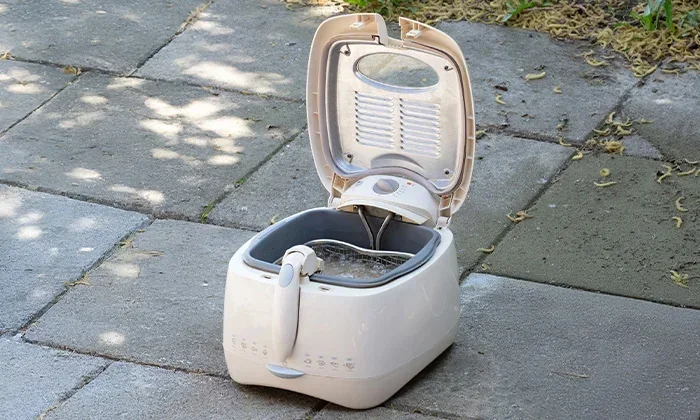
Visual guide about broken air fryer recycling bin
Image source: 1800gotjunk.com
Step 1: Check If It’s Actually Broken
Sometimes, an air fryer that seems broken just needs a little TLC. Before you start the disposal process, try these quick fixes:
- Reset it: Unplug the unit, wait 10 minutes, and plug it back in. Some models have a reset button on the bottom.
- Clean the heating element: Built-up grease and food debris can cause overheating or prevent the element from working.
- Check the power cord: Make sure there’s no visible damage and that the outlet works.
- Look at the basket: Some fryers have safety sensors that stop working if the basket isn’t seated properly.
If none of these work, then yeah, it’s probably time to say goodbye.
Step 2: Remove Any Usable Parts
Before recycling, take a minute to see if any parts can be salvaged or reused. The basket and tray might work as replacement parts for someone else’s broken unit. The power cord could be useful for DIY projects. Even the screws and hinges have value at scrap metal recyclers.
Step 3: Choose Your Disposal Method
Here’s where the real decision happens. You’ve got several good options, and we’ll dig into each one next.
Where to Recycle an Air Fryer
Recycling is hands-down the most eco-friendly way to dispose of an old air fryer. Here’s how to make it happen.
Visual guide about broken air fryer recycling bin
Image source: familyguidecentral.com
Retailer Recycling Programs
Many big-box retailers have stepped up their recycling game in recent years. These stores often accept small appliances for free, even if you didn’t buy the item from them.
- Best Buy: Accepts most small electronics and appliances, including air fryers, at all U.S. locations. There’s no charge, and you don’t even need to buy anything.
- Home Depot: Partners with recycling programs in select states to take old appliances. Call your local store first to confirm they accept small kitchen appliances.
- Lowes: Offers recycling kiosks for various electronics, though availability varies by location.
- Staples: Accepts small electronics for free recycling, but air fryer acceptance may depend on store policy.
The process is usually simple: walk in, tell the customer service desk you have an item to recycle, and they’ll point you to the drop-off location. Some stores even have self-service kiosks.
Municipal Recycling Centers
Your local waste management facility almost certainly accepts small appliances. Most cities have a dedicated drop-off site for e-waste, and some even run periodic collection events where you can bring electronics to a central location.
To find your nearest center, try these steps:
- Check your city or county’s website for “e-waste disposal” or “household hazardous waste.”
- Call your local public works department.
- Use the Earth911 recycling locator tool online.
Many municipal centers offer this service for free, while others charge a small fee, usually between $5 and $20.
Manufacturer Take-Back Programs
Some air fryer brands have started their own recycling initiatives. These programs are still relatively rare, but they’re growing. Brands like Ninja, Cosori, and Philips occasionally offer mail-back options or trade-in discounts when you buy a new product.
Check the manufacturer’s website or call their customer support line to see if they have an active program. Even if they don’t advertise one, they might still help you out. Companies are increasingly interested in recovering materials for reuse, so don’t be afraid to ask.
Specialized E-Waste Recyclers
If you want to go the extra mile, look for certified e-waste recyclers in your area. These companies specialize in breaking down electronics and recovering valuable materials like copper, aluminum, and rare earth elements.
Look for recyclers certified by:
- R2 (Responsible Recycling): A widely recognized standard for e-waste recyclers.
- e-Stewards: Another certification that ensures responsible processing.
- ISO 14001: An environmental management certification.
Working with certified recyclers ensures your air fryer won’t end up shipped overseas or dumped in a developing country’s landfill, which is unfortunately common with shady recyclers.
Can You Donate a Working Air Fryer?
If your air fryer still works but you’ve just upgraded, don’t recycle it just yet. Donating is even better because it extends the product’s life and keeps it out of the waste stream entirely.
Where to Donate
Several organizations accept small working appliances:
- Goodwill: Many locations accept small kitchen appliances, though call ahead to confirm.
- Salvation Army: Accepts working appliances in good condition.
- Habitat for Humanity ReStores: Some locations accept small appliances.
- Local shelters and food banks: These often need kitchen equipment for their facilities or clients.
- Churches and community centers: Great places to donate gently used items.
- Facebook Marketplace, Craigslist, or Buy Nothing groups: Give it away for free to someone who needs it.
Before donating, make sure the unit is clean, in working order, and includes all parts and accessories. Nobody wants a grimy air fryer with missing pieces.
Tax Benefits
Here’s a fun bonus: you might be able to deduct the value of your donated air fryer on your taxes. If you itemize deductions and donate to a registered 501(c)(3) nonprofit, keep the receipt and claim the fair market value. A decent air fryer might be worth $50 to $100 depending on the model.
How to Prepare an Air Fryer for Disposal
Whether you’re recycling or donating, a little prep work goes a long way.
Cleaning the Unit
A clean appliance is easier to recycle and far more appealing to donate. Here’s how to get it spick-and-span:
- Unplug the unit and let it cool completely.
- Remove the basket and tray and wash them with warm soapy water.
- Wipe down the interior with a damp cloth to remove grease and food residue.
- Clean the exterior with a mild cleaner to remove fingerprints and grime.
- Dry everything thoroughly before packing it up.
Disassembling (Optional)
For recycling, you don’t usually need to disassemble anything. The recycling facility will handle that. However, if you’re dropping it off at a scrap metal recycler, they might appreciate it if you remove any obvious metal parts.
If you do decide to take it apart:
- Remove the screws from the housing using a Phillips head screwdriver.
- Separate the metal components from the plastic ones.
- Pull out the heating element and wires.
- Place small electronic parts in a separate bag.
Always wear gloves when handling sharp metal edges, and be cautious of any capacitors, which can store an electrical charge even when unplugged.
Packaging It Up
For donation or transport, pack the air fryer in its original box if you still have it. If not, any sturdy box with some padding will do. Wrap the basket and tray in newspaper or bubble wrap to prevent scratching.
What Happens If You Accidentally Trash It?
Sometimes mistakes happen. Maybe you tossed it before you knew better, or maybe your trash collector took it before you could fish it out. Don’t panic. Here’s what likely happened and what it means.
Landfill Impact
If your air fryer ends up in a landfill, it will eventually break down over many years, releasing small amounts of contaminants into the surrounding soil and water. One air fryer won’t cause an environmental disaster, but multiplied across millions of households, it adds up to a real problem.
Did You Know?
A single metric ton of circuit boards can contain more gold than one metric ton of gold ore. That means your old air fryer has tiny amounts of precious metals that could be recovered and reused. When it ends up in a landfill, those resources are lost forever.
Legal Consequences
In areas with strict e-waste laws, you could receive a fine for improper disposal. The amount varies widely:
- California: Fines range from $100 to $1,000 for illegal dumping of electronics.
- New York: Penalties start around $50 for first offenses.
- Many cities: Issue warnings before fines for first-time offenders.
The bigger risk is your trash hauler simply refusing to pick up your garbage if they spot an air fryer in the bin. That’s an inconvenience most people want to avoid.
Eco-Friendly Alternatives and the Bigger Picture
Beyond just disposing of your old air fryer responsibly, there are ways to think about this more holistically.
Reduce and Reuse First
Before you even think about recycling, consider whether you really need a new air fryer. If yours is still working but you’re tempted to upgrade for the latest model, ask yourself:
- Can I repair the current one?
- Will I actually use the new features?
- Is the old one taking up valuable counter space?
If the answer is “I just want a new one,” maybe donate the old one to someone who doesn’t have one at all. That way, you reduce demand for new manufacturing while helping someone in need.
Repair Instead of Replace
Many air fryer issues are fixable with cheap parts and a little YouTube research. Common repairs include:
- Replacing a faulty power cord ($10-$20)
- Cleaning or replacing the heating element ($15-$30)
- Fixing a broken door latch or hinge ($5-$15)
- Replacing a damaged basket ($20-$40)
Compare that to buying a new air fryer for $80 to $200, and repair starts sounding pretty attractive.
Supporting Circular Economy
When you recycle or donate, you’re participating in what’s called the “circular economy.” Instead of a linear take-make-dispose model, the circular economy keeps materials in use for as long as possible. Every time you choose responsible disposal, you’re voting with your dollars for a more sustainable system.
Plus, you’re saving resources. Recycling one ton of electronics can save enough energy to power 365 U.S. households for one day. That’s real impact from a single air fryer.
The Air Fryer Market Is Growing Fast
Here’s why this matters more than ever: the global air fryer market was valued at around $1.1 billion in 2022 and is expected to keep growing. That means millions of new air fryers are being sold every year. As older models break or get replaced, the e-waste problem will only get worse unless we all do our part.
Final Thoughts: Making the Right Choice
So, can you throw an air fryer in the trash? Technically, you can, but you really shouldn’t. Between the environmental impact, potential legal issues, and the availability of better alternatives, there’s no good reason to send it to the landfill.
Your best options, in order of preference, are:
- Repair it if possible.
- Donate it if it still works.
- Recycle it through a retailer, municipal program, or certified e-waste recycler.
- Trash it only as a last resort, and only if your local regulations allow it.
The next time your air fryer kicks the bucket, take 10 minutes to find a proper disposal option. It’s a small effort that makes a big difference, and who knows, you might even score a tax deduction or help out a neighbor in the process.
Remember: every appliance you keep out of the landfill is a small victory for the planet. And with millions of air fryers reaching the end of their lifespan every year, every victory counts.
Frequently Asked Questions
Can you throw an air fryer in the regular trash?
No, air fryers are classified as electronic waste and should not go in regular household trash. They contain electronic components, metal, and wiring that require special disposal. Most areas have laws against throwing electronics in the garbage, so always check your local regulations and use proper recycling channels instead.
Where can I recycle my old air fryer?
You can recycle your old air fryer at major retailers like Best Buy and Home Depot, at municipal e-waste drop-off centers, or through certified e-waste recyclers. Many of these options are free, and some even accept items regardless of where you bought them. Use the Earth911 recycling locator to find options near you.
Do I need to remove any parts before recycling an air fryer?
Generally, no. Most recycling facilities handle the disassembly process themselves. However, removing obvious metal parts or separating major components can sometimes be helpful, especially for scrap metal recyclers. Always wear gloves when handling internal parts and be cautious of capacitors that may hold an electrical charge.
Can I donate a used air fryer?
Yes, you can donate a working air fryer to charities like Goodwill, the Salvation Army, or local shelters. You can also give it away through online platforms like Facebook Marketplace, Craigslist, or Buy Nothing groups. Just make sure the unit is clean, in working order, and includes all accessories before donating.
What happens to air fryers in landfills?
When air fryers end up in landfills, they slowly break down and can release heavy metals like lead, mercury, and cadmium into the soil and groundwater. These contaminants can spread and cause environmental damage. Recycling prevents this by safely recovering valuable materials and keeping hazardous substances out of the environment.
Are there any penalties for illegally disposing of an air fryer?
Penalties vary by location, but many states and municipalities have fines for improper e-waste disposal. Fines can range from $50 for first offenses to over $1,000 in stricter jurisdictions like California. In some areas, trash collectors may simply refuse to pick up your garbage if electronics are visible in the bin.