Can You Bake a Potato in an Air Fryer

Featured image for air fryer baked potato
Image source: sp-ao.shortpixel.ai
Yes, you can bake a potato in an air fryer and the results are often better than a conventional oven. The circulating hot air creates incredibly crispy skin while keeping the inside light and fluffy in about half the time.
If you have ever stared at your air fryer and wondered whether it can handle a classic baked potato, the answer is a resounding yes. In fact, many home cooks now prefer the air fryer method over the traditional oven because it delivers that coveted crispy skin and fluffy interior in a fraction of the time. The secret lies in the rapid air circulation technology that mimics a convection oven on overdrive, blasting hot air around every inch of the potato surface.
This guide walks you through everything you need to know to bake a potato in an air fryer like a pro. We will cover the best potato varieties, the exact temperature and timing, pro tips for extra crispy skin, creative topping ideas, and common mistakes that ruin the texture. Whether you are cooking for one or feeding a crowd, you will walk away with a foolproof method that works every single time.
Key Takeaways
- Air fryers bake potatoes faster: Cook time drops from 60-75 minutes in an oven to just 35-45 minutes in an air fryer.
- Russet potatoes work best: Their high starch content and thick skin create the ideal fluffy interior and crispy exterior.
- Oil and salt are essential: Rubbing the skin with oil and coarse salt draws out moisture for maximum crispiness.
- Don’t wrap in foil: Foil traps steam and prevents the skin from crisping — skip it for best results.
- Flip halfway through: Turning the potato ensures even browning on all sides.
- Check doneness with a probe: Internal temperature should hit 205-210°F for perfectly fluffy insides.
- Let rest before cutting: A 5-minute rest lets steam finish cooking the center without drying it out.
📑 Table of Contents
- Why Air Fryers Are Perfect for Baked Potatoes
- Choosing the Right Potato
- Step-by-Step Guide to Air Fryer Baked Potatoes
- Tips for Crispy Skin and Fluffy Interior
- Topping Ideas and Serving Suggestions
- Common Mistakes to Avoid
- Air Fryer Models and Basket Styles
- Storing and Reheating Leftovers
- Nutrition Facts and Health Considerations
- Troubleshooting Common Issues
- Conclusion
Why Air Fryers Are Perfect for Baked Potatoes
The Science Behind the Crisp
An air fryer is essentially a compact convection oven with a powerful fan positioned directly above the heating element. This design forces superheated air to circulate rapidly around the food, creating a Maillard reaction on the surface. That reaction is responsible for the golden-brown, crunchy skin we all love. In a standard oven, hot air rises and creates cooler zones. In an air fryer, the fan eliminates those zones, so every potato cooks evenly.
Did you know that air fryers can reduce cooking time by up to 40 percent compared to conventional ovens? A typical russet potato takes 60 to 75 minutes at 400°F in a regular oven. In an air fryer set to 400°F, the same potato is done in 35 to 45 minutes. That time savings adds up, especially on busy weeknights.
Energy Efficiency Matters
Heating a full-size oven to 400°F consumes significant energy, often 2,000 to 5,000 watts depending on the model. Most air fryers draw between 1,400 and 1,800 watts and reach target temperature in under three minutes. If you are baking just one or two potatoes, the air fryer uses a fraction of the electricity. Over a year of weekly baked potatoes, that difference can lower your utility bill noticeably.
Small Kitchen Friendly
Not everyone has a full kitchen. Dorm rooms, RVs, studio apartments, and office break rooms often lack ovens. A compact air fryer fits on a countertop and plugs into a standard outlet. It brings baked potato night to spaces where it was previously impossible. Plus, cleanup is minimal — most baskets are nonstick and dishwasher safe.
Choosing the Right Potato
Russet: The Gold Standard
When you picture a classic baked potato, you are picturing a russet. These large, oblong potatoes have thick, rough skin and high starch content. That starch turns light and fluffy when heated, creating the perfect contrast to crispy skin. Russets also have low moisture content, which means less steam trapped inside and a drier, fluffier texture. Look for potatoes that feel heavy for their size with no soft spots, green tinges, or sprouting eyes.
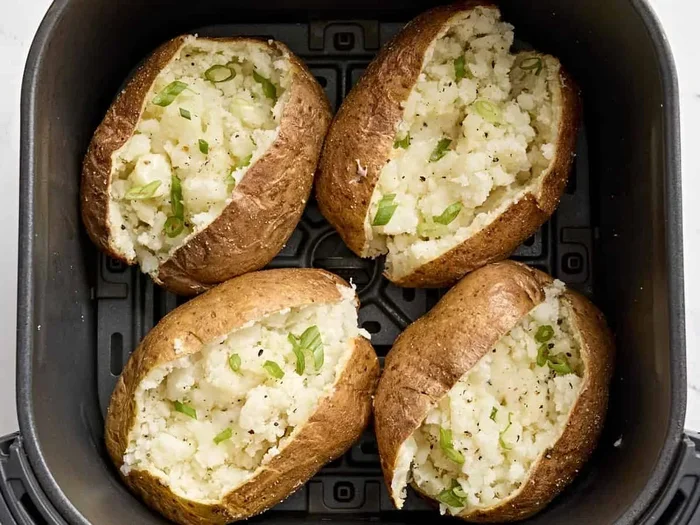
Visual guide about air fryer baked potato
Image source: budgetbytes.com
Yukon Gold: The Buttery Alternative
Yukon Golds have medium starch and a naturally buttery flavor. Their skin is thinner and more delicate, so it crisps faster but can burn if you are not careful. The interior is creamier than a russet, almost like a mash. If you prefer a richer taste and do not mind a slightly less fluffy texture, Yukon Golds are a fantastic choice. Cook them at 390°F instead of 400°F and check at 30 minutes.
Sweet Potatoes: A Nutrient-Packed Twist
Sweet potatoes bake beautifully in an air fryer. Their natural sugars caramelize under the intense heat, creating a sweet-savory crust. Because they are denser and moister than russets, they need a slightly longer cook time — usually 45 to 55 minutes at 390°F. Pierce the skin well to let steam escape, or they can burst. A 2021 USDA study noted that air frying sweet potatoes retains more beta-carotene than boiling or microwaving.
Size Consistency Is Key
If you are cooking multiple potatoes at once, pick ones that are similar in size. A 10-ounce potato and a 16-ounce potato will finish at very different times. Uniform size ensures everything comes out done together. If you only have mixed sizes, start the larger ones first and add the smaller ones 5 to 10 minutes later.
Step-by-Step Guide to Air Fryer Baked Potatoes
Prep Work: Wash, Dry, Pierce
Start by scrubbing each potato under cool running water. Use a vegetable brush to remove dirt from the crevices. Pat them thoroughly dry with paper towels. Moisture on the skin is the enemy of crispiness. Next, pierce each potato 6 to 8 times with a fork or skewer. These holes let steam escape so the potato does not explode from internal pressure. Space the punctures evenly around the circumference.
Season for Success
Drizzle about one teaspoon of olive oil or avocado oil over each potato. Use your hands to rub the oil over the entire surface, including the ends. The oil conducts heat and helps the salt adhere. Sprinkle coarse kosher salt or sea salt generously over the oiled skin. The salt draws out surface moisture through osmosis, drying the skin further for maximum crunch. For extra flavor, add a pinch of garlic powder, smoked paprika, or dried rosemary to the oil before rubbing.
Preheat the Air Fryer
Set your air fryer to 400°F and let it preheat for 3 to 5 minutes. Preheating ensures the potatoes hit hot air immediately, jump-starting the crisping process. Some models have a dedicated preheat button; others just need you to run the unit empty. Skip this step and you risk soggy skin because the potatoes sit in warming air instead of blasting heat.
Arrange With Space
Place the potatoes in the basket in a single layer with at least half an inch of space between each one. Crowding blocks airflow and creates steam pockets. If your basket is small, cook in batches. The first batch stays warm on a wire rack in a 200°F oven while the second batch cooks. Do not stack potatoes or use the rack accessory for this recipe — direct basket contact gives the best bottom crust.
Cook and Flip
Cook at 400°F for 35 to 45 minutes depending on size. At the 20-minute mark, pull the basket out and flip each potato with tongs. Flipping ensures the bottom gets the same crispy treatment as the top. If you see any skin splitting open, that is a good sign — steam is escaping and the interior is fluffing up. For extra-large potatoes over 14 ounces, add 5 to 10 minutes.
Test for Doneness
The most reliable test is an instant-read thermometer. Insert the probe into the thickest part of the potato. You want 205°F to 210°F. At this temperature, the starch granules have fully gelatinized and the texture is cloud-like. If you do not have a thermometer, squeeze the potato gently with an oven mitt. It should give easily with no hard center. A fork should slide in with zero resistance.
Rest Before Serving
Transfer the potatoes to a wire rack and let them rest for 5 minutes. This rest period lets the internal steam redistribute and finish cooking the very center without drying it out. Cutting too early releases all that steam and leaves you with a drier potato. After resting, slice a deep cross in the top, pinch the sides to open it up, and fluff the interior with a fork.
Tips for Crispy Skin and Fluffy Interior
Use a Wire Rack for Cooling
Never let baked potatoes sit in the air fryer basket after cooking. The residual heat and trapped steam will soften the skin within minutes. A wire rack allows air to circulate 360 degrees around the potato, preserving that crunch. If you do not have a rack, prop the potatoes against each other or the basket sides so only a small contact point touches the surface.
Don’t Wrap in Foil
This is the number one mistake people make. Foil traps steam and essentially steams the potato instead of baking it. The skin stays pale and soft. The only time foil helps is if you are reheating a pre-baked potato and want to prevent burning. For fresh baking, keep the skin naked and oiled.
Salt the Skin Generously
Coarse salt does double duty. It seasons the skin and pulls moisture out through osmosis. Table salt works but dissolves too fast. Kosher salt or flaky sea salt crystals sit on the surface longer, doing their job. Some cooks even brine potatoes in a 2 percent salt water solution for 30 minutes before oiling, then pat dry. This seasons the interior too.
High Heat Is Non-Negotiable
Lower temperatures like 350°F or 375°F will cook the potato through but will not crisp the skin well. The Maillard reaction needs temperatures above 350°F to really get going. Stick to 400°F for russets. If your air fryer runs hot and burns the skin before the center is done, drop to 390°F and add 5 minutes. Every model calibrates differently.
Pierce Deep and Wide
Shallow fork pricks close up during cooking as the skin tightens. Use a metal skewer or thin knife to make deeper channels. Aim for at least half an inch deep. More holes mean more steam escape routes, which means drier skin and fluffier insides. Some chefs cut a small X in the top before cooking to create a natural vent that opens beautifully.
Brush With Butter at the End
For restaurant-style skin, brush the potatoes with melted butter during the last 3 minutes of cooking. The milk solids in butter brown quickly, adding flavor and color. Watch closely — butter burns fast at 400°F. This trick works especially well if you plan to eat the skin, which you absolutely should. Potato skin contains more fiber, iron, and potassium than the flesh.
Topping Ideas and Serving Suggestions
Classic Loaded Baked Potato
The classic combo is butter, sour cream, chives, bacon bits, and shredded cheddar. For the best melt, add the cheese while the potato is piping hot and cover with foil for 30 seconds. The residual heat melts it perfectly. Use full-fat sour cream for richness, or Greek yogurt for a tangy protein boost. Fresh chives add a mild onion bite that dried flakes cannot match.
Health-Conscious Options
Swap sour cream for plain Greek yogurt — same tang, double the protein, half the fat. Top with steamed broccoli, a sprinkle of nutritional yeast for cheesy flavor, and a drizzle of lemon-tahini sauce. Black beans, salsa, avocado, and cilantro turn your potato into a Tex-Mex power bowl. A 2022 nutrition analysis showed that a loaded baked potato with veggie toppings provides over 15 grams of fiber and 20 grams of protein.
Breakfast Baked Potato
Split a hot potato, fluff the inside, and crack an egg directly into the center. Air fry at 350°F for 4 to 6 minutes until the white sets but the yolk stays runny. Top with crumbled sausage, hot sauce, and scallions. This hack turns leftovers into a hearty morning meal. The potato skin holds the egg perfectly — no ramekin needed.
Twice-Baked Potato Skins
Scoop the fluffy interior out of cooked potatoes, leaving a quarter-inch shell. Mix the flesh with cream cheese, cheddar, green onions, and bacon. Refill the skins, top with more cheese, and air fry at 375°F for 8 minutes until golden. These make incredible appetizers for game day. Make a double batch and freeze the filled skins raw — cook from frozen at 375°F for 12 minutes.
Global Flavor Inspirations
Try a Greek version with tzatziki, feta, olives, dill, and lemon zest. Or go Indian with spiced cauliflower, cilantro chutney, and a dollop of yogurt. Korean-inspired: kimchi, gochujang mayo, sesame seeds, and a fried egg. The neutral potato canvas handles bold flavors from any cuisine. Experiment with what you have in the fridge.
Common Mistakes to Avoid
Skipping the Dry Step
Wet skin equals steamed skin. Even a thin layer of surface water creates a barrier between the oil and the potato. The water must evaporate before browning can begin, and that wastes precious cook time. Always pat thoroughly. If you washed them an hour ago, pat again — condensation forms as they sit.
Overcrowding the Basket
Air fryers rely on airflow. Stacking potatoes or packing them tight creates a steam chamber. You end up with boiled potatoes in crispy skin costumes. Cook in batches if needed. The 5-minute wait between batches is worth the texture payoff. If you regularly cook for four or more, consider a dual-basket or oven-style air fryer with multiple racks.
Using the Wrong Oil
Extra virgin olive oil has a smoke point around 375°F. At 400°F, it can burn and taste bitter. Choose avocado oil (smoke point 520°F), refined olive oil (465°F), or grapeseed oil (420°F). These neutral oils handle the heat and let the potato flavor shine. A light spray works fine — you do not need a heavy coating.
Ignoring Carryover Cooking
Potatoes retain heat incredibly well. A potato pulled at 205°F will climb to 210°F while resting. If you wait until it hits 210°F in the basket, the center overcooks and gets gummy. Pull at 205°F, rest 5 minutes, and you hit the sweet spot. This principle applies to all starchy vegetables.
Not Adjusting for Potato Temperature
Cold potatoes straight from the fridge take 5 to 10 minutes longer than room-temperature ones. The center has to climb from 40°F to 210°F instead of 70°F to 210°F. For best results, let potatoes sit on the counter for 30 minutes before cooking. This also helps the skin dry further.
Forgetting to Clean the Air Fryer
Built-up grease on the heating element smokes at high temps and can impart off-flavors. Wipe the element with a damp cloth after every few uses. Clean the basket and tray thoroughly. A dirty air fryer is also a fire hazard. Most manufacturers recommend a deep clean monthly.
Air Fryer Models and Basket Styles
Basket-Style Air Fryers
The classic pull-out basket design is the most common. Capacities range from 2 to 8 quarts. A 4-quart basket holds two to three medium russets comfortably. A 6-quart handles four to five. Shake the basket gently at the flip point to ensure even contact. Some models have a paddle that stirs automatically — disable it for whole potatoes or they will get battered.
Oven-Style Air Fryers
These look like toaster ovens with multiple rack positions. They excel at batch cooking — you can fit 6 to 8 potatoes across two racks. Rotate racks halfway through for even browning. The larger cavity means longer preheat but more consistent results. Many include a rotisserie spit, which works surprisingly well for potatoes if you secure them tightly.
Dual-Basket Models
Dual-zone fryers let you cook potatoes in one basket and vegetables or protein in the other with different settings. Sync finish features coordinate the timing so everything is hot together. This is a game-changer for complete meals. Imagine baked potatoes in zone one and air-fried broccoli in zone two, both done at 7:00 PM sharp.
Capacity Planning
As a rule of thumb, allow 2 quarts of capacity per large russet for optimal airflow. A 5-quart unit does two large or three medium potatoes well. Do not max out the stated capacity — those numbers assume french fries or nuggets that can be shaken. Whole potatoes need breathing room.
Storing and Reheating Leftovers
Refrigerator Storage
Cool baked potatoes to room temperature within two hours, then refrigerate in an airtight container. They keep for 4 to 5 days. Do not wrap in foil for storage — trapped moisture breeds bacteria and makes skins soggy. A paper towel in the container absorbs excess humidity.
Freezing for Meal Prep
Fully baked potatoes freeze beautifully for up to 3 months. Cool completely, wrap each in plastic wrap, then place in a freezer bag. Reheat from frozen at 350°F for 15 to 20 minutes. The skin re-crisps nicely. For twice-baked potatoes, freeze after the second bake for best texture.
Reheating in the Air Fryer
The air fryer is the best reheating tool, hands down. Microwave turns skins rubbery. Oven takes too long. Set the air fryer to 350°F and reheat for 8 to 12 minutes depending on size. No oil needed — the skin already has fat from the initial bake. For loaded potatoes, remove cold toppings like sour cream first, reheat, then add fresh toppings.
Repurposing Leftover Flesh
Scooped-out potato flesh makes amazing gnocchi, potato pancakes, shepherd’s pie topping, or thickener for soups. Mash with a little butter and milk, then freeze in portion bags. You essentially get two meals from one bake. The skins can be crisped again as chips — brush with oil, salt, and air fry at 375°F for 5 minutes.
Nutrition Facts and Health Considerations
Potato Nutrition Profile
A medium russet potato (about 173 grams) provides 164 calories, 37 grams of carbohydrate, 4.7 grams of protein, 0.2 grams of fat, and 4 grams of fiber. It delivers 28 percent of your daily vitamin C, 26 percent of potassium, and 27 percent of vitamin B6. The skin holds half the fiber and most of the iron. Eating the skin doubles the nutritional payoff.
Glycemic Index Nuance
Potatoes have a high glycemic index (GI), but that number changes with preparation. Baking lowers GI compared to mashing because the starch structure stays more intact. Cooling a baked potato and reheating it creates resistant starch, which acts like fiber and blunts blood sugar spikes. A 2019 study in the Journal of Nutrition found that cooled-then-reheated potatoes produced a 25 percent lower glucose response than freshly cooked.
Air Frying vs. Deep Frying
Air frying uses 70 to 80 percent less oil than deep frying. For a baked potato, you use maybe a teaspoon of oil versus cups in a fryer. That translates to roughly 40 fewer calories and 5 grams less fat per potato. The acrylamide formation — a potential carcinogen in browned starches — is also lower in air frying due to shorter cook times and less oil oxidation.
Dietary Flexibility
Baked potatoes are naturally gluten-free, vegan, and low-FODMAP in moderate portions (half a medium potato). They fit paleo if you skip dairy toppings. For keto, they are too high in carbs, but cauliflower “potatoes” air fry similarly. The versatility makes them a staple for mixed-diet households.
Troubleshooting Common Issues
Skin Not Crispy
Check these culprits: wet skin, too low temperature, overcrowded basket, or foil wrapping. Fix: pat drier, crank to 400°F, cook fewer at once, ditch the foil. If your air fryer runs cool, use an oven thermometer to verify actual temperature. Many budget models run 15 to 25 degrees below the dial setting.
Hard Center
Undercooked centers happen when the potato is too large, the temperature is too high (burning outside before inside cooks), or you did not flip. Fix: pierce deeper, lower to 390°F for large potatoes, always flip. A metal skewer left in the potato during cooking conducts heat to the center and speeds things up.
Burnt Skin, Raw Inside
This means your air fryer runs hot or the potato is very large. Lower temperature to 375°F and extend time. Tent the top loosely with a small piece of foil if the skin darkens too fast — but only for the last 10 minutes. The skewer trick helps here too.
Potato Exploded
Insufficient piercing. Steam built up until the skin ruptured. Next time, pierce 10 to 12 times deeply. An exploded potato is still edible — just messy. Scoop the flesh, mash with butter, and call it rustic.
Uneven Cooking
Potatoes of different sizes or a warped basket. Sort by size. If your basket sits crooked, prop the low side with a folded silicone mat. Rotate positions at the flip.
Conclusion
Baking a potato in an air fryer is not just possible — it is arguably the best way to do it. You get restaurant-quality crispy skin and cloud-like fluffy interior in under 45 minutes with minimal effort and energy. The key takeaways are simple: choose russets, dry them thoroughly, oil and salt generously, preheat to 400°F, flip halfway, and rest before cutting. Avoid foil, overcrowding, and wet skin.
Once you master the basic method, the topping possibilities are endless. From classic loaded to global fusion, breakfast to dinner, the humble baked potato becomes a canvas for creativity. And with proper storage and reheating, leftovers stay delicious for days. Your air fryer just earned its permanent spot on the counter. Happy baking!
Frequently Asked Questions
Can you bake a potato in an air fryer without oil?
Yes, you can bake a potato in an air fryer without oil, but the skin will not get as crispy. Oil conducts heat and promotes browning. For a lower-fat option, use a light spray of cooking spray instead of rubbing with oil.
How long does it take to bake a potato in an air fryer at 400 degrees?
A medium russet potato takes 35 to 45 minutes at 400°F in an air fryer. Large potatoes over 12 ounces may need 45 to 55 minutes. Always check for doneness with a thermometer reading 205°F to 210°F internally.
Do you need to pierce potatoes before air frying?
Yes, you must pierce potatoes 6 to 8 times with a fork or skewer before air frying. This allows steam to escape and prevents the potato from bursting from internal pressure buildup.
Can you put foil in an air fryer for baked potatoes?
Do not wrap potatoes in foil when air frying. Foil traps steam and prevents the skin from crisping. Only use foil tented loosely over the top if the skin is burning before the center cooks through.
What temperature do you bake potatoes in an air fryer?
The ideal temperature for baking russet potatoes in an air fryer is 400°F. For Yukon Gold or sweet potatoes, lower to 390°F to prevent burning the thinner skin before the interior is done.
How do you reheat a baked potato in an air fryer?
Reheat a baked potato in an air fryer at 350°F for 8 to 12 minutes. No additional oil is needed. Remove cold toppings like sour cream before reheating, then add fresh toppings after.