Can You Cook a Steak in an Air Fryer
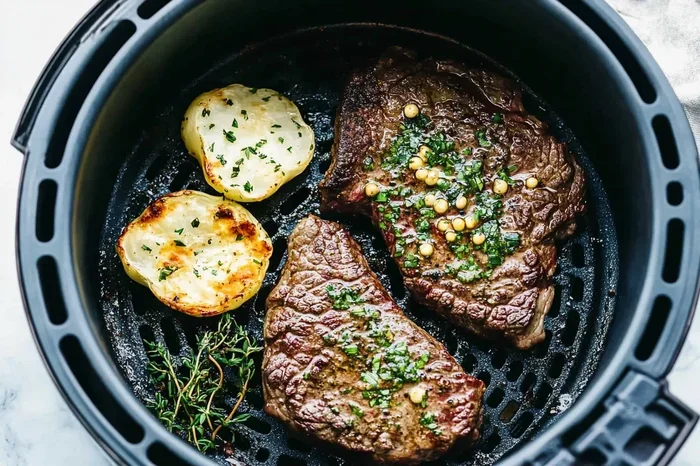
Featured image for perfect air fryer steak
Image source: thecharmingrecipes.com
Yes, you absolutely can cook a steak in an air fryer, and the results are surprisingly juicy and flavorful. This method uses rapid hot air circulation to create a beautiful crust while keeping the inside tender, much like a mini convection oven. It is faster than a grill, cleaner than a pan, and perfect for weeknight dinners.
You stare at the beautiful ribeye in your fridge. The grill is buried under snow, or maybe you just don’t want to fire up charcoal for a Tuesday dinner. You glance at your air fryer sitting on the counter. A question pops into your head: can you cook a steak in an air fryer? The short answer is a resounding yes. In fact, it might just become your new favorite way to cook beef.
Many people think of air fryers as gadgets for frozen fries or chicken wings. They are actually powerful mini convection ovens. They circulate superheated air at high speed. This creates a crispy exterior on food fast. For steak, that means a gorgeous brown crust and a pink, juicy center. You get steakhouse results without the smoke alarm going off or the splatter guard on your stove.
Key Takeaways
- It works exceptionally well: The air fryer mimics a convection oven, delivering a great sear and even doneness with less smoke and mess.
- Thicker cuts are best: Choose steaks at least 1 inch thick (ribeye, strip, filet mignon) to prevent overcooking before a crust forms.
- Dry the surface thoroughly: Pat the meat dry with paper towels; moisture is the enemy of a good sear in an air fryer.
- High heat is non-negotiable: Cook at 400°F (200°C) to trigger the Maillard reaction for that steakhouse crust.
- Use a meat thermometer: Pull the steak at 5°F below your target temp; carryover heat finishes the job while resting.
- Resting is mandatory: Let the steak rest 5–10 minutes so juices redistribute instead of spilling onto the cutting board.
- Reheating is a breeze: The air fryer is the best tool to reheat leftover steak without drying it out.
📑 Table of Contents
- The Short Answer: Yes, You Can
- Why the Air Fryer Works for Steak (The Science)
- Choosing the Right Cut for Air Frying
- Step-by-Step Guide to Perfect Air Fryer Steak
- Common Mistakes and How to Avoid Them
- Serving, Storing, and Reheating Tips
- Air Fryer Steak vs. Other Methods
- Frequently Asked Questions (Deep Dive)
- Pro Tips for Next-Level Results
- Nutrition and Health Perspective
- Equipment Checklist
- Troubleshooting Quick Reference
- Conclusion
The Short Answer: Yes, You Can
If you are in a hurry, here is the bottom line. Can you cook a steak in an air fryer? Absolutely. It works for almost any cut. It works for fresh steak and frozen steak. It delivers a texture remarkably close to pan-searing or grilling. The learning curve is nearly zero. You season the meat. You put it in the basket. You set the temperature. You flip it halfway. You eat a delicious steak.
Why This Method Surprises People
Skeptics assume the air fryer will dry the meat out. They picture a leather shoe. The reality is different. The rapid air movement actually seals the surface quickly. Think of it like a high-speed hand dryer for your meat’s exterior. It evaporates surface moisture instantly. Dry surface equals better browning. Better browning equals deeper flavor. This is the Maillard reaction in action. It is the chemical reaction between amino acids and reducing sugars that gives browned food its distinctive flavor.
Did You Know?
The air fryer was invented by Philips and launched in 2010. It uses Rapid Air Technology. A mechanical fan circulates hot air at high speed. This cooks food and produces a crispy layer via the Maillard effect. By 2023, over 60% of U.S. households owned an air fryer. It has moved from a fad to a kitchen staple.
Why the Air Fryer Works for Steak (The Science)
Understanding why it works helps you trust the process. An air fryer is essentially a small, powerful convection oven. A heating element sits near a strong fan. The fan blows hot air around the food in a perforated basket. The air hits the food from all angles. This is different from a standard oven where air moves slowly. It is different from a pan where only the bottom touches heat.
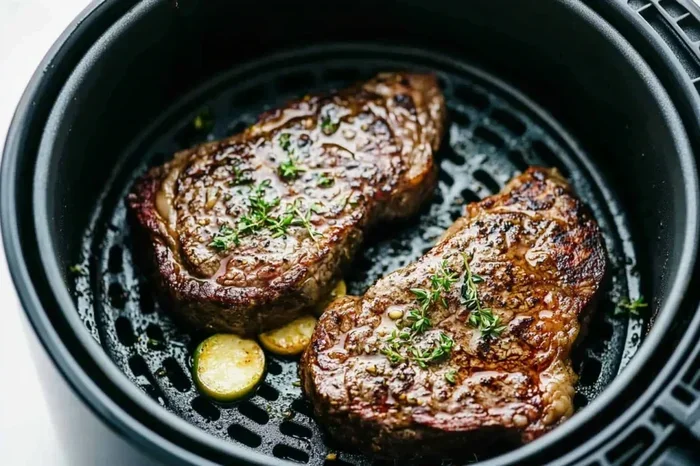
Visual guide about perfect air fryer steak
Image source: thecharmingrecipes.com
Convection vs. Conduction
Pan searing uses conduction. Heat transfers through direct contact. The pan touches the steak. Only the bottom browns at once. You must flip it. Grilling uses radiation and convection. Hot air and infrared waves hit the meat. An air fryer uses forced convection. The fan forces hot air onto every surface of the steak simultaneously. This cooks the edges and the top and bottom at the same time. It creates a more uniform crust.
The “Mini Oven” Analogy
Imagine a professional kitchen convection oven. Chefs love them for roasting chickens and baking cookies. They cook faster and more evenly. Your air fryer is that oven shrunk down to countertop size. Because the chamber is tiny, the fan speed is effectively much higher relative to the food. The air velocity is intense. This intensity is the secret weapon for steak. It blasts the surface dry in seconds. A dry surface browns. A wet surface steams. Steamed steak is gray and sad. Browned steak is delicious.
Temperature Control Precision
Most modern air fryers hold temperature within a few degrees. This consistency is huge for steak. On a grill, you have hot spots and flare-ups. On a stove, the pan temp drops when you add cold meat. The air fryer recovers heat instantly. The fan keeps the ambient temp stable. This predictability means you can nail medium-rare (130°F–135°F internal) every single time.
Choosing the Right Cut for Air Frying
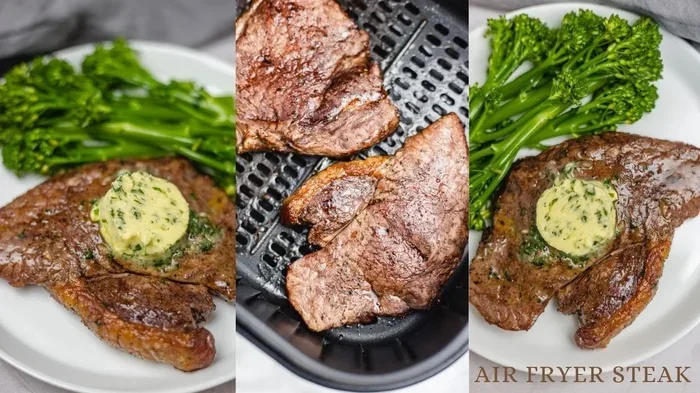
Not all steaks are created equal in an air fryer. The device excels at certain thicknesses and fat contents. Thin steaks cook too fast. Very thick steaks (over 2 inches) can burn outside before the center cooks. You want the Goldilocks zone.
Visual guide about perfect air fryer steak
Image source: i.ytimg.com
Best Cuts for the Air Fryer
- Ribeye: High marbling. The fat renders beautifully in the hot air. It self-bastes. This is the king of air fryer steaks.
- New York Strip: Leaner than ribeye but great texture. Holds shape well. Excellent crust formation.
- Filet Mignon: Very lean. Tender but needs fat (butter or oil) to prevent drying. Wrap in bacon for extra insurance.
- Top Sirloin: Budget-friendly. Lean. Slice against the grain after cooking. Great for steak salads or fajitas.
- Flat Iron: Hidden gem. Well-marbled, uniform thickness. Cooks incredibly evenly.
Cuts to Avoid or Modify
- Skirt or Flank Steak (Thin): These are often 1/2 inch thick. They will hit well-done in 3 minutes. If you use them, lower the temp to 375°F and watch like a hawk. Better for stir-fry slices.
- Tomahawk or Cowboy Cut (3+ inches): The exterior will char before the center hits 120°F. You can do a reverse sear: cook at 275°F until 110°F internal, then crank to 400°F for the crust. But honestly, use the oven or grill for these monsters.
Thickness Matters Most
Aim for 1 to 1.5 inches thick. This thickness allows a crust to form in the 8–12 minutes it takes the center to reach medium-rare. If your steaks are thin, pound them slightly to even thickness or butterfly thick ones. Uniform thickness = uniform doneness. This is the single biggest factor in success.
Fresh vs. Frozen
You can cook from frozen. Yes, really. Add 50% more time. Do not thaw first. Season after the first flip when the surface has thawed enough to hold salt. The result is shockingly good. It is a lifesaver for forgotten dinner plans.
Step-by-Step Guide to Perfect Air Fryer Steak
Follow these steps for a foolproof result. This method works for 1-inch to 1.5-inch steaks targeting medium-rare. Adjust time slightly for preference.
1. Temper the Meat
Take the steak out of the fridge 30–45 minutes before cooking. Cold meat cooks unevenly. The outside overcooks while the center stays raw. Room temp meat cooks faster and more evenly. It also sears better because the surface isn’t ice cold.
2. Dry It Like You Mean It
Pat the steak aggressively with paper towels. Get every drop of surface moisture off. Moisture creates steam. Steam prevents browning. This is the most skipped step and the most important. If the towels come away wet, do it again. Dry surface = crust. Wet surface = gray band.
3. Oil the Meat, Not the Basket
Rub the steak with a high smoke point oil. Avocado oil, grapeseed oil, or light olive oil work best. Use about 1 teaspoon per steak. Rub it all over. This conducts heat to the surface evenly. It helps seasoning stick. It promotes even browning. Do not spray the basket. Oil on the basket burns and smokes.
4. Season Generously
Salt and pepper are classics. Use kosher salt (bigger flakes, easier to control) and fresh cracked black pepper. Season all sides, including the edges. Press the seasoning into the oiled surface. For extra flavor, add garlic powder, onion powder, or smoked paprika. Do not use fresh garlic or herbs now. They will burn in the 400°F wind tunnel. Add fresh herbs in the butter baste at the end.
5. Preheat the Air Fryer
Set to 400°F (200°C). Preheat for 3–5 minutes. A hot basket sears instantly. A cold basket steams the bottom. Most models have a preheat button. If yours doesn’t, just run it empty. This step is non-negotiable for a crust.
6. Single Layer, No Crowding
Place steak in the basket. Leave space around it. Air must circulate. If cooking two steaks, ensure they don’t touch. If they touch, those spots stay pale and steamed. Cook in batches if needed. The first batch stays warm on a plate tented with foil while the second cooks.
7. Cook and Flip
For 1-inch thick, medium-rare: 8 minutes total. Flip at 4 minutes. For 1.5-inch thick: 12 minutes total. Flip at 6 minutes. The flip ensures even color on both sides. Use tongs. Do not pierce with a fork. Piercing lets juices escape.
8. The Butter Baste (Optional but Recommended)
At the flip, add a pat of butter, a smashed garlic clove, and a sprig of thyme or rosemary on top of the steak. The hot air melts the butter over the meat. It infuses flavor and adds richness. This mimics the spoon-basting technique of steakhouse chefs.
9. Check Temp Early
Start checking 2 minutes before the estimated finish time. Insert an instant-read thermometer into the side, tip in the center. Target pull temps:
- Rare: 120°F (pull at 115°F)
- Medium-Rare: 130°F (pull at 125°F)
- Medium: 140°F (pull at 135°F)
- Medium-Well: 150°F (pull at 145°F)
- Well Done: 160°F (pull at 155°F) — please don’t.
10. Rest. Seriously. Rest.
Move steak to a cutting board or warm plate. Tent loosely with foil. Wait 5 minutes for 1-inch, 10 minutes for 1.5-inch. The muscle fibers relax. Juices thicken and stay inside. Cut now, and the plate floods with juice. Cut later, and the juice stays in the steak. This is physics. Do not skip it.
11. Slice Against the Grain
Look at the muscle fibers. They run in one direction. Cut perpendicular to them. Short fibers = tender bite. Long fibers = chewy bite. This matters most for sirloin, flank, and strip. Filet is tender either way, but do it anyway. It looks professional.
Common Mistakes and How to Avoid Them
Even simple methods have pitfalls. Here are the top errors and fixes.
Mistake 1: Cooking Cold, Wet Meat
The Result: Gray, steamed, tough exterior. No crust.
The Fix: Temper 30 mins. Dry thoroughly. Oil the meat.
Mistake 2: Crowding the Basket
The Result: Pale spots where steaks touch. Uneven cooking.
The Fix: Cook one at a time. Or use a rack accessory to stack with airflow. Better yet, just do batches. It takes 10 minutes per batch. Patience pays.
Mistake 3: Guessing Doneness
The Result: Overcooked expensive meat. Sadness.
The Fix: Buy a $15 instant-read thermometer. ThermoWorks ThermoPop or similar. It pays for itself in one saved ribeye. Probe from the side.
Mistake 4: Skipping the Rest
The Result: Juice on the board, dry steak in mouth.
The Fix: Set a timer for 5–10 minutes. Make a salad. Pour wine. Scroll phone. Do not cut.
Mistake 5: Using Sweet Marinades or Sauces During Cooking
The Result: Burnt sugar smoke. Blackened bitter crust. Smoke alarm.
The Fix: Marinate if you want, but wipe excess off before air frying. Apply BBQ sauce, teriyaki, or honey glazes in the last 60 seconds only. Or sauce after plating.
Mistake 6: Wrong Temperature
The Result: 350°F gives roast beef texture, not steak. 450°F burns thin cuts.
The Fix: 400°F is the sweet spot for 1–1.5 inch steaks. Adjust only for thickness extremes.
Serving, Storing, and Reheating Tips
The meal isn’t over when the steak hits the plate. How you finish, store, and reheat defines the total experience.
Finishing Touches
- Compound Butter: Mix softened butter with herbs, garlic, lemon zest, blue cheese, or miso. Slice a pat onto the hot resting steak. It melts into a sauce.
- Flaky Salt: Maldon or fleur de sel on the slice adds crunch and flavor bursts.
- Pan Sauce: While steak rests, deglaze the air fryer drawer (if non-stick safe) or a hot pan with wine, stock, butter. Pour over slices.
- Chimichurri or Salsa Verde: Bright, acidic herbs cut the richness. Spoon generously.
Storing Leftovers
Cool to room temp (max 2 hours). Slice or leave whole. Store in airtight container. Fridge: 3–4 days. Freezer: 2–3 months (vacuum seal best). Label with date.
The Air Fryer Reheat Magic
This is the killer feature. Microwave ruins steak. Oven takes forever. Air fryer reheats in 3–4 minutes at 350°F. The crust revives. The center warms without overcooking. For sliced steak, 2 minutes. For whole, 4 minutes. Check temp. Eat. It is 90% as good as fresh. No other reheat method comes close.
Cold Steak Applications
Don’t want to reheat? Cold steak is a superstar.
Steak Salad: Slice thin over greens, blue cheese, walnuts, balsamic.
Steak Sandwich: Crusty roll, horseradish mayo, arugula, cold sliced steak.
Steak Tacos: Corn tortillas, salsa, onion, cilantro, lime.
Breakfast Hash: Dice cold steak, fry with potatoes, onions, top with fried egg.
Air Fryer Steak vs. Other Methods
How does it stack up? Let’s compare honestly.
vs. Pan Sear (Cast Iron)
Pan wins on: Deep, thick crust. Fond (brown bits) for pan sauce. Control. Butter basting control.
Air Fryer wins on: Cleanup (no splatter). Even edge-to-edge cooking. Less smoke. Hands-off. Consistency.
Verdict: Pan for special occasions. Air fryer for Tuesday.
vs. Grill
Grill wins on: Smoke flavor. Char marks. Outdoor vibes. Large capacity.
Air Fryer wins on: Weather independence. Temp precision. No flare-ups. Apartment friendly. Speed (no preheat 20 mins).
Verdict: Grill for weekends. Air fryer for weeknights.
vs. Sous Vide + Sear
Sous Vide wins on: Perfect edge-to-edge doneness guarantee. Zero overcooked gray band. Meal prep friendly.
Air Fryer wins on: Speed (1 hour vs 15 mins). Crust texture (drier surface = better sear). No bags/water bath.
Verdict: Sous vide for meal prep/entertaining. Air fryer for spontaneous craving.
vs. Broiler
Broiler wins on: Intense top heat. Good for thin cuts.
Air Fryer wins on: Even all-around heat. No flipping needed for thin cuts (air hits both sides). Less burning risk.
Verdict: Air fryer is more user-friendly.
Frequently Asked Questions (Deep Dive)
Do I need to flip the steak in an air fryer?
Yes, for thick cuts (1 inch+), flip halfway. The fan blows from the top (usually). The bottom sits on the basket grate. Flipping ensures even browning on both faces. For thin cuts (under 3/4 inch), you can often skip the flip because the intense air cooks both sides fast, but flipping is still safer for even color.
Can I cook frozen steak in an air fryer without thawing?
Yes. Preheat to 400°F. Place frozen steak in basket. Cook 50% longer than fresh. A 1-inch frozen steak takes ~12–14 minutes for medium-rare. Flip at halfway. Season after the first flip when the surface thaws enough to hold salt. It works surprisingly well.
Why is my air fryer steak tough?
Three usual suspects: 1) Overcooked (use a thermometer). 2) Wrong cut for the method (thin skirt steak cooked like a ribeye). 3) Sliced with the grain instead of against it. Fix: Buy thicker, well-marbled cuts. Cook to temp, not time. Slice across the fibers.
Does air fryer steak taste like grilled steak?
It tastes like pan-seared steak, not grilled. You get the Maillard crust (beefy, nutty, roasty notes) but no smoke or char flavor from dripping fat on coals. If you want smoke flavor, add 1/4 tsp smoked paprika to the rub or finish with a dash of liquid smoke in the butter baste. It is close, but distinct.
Can I put foil or parchment in the air fryer for steak?
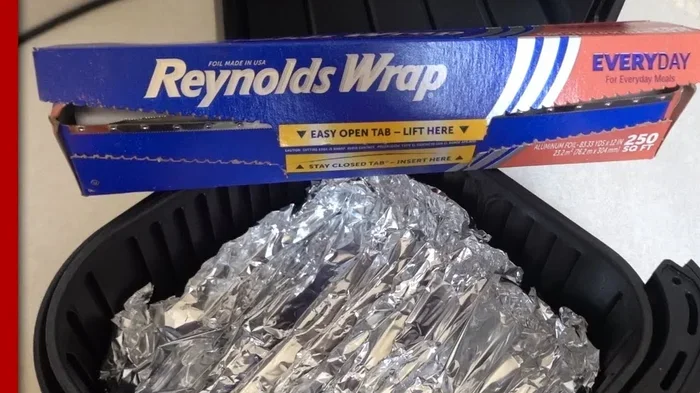
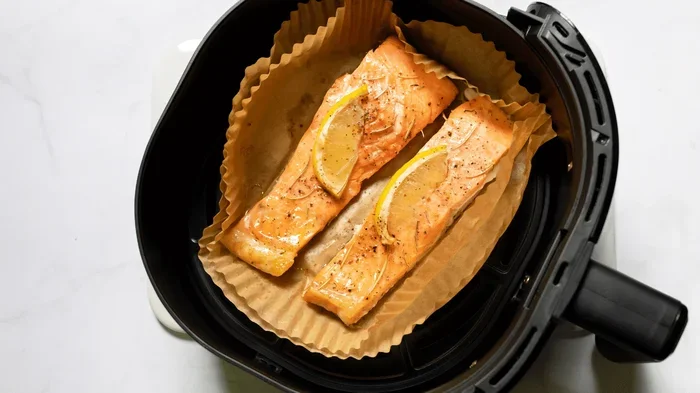
You can, but don’t. Foil blocks airflow. The bottom won’t brown. Parchment blocks airflow. The whole point is air circulation. If cleanup is a concern, use a silicone liner with perforations, or just wash the basket. It’s non-stick usually. A 30-second soak cleans it easy.
What internal temperature is safe for steak?
USDA says 145°F + 3 min rest for whole cuts. That is medium. Most chefs and eaters prefer 130°F–135°F (medium-rare). At 130°F held for a few minutes, pasteurization occurs. The risk of illness from intact muscle steak (not ground, not mechanically tenderized) at medium-rare is extremely low. Choose your risk tolerance. Ground beef (burgers) must hit 160°F.
Pro Tips for Next-Level Results
Ready to level up? These tweaks separate good from great.
Dry Brine Overnight
Salt the steak generously on a rack in the fridge uncovered 12–24 hours before. The salt draws out moisture, dissolves, gets reabsorbed. It seasons deeply. The surface dries out (pellicle forms). You skip the pat-dry step. The crust forms faster and deeper. This is the single best upgrade.
Use a Wire Rack in the Basket
If your air fryer basket has large gaps, the steak sits flat. The bottom contact points can get grill marks but uneven browning. A small wire rack (like a cooling rack that fits) elevates the steak. Air hits 360 degrees. Crust all around. No flip marks. Check your manual for accessory compatibility.
Reverse Sear in the Air Fryer
For thick steaks (1.5–2 inches): Cook at 250°F until internal temp is 15°F below target (e.g., 110°F for medium-rare). Takes ~20 mins. Remove. Crank air fryer to 400°F (or max). Put steak back in. Sear 1–2 mins per side. Best of both worlds: perfect pink edge-to-edge + hard crust.
Compound Butter Logs
Make flavored butter logs. Roll in plastic wrap. Freeze. Slice coins onto hot steak. Ideas: Garlic herb. Blue cheese walnut. Miso scallion. Chipotle lime. Coffee cocoa (for rub crust). Truffle salt. Keep a log in freezer always.
Deglaze the Drip Tray
After cooking, the drawer has rendered fat and juices. Put it on the stove (if metal) or pour into a hot pan. Add shallot, wine, stock, butter. Reduce. Instant pan sauce. Zero waste. Maximum flavor.
Nutrition and Health Perspective
Air frying uses significantly less oil than deep frying or even pan searing. A tablespoon of oil coats the steak vs. 1/4 cup in a pan. For lean cuts, this matters. The fat that renders from the steak drips away into the drawer. You don’t eat it. Grilling does this too. Pan searing keeps the fat in the pan (which you might make sauce with). Air frying is a lean cooking method by default.
Did You Know?
A study in the Journal of Food Science found air frying reduces fat content by up to 75% compared to deep frying. For steak, the fat reduction comes from rendered fat dripping away rather than added oil. The high heat also preserves more heat-sensitive nutrients like B vitamins compared to slower roasting, though the difference is minimal for a 10-minute cook.
Equipment Checklist
You don’t need much. But the right tools make it effortless.
- Air Fryer: Basket style or oven style. Both work. Basket is easier for single steaks. Oven style fits more.
- Instant-Read Thermometer: Non-negotiable. $15–$100. Best investment.
- Tongs: Long enough to keep hands clear of heat.
- Wire Rack (Optional): For 360° crust.
- Paper Towels: For drying.
- Small Bowl: For oil + seasoning mix.
- Cutting Board: With juice groove preferred.
- Chef’s Knife: Sharp. For clean slices against grain.
- Aluminum Foil: For tenting rest.
Troubleshooting Quick Reference
| Problem | Likely Cause | Fix |
|---|---|---|
| No crust, gray meat | Wet surface / low temp / crowded | Dry thoroughly / 400°F / single layer |
| Burnt outside, raw inside | Steak too thick for temp | Reverse sear (low then high) or thinner cut |
| Tough/chewy | Overcooked / wrong cut / sliced with grain | Thermometer / better cut / slice against grain |
| Smoke alarm triggers | Excess fat / oil on element / sweet sauce | Trim fat / oil meat not basket / sauce last min |
| Uneven doneness | Uneven thickness / cold meat | Pound even / temper 30 mins |
| Stuck to basket | No oil / didn’t preheat / moved too early | Oil meat / preheat / wait for release |